

 One app for all your study abroad needs

















Article Summary
- Explore the highest-paid government jobs in India across UPSC, RBI, defence, PSUs, banking, research, and academic sectors.
- Understand salary structures, allowances, perks, promotion timelines, and long-term career growth opportunities.
- Learn the eligibility criteria, age limits, and selection processes for top government careers.
- Compare career stability, work-life balance, pension benefits, and earning potential to choose the right path for your goals.
- Entry routes vary from the UPSC Civil Services Examination to GATE-based recruitment for technical roles, with career growth spanning 15 to 25 years to reach peak salary levels.
India’s Government jobs continue to attract millions of aspirants because they offer a powerful combination of high salaries, job security, social respect, pensions, and long-term career stability. From IAS officers and RBI Grade-B officials to defence officers, scientists, and PSU executives, several government careers now provide salaries and benefits comparable to top private-sector roles.
In this guide, you will discover the highest-paid government jobs in India, their salary structures, allowances, eligibility criteria, entrance exams, career growth, and long-term earning potential. The article also compares different career paths across civil services, banking, defence, research, teaching, and public sector enterprises to help you understand which role best matches your qualifications, interests, and career goals.
Whether you are a student planning after Class 12, a graduate preparing for competitive exams, or someone exploring stable high-income careers, this guide will help you make a more informed career decision.
Why Pursue High-Salary Government Jobs?
Government employment in India offers unmatched job security, a guaranteed pension under the National Pension System, and inflation-indexed benefits that private sector roles rarely match. Beyond financial stability, positions such as IAS or defence officer roles carry significant social prestige and offer opportunities to influence policy, lead major projects, and serve communities directly. Work-life balance, particularly in roles like RBI Grade-B or central university professorships, allows for structured hours and predictable schedules compared to the demanding pace of corporate careers.
7th Pay Commission Impact
The 7th Pay Commission fundamentally reshaped government compensation. Entry-level employees saw minimum salaries jump from ₹7,000 to ₹18,000 per month, while pensions for pre-2016 retirees rose from ₹3,500 to ₹9,000 monthly. The unified pay matrix replaced the old grade pay system, introducing transparent progression paths with 3% annual increments. As the 8th Pay Commission report nears finalisation, anticipation builds around a potential 30–34% hike and a revised fitment factor, which could lift salaries further across all cadres.
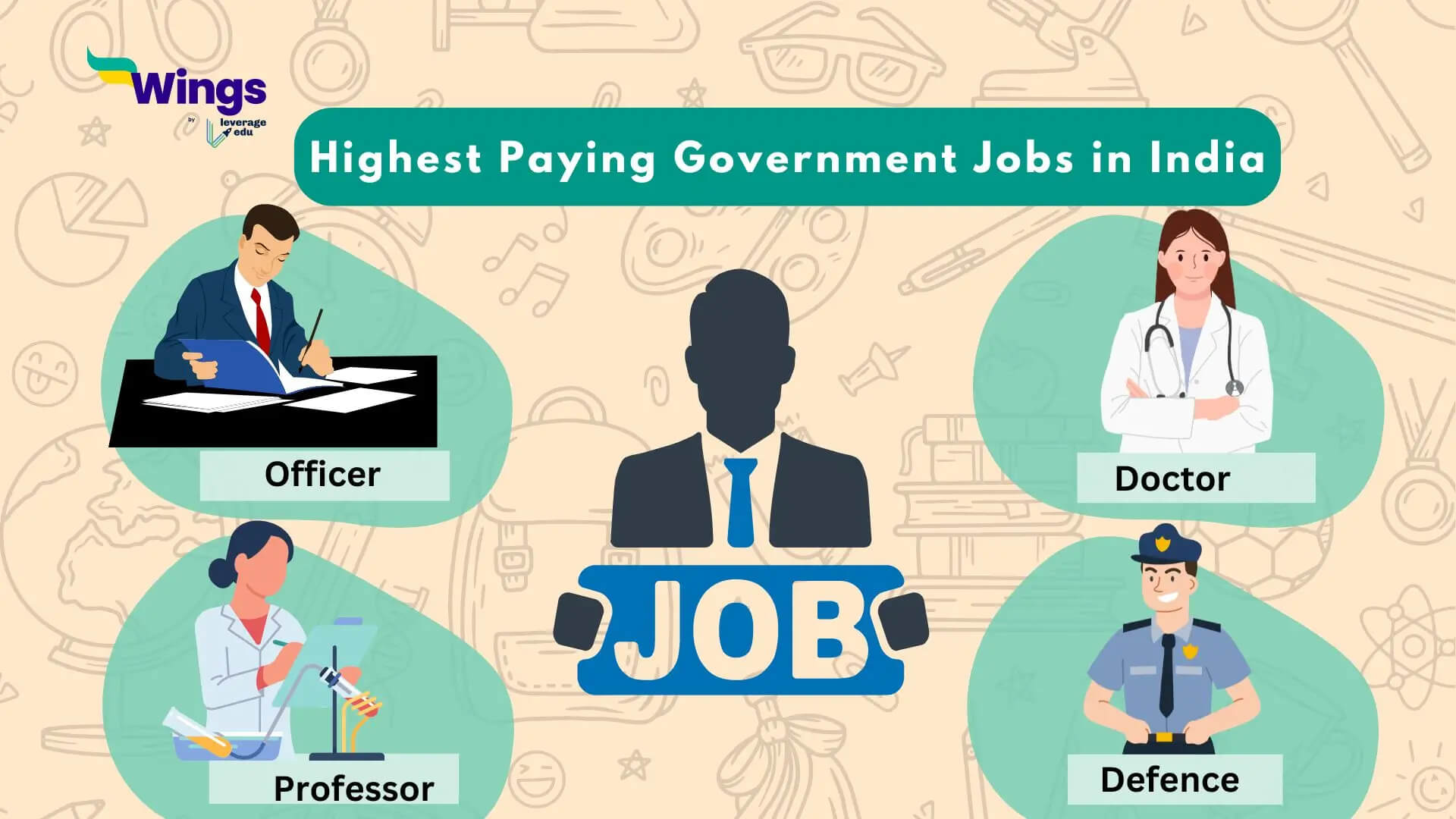
Top 10 Highest Paid Government Jobs in India
This ranking considers basic pay under the 7th Pay Commission, total in-hand monthly earnings including allowances, non-monetary perks, and long-term career growth potential. Each role description includes eligibility requirements and exam pathways, helping you identify which positions match your educational background and interest areas.
Indian Civil Services (IAS / IPS / IFS)
- Entry-level IAS/IPS officers start at ₹56,100 per month under Pay Level 10.
- Senior-most officers, such as the Cabinet Secretary, earn ₹2,50,000 per month.
- Chief Secretaries and Secretaries to the Government of India earn ₹2,25,000 monthly.
- Additional benefits include:
- Dearness Allowance (DA)
- House Rent Allowance (HRA)
- Travel Allowance (TA)
- Government bungalow
- Chauffeur-driven car
- Security staff and household support
- Officers usually reach Level 12–13 after 10 years, earning ₹78,800–₹1,23,100 basic pay plus allowances.
- Entry is through the UPSC Civil Services Examination.
- Gratuity benefits can go up to ₹25 lakh.
- These roles offer significant administrative authority and policy-making influence.
RBI Grade-B Officer
- Basic monthly salary starts at ₹78,450.
- The gross monthly salary is approximately ₹1,54,936 with allowances.
- RBI revised salaries in 2025 with a 42% increase over earlier pay scales.
- Major perks include:
- House Rent Allowance (15% if housing is not provided)
- Education allowance for children
- Medical benefits
- Strong maternity benefits
- Officers receive nearly ₹12 lakh annually in allowances and perks.
- Salary progression can increase basic pay to ₹1,41,600 over 16 years without promotion.
- The selection process includes:
- Phase I exam
- Phase II exam
- Interview
- Known for excellent work-life balance and fixed office hours. Officers frequently describe the role as offering strong work-life balance, fixed banking hours, and comprehensive maternity benefits.
Defence Commissioned Officers
- Lieutenant basic pay starts at ₹56,100 per month.
- Colonel-level officers earn approximately ₹1,30,600 basic pay.
- Military Service Pay (MSP) adds ₹15,500 monthly.
- Special allowances include:
- Siachen Allowance: ₹42,500/month
- Field Area Allowance: ₹6,000–₹16,900
- High Altitude Allowance: ₹3,400–₹25,000
- Special Forces Allowance: ₹25,000–₹90,000
- Entry routes include:
- NDA
- CDS
- Additional benefits:
- Subsidised canteen facilities
- Medical care
- Government accommodation
- Pension benefits
- The role involves frequent transfers and challenging field postings.
ISRO & DRDO Scientists/Engineers
- DRDO Scientist B officers start at ₹56,100 basic pay under Pay Level 10.
- Approximate monthly salary ranges from ₹75,000 to ₹1,00,000, including allowances.
- ISRO Scientist/Engineer ‘SC’ follows a similar Level 10 pay structure.
- Recruitment is primarily based on GATE scores and interviews.
- Benefits include:
- Subsidised campus housing
- Research grants
- Medical facilities
- High job security
- These roles offer opportunities to work on advanced defence and space research projects.
Government Bank PO & Specialist Officers
- SBI Probationary Officers start with ₹48,480 basic pay plus advance increments.
- Gross monthly salary is approximately ₹95,572.
- Approximate in-hand salary is ₹73,629 after deductions.
- Initial annual CTC in metro cities can exceed ₹20 lakh.
- Career growth is strong:
- AGM/DGM roles can earn ₹1.5–₹2.3 lakh monthly
- General Managers may earn ₹2.5–₹3 lakh monthly
- Entry is through the SBI PO or IBPS PO examinations.
- Additional perks include:
- Concessional home and car loans
- Performance bonuses
- Structured office hours
- Internal promotions and transfers
Central University Professors
- Assistant Professors start at ₹57,700 per month under Academic Level 12.
- Associate Professors begin at ₹1,31,400.
- Full Professors start at ₹1,44,200.
- Maximum pay for senior professors can exceed ₹2,11,500.
- Eligibility generally includes:
- UGC NET qualification
- PhD degree
- Benefits include:
- Sabbatical leave
- Research grants
- Academic flexibility
- Semester breaks
- Suitable for candidates interested in teaching, mentoring, and research careers.
Indian Forest Service (IFoS)
- IFoS officers follow the same pay structure as IAS and IPS officers.
- Starting salary is ₹56,100 per month under Pay Level 10.
- Senior officers can earn ₹2,25,000–₹2,50,000 per month.
- Additional field-related benefits include:
- Forest accommodation
- Vehicle facilities
- Travel allowances
- Remote area allowances
- Entry is through the UPSC Civil Services Examination with IFoS selection.
PSU Executives (ONGC, NTPC, IOCL)
- PSU executives generally start at the E1 grade with an annual CTC of ₹12–18 lakh.
- E3 grade executives (5–7 years of experience) earn ₹18–25 lakh annually.
- Senior E5–E7 executives can earn ₹35–60 lakh+ annually.
- Benefits include:
- Performance bonuses
- Official accommodation
- Medical coverage
- Retirement benefits
- Leave travel allowances
- Recruitment is primarily through GATE scores.
Railway Group-A Officers (IRAS/IRSE)
- Entry-level Railway Group-A officers start with a basic pay of ₹ 56,100 under Level 10.
- Monthly in-hand salary generally ranges between ₹80,000 and ₹1,00,000.
- Benefits include:
- Railway accommodation
- Free or concessional travel passes
- Medical facilities
- Pension benefits
- Entry is through the UPSC Engineering Services Examination or the Civil Services Examination.
AIIMS/CGHS Medical Officers
- Medical Officers usually start with a basic pay of ₹56,100–₹67,700.
- Doctors receive a Non-Practising Allowance (NPA) of around 20% of basic pay.
- Senior specialists and professors may earn more than ₹2 lakh per month.
- Benefits include:
- Dearness Allowance
- House Rent Allowance
- Medical facilities
- Pension benefits
- Academic and research opportunities
- Recruitment is through AIIMS, UPSC CMS, or state medical recruitment exams.
Salary & Perk Comparison Snapshot
| Job Role | Basic Pay (Level) | Gross/In-Hand (Monthly) | Standout Perks |
|---|---|---|---|
| IAS / IPS / IFS | Level 10 (₹56,100) → Level 18 (₹2,50,000) | Up to ₹2,50,000 | Bungalow, chauffeur-driven car, security, policy influence |
| RBI Grade-B Officer | ₹78,450 (revised 2025) | ~₹1,54,936 gross | Education allowance, leased housing, fixed office hours |
| Defence Officers | Level 10 (₹56,100 Lt) → ₹1,30,600 (Colonel) | ₹1,00,000–₹2,50,000+ | MSP ₹15,500, Siachen Allowance ₹42,500, CSD canteen |
| DRDO / ISRO Scientists | Level 10 (₹56,100 Scientist B) | ₹60,000–₹1,00,000 | Campus housing, research grants, and high-tech projects |
| SBI / IBPS Bank PO | ₹48,480 (+ 4 advance increments) | ~₹73,629–₹80,350 in-hand | Fast promotions, concessional loans, bonuses |
| Central University Professor (Assistant Professor) | Level 12 (₹57,700) | Variable | Sabbatical leave, research grants, and academic flexibility |
| Central University Professor (Full Professor) | Level 14 (₹1,44,200 entry) | Variable | Academic autonomy, semester breaks, and consultancy opportunities |
| Indian Forest Service (IFoS) | Level 10 (₹56,100) → Apex Level ₹2,50,000 | ₹80,000–₹2,00,000+ | Forest accommodation, vehicle facilities, and remote area allowances |
| PSU Executives (ONGC/NTPC/IOCL) | E1 Grade (~₹60,000 basic) → E7 Senior Executive | ₹12–₹60 lakh+ annual CTC | Performance bonuses, official housing, and medical benefits |
| Railway Group-A Officers (IRAS/IRSE) | Level 10 (₹56,100) | ₹80,000–₹1,00,000 | Railway accommodation, free travel passes, pension benefits |
| AIIMS / CGHS Medical Officers | Level 10–11 (₹56,100–₹67,700) | ₹1,00,000–₹2,00,000+ | Non-Practising Allowance (NPA), medical benefits, research opportunities |
Note: In-hand amounts vary based on DA (currently 60%), HRA (location-dependent), and City Compensatory Allowance. The top three monthly earners by gross pay are senior-level IAS/IPS/IFS officers, RBI Grade-B officers, and defence Colonels with special allowances.
If you are weighing multiple career paths, Leverage Edu’s counsellors can help you compare salary trajectories, exam difficulty, and lifestyle fit across these roles in a free consultation session.
Eligibility & Selection Exams Explained
Indian Civil Services (IAS/IPS/IFS)
- Candidates must hold a bachelor’s degree in any discipline from a recognised university.
- The age limit for the general category is 21–32 years, with relaxations available for OBC, SC/ST, and PwD candidates.
- Selection is conducted through the UPSC Civil Services Examination, which includes: Prelims (Objective), Mains (Descriptive), Personality Test/Interview
RBI Grade-B Officer
- Candidates must hold a bachelor’s degree with a minimum of 60% marks for General/OBC categories and 55% for SC/ST/PwD categories.
- The age limit for the general category is 21–30 years, with relaxations available for reserved categories.
- Selection is conducted through a three-stage recruitment process, which includes: Phase I (Objective), Phase II (Objective + Descriptive), and Interview.
Defence Commissioned Officers
- Candidates can apply for NDA after completing Class 12, generally between 16.5 and 19.5 years of age.
- Graduates can apply through CDS for entry into academies such as the IMA, typically between 19 and 24 years of age.
- Selection includes: Written Examination and SSB Interview (5-day assessment process)
DRDO/ISRO Scientists
- Candidates must hold a bachelor’s or master’s degree in Engineering or Technology from a recognised institution.
- The age limit is generally below 35 years, depending on the organisation and category relaxations.
- Selection is usually based on: GATE Score, Shortlisting and Technical/Personal Interview
SBI/IBPS Bank PO
- Candidates must hold a bachelor’s degree in any discipline from a recognised university.
- The age limit for most PO examinations is 20–30 years, with category-wise relaxations.
- Selection is conducted through: Preliminary Examination, Main Examination, and Interview
- Specialist Officer roles may require discipline-specific qualifications.
Central University Professors
- Candidates generally require a master’s degree with at least 55% marks along with a UGC NET qualification.
- Candidates with a PhD may receive NET exemption in certain cases as per UGC guidelines.
- Age limits vary by university and are generally open until retirement age.
- Selection usually includes: Academic Screening, Interview/Presentation and Research Evaluation
General vs Reserved Category Relaxations
| Category | Age Relaxation | Additional Benefits |
|---|---|---|
| OBC Candidates | 3 years | Additional attempts in competitive examinations |
| SC/ST Candidates | 5 years | More attempts and relaxed eligibility under government recruitment rules |
| PwD Candidates | Up to 10 years | Additional relaxations depending on the category and recruitment regulations |
Detailed eligibility rules, attempt limits, and relaxations are published annually in official UPSC, IBPS, UGC, and other government recruitment notifications.
Preparation Strategy & Study Resources
Administrative Track (UPSC CSE, IFoS)
Build a strong foundation with NCERT textbooks from Classes 6 to 12, covering History, Geography, Polity, and Economics. Progress to standard references: Laxmikanth for Polity, Spectrum for Modern History, and Ramesh Singh for Economics. Daily answer writing is non-negotiable; set a target of at least two 250-word answers per day. Free resources include NIOS study materials and toppers’ notes shared on forums, while paid options span established coaching institutes and quality test series that simulate actual exam conditions.
Financial Track (RBI Grade-B, Bank PO)
Quantitative aptitude requires daily practice; work through 50 questions covering arithmetic, algebra, and data interpretation. Read the Economic Survey annually and stay updated on monetary policy changes via RBI bulletins. For the Economic and Social Issues (ESI) paper in RBI Grade-B, follow mainstream newspapers and compile monthly current affairs notes. Online mock platforms offering timed sectional tests help identify weak areas, and previous year papers reveal recurring question patterns worth mastering.
Read more: What is a Bank PO? Everything that you need to know!
Technical Track (GATE for PSU/DRDO/Railways)
Core subject mastery trumps breadth; focus on your engineering discipline’s fundamental concepts rather than attempting superficial coverage of peripherals. Solve at least five years of previous GATE papers in timed conditions to internalise the exam’s question style and difficulty curve. Time management drills are essential; GATE’s negative marking punishes guesswork, so accuracy under pressure matters more than attempting every question. Virtual test series and subject-specific YouTube channels offer affordable supplementary learning.
Habit Building & Mock Tests
Consistency beats intensity in civil service preparation. Set daily study hours and stick to them rather than cramming in erratic bursts. Revision cycles should repeat every three weeks to strengthen retention; create concise summary notes during initial reading, then review them at regular intervals. Full-length mock tests, taken under exam conditions without breaks, build stamina and reveal time allocation weaknesses. Analyse every mock thoroughly; understanding why you missed a question matters more than your raw score.
High-Salary Government Jobs After 12th & For Women
Opportunities for 12th-Pass Candidates
National Defence Academy: If you clear the NDA exam after 12th, you enter a three-year academy programme plus one year at the Indian Military Academy, graduating as a Lieutenant with ₹56,100 basic pay plus allowances, totalling approximately ₹70,000 to ₹90,000 in-hand. Promotion to Captain occurs within two years, and long-term progression to Colonel-level salaries is structured and transparent.
SSC CGL Income Tax Inspector: Income Tax Inspectors are recruited through the SSC CGL examination and require a bachelor’s degree from a recognised university. The post falls under Pay Level 7 of the 7th CPC with a starting basic pay of ₹44,900 per month. After including Dearness Allowance, House Rent Allowance, and other benefits, the approximate in-hand salary ranges between ₹65,000 and ₹80,000, depending on the city of posting. The role also offers pension benefits, departmental promotions, and stable long-term career growth within the Income Tax Department.
Wanted to crack the exam? Read to know more.
Railway Technician Grade-A: Railway Technician Grade-I posts are recruited through the Railway Recruitment Board (RRB) examinations. The role generally falls under Pay Level 5 with a starting basic pay of ₹29,200 per month. Including allowances, the approximate in-hand salary ranges between ₹40,000 and ₹55,000. Employees receive additional benefits such as railway travel concessions, medical facilities, pension coverage, overtime allowances, and departmental promotion opportunities. Over time, experienced employees can move into supervisory and technical leadership roles within Indian Railways.
Also read: TTE In Railways: Eligibility, Benefits, Salary, and Recuitment Processs
High-Salary Roles Popular Among Female Candidates
Indian Forest Service: Forest officers balance fieldwork with policy roles, enjoy flexible posting schedules relative to police or district administration, and benefit from government quarters in scenic locations. The role suits candidates passionate about conservation and comfortable with semi-urban postings.
RBI Grade-B Officer: Fixed banking hours, comprehensive maternity leave, and education allowances for children make this role attractive for those planning families. The institutional culture in RBI leans towards meritocracy, with transparent promotion criteria.
Central University Professor: Academic calendar flexibility, sabbatical provisions for research, and the ability to shape your teaching schedule offer autonomy that few government roles match. Female representation in university faculty has grown steadily, particularly in the humanities and social sciences.
UPSC: Female representation in UPSC Civil Services has risen over the past decade, with women consistently securing top ranks and leadership positions. Banking exams similarly see strong female participation, driven by predictable career paths and structured work environments.
Read more: Government Exams After Graduation for Female
Conclusion: Choosing the Right Role
Picking among India’s highest-salary government positions requires matching your academic strengths, lifestyle priorities, and long-term ambitions against exam demands and career trajectories. If policy influence and administrative authority excite you, UPSC Civil Services remains unmatched. If structured hours and rapid financial growth matter most, RBI Grade-B and Bank PO roles deliver both. Technical graduates passionate about research will find DRDO and ISRO fulfilling, while those drawn to service and adventure should seriously consider defence commissions.
Map your qualifications against eligibility criteria, assess your comfort with exam formats, and factor in non-monetary perks like housing, location stability, and work-life balance before committing to a preparation path.
Ready to begin? Leverage Edu can connect you with exam-specific prep resources, personalised study plans, and free counselling sessions to clarify which role aligns best with your profile and aspirations.
FAQs
Senior-level Indian Civil Services, particularly the Cabinet Secretary at Level 18, earn a fixed monthly salary of ₹2,50,000. Secretaries to the Government of India and state Chief Secretaries draw ₹2,25,000 at Level 17. RBI Grade-B officers and defence Colonels with special allowances also rank among top earners, with gross monthly pay frequently exceeding ₹1.5 lakh.
Ease depends on individual strengths; however, the IBPS PO and SSC CGL exams for Income Tax Inspector roles have higher selection ratios than the UPSC CSE. GATE for PSU recruitment offers engineering graduates a predictable syllabus and transparent cutoff system, making preparation straightforward if core subjects are strong.
The 7th Pay Commission introduced a 23.55% hike via a 2.57 fitment factor and replaced the grade pay system with a unified pay matrix. Entry-level salaries rose from ₹7,000 to ₹18,000, and allowances, including DA, HRA, and TA, increased substantially. A fresh IAS officer’s basic pay at Level 10 stands at ₹56,100, with higher allowances significantly boosting the in-hand salary compared to the 6th CPC structure.
Yes, through the NDA exam leading to commissioned officer positions with starting in-hand pay around ₹70,000 to ₹90,000, and SSC CHSL for roles like Income Tax Inspector, offering competitive pay. Railway technical posts also offer solid starting salaries and structured promotion ladders. Departmental exams enable further career progression to higher pay scales.
RBI Grade-B Officer, Central University Professor, and Indian Forest Service are frequently cited for manageable hours, predictable schedules, and lower stress. Banking roles follow fixed office hours with weekends off, while teaching positions align with academic calendars. In contrast, civil administration and defence postings often require extended hours and frequent transfers.
Dearness Allowance is currently at 60%, House Rent Allowance varies by city classification, Transport Allowance, and role-specific additions like Hardship Allowance for remote postings, Risk Allowance for defence and police personnel, Siachen Allowance of ₹42,500 monthly, and Non-Practising Allowance for medical officers. Allowances can add 40 to 60% to basic pay, substantially increasing in-hand salary.


 2,00,000+ students realized their study abroad dream with us. Take the first step today.
11 comments
Hello,
My son wants to practice for the competitive civil services examination. He just started. Can you please guide for a strategy?
Hi, Pravin!
Civil Engineering: Courses, Job Profiles and FAQs
Civil Engineering Jobs for Freshers
Call us at 1800 57 2000 for more help.
I want to become a government civil services officer
hi, Abhijeet!
We are happy to help you!
Call us at 1800 57 2000 and get all the details for your desired career.
Also, read: How to Become an IPS Officer?
How to Become an IFS Officer?
RBI Law Officer Recruitment
I have completed microbiology and DMLT what are the government jobs I can apply
Hi, Sowmiya!
Please read: Courses after BSc Biotechnology
Scope of Biotechnology
Very simple and informative post.
Thank you! If you want to get regular updates then please sign up for our weekly newsletter!
I want to be a serviceman, can I do it as I have just passed out 12th commerce from CBSE board .
Can I be so ?
Thanks for sharing
Hello sir,I completed my graduation in bsc computer science in 2020 so what course is better in non coding in IT sector ?please reply