

 One app for all your study abroad needs













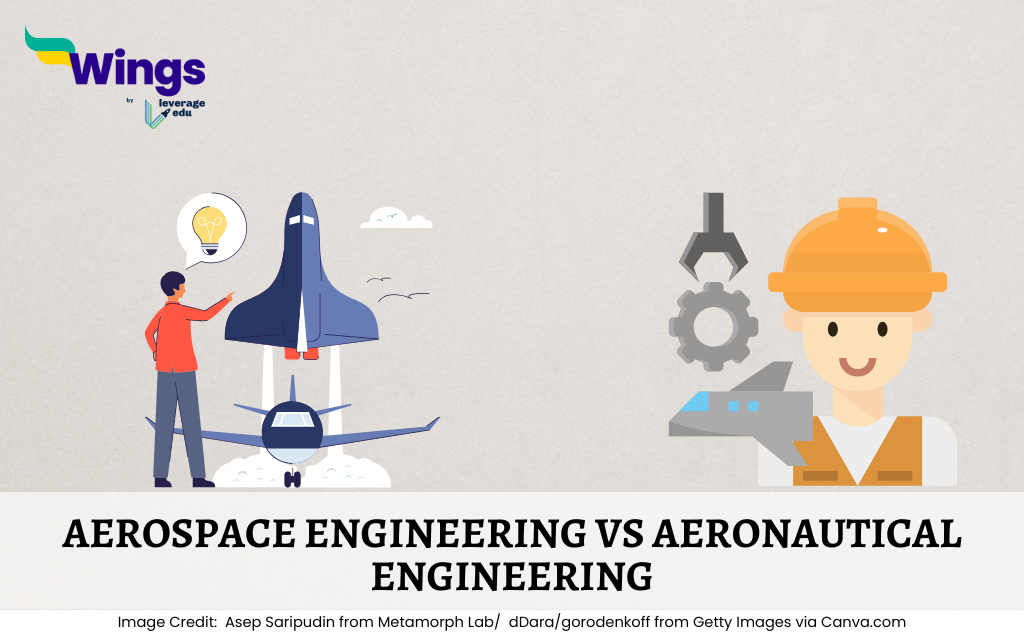
Are you someone who is fascinated with manufacturing and designing spaceships, rockets and aircraft? Students often get confused between Aerospace and Aeronautical engineering, and with a lack of knowledge, end up making the wrong choice. Both courses offer the study of the design of an aircraft. Aerospace Engineering focuses on both aircraft and spacecraft that fly within and outside the atmosphere of the Earth.
Whereas Aeronautical Engineering focuses on the aircraft that fly within the atmosphere of the Earth. If you are planning to pursue a career in this field, this blog will help you settle the aerospace engineering vs aeronautical engineering debate.
This Blog Includes:
- What is Aerospace Engineering?
- What is Aeronautical Engineering?
- Aerospace Engineering vs Aeronautical Engineering: Key Differences
- Reasons to Pursue Aerospace and Aeronautical Engineering
- Aerospace vs Aeronautical Engineering Syllabus
- Similarities in Aerospace and Aeronautical Engineering
- Top Universities for Aerospace & Aeronautical Engineering
- Aerospace vs Aeronautical Engineering Scope
- Aerospace vs Aeronautical Engineering – Which is Better?
- FAQs
What is Aerospace Engineering?
Aerospace engineering is the primary field of engineering. The subject is concerned with the design, development, testing, and production of aircraft, spacecraft, and related systems and equipment. The field is focused on atmospheric and space flight. It has two major branches: aeronautical engineering and astronautical engineering.
Those who enrol in Aerospace engineering courses learn to design aircraft, spacecraft, satellites, and missiles. When these students become professionals, they design components and parts of an aircraft that include engines, airframes, wings, landing gear, control systems and instruments.
What is Aeronautical Engineering?
Students pursuing Aeronautical Engineering study the design and manufacture, along with the techniques of operating aircraft. This course trains the future engineer in designing, constructing, and testing commercial & military aircraft, spacecraft and missiles. Students will learn to be responsible for the research, design and production of aircraft, spacecraft, satellites and missiles. They will also learn to develop new technologies in commercial aviation, defence systems, and space exploration. Aeronautical Engineering courses develop and enhance knowledge of aerodynamics, flight mechanics, and stability and control.
Also Read: Aeronautical Engineering
Aerospace Engineering vs Aeronautical Engineering: Key Differences
The table below showcases the key difference between aerospace engineering and aeronautical engineering. The differences mainly lie in the course content, subjects, cost, and career scope.
Reasons to Pursue Aerospace and Aeronautical Engineering
The main reason behind students studying Aerospace and Aeronautical Engineering is the prestige of being called a “rocket scientist”. Students enrolled in Aerospace or Aeronautical studies to design and create aircraft, spacecraft, satellites and missiles. Getting a degree in this field will enhance your resume and place your career path at the cutting edge of the engineering field.
Aerospace vs Aeronautical Engineering Syllabus
Students interested in the course get confused about which one to choose. Both Aerospace and Aeronautical Engineering are interconnected and yet have some differences. Hence, they have a different syllabus that has separate focus areas for the students. Aerospace Engineering is a broader and more advanced field in comparison to Aeronautical Engineering. Aerospace graduates develop new technologies in aviation, defence systems, and spacecraft. Subjects covered in Aerospace Engineering are Spacecraft Design, Introduction to Astronautics, Fundamentals of Jet Propulsion, Spacecraft Dynamics, and Orbital Mechanics.
Similarly, Aeronautical Engineering is the study of aircraft that operate within the Earth’s atmosphere. Aeronautical Engineering is a study that focuses on designing aircraft, helicopters, and aeroplanes. Aeronautical Engineering subjects will cover Thermodynamics, Heat Transfer, Aircraft Structures, Flight Mechanics, Aircraft Stability, and Control.
To learn more about the Aerospace vs Aeronautical Engineering difference, watch this video:
Similarities in Aerospace and Aeronautical Engineering
Aerospace and Aeronautical Engineering deal with aircraft. Both areas study flight stability, aerodynamics and aircraft control. They also deal with traditional engineering issues. On one hand, Aerospace engineering focuses on designing both aircraft and spacecraft. Aerospace is the study of all crafts flying within and out of the Earth’s atmosphere. On the other hand, Aeronautical Engineering works on aircraft flying inside the Earth’s atmosphere.
Top Universities for Aerospace & Aeronautical Engineering
Now that you understand the Aerospace Engineering vs Aeronautical Engineering difference, let’s get to know the top universities. The top universities you can enrol in for these courses.
| S.No | Name of the Institution | Course Name | Location |
| 1 | Teeside University | BEng (Hons) Aerospace Engineering | Middlesbrough, UK |
| 2 | Arizona State University | Bachelor of Science in Engineering in Aerospace Engineering | Tempe, USA |
| 3 | York University | BEng in Space Engineering | Toronto, Canda |
| 4 | The University of Melbourne | Bachelor of Design in Mechanical Systems | Melbourne, Australia |
| 5 | Coventry University | Aerospace Systems Engineering BEng (Hons) | Coventry, UK |
| 6 | University of Hertfordshire | BEng (Hons) Aerospace Engineering with Pilot Studies | Hatfield, UK |
| 7 | University of Waterloo | Bachelor of Science in Honours Science and Aviation | Waterloo, Canada |
| 8 | Texas A & M University | BS in Aerospace Engineering | College Station, USA |
| 9 | Seneca College of Applied Arts and Technology | Honours Bachelor of Aviation Technology | Toronto, Canada |
| 10 | Toronto, Canada | MEng in Aerospace Engineering with Management | Manchester, UK |
Aerospace vs Aeronautical Engineering Scope
As you already know, Aerospace and Aeronautical Engineers work in various areas in the field. The Engineers design aircraft and propulsion systems, and also study the aerodynamic performance of aircraft with their construction materials within the Earth’s atmosphere. Countries like the United States of America, France, the UK, and Germany have various job opportunities in the field. There are a lot of global career opportunities for aerospace engineers and aeronautical engineers.
Countries like the USA, France, the UK, Germany, and more are hiring many Indian aerospace engineers every year. You might be surprised, but the National Aeronautics and Space Administration, NASA (US Federal Government Agency), has a good number of Indian engineers working with them.
The average salary for an Aerospace Engineer is INR 730,000 per year in India, depending on academic qualification and experience. However, Aerospace Engineers working abroad get approximately USD 123,000 or INR 76.6 lakhs per year.
Aerospace vs Aeronautical Engineering – Which is Better?
Both Aerospace and Aeronautical Engineering are better, in fact, the best for the students who want to study aircraft. Students interested in working in the aircraft building industry must go for aerospace engineering, and for those who want to work in the space industry, must pursue aeronautical engineering. There is also an option to choose an aeronautical specialisation after pursuing B.Tech in Aerospace or Mechanical Engineering.
Both Aerospace and Aeronautical Engineering offer courses that relate to the study of the design of aircraft. Aerospace Engineering focuses on both aircraft and spacecraft within and outside the atmosphere. But the Aeronautical Engineering focuses on the aircraft within the atmosphere of the Earth. Both are good courses; however, career opportunities are broader in aerospace engineering.
Also Read: Learn about top Aviation Courses after 12th
FAQs
No, neither Aeronautical Engineering nor Aerospace Engineering is difficult. If a student has a dream to build a career in aircraft engineering, then any of these is the best career opportunity.
You need to acquire an undergraduate degree in Aeronautical Engineering to become an Aerospace Engineer. Further, you need to build your expertise with a master’s degree in a specialisation in these fields.
Yes. NASA accepts aeronautical engineers for jobs related to propulsion, aircraft design and flight systems. Aeronautics engineers work with aerospace engineers on overlapping technologies. They have strong academic backgrounds that increase their chances of being hired.
The average salaries of an aerospace engineer and an aeronautical engineer are the same. Both earn around INR 7 lakh to INR 9 lakh per year. On the other hand, Aeronautical engineers’ salaries can grow over time. They can earn about USD 115000. The gap is due to the specialisation.
Yes. Aerospace engineering consists of a lot of mathematics. You need to have a strong hold of the subject to take up this course. For example, you need to know topics particularly as algebra, calculus, and differential equations.
Related Articles:
Are you planning to study abroad but are not sure where to start? Contact our Leverage Edu experts for end-to-end guidance from application to the Visa process. Call us at 1800 57 2000 and book your FREE 30-minutes counselling session today!

Ankita Mishra
Ankita Mishra is a Content Marketing Team Lead at Leverage Edu, where she leads a team of talented writers in creating engaging and informative content. With more than 10 years of experience, including 5 years in a newsroom, Ankita takes great pleasure in helping students via study abroad news updates about universities and visa policies. When not busy working, you can find her creating memes and discussing social issues with her colleagues.

 60,000+ students trusted us with their dreams. Take the first step today!