

 One app for all your study abroad needs













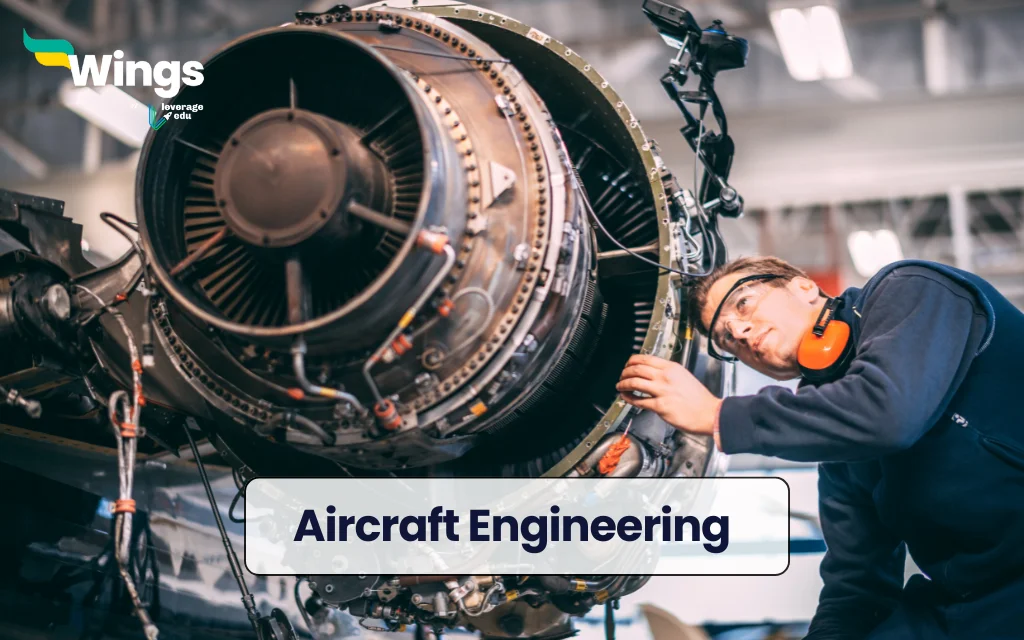
Embarking on a career in Aircraft Engineering offers a fascinating journey into the heart of aviation, a sector synonymous with precision, innovation, and global connectivity. Aircraft engineers are the masterminds behind the design, development, maintenance, and operation of aircraft, playing a critical role in ensuring safety, efficiency, and the continuous advancement of air travel. This field demands a unique blend of technical expertise, problem-solving skills, and meticulous attention to detail. If you’re passionate about aerospace and eager to contribute to the future of flight, exploring the diverse opportunities within aircraft engineering could be your calling.
This blog post will delve into the exciting career paths available, providing insights into the salary expectations both in India, ranging from an entry-level INR 4 LPA to senior-level professionals earning upwards of INR 25 LPA, and abroad, where average annual salaries can range from AUD 90,000 in Australia to USD 150,000+ in the USA, and highlighting the extensive range of job opportunities that await skilled professionals in this dynamic industry, from roles in airlines and aircraft manufacturing companies like Boeing and Airbus, to positions in MRO organizations, government agencies, and research and development units.
This Blog Includes:
Who is an Aircraft Engineer?
An Aircraft Engineer is a highly skilled professional responsible for the design, development, manufacturing, testing, maintenance, and repair of aircraft and their components. Their primary goal is to ensure the safety, airworthiness, efficiency, and reliability of all types of aerial vehicles, from small helicopters to large commercial airliners and even military aircraft.
This broad Aircraft Engineer encompasses several specialized roles:
- Aircraft Design Engineers (Aeronautical Engineers): These engineers focus on the conceptualization and development of new aircraft. They work on aspects like aerodynamics, structural integrity, propulsion systems, and materials science to create innovative designs that meet performance, safety, and environmental standards.
- Aircraft Maintenance Engineers (AMEs) / Licensed Aircraft Engineers (LAMEs): These professionals are crucial for keeping aircraft operational and safe. They conduct routine inspections, diagnose and troubleshoot mechanical, electrical, and structural issues, perform repairs, replace defective parts, and ensure that all maintenance activities comply with stringent aviation regulations and manufacturer guidelines. They are often licensed to certify an aircraft as airworthy before it takes flight.
- Avionics Engineers: A specialization within aircraft engineering, avionics engineers deal with the electronic systems of an aircraft, including navigation, communication, flight control, and instrumentation. They design, install, maintain, and troubleshoot these complex systems.
- Propulsion Engineers: These engineers focus specifically on the engines and power systems of aircraft, working to optimize performance, fuel efficiency, and reduce emissions.
- Structures Engineers: They specialize in the structural components of the aircraft, ensuring their strength, durability, and resistance to stress and fatigue.
How to Pursue Aeronautical Engineering?
Pursuing a career in Aeronautical Engineering involves a step-by-step academic and professional journey. Here’s how you can get started:
- You must have a strong grasp of Physics, Chemistry, and Mathematics (PCM) in your 10+2 (or equivalent) examinations.
- Pay close attention to core concepts in these subjects, as they form the bedrock of engineering studies.
- A Bachelor of Technology (B.Tech) or Bachelor of Engineering (B.E.) in Aeronautical or Aerospace Engineering is typically a 4-year program.
- To get admission into top colleges, you need to qualify for entrance exams such as: JEE Main & Advanced (for IITs, NITs), State-level Exams (like MHT CET, WBJEE, and University-specific Exams (like IIST, VITEEE).
- Actively seek internships during your undergraduate studies with airlines, MRO organizations, aircraft manufacturers (like HAL in India), or research institutions.
- Engage in academic projects, build models, or participate in design competitions to apply your theoretical knowledge and develop problem-solving skills.
- Gain proficiency in industry-standard software for design (CAD), simulation (CFD, FEA), and analysis.
- Higher Education and Specialization (Optional but Recommended) including Master’s Degree (M.Tech/M.S.) and Doctorate (Ph.D.).
- If you aim to work directly in aircraft maintenance and certification, obtaining an AME license from the Directorate General of Civil Aviation (DGCA) in India (or equivalent regulatory bodies abroad) is crucial.
- While not always mandatory for entry-level positions, a PE license can enhance career progression, allowing engineers to oversee projects and provide services directly to the public, particularly in some countries.
Courses in Aircraft Engineering
Programs in Aircraft Engineering are designed to provide students with the structure and design of various aircraft like Aeroplanes, helicopters, airships (blimps), spaceships, etc. People with a mechanical engineering background can also look forward to work in this field. With a degree in this course, you would be equipped to handle troubleshooting and repair issues in the aircraft. Here is a table listing down the different programs in Aircraft Engineering ranging from diploma courses to doctoral degrees.
| Level of Education | Courses Offered in Aircraft Engineering |
| Diploma-Level Courses | Diploma of Aircraft Maintenance Engineering – Mechanical TBI Diploma of Aviation (Instrument Rating) Unmanned Aircraft Systems Applications Certificate |
| Bachelor’s Degrees | BEng (Hons) Avionic Systems with a Year in Industry Ontario College Certificate in Flight Services Bachelor of Science in Aviation Management and Operations BSc (Hons) Air Transport Management |
| Master’s Degrees | Master of Business Administration in Aviation Management Master of Science in Aviation (Airport Development and Management) |
| Doctoral Degrees | Doctor of Philosophy in Aviation Doctor of Philosophy in Aviation Business Administration |
Eligibility Requirements for Aeronautical Engineering
The eligibility requirements for Aeronautical Engineering primarily depend on the level of the course you wish to pursue (Diploma, Undergraduate, Postgraduate) and the specific institution. Candidates that are interested in studying aeronautical engineering must meet the following requirements:
- Many engineering institutes ask for JEE Main and JEE Advanced scores are required for admission to the programme for aeronautical engineers.
- Many states conduct their own entrance exams (e.g., KCET, MHT CET, TNEA) for colleges within that state.
- Minimum aggregate PCM scores of 70–75% are required for aeronautical engineering as the primary eligibility requirement.
- Engineering diploma holders in aviation maintenance can get degrees by passing the Aeronautical Society of India exams.
- The candidate must have earned a Bachelor’s degree in aeronautical engineering in order to be admitted to postgraduate and doctoral programmes.
- Many institutions, including IITs and IISc, as well as science research institutions, accept GATE scores for admission to the discipline of master’s degrees.
Subjects List in Aeronautical Engineering
Aeronautical Engineering is a highly specialized field that draws upon fundamental principles from various branches of science and engineering. The subjects taught are designed to provide a comprehensive understanding of aircraft design, development, manufacturing, testing, and maintenance.
Here’s a breakdown of the core subjects, often accompanied by practical laboratory sessions and project work:
| Category | Subjects Taught |
| Foundational Sciences & Engineering (Early Semesters) | Engineering Mathematics: Calculus, Linear Algebra, Differential Equations, Numerical Methods, Statistics. |
| Engineering Physics: Mechanics, Thermodynamics, Electromagnetism, Optics, Modern Physics. | |
| Engineering Chemistry: Material Science (basic), Electrochemistry, Polymers, Fuels. | |
| Basic Electrical & Electronics Engineering: Circuit analysis, Semiconductor devices, Digital electronics, Microprocessors. | |
| Computer Programming: C, Python, MATLAB, Data Structures, Algorithms. | |
| Engineering Graphics/Drawing & CAD: Principles of technical drawing, Computer-Aided Design. | |
| Workshop Technology/Manufacturing Practices: Various manufacturing processes. | |
| Core Aeronautical Engineering (Specialized Subjects) | Aerodynamics: Airflow over aircraft, lift, drag, thrust, wind tunnel testing. |
| Aircraft Structures & Materials: Stress/strain analysis, fatigue, fracture mechanics, composites, FEA. | |
| Aircraft Propulsion Systems: Jet engines, rockets, turboprops, engine performance. | |
| Flight Mechanics & Control: Aircraft stability, performance, control systems, flight dynamics. | |
| Avionics: Aircraft electronic systems, navigation, communication, instrumentation, radar. | |
| Aircraft Design: Systematic approach to aircraft conceptual and detailed design. | |
| Computational Fluid Dynamics (CFD): Numerical simulation of fluid flows. | |
| Aircraft Systems & Instrumentation: Hydraulics, pneumatics, landing gear, fuel systems, environmental control. | |
| Aircraft Maintenance Practices: Regulations, inspection, repair techniques, maintenance management. | |
| Electives & Advanced Topics (Vary by University/Specialization) | Space Mechanics/Spacecraft Design: Principles of space flight. |
| Rockets and Missiles: Design and operation of rocket and missile systems. | |
| Unmanned Aerial Vehicles (UAVs)/Drones: Design, control, and applications. | |
| Aeroelasticity: Interaction between aerodynamic forces and structural deformation. | |
| Aeroacoustics: Study of noise generated by aerodynamic forces. | |
| Aviation Legislation & Regulations: Rules and laws governing the aviation industry. | |
| Airport Planning & Management: Operational and infrastructural aspects of airports. |
Job Opportunities for Aeronautical Engineering
Here’s a table outlining common job opportunities for Aeronautical Engineers, including typical salary ranges in India and abroad. Please note that salaries can vary significantly based on experience, specific company, location, and economic conditions. The “Abroad” figures are general averages for major aviation hubs like the USA, Europe, and the Middle East, which often represent higher earning potential.
| Job Profile / Role | Average Salary Range (INR) – India | Average Salary Range (USD / EUR / GBP) – Abroad |
| Aeronautical/Aerospace Engineer | Entry: ₹4 LPA – ₹6 LPA Mid: ₹8 LPA – ₹12 LPA Senior: ₹15 LPA – ₹25 LPA+ | USA: $90,000 – $150,000+ Europe: €45,000 – €90,000+ Middle East: $60,000 – $120,000+ |
| Aircraft Design Engineer | Average: ₹9 LPA – ₹12 LPA (can go higher with experience) | USA: $95,000 – $160,000+ Europe: €50,000 – €100,000+ |
| Aerodynamics Engineer | Average: ₹9 LPA – ₹10 LPA (can go higher) | USA: $90,000 – $155,000+ Europe: €48,000 – €95,000+ |
| Structures Engineer | Average: ₹7.5 LPA – ₹10 LPA (can go higher) | USA: $90,000 – $150,000+ Europe: €45,000 – €90,000+ |
| Propulsion Engineer | Average: ₹8.6 LPA – ₹16 LPAI SRO/Govt: ₹10 LPA – ₹25 LPA+ | USA: $95,000 – $165,000+ Europe: €50,000 – €100,000+ |
| Avionics Engineer | Average: ₹8 LPA – ₹15.4 LPA | USA: $85,000 – $145,000+ Europe: €40,000 – €85,000+ |
| Flight Test Engineer | Entry: ₹9.9 LPA Senior: ₹17.3 LPA | USA: $90,000 – $150,000+ Europe: €45,000 – €90,000+ |
| Aircraft Maintenance Engineer (AME)/LAE | Trainee: ₹3 LPA – ₹5 LPA Junior: ₹4 LPA – ₹6 LPA Senior: ₹8 LPA – ₹15 LPA+ | USA: $60,000 – $100,000+ Middle East: $50,000 – $100,000+ (tax-free benefits) |
| Quality Assurance Engineer | Average: ₹5.2 LPA (can reach ₹10 LPA with experience) | USA: $70,000 – $120,000+ Europe: €38,000 – €75,000+ |
| Manufacturing Engineer | Average: ₹7.2 LPA – ₹10 LPA (can reach ₹20 LPA+ with experience and company like Boeing/Airbus in India) | USA: $75,000 – $130,000+ Europe: €40,000 – €80,000+ |
| R&D Engineer/Scientist | Average: ₹15.6 LPA – ₹50 LPA (highly variable by experience and organization) | USA: $100,000 – $200,000+ Europe: €55,000 – €110,000+ |
| UAV (Drone) Engineer | Average: ₹12.2 LPA – ₹21.8 LPA | USA: $80,000 – $140,000+ Europe: €40,000 – €85,000+ |
FAQs
Aeronautical engineers deal with flying objects. Although designing aircraft and propulsion systems is their core duty, engineers eventually receive a wide range of additional tasks to do. The mechanisms of aircraft are studied by aeronautical engineers. They pursue careers in space shuttles, jet aircraft, and aircraft.
The average annual income for an aeronautical engineer in India is around Rs. 5 lakh. In the public sector, salaries are set according to the pay scale for each position.
Aeronautical engineering and aerospace engineering are both reputable fields. Aerospace engineering is the best field of study if you want to work in the aircraft manufacturing sector. Aeronautical engineering is the appropriate field of study for those who desire to work in the space sector.
RELATED BLOGS
We hope that this blog provides a complete overview of a career in Aircraft Engineering. To explore more courses to study abroad, make sure to subscribe to Leverage Edu today. Thank you for reading!


 60,000+ students trusted us with their dreams. Take the first step today!
3 comments
This course is good but you can’t get diploma certificate
I really like the career because it’s what I want to pursue, but I have a question, what combinations in your Advanced level (A’level) can you study in order to do Aircraft engineering?
Hi, Sir
We understood your query. Please reach us at 1800 57 2000 for help regarding study matters.