














OCAD University

Toronto, Canada

Private -1876

21%

International Student Rate

Fall, Summer and Winter

Intakes

45-50%

Acceptance Rate

17:1

Student: Teacher Ratio

27:73

Male: Female Ratio

History, Affiliations and Rankings

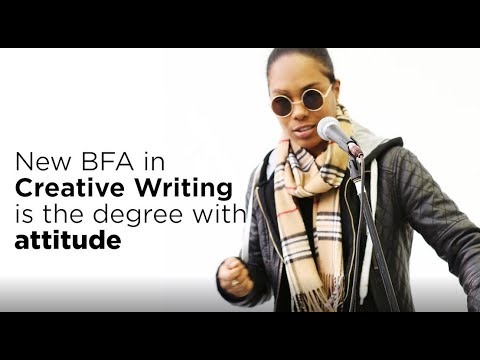
OCAD University, founded in 1876, is dedicated to Art and Design education, practice, and research, as well as knowledge and creativity in a variety of areas. It is a public university in Toronto, Ontario. The Ontario School of Art was its previous name. In 1912, it was renamed the Ontario College of Art, and it became the first Canadian institution committed to training professional artists in both commercial and fine arts. OCAD University is affiliated with the Association of Independent Colleges of Art and Design (AICAD), Universities Canada (UCan), CBIE, the Council of Ontario Universities (COU) and the International Association of Universities (IAU). OCAD University stands among the 101st and 150th Best Art and Design universities in the world according to QS World University Rankings 2022. 

Infrastructure, Campuses and Courses

The OCAD University campus is a commuter campus and is located on Richmond Street West in Toronto, Canada. The Miles Nadal Jewish Community Centre, City of Toronto Recreation Centre, and Toronto Governor Grosvenor YMCA Centre are all closer to the campus. A north campus and a south campus make up the current OCAD campus. The Main Building and Sharp Centre for Design, as well as Butterfield Park, the Annex Building, the Rosalie Sharp Pavilion, the Student Center, the Inclusive Design Institute, and the Continuing Education Centre, are all located on the north campus. The south campus includes buildings on Richmond Street West, as well as the proposed Mirvish-Gehry development on King Street further south. Through the Faculties of Art, Design, Liberal Arts, and Sciences, OCAD University offers 18 undergraduate and seven graduate degree programmes, as well as serving as a business incubator, and executive training studio, and is home to important research projects.

Accomplishments and Alumni

The international art and design leaders who lead, teach, and study at OCAD University shape the university. There history begins with renowned painter George A. Reid, who designed the original Grange Park site, as well as Arthur Lismer and J.E.H. MacDonald of The Group of Seven, who served as vice-principal and principle, respectively, of the institution. Moreover, the OCAD University has produced hundreds of notable alumnus till now including Madeline Ashby — science fiction writer, Myfanwy Ashmore – conceptual artist, Jack Bush – abstract expressionist painter, member of the Painters Eleven, Meryn Cadell – writer, performance artist, Franklin Carmichael – painter, member of the Group of Seven, Barbara Astman – artist, photographer, Shary Boyle – sculpture, painting, drawing, performance, Jubalrown – video artist, George Bures Miller – installation artist,  Yank Azman – actor, Rebecca Belmore – artist and David Blackwood – artist.

Student Diversity and Visiting Companies

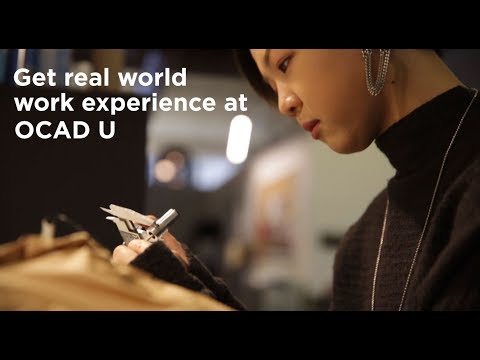
OCAD University has an undergraduate student enrollment of 4,400+ and nearly 300+ graduate students, out of which 21% are international students. For every 100 students at OCAD, 27 are females and 73 are males. There are special-interest student clubs allow students to communicate with one another, encourage faith and culture, and foster a diverse environment while fostering self-development, social responsibility, and environmental awareness. Part-time jobs are available on campus through the Campus Employment Program for International Students (CEPIS). The placement is open to students who are enrolled full-time in a degree program and have a valid study permit. Students can also join the alumni organisation in order to participate in career fairs and workshops. RBC, ScotiaBank, Shopify, City of Toronto and the Directors Guild of Canada - Ontario are some of the corporate and government organizations that recruit graduates from OCAD University. 

Read More

International Students %

21%

AI University Course Finder FREE

See personalized recommendations basis your profile and preferences from OCAD University & similar universities.

Find courses best-fit for you

See personalized recommendations basis your profile and preferences from OCAD University & similar universities.

Find courses best-fit for you

Browse Courses

leverage
Master in Fine Arts - Criticism and Curatorial Practice

CAD 31,107/year

Fee

24 Months

Duration

IELTS: 7

Qualification

Masters

Course level

On Campus

Mode of Degree

Jan, Sep

Intakes

This course by OCAD University will take you through all the core insights of the field. Along with theoretical concepts, you will gain hands-on-learning experience throughout the span of the program.
Read More

View All Courses

One app for all your study


abroad needs

Start your journey, track your progress, grow


with the community and so much more

Scan QR Code to Download the Study Abroad with Leverage App

Start your journey, track your progress, grow with the community and so much more

QS

Quacquarelli Symonds (Q.S.) is a corporation based in the United Kingdom that specialises in the analysis of higher education institutions worldwide. Nunzio Quacquarelli launched the company in 1990. It publishes the Q.S. World University Rankings every year. The Q.S. rating, which is considered one of the three most widely read university rankings globally, is approved by the International Ranking Expert Group (IREG). The institution uses six metrics, namely Academic Reputation, Employer Reputation, Faculty/Student Ratio, Citations per faculty, International Faculty Ratio and International Student Ratio, that effectively capture university performance. It also publishes rankings in Young universities, Graduate Employability, and Subject Rankings. Q.S. provides an auditing service to universities, which offers information on the institution's strengths and shortcomings. The Q.S. Stars audit procedure rates universities based on over 50 different indicators.

THE

The Times Higher Education, originally The Times Higher Education Supplement (THES), is a British magazine that focuses on higher education news and topics. It annually publishes The Times Higher Education World University Rankings. It has received worldwide acclaim for its new and improved rating algorithm. Since 2004, it has provided students and their families, academics, university executives, governments, and businesses with reliable university performance data. The performance indicators are grouped into five areas: Teaching (the learning environment); Research (volume, income and reputation); Citations (research influence); International outlook (staff, students and research); and Industry income (knowledge transfer). It also produces subject rankings and rankings for Young Universities, Impact, Reputation, And Emerging Economies.

Guardian

The Guardian is a British daily newspaper that first appeared in 1821 as The Manchester Guardian and was renamed The Guardian in 1959. The Guardian University Guide is published once a year. The goal of the University Guide is to show how each university's department is likely to provide an overall beneficial experience to future students, and to do so; they look at how previous students in the department fared. A league table was created using nine performance criteria for 54 disciplines spanning all stages of the student life cycle. Entry standards, Student-staff ratios, Expenditure per student, Continuation, Student satisfaction, Value Added, Standardisation, Subject Classification, and Career Prospects are the indicators utilised by the organisation.

USN

U.S. News & World Report is American news, consumer advice, rankings, and analysis publication. It began in 1948 as a merger of the weekly newspaper U.S. News and the worldwide weekly magazine World Report. The company's rankings of Best Global universities are well-known among the wider population and significantly impact admission trends. The inaugural "America's Best Colleges" report was released by the U.S. News & World Report in 1983. Since 1985, the rankings have been produced and published annually. The magazine U.S. News & World Report rankings are based on data collected from educational institutions through an annual survey, government and third-party data sources, and school websites. It also takes into account outside opinion polls of university faculty and administrators.

Rankings

101-150

Global Ranking

QS-2022

101-150

Global Ranking

QS-2022

View All Rankings

Start your journey

Realise your study abroad dream

Talk to an Expert for FREE

Realise your study abroad dream

Talk to an Expert for FREE

Fees Estimate

CourseDurationFee/Year
Master in Arts - Contemporary Art, Design and New Media Art Histories24 Months ₹31,107
Master in Arts - Digital Futures24 Months ₹31,716
Bachelor in Arts - Visual and Critical Studies48 Months ₹24,618
Master in Arts - Interdisciplinary in Art, Media and Design24 Months ₹31,107
Bachelor in Design - Advertising48 Months ₹24,618
Master in Design - Design for Health24 Months ₹38,625
Bachelor in Design - Digital Futures48 Months ₹24,618
Master in Design - Digital Futures24 Months ₹31,716
Bachelor in Design - Environmental Design48 Months ₹24,618
Bachelor in Design - Illustration48 Months ₹24,618
View All Courses
CourseDurationFee/Year
Master in Arts - Contemporary Art, Design and New Media Art Histories24 Months₹31,107
Master in Arts - Digital Futures24 Months₹31,716
Bachelor in Arts - Visual and Critical Studies48 Months₹24,618
Master in Arts - Interdisciplinary in Art, Media and Design24 Months₹31,107
Bachelor in Design - Advertising48 Months₹24,618
Master in Design - Design for Health24 Months₹38,625
Bachelor in Design - Digital Futures48 Months₹24,618
Master in Design - Digital Futures24 Months₹31,716
Bachelor in Design - Environmental Design48 Months₹24,618
Bachelor in Design - Illustration48 Months₹24,618
View All Courses

Scholarships

This fellowship is for full-time students.

Eligibility

Excellent academic background.

Applicability

An online application must be submitted.

This fellowship is for full-time students.

Eligibility

Excellent academic background.

Applicability

An online application must be submitted.

This scholarship is available to international applicants who are enrolled for the fall and winter terms

Eligibility

Must have a grade average of 80 percent or higher

Applicability

An online application must be submitted.

This fellowship is for full-time students.

Eligibility

Students participating in a PhD programme in the Humanities or Social Sciences.

Applicability

An online application must be submitted.

Annually, the Governor General's Academic Medals are given to a graduate and an undergraduate student.

Eligibility

Excellent academic background.

Applicability

An online application must be submitted.

Application Process

  • Visit the official website of the institution. 
  • Click on 'Apply Now' or 'Register Here'
  • Complete filling your education history with all the qualifications.
  • Fill in the details of your employment history.
  • Fill in your personal statement.
  • Submit the application form by paying the mentioned fees.

Documents Required

Admission Requirements

FAQs

Yes, it is officially recognized by the Ministry of Training, Colleges and Universities of Ontario and Council of Ontario Universities.
In the month of March.
OCAD University offers an urban campus in Toronto, Ontario, Canada, which is a booming North American city.

Currently, the university has around 6000 students enrolled.

Hear from our students

Seneilla

Excellent Service!! The staff and the team here are very professional. My counselor was really very helpful and reliable right from the beginning. He helped me sort everything...Read More

Excellent Service!! The staff and the team here are very professional. My counselor was really very helpful and reliable... Read More

Gandharv

I am grateful to have approached Leverage Edu at a very early stage of my college application period. They not only provided me with the right guidance but also upon assessing...Read More

I am grateful to have approached Leverage Edu at a very early stage of my college application period. They not only prov... Read More

Your feedback matters

Tell us how we could provide more value to you

Share Feedback

Tell us how we could provide more value to you

Share Feedback

Studying in Canada

For international students, the average first-year tuition cost to study in Canada is as follows: 

Undergraduate: CAD 12,000 - CAD 30,000 (INR 7,19,814 - INR 17,99,537)

Postgraduate: CAD 18,000 - CAD 20,000 (INR 9,54,000 - INR 12,00,017)

MBA: CAD 28,000 - CAD 57,000 (INR 16,80,153 - 34,20,312)

For international students, the average first-year tuition cost to study in Canada is as follows: 

Undergraduate: CAD 12,000 - CAD 30,000 (INR 7,19,814 - INR 17,99,537)

Postgraduate: CAD 18,000 - CAD 20,000 (INR 9,54,000 - INR 12,00,017)

MBA: CAD 28,000 - CAD 57,000 (INR 16,80,153 - 34,20,312)

Average On-Campus Accommodation Fees in Canada: CAD 250- CAD 625 per month (INR 14,538 - INR 36,345)

Average Off-Campus Accommodation Fees in Canada: CAD 750 - CAD 2,200 per month (INR 43,614 - INR 1,27,937)

Food Expenses: CAD 407 - CAD 816 per month (INR 23,668 - INR 47,453)

Average On-Campus Accommodation Fees in Canada: CAD 250- CAD 625 per month (INR 14,538 - INR 36,345)

Average Off-Campus Accommodation Fees in Canada: CAD 750 - CAD 2,200 per month (INR 43,614 - INR 1,27,937)

Food Expenses: CAD 407 - CAD 816 per month (INR 23,668 - INR 47,453)

English Proficiency Exams to Study in Canada

IELTS: 5.5 - 7.0

TOEFL iBT: 80 - 100

PTE60 - 75

Duolingo English Test: 90 - 115 and higher

Admission Tests to Study in Canada

GMAT: 550 - 690

GRE: 305 - 315+

MCAT: A minimum of 125 in each section

LSAT: 155 - 162

SAT: 1100 - 1400

English Proficiency Exams to Study in Canada

IELTS: 5.5 - 7.0

TOEFL iBT: 80 - 100

PTE60 - 75

Duolingo English Test: 90 - 115 and higher

Admission Tests to Study in Canada

GMAT: 550 - 690

GRE: 305 - 315+

MCAT: A minimum of 125 in each section

LSAT: 155 - 162

SAT: 1100 - 1400

Part-Time Job Rules for International Students in Canada

  • You can work up to 20 hours per week during regular academic terms/semesters. To make up these hours, you can perform multiple jobs as long as they all match the requirements of your study permit.

  • You can work full-time if you're on a scheduled break throughout the school year, such as the winter and summer holidays or a fall or spring reading week. 

  • You have the option of working overtime or can also work in 2 part-time jobs that sum up to a bigger number of hours than normal. To work full-time before and after the break, you must be a full-time student. You are unable to work during the break before the start of your first academic session/semester.

  • If you're self-employed, you're also in charge of keeping account of the hours you work off-campus and demonstrating that you're following the terms of your study permit.

Types of Part-Time Jobs in Canada

There are two ways international students can get part-time jobs in Canada. They can either look for on-campus jobs or off-campus jobs.

On-Campus Jobs: On-campus jobs are available inside the university campus and are perfect for students as they can apply in different departments within their proximity. Students can only work on-campus in Canada if their study permit allows it. However, they can work without a work permit if they:

  • Are a holder of a Social Insurance Number (SIN)

  • Have enrolled in a program that is at least 6 months long and awards a diploma, certificate or degree by the end of it

  • Have enrolled in a secondary-level post-secondary academic, vocational or professional training program

Off-Campus Jobs: Off-campus jobs are relatively easy but not always in proximity. These jobs include office boy, receptionist, waiter/ waitress, call centre maintenance, data entry, etc. In Canada, students can work off-campus only if:

  • They are a student at a designated learning institution (DLI).

  • They are enrolled in a secondary-level vocational training programme or a post-secondary academic, vocational, or professional training programme.

  • They are enrolled in a programme that lasts at least 6 months and leads to a diploma, certificate, or degree.

  • They are a holder of a Social Insurance Number (SIN)

  • They are studying part-time because you are in your last semester and do not need a full course load, or you were a full-time student until your final semester.

 Check out our student-friendly guide to know more about the types of part-time jobs for international students in Canada and a lot more! 

Part-Time Job Rules for International Students in Canada

  • You can work up to 20 hours per week during regular academic terms/semesters. To make up these hours, you can perform multiple jobs as long as they all match the requirements of your study permit.

  • You can work full-time if you're on a scheduled break throughout the school year, such as the winter and summer holidays or a fall or spring reading week. 

  • You have the option of working overtime or can also work in 2 part-time jobs that sum up to a bigger number of hours than normal. To work full-time before and after the break, you must be a full-time student. You are unable to work during the break before the start of your first academic session/semester.

  • If you're self-employed, you're also in charge of keeping account of the hours you work off-campus and demonstrating that you're following the terms of your study permit.

Types of Part-Time Jobs in Canada

There are two ways international students can get part-time jobs in Canada. They can either look for on-campus jobs or off-campus jobs.

On-Campus Jobs: On-campus jobs are available inside the university campus and are perfect for students as they can apply in different departments within their proximity. Students can only work on-campus in Canada if their study permit allows it. However, they can work without a work permit if they:

  • Are a holder of a Social Insurance Number (SIN)

  • Have enrolled in a program that is at least 6 months long and awards a diploma, certificate or degree by the end of it

  • Have enrolled in a secondary-level post-secondary academic, vocational or professional training program

Off-Campus Jobs: Off-campus jobs are relatively easy but not always in proximity. These jobs include office boy, receptionist, waiter/ waitress, call centre maintenance, data entry, etc. In Canada, students can work off-campus only if:

  • They are a student at a designated learning institution (DLI).

  • They are enrolled in a secondary-level vocational training programme or a post-secondary academic, vocational, or professional training programme.

  • They are enrolled in a programme that lasts at least 6 months and leads to a diploma, certificate, or degree.

  • They are a holder of a Social Insurance Number (SIN)

  • They are studying part-time because you are in your last semester and do not need a full course load, or you were a full-time student until your final semester.

 Check out our student-friendly guide to know more about the types of part-time jobs for international students in Canada and a lot more! 

Holders of a Canadian Study Permit who meet the requirements have been allowed to work on or off-campus without the need for a separate work permit for up to 20 hours per week. Students must note that:

  • They need to pursue a course for a minimum duration of 8 months to be eligible to stay back in Canada.

  • Courses with a duration of fewer than 8 months do not allow a student to stay back and apply for Post Graduation Work Permit.

  • If students pursue a course with a duration of less than 2 years, they are eligible for a post-graduation work permit of equivalent duration as the course.

Here’s our top-searched guide to know more about the Canada Work Permit

Holders of a Canadian Study Permit who meet the requirements have been allowed to work on or off-campus without the need for a separate work permit for up to 20 hours per week. Students must note that:

  • They need to pursue a course for a minimum duration of 8 months to be eligible to stay back in Canada.

  • Courses with a duration of fewer than 8 months do not allow a student to stay back and apply for Post Graduation Work Permit.

  • If students pursue a course with a duration of less than 2 years, they are eligible for a post-graduation work permit of equivalent duration as the course.

Here’s our top-searched guide to know more about the Canada Work Permit

Here are the different application costs for different types of student visas that an international student requires to study in Canada:

  • Student Permit: CAD 154

  • Canada Student Dependent Visa: CAD 500

  • Post Graduate Work Permit: CAD 261

  • Work Permit: CAD 199

Here are the different application costs for different types of student visas that an international student requires to study in Canada:

  • Student Permit: CAD 154

  • Canada Student Dependent Visa: CAD 500

  • Post Graduate Work Permit: CAD 261

  • Work Permit: CAD 199

Step 1: Get an admission letter from a designated learning institution (DLI).

Step 2: Apply for the permit online or download an application package.

Step 3: Pay the fee for your application and keep the receipt.

Step 4: Have a medical check-up from a panel physician registered in your country.

Step 5: Receive a decision on your application.

Step 1: Get an admission letter from a designated learning institution (DLI).

Step 2: Apply for the permit online or download an application package.

Step 3: Pay the fee for your application and keep the receipt.

Step 4: Have a medical check-up from a panel physician registered in your country.

Step 5: Receive a decision on your application.

According to Glassdoor, some of the top high paying job industries in Canada for international students are as follows:

  • Law and Legal Studies

  • Architecture

  • Medicine and Life Sciences

  • Engineering, IT and Blockchain

  • Natural Sciences

  • Human Resources 

  • Finance and Banking

According to Glassdoor, some of the top high paying job industries in Canada for international students are as follows:

  • Law and Legal Studies

  • Architecture

  • Medicine and Life Sciences

  • Engineering, IT and Blockchain

  • Natural Sciences

  • Human Resources 

  • Finance and Banking

Canada has one of the world's largest economies and is one of the world's wealthiest countries. As of 2020, it has the 9th-largest economy in the world, with a GDP of $1.64 trillion in US dollars and 15th in terms of purchasing power parity (PPP). Moreover, compared to some of the world's other great economic powers, it has a workforce several of just under 19 million people. According to Statista, Canada's Real GDP growth rate is expected to be 4.89% in 2022.

Canada has one of the world's largest economies and is one of the world's wealthiest countries. As of 2020, it has the 9th-largest economy in the world, with a GDP of $1.64 trillion in US dollars and 15th in terms of purchasing power parity (PPP). Moreover, compared to some of the world's other great economic powers, it has a workforce several of just under 19 million people. According to Statista, Canada's Real GDP growth rate is expected to be 4.89% in 2022.

Talk to an Expert for FREE

Whatsapp Icon
Leverage Edu Logo

A plan for every dream

Proudly associated with

AIRC-logoBritish-Council-logoICEF-logo

Download the Study Abroad with Leverage App

Copyright â’¸ 2026, Leverage. All rights reserved.

Back to top button