

 One app for all your study abroad needs

















The blend of Drama, Art, and Education has been there since the time Plato started his Academy. He believed that informing a student just about the concept is not enough; a good teacher has to instill the ability of critical thinking and the importance of value education in a student. Drama and Theatre both are pivotal outlets for self-expression, and by using drama as a teaching tool, students are involved in every way, be it intellectually, physically, socially, or emotionally. The use of drama and art in education leads to holistic learning, accelerates personality development, and imparts students with crucial life skills, problem-solving skills, leadership, cooperation, and collaboration. Through this blog, we will see the importance of Drama and Art in education, their benefits, role, and objectives in the learning process.
This Blog Includes:
- What is Drama?
- Importance of Drama and Art in Education
- Benefits of Drama and Arts in Education
- How to Create a Drama and Art in Education BEd Practical File?
- Importance of Arts in Education
- Objectives of Drama and Art in Education
- Theatre in Education
- How to Use Drama in Education?
- Implementing Art in Learning
- FAQs
What is Drama?
Drama is simply referred to as a form of fiction which is represented in a performance in a theatre, radio or TV, and in any of its performing arts such as plays, mime, ballet, musical, etc. The word ‘drama’ is actually taken from the Greek word ‘drama’/’drao’ which also refers to ‘I do’ or action. Thus, acting or performing action comes in play through theatrical, radio, TV or live performances of a fictional story.
Importance of Drama and Art in Education
Spoon-feeding a chunk of information and students gulping it down without reason can be disastrous for society. To stimulate creativity, smart learning, critical thinking, and logical reasoning in students, drama and arts play a pivotal role in the education process. If in a controlled atmosphere, a group of students are asked to replicate a historic scene, students find it easy to remember and understand without having to cram a bunch of names and dates from History.
Drama and the arts in education have been inculcated as part of the curriculum at many institutions around the world to promote effective learning. Be it through puppetry or role-play, students learn interpersonal and group communication, public speaking skills, and also the method helps to foster a knack for exploration in them.
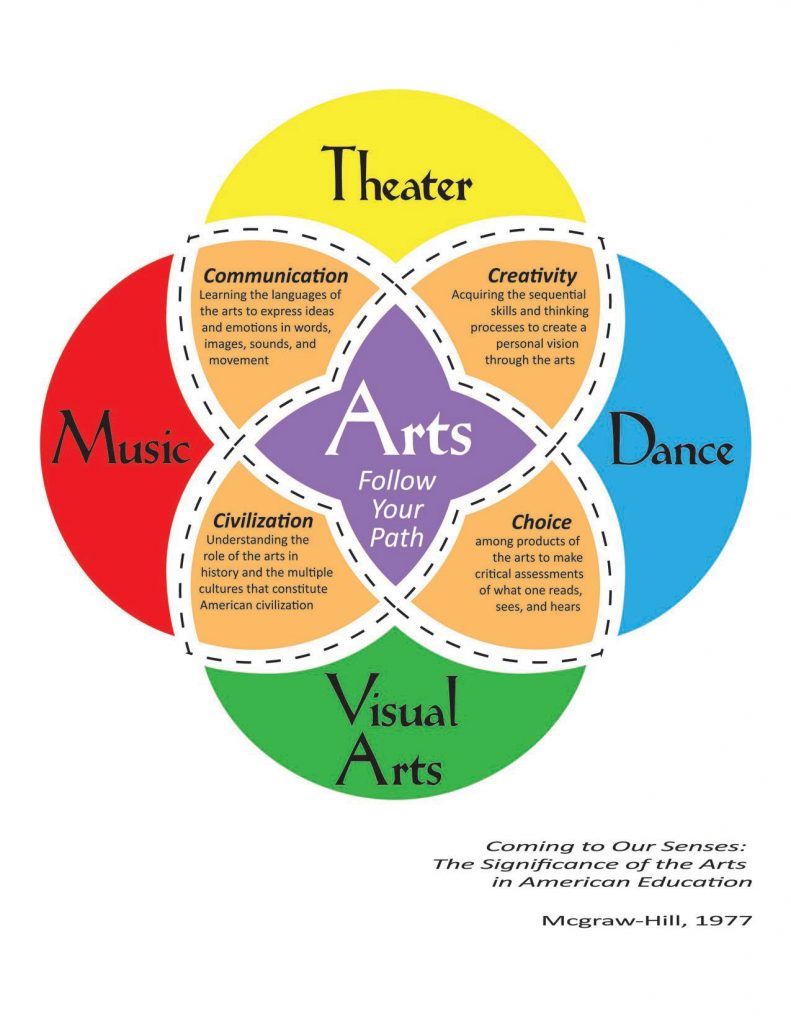
Here are the key reasons for the importance of drama and the arts in education
- Teaches Self-Expression: Children learn about the importance of self-expression through the use of drama and arts in education, and through creative expression, their perception and worldview are broad,r which equips them with the skills to face adversities late in life.
- Life Skill Training: It imparts to students various life skills like teamwork, compassion, cooperation, and collaboration.
- Learn Constructive Criticism: Children also learn about taking constructive criticism and feedback in a way that helps them become better individuals.
- Contributes to Personality Development: The use of drama and art in education also accelerates personality development in students.
- Find their Voice: Through theatre and performing arts, students are able to find their unique ‘voice’ that helps them explore their inner talents, skills, and competencies.
- Problem-solving Skills: Through creative art forms, students learn about the value of problem-solving in every situation as they learn to be in a group, work around various things to thrive as a team and become superb at problem-solving!
- Learn to Lead: Using drama and art in education also teaches students to don the hat of a leader and imbibe central skills pertaining to leadership and teamwork.
Benefits of Drama and Arts in Education
In a world where the need for leaders, influencers and thinkers is imminent and growing, the education sector has added responsibilities to it. By implementing effective teaching, the quality of education is certainly to increase.

The core benefits of using drama and art in education as tools of education can be summed up in the following points:
- Students become better learners.
- They learn to empathize with other social elements.
- With the spirit of co-working, they develop an attitude of co-learning.
- Using their leadership skills they help at resolving conflicts at the micro-level and at a larger level as well in society.
- They become torchbearers of critical thinking and encourage the flow of discourse,
- Having understood the core of education, they devise methods for creative learning.
- The students can yield better results and act as catalysts for change in society.
- The students comprehend the difference between Education and Experience.
Also Read: Story Writing Format with Examples, Steps & Key Elements
How to Create a Drama and Art in Education BEd Practical File?
The video link below shows how to create drama and art in the Education BEd Practical File. Please have a look!
Importance of Arts in Education
What is the role of the arts in education? Arts in education can make learning fun and engaging while also inculcating many important skills in learners like critical thinking, improve, analytical thinking, life skills, teamwork, and more.
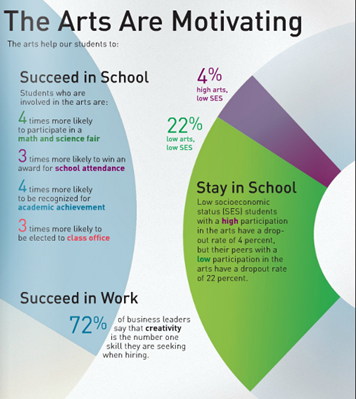
Here is all you need to know about the role of art in education:
- Creativity: The usage of the arts in education makes children more creative and imaginative through various co-curricular activities.
- Motor Skills: Arts also imbibe students with useful motor skills especially in younger children as they learn to hold a colouring brush or draw different shapes, etc.
- Improves Academic Performance: As students are able to learn better with engaging artistic learning methods, the role of art in education is also to improve academic performance.
- Confidence: Different forms of arts help learners discover their talents and foster their creativity, thus making them more confident about their unique abilities.
- Perseverance: Arts require immense practice and endeavours to find one’s creative spirit, thus it also fosters perseverance in children.
- Focus: By boosting the creativity and imagination of children, art in education also improves focus, thereby making children more active in the classroom.
- Accountability: As children learn to be a part of a group through performing arts and other forms of art, they learn about accountability and how important it is, especially in a team.
- Collaboration: Similar to accountability, the arts help children learn the essence of collaboration in every art form, whether it is performing arts, working individually, or supporting the talents of other children.
- Decision Making: As children get busy in different artistic activities, they need to think on their feet whether it is playing a character in a play, drawing or sketching something or even creating a story, their decision-making and critical thinking skills are thus boosted.
Objectives of Drama and Art in Education
The objectives of drama and art in education focus on fostering creativity, critical thinking, and emotional development in students. These disciplines aim to enhance communication skills, promote self-expression, and encourage collaboration. Here are the key objectives.
- Students will learn about theatre and performing arts and transform simple stories into wonderful scripts.
- Students will be equipped with key critical thinking skills, performance skills, speaking and writing skills, public speaking skills and teamwork.
- Through drama and art in education, students can also be imparted the knowledge of pronunciation, intonation, as well as storytelling.
- Language learning skills are also strengthened through the use of drama and art in education.
- Students will also know about body language, impromptu performance, and presenting a story in front of an audience.
Theatre in Education
Storytelling is a powerful tool to facilitate learning in a meaningful manner. Since theatre itself is a potential driver of bringing impactful change in society, it can play a crucial role in utilising drama and art in education. Using theatrical musicals as well as dramas, learning can be carried out in an interesting manner. It caters to different learning methods as it adheres to VARK, which is a famed teaching model by Neil Fleming and emphasises the use of
- Visual
- Aural
- Read/Write
- Kinesthetic Sensory in Education.
Through creative stories and theatre dramas, a multi-sensory experience can be curated thus making learning a fun and engaging process.
Also Read: Top 10 Best Education Systems in the World for Students
How to Use Drama in Education?
The element of drama used in the process of education may vary for institutions depending on the approach they use and the goal they aspire to achieve. The common form of Drama implemented in the process of imparting education is ‘Role Play’.
A role play involves a group of students in a controlled atmosphere where they replicate a scene from history or a play, or a movie. The students are given the roles of the characters in the event. They not only learn to understand the mentality of the characters but also learn behavioural psychology, based on which they make critical judgements. To help the students immerse themselves in the scene and understand its essence, the use of costumes and sets is made.
The activity not only helps them become better thinkers and storytellers in the future but it also develops in them the confidence to engage with others in healthy interactions. For future filmmakers and dramatists, this activity turns out to be the cornerstone of their careers.
Other than role play for utilising drama and art in education, you can also explore the following types of co-curricular activities to engage children and carve out a better learning experience:
- Mime Exercises [Using drama to act out different concepts]
- Create literary sketches
- Charades
- Improv
- Writing a story from their favourite drama characters
- One-word story
- Break the fourth wall and help the characters [to facilitate critical thinking]
Also Read: Career Options After 12th Arts in 2025
Implementing Art in Learning
Making use of art forms is the best way to attract young students to learn. It is hard for a teacher to tell a student in kindergarten about the benefits of education. I bet even Francis Bacon reciting his iconic essay ‘Of Studies’ to a group of kindergarten students would fail terribly to convince students at a tender age to read. To start the learning process for a student at a young age, art is the best tool. The graphical representation of texts, assigning a picture to an object, and telling a story through motion graphics or toys has proven to be effective in exposing young students to educational journeys. Some of the prominent activities you can practice with children to help them learn better are:
- Painting & Drawing
- Using visuals to learn something
- Transforming complicated concepts into rhymes and songs
- Using puppets to explain a concept
- Creating stories from a single word
FAQs
Ans: Drama and art in education play a crucial role in fostering creativity, self-expression, and critical thinking. They help students develop communication skills, enhance emotional intelligence, and engage with diverse perspectives, leading to a more holistic learning experience.
Ans: By engaging in drama and art activities, students can better understand and retain academic concepts through hands-on, interactive experiences. These subjects also help students build teamwork skills and develop empathy, making them valuable for both personal and academic growth.
Ans: Incorporating drama and art into the B.Ed curriculum helps future educators understand the value of creative teaching methods. It also equips them with strategies to integrate artistic expressions into their teaching, benefiting diverse learning styles and promoting student engagement.
Ans: Drama in education is important as it encourages students to think critically, improves their communication skills, and helps them understand complex concepts by embodying different perspectives. It also aids in the development of empathy and emotional intelligence.
Ans: Drama and art activities allow students to express themselves freely, helping them to explore their emotions, build self-esteem, and develop interpersonal skills. These activities foster resilience, adaptability, and creativity, which are essential for personal growth and success.
Additional Reads
We hope that the blog has helped you understand the importance of Drama and Art in education. Several institutions imbibe art and drama in their courses to make them more coherent and rich. Let our experts at Leverage Edu help you choose a course that is best suited for you.


 60,000+ students trusted us with their dreams. Take the first step today!
10 comments
I really appreciate this important tips.
I will be in touch with this field because it will indeed improve our learning process.
Thank you. Keep going.
Thank you, Ashiru!
Thank you for sharing this
Thank you, Terry!
Good one and very educative
Thanks for the comment.
Keep reading more on: Career in Art and Drama
Career in Visual Arts
National School of Drama (NSD)
Best Fine Arts Colleges in India
Good morning.
Here are some of the best and most inspiring information. Conducting a Inclusive Education with techiques from Art and Theatre Education helps too.
Thank you very much,
Thank you! Please subscribe to our newsletter and watch our space for new blogs!
well done..
This is very helpful,thank you