

 One app for all your study abroad needs

















The most powerful organisations in the world play a crucial role in fostering global cooperation, peace, and sustainable development. There are more than 300 intergovernmental organisations worldwide. Many of them have been instrumental in facilitating collaboration among states on key global issues such as climate change, human rights, international trade, terrorism, and economic growth. In this article, we will provide a comprehensive list of international organisations, highlighting their significance, roles, and contributions to addressing pressing challenges.
This Blog Includes:
- List of World Organisations and Their Headquarters
- 15 Most Powerful Organisations in the World
- United Nations (UN)
- United Nations Children’s Fund (UNICEF)
- World Health Organisation (WHO)
- World Economic Forum
- International Monetary Fund (IMF)
- World Bank
- World Trade Organisation
- United Nations Educational, Scientific & Cultural Organisation (UNESCO)
- South Asian Association for Regional Cooperation (SAARC)
- Association of South East Nations (ASEAN)
- Organisation for Economic Cooperation & Development (OECD)
- Asian Infrastructure Investment Bank (AIIB)
- New Development Bank (BRICS Development Bank)
- Asian Development Bank (ADB)
- World Wide Fund for Nature (WWF)
- What is the World’s Highest Organisation?
- What is the Most Powerful NGO in the World?
- FAQs
List of World Organisations and Their Headquarters
International organisations are essential in addressing global challenges, fostering cooperation, and promoting development across countries. They work across various sectors such as health, education, finance, trade, and human rights, aiming to create a more interconnected and peaceful world. Below we have given a list of such powerful organisations in the world, their functions and their headquarters.
| International Organisation | Function | Headquarters |
| United Nations | World Health Organisation | New York, USA |
| International Monetary Fund (IMF) | Promotes international monetary cooperation and financial stability | Washington, D.C., USA |
| World Trade Organisation (WTO) | Coordinates international health efforts, sets standards for public health | Geneva, Switzerland |
| UNESCO | Promotes peace through education, science, culture, and communication | Paris, France |
| Association of Southeast Asian Nations (ASEAN) | Enhances regional cooperation and facilitates economic, political, and cultural integration | Jakarta, Indonesia |
| Organisation for Economic Co-operation and Development (OECD) | Promotes policies to improve economic and social well-being | Paris, France |
| South Asian Association for Regional Cooperation (SAARC) | Promotes regional cooperation and development in South Asia | Kathmandu, Nepal |
| World Bank | Provides financial assistance and advice for development projects | Washington, D.C., USA |
| United Nations Industrial Development Organisation (UNIDO) | Oversees global trade rules and resolves trade disputes | Geneva, Switzerland |
| International Atomic Energy Agency (IAEA) | Promotes safe use of nuclear energy and ensures non-proliferation | Vienna, Austria |
| Standardises and coordinates global telecommunication policies | Promotes industrial development for poverty reduction | Vienna, Austria |
| Asian Development Bank (ADB) | Supports development and poverty reduction in Asia | Manila, Philippines |
| OPEC | Coordinates and unifies petroleum policies among oil-producing nations | Vienna, Austria |
| African Development Bank (AfDB) | Provides financial support and policy advice for African development | Abidjan, Côte d’Ivoire |
| UNICEF | Provides humanitarian aid and focuses on children’s rights | New York, USA |
| International Telecommunication Union (ITU) | International Labour Organisation (ILO) | Geneva, Switzerland |
| Food and Agriculture Organisation (FAO) | International Maritime Organisation (IMO) | Geneva, Switzerland |
| Promotes labour rights and social justice globally | Works on food security, nutrition, and agriculture | Rome, Italy |
| World Wide Fund for Nature (WWF) | Works to conserve nature and reduce the most pressing threats to biodiversity | Gland, Switzerland |
| United Nations Population Fund (UNFPA) | Focuses on reproductive health and population development | New York, USA |
| Universal Postal Union (UPU) | Coordinates international postal services | Bern, Switzerland |
| International Civil Aviation Organisation (ICAO) | Regulates shipping and maritime safety | London, UK |
| International Committee of the Red Cross (ICRC) | Provides humanitarian aid and protection to victims of armed conflict | Geneva, Switzerland |
| Organisation for the Prohibition of Chemical Weapons (OPCW) | Enforces the ban on chemical weapons and promotes disarmament | The Hague, Netherlands |
| International Organisation for Standardisation (ISO) | Develops international standards for various industries | Geneva, Switzerland |
| Commonwealth of Nations | Promotes international cooperation and economic development | London, UK |
| United Nations Development Programme (UNDP) | Focuses on global development and poverty reduction | New York, USA |
| International Fund for Agricultural Development (IFAD) | Focuses on rural poverty and agricultural development | Rome, Italy |
| World Intellectual Property Organisation (WIPO) | Sets international standards for aviation safety | Montreal, Canada |
| World Meteorological Organisation (WMO) | Protects intellectual property globally | Geneva, Switzerland |
| Promotes sustainable urbanisation and human settlements | Provides global leadership on weather, climate, and water issues | Geneva, Switzerland |
| UN Women | Works on gender equality and women’s empowerment | New York, USA |
| United Nations Human Settlements Programme (UN-Habitat) | International Telecommunications Satellite Organisation (ITSO) | Nairobi, Kenya |
| UN Tourism (UNWTO) | Promotes sustainable tourism | Madrid, Spain |
| Organisation of Islamic Cooperation (OIC) | Promotes political and economic cooperation among Muslim countries | Jeddah, Saudi Arabia |
| Asia-Pacific Economic Cooperation (APEC) | Promotes free trade and economic cooperation in the Asia-Pacific region | Singapore |
| International Chamber of Commerce (ICC) | Promotes international business cooperation | Paris, France |
| New Development Bank (NDB) | Provides financial support for development projects | Shanghai, China |
| United Nations High Commissioner for Refugees (UNHCR) | Provides protection and aid for refugees and displaced people | Geneva, Switzerland |
| World Economic Forum (WEF) | Engages global leaders to address economic and social issues | Davos, Switzerland |
| International Union for Conservation of Nature (IUCN) | Works to conserve the environment and protect biodiversity | Gland, Switzerland |
| Indian Ocean Rim Association (IORA) | Enhances economic cooperation in the Indian Ocean region | Ebene, Mauritius |
| Amnesty International | Works to protect human rights worldwide | London, UK |
| United Nations Environment Programme (UNEP) | Promotes environmental sustainability globally | Nairobi, Kenya |
| International Mobile Satellite Organisation (IMSO) | Oversees the operation of international satellite telecommunications | Washington, D.C., USA |
| International Organisation for Migration (IOM) | Regulates mobile satellite services | London, UK |
| Joint United Nations Programme on HIV/AIDS (UNAIDS) | Coordinates the global response to HIV/AIDS | Geneva, Switzerland |
| United Nations Office on Drugs and Crime (UNODC) | Focuses on drug control, crime prevention, and terrorism | Vienna, Austria |
| World Food Programme (WFP) | Provides food assistance in emergencies and promotes food security | Rome, Italy |
| International Organisation for Migration (IOM) | Supports migrants and migration-related issues | Geneva, Switzerland |
| United Nations University (UNU) | Promotes global academic research and education on sustainable development | Tokyo, Japan |
Also Read: Top Universities for Online Political Science Bachelor’s Degree
15 Most Powerful Organisations in the World
Here is a list of the top 15 international organisations. These are the most powerful intergovernmental organisations in the world. They are responsible for specific functions. The most powerful organisation is the United Nations. Below, we have explained about each of these international organisations and what they stand for.
United Nations (UN)
The UN is the most powerful intergovernmental organisation in the world, responsible for the prevention of war and conflict in the world. The United Nations (UN) is an intergovernmental organisation whose mission is to ensure international peace and security, promote cordial relations between nations, promote international cooperation, and serve as a central focus for coordinating national efforts.
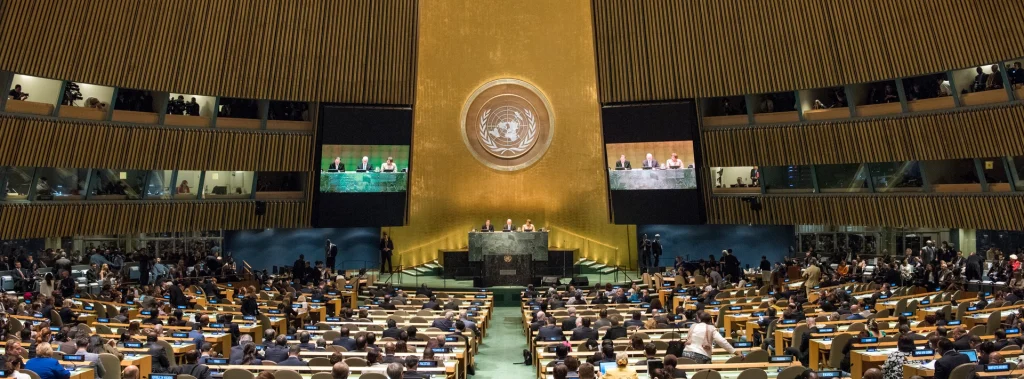
It is the world’s largest, most well-known, most widely represented, and most powerful intergovernmental organisation. The United Nations is headquartered in New York City, on international territory, with main offices in Geneva, Nairobi, Vienna, and The Hague.
| Headquarter | New York, US |
| Established on | 24th October 1945 |
| Secretary-General | Antonio Guterres |
United Nations Children’s Fund (UNICEF)
UNICEF, or the United Nations Children’s Fund, is a United Nations organisation that provides humanitarian and developmental aid to children around the world.
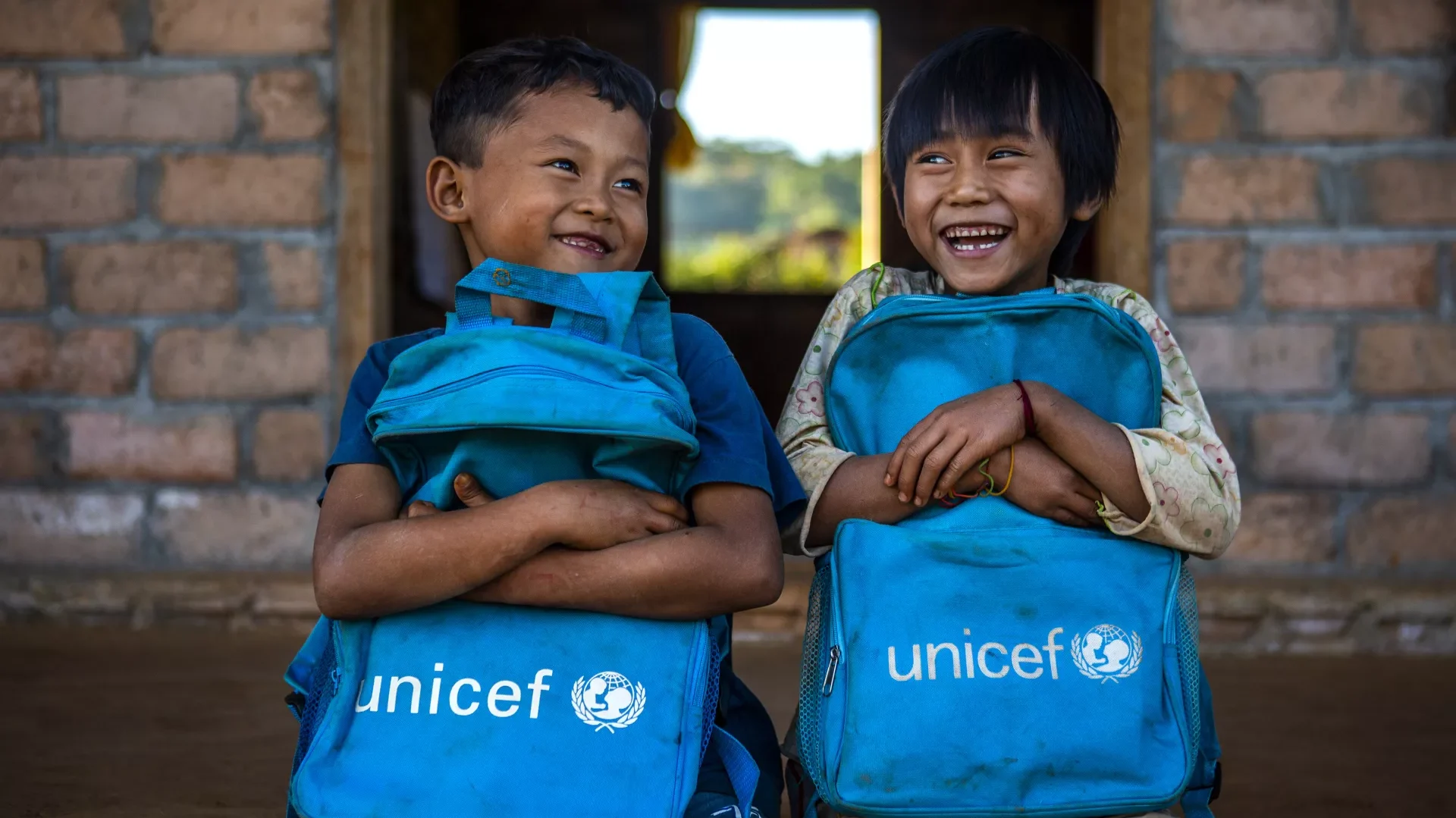
With a presence in 192 countries and territories, the agency is one of the most well-known social welfare organisations in the world. Immunisation and disease prevention are among UNICEF’s initiatives, as are HIV treatment for children and women, improving childhood and maternal nutrition, increasing sanitation, promoting education, and providing emergency relief in disasters.
| Headquarter | New York, US |
| Established on | 11th December 1946 |
| Current Head | Henrietta H. Fore |
World Health Organisation (WHO)
The World Health Organisation (WHO) is a United Nations specialised organisation in charge of international public health. “The attainment by all peoples of the highest attainable degree of health,” declares the WHO Constitution, which sets the agency’s governance structure and ideals. It has six semi-autonomous regional offices and 150 field offices worldwide, with its headquarters in Geneva, Switzerland.
| Headquarter | Geneva, Switzerland |
| Established on | 7 April 1948 |
| Current Head | Director-General – Tedros Adhanom |
World Economic Forum
The World Economic Forum (WEF), based in Cologny, Canton of Geneva, Switzerland, is an international non-governmental organisation (NGO) created on January 24, 1971.
WEF’s mission statement says, “Committed to improving the status of the world by engaging commercial, governmental, intellectual, and other leaders of society to influence global, regional, and industry agendas.”
| Headquarter | Cologny, Switzerland |
| Established on | January 1971 |
| Current Head | Klaus Schwab |
International Monetary Fund (IMF)
The International Monetary Fund (IMF) is one of the most prominent international organisations and thus on our list. It comes under the list of powerful organisations in the world.
It is a 190-country international financial institution headquartered in Washington, D.C. that works to promote global monetary cooperation, secure financial stability, facilitate international trade, promote high employment and sustainable economic growth, and reduce poverty around the world while relying on the World Bank for resources periodically.
| Headquarter | Washington, D.C., United States |
| Established on | 27 December 1945 |
| Current Head | Chief Economist – Gita Gopinath |
World Bank
The World Bank is an international financial agency that lends and gives money to governments in low- and middle-income nations to fund capital projects.
The International Bank for Reconstruction and Development (IBRD) and the International Development Association (IDA) are the two institutions that make up the organisation (IDA). The World Bank Group consists of the World Bank and its subsidiaries.
| Headquarter | Washington, D.C., United States |
| Established in | July 1944 |
| Current Head | President of WV: David Malpass |
World Trade Organisation
The World Trade Organisation (WTO) is a multilateral organisation that regulates and supports international trade. It began operations on January 1, 1995, as a result of the 1994 Marrakesh Agreement, which replaced the 1948-established General Agreement on Tariffs and Trade (GATT).
With 164 member states representing over 96 per cent of global trade and GDP, the World Trade Organisation (WTO) is the world’s largest international economic organisation.
| Headquarter | Geneva, Switzerland |
| Established in | 1 January 1995 |
| Current Head | Roberto Azevêdo |
United Nations Educational, Scientific & Cultural Organisation (UNESCO)
The United Nations Educational, Scientific, and Cultural Organisation (UNESCO, French: Organisation des Nations Unies pour l’éducation, la Science, et la Culture) is a United Nations (UN) specialised agency charged with the duty of promoting world peace and security through international cooperation in education, science, and culture.
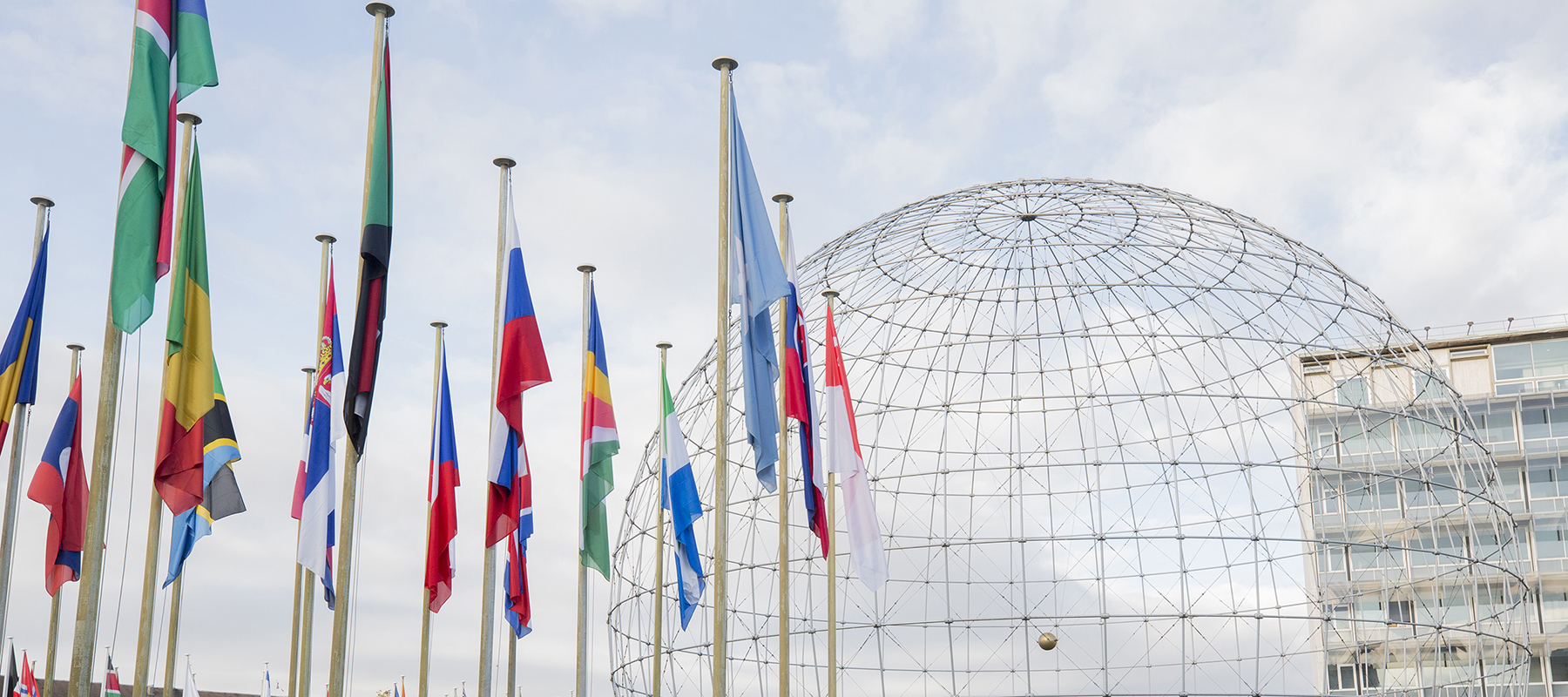
It consists of 193 member states, 11 associate members, and nongovernmental, intergovernmental, and corporate sector partners.UNESCO is headquartered in Paris, France, and has 53 regional field offices and 199 national commissions to help it carry out its global mandate.
| Headquarter | Paris, France |
| Established in | 16 November 1945 |
| Current Head | Audrey Azoulay |
South Asian Association for Regional Cooperation (SAARC)
South Asia’s major intergovernmental organisation and the geopolitical union are the South Asian Association for Regional Cooperation (SAARC). Afghanistan, Bangladesh, Bhutan, India, the Maldives, Nepal, Pakistan, and Sri Lanka are its members.
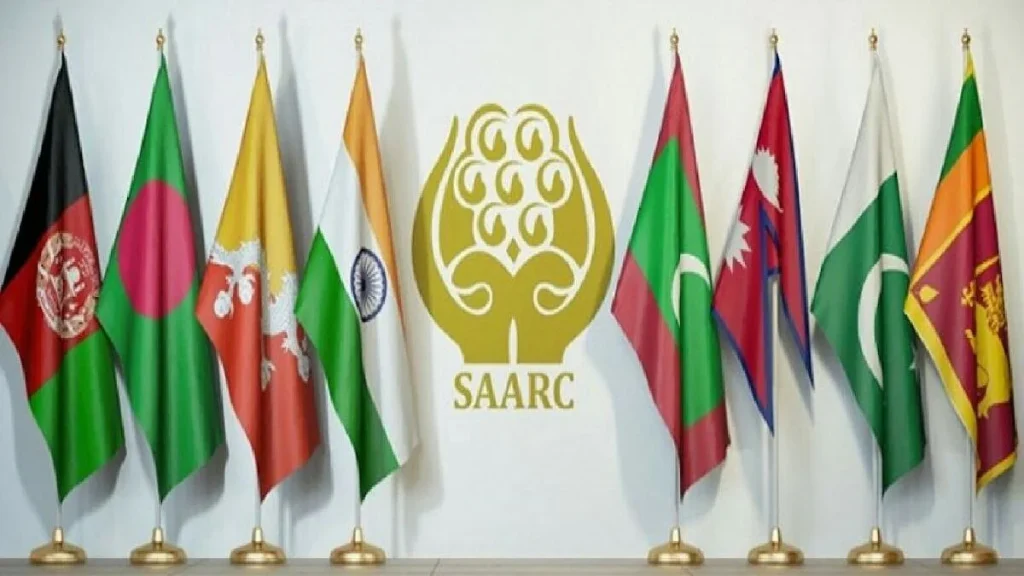
As of 2019, the SAARC makes for 3% of the world’s land area, 21% of the world’s population, and 4.21 per cent (USD 3.67 trillion) of the global economy. It is one of the most powerful organisations in the world.
| Headquarter | Kathmandu, Nepal |
| Established in | 8 December 1985, (in Dhaka, Bangladesh) |
| Current Head | Secretary-General – Esala Weerakoon |
Association of South East Nations (ASEAN)
ASEAN, or the Association of Southeast Asian Nations, is an economic union in Southeast Asia made up of ten member states. It promotes intergovernmental cooperation and facilitates economic, political, security, military, educational, and sociocultural integration among its members and other Asian countries. The primary goal of ASEAN was to speed economic growth and, as a result, social and cultural development.
| Headquarter | Jakarta, Indonesia |
| Established in | 8 August 1967 |
| Current Head | Lim Jock Hoi Mon |
Organisation for Economic Cooperation & Development (OECD)
The Organisation for Economic Co-operation and Development (OECD; French: Organisation de Coopération et de Développement Économiques, OCDE) is a 38-member intergovernmental economic organisation formed in 1961 to promote economic advancement and global trade.
As one of the most prominent international organisations on our list, the OECD is responsible for trade and economic activities. It is a forum of countries that identify themselves as committed to democracy and the market economy. It serves as a forum for members to share policy experiences, seek solutions to shared challenges, identify best practices, and coordinate their domestic and international policies.
| Headquarter | Paris, France |
| Established in | 30 September 1961 |
| Current Head | Angel Gurría |
Asian Infrastructure Investment Bank (AIIB)
The Asian Infrastructure Investment Bank (AIIB) is an international development bank dedicated to improving Asia’s economic and social conditions. Currently, the bank has 103 members and 21 prospective members from all around the world. It is one of the most powerful international organisations in the world.
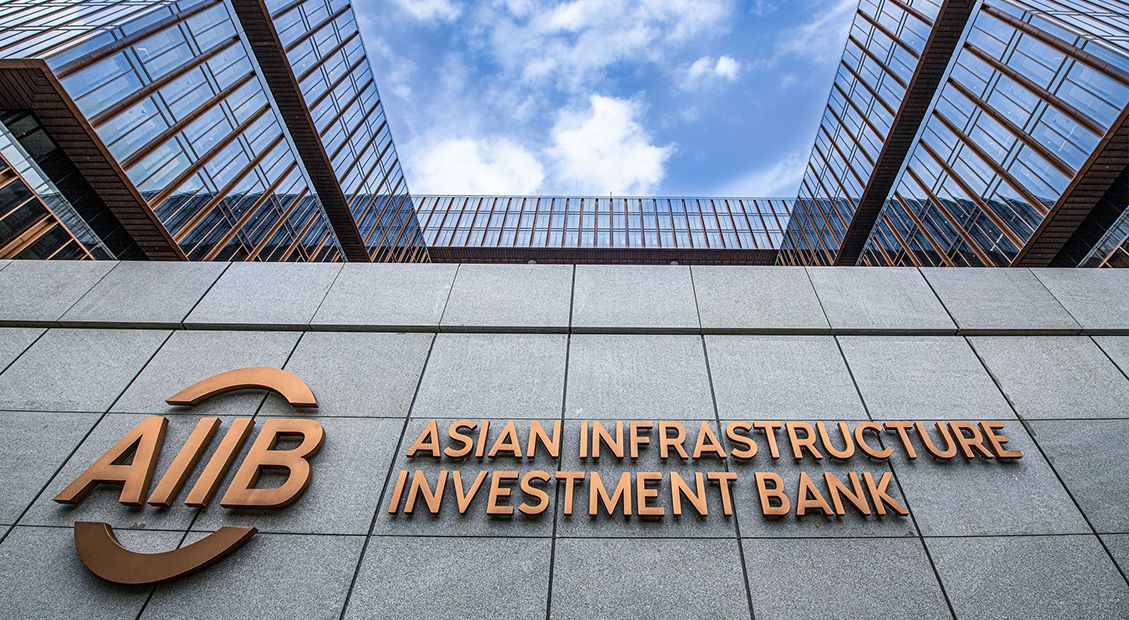
The bank began operations after the agreement went into effect on December 25, 2015, with ratifications from ten member states accounting for 50 per cent of the Authorised Capital Stock initial subscriptions.
| Headquarter | Beijing, China |
| Established in | January 2016 (began operations) |
| Current Head | Jin Liqun |
New Development Bank (BRICS Development Bank)
The New Development Bank (NDB), originally known as the BRICS Development Bank, is a global development bank founded by the BRICS countries (Brazil, Russia, India, China, and South Africa).
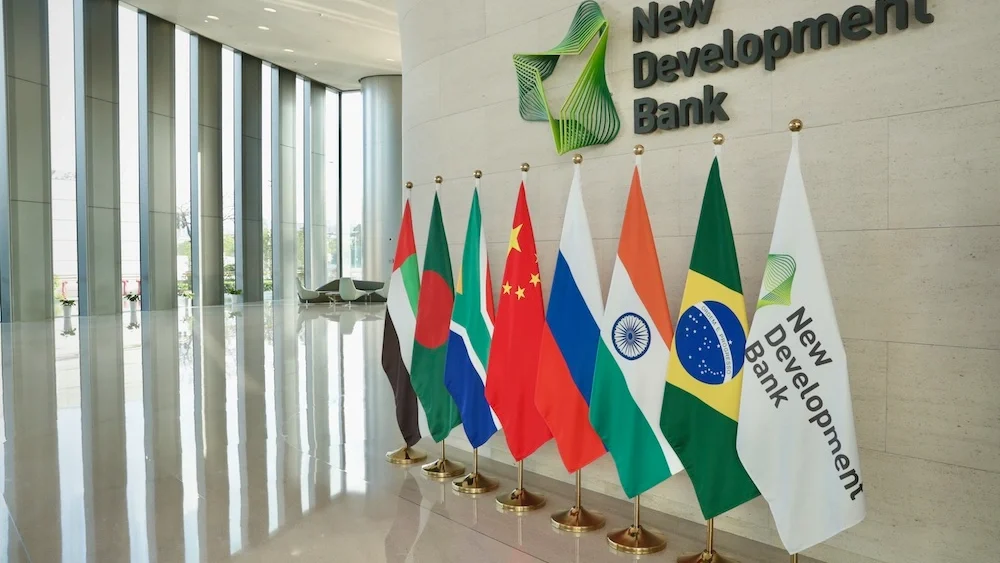
“The Bank shall support public or private initiatives through loans, guarantees, equity participation, and other financial instruments,” according to the NDB Agreement.
| Headquarter | Shanghai, China |
| Established in | 15 July 2014 |
| Current Head | K. V. Kamath |
Also Read: United Nations Day: History & Significance
Asian Development Bank (ADB)
The Asian Development Bank (ADB) is a regional development bank headquartered in the Ortigas Centre in Mandaluyong, Metro Manila, Philippines. It was founded on December 19, 1966. In addition, the corporation operates 31 field offices around the world to promote Asia’s social and economic development.
| Headquarter | Manila, Philippines |
| Established in | 19 December 1966 |
| Current Head | Masatsugu Asakawa |
World Wide Fund for Nature (WWF)
The World Wide Fund for Nature (WWF) is an international non-governmental organisation that seeks to preserve wilderness and reduce the human effects on the environment. It was created in 1961. The World Wildlife Fund was its last name, and it is still used in Canada and the United States.
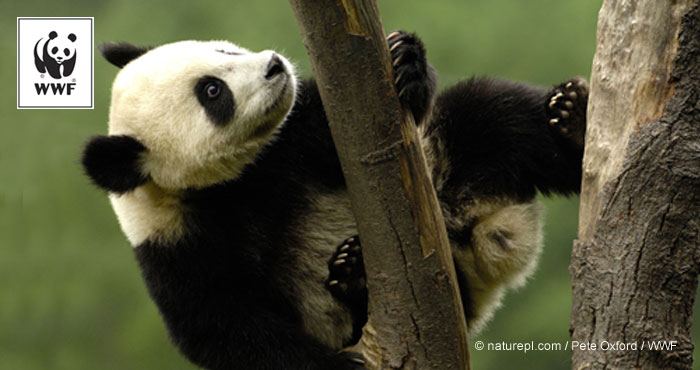
With over five million supporters globally, WWF is the world’s largest conservation organisation, working in over 100 countries and supporting around 3,000 conservation and environmental projects.
| Headquarter | Gland, Switzerland |
| Established in | 29 April 1961 |
| Current Head | Carter Roberts |
What is the World’s Highest Organisation?
The World’s highest organisation is the United Nations, or the UN. This international organisation has the broadest scope of impact in the world. The UN has its influence in peacekeeping diplomacy, humanitarian aid, global development, and even human rights. It is considered the world’s highest organisation due to the following reasons.
- Almost every country that is recognised is part of the UN. At present, it has 193 member countries.
- The UN also has the authority to impose sanctions and authorise peacekeeping missions. Moreover, it can intervene diplomatically in conflicts between countries.
- UN agencies like UNICEF, UNHCR, UNDP, etc, focus on specific functions of the UN. For example, UNDP focuses on children, refugees and global development.
- The UN can establish international laws and treaties through its bodies, like the International Court of Justice.
What is the Most Powerful NGO in the World?
The most powerful NGO in the world is the Bill & Melinda Gates Foundation. The foundation uses its immense financial resources for global reach and thus has influence on public health and development policy. The Bill & Melinda Gates Foundation is the most powerful NGO in the world due to the following reasons:
- It has strong financial funding that is used for initiatives towards global health, poverty alleviation, education, and vaccines.
- The organisation plays a huge role in combating diseases such as HIV/AIDS, malaria, polio, and even works with the WHO.
- It collaborates with international organisations and even private organisations for their large-scale projects. For example, the distribution of vaccines.
- This is one of the most powerful organisations in the world and influences policies. The research and grant-making power of the organisation gives it an influence over global health priorities and funding initiatives.
International organisations are crucial for fostering global cooperation, addressing shared challenges such as climate change, poverty, and health crises, and maintaining peace and security. They help countries work together, manage conflicts, and ensure global stability through diplomacy, aid, and collaboration.
FAQs
The Most Powerful organisation in the world is the United Nations (UN).
The exact number of international organisations is challenging to determine as it depends on their classification. Broadly speaking, there are over 300 recognised organisations, including prominent ones like the United Nations (UN), the World Trade Organisation (WTO) and more.
The United Nations (UN) system comprises various specialised agencies, each focusing on specific global issues. Here are the 15 specialised agencies of the UN:
1. United Nations Educational, Scientific and Cultural Organisation (UNESCO)
2. International Civil Aviation Organisation (ICAO)
3. International Fund for Agricultural Development (IFAD)
4. International Labour Organisation (ILO)
5. World Health Organisation (WHO)
6. World Bank Group (WBG)
7. World Intellectual Property Organisation (WIPO)
8. World Meteorological Organisation (WMO)
9. World Tourism Organisation (UNWTO)
10. Food and Agriculture Organisation (FAO)
11. United Nations Children’s Fund (UNICEF)
12. United Nations Development Programme (UNDP)
13. United Nations Population Fund (UNFPA)
14. International Telecommunication Union (ITU)
15. United Nations High Commissioner for Refugees (UNHCR)
The most powerful international organisations influence global policies, economics, and security. Some of the top organisations include:
1. United Nations (UN)
2. World Bank (WB)
3. World Health Organisation (WHO)
4. International Monetary Fund (IMF)
5. European Union (EU)
6. World Trade Organisation (WTO)
7. United Nations Security Council (UNSC)
8. North Atlantic Treaty Organisation (NATO)
9. World Intellectual Property Organisation (WIPO)
10. Organisation of the Petroleum Exporting Countries (OPEC)
Some of the most influential international organisations include:
1. United Nations (UN): Addresses global peace, security, and development.
2. World Bank (WB): Provides financial and technical assistance to developing countries.
3. World Trade Organisation (WTO): Regulates global trade.
4. International Monetary Fund (IMF): Supports global monetary cooperation and financial stability.
These organisations shape global policies, foster international relations, and drive economic and social development.
Related Articles:
This was all about the list of the most powerful international organisations in the world and their headquarters. Hope this was helpful.
If you want to get into your dream course in a high-ranked global university, you may enlist the assistance of Leverage Edu specialists to assist you with the application process so that you can realise your goals. Call us immediately at 1800 57 2000 for a free 30-minute counselling session.


 60,000+ students trusted us with their dreams. Take the first step today!
9 comments
I use it as a source project. Thank you.
Thanks!
Thanks. Please add g20 organization.
Thanks for the suggestion.
Nice
Thanks for reading.
Also, check: International Day of World’s Indigenous Peoples
I would like to apperciate you for the best fund around the keep it and God bless you all thanks
Hi Buay,
Thank you so much for the lovely comment. We are thrilled to know that our blogs are proving out to be helpful for readers. For more updates and interesting reads, stay tuned with Leverage Edu.
So educative. Thanks