

 One app for all your study abroad needs















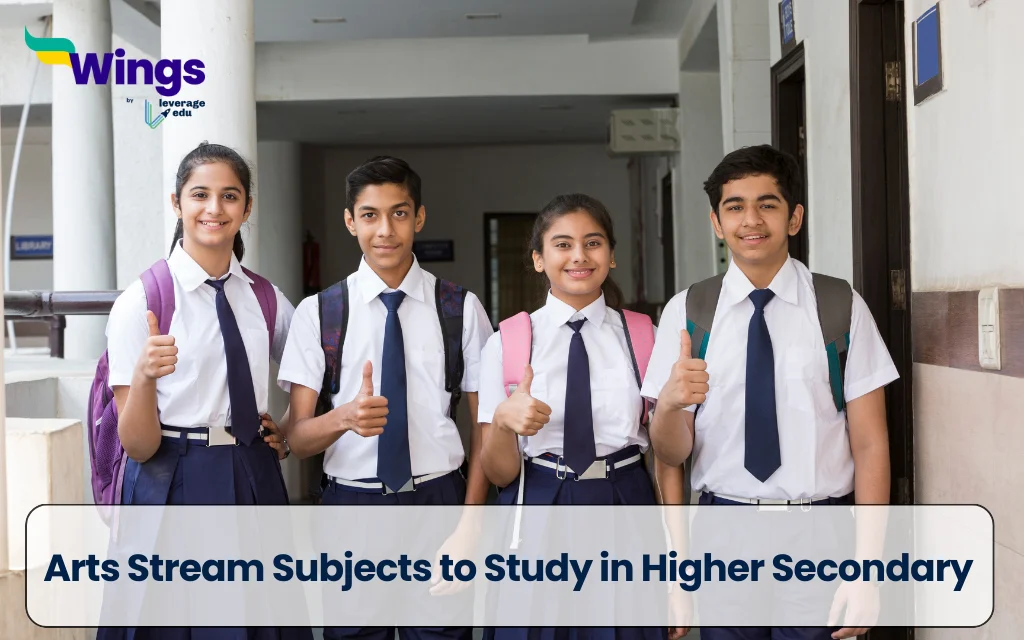
Selecting the right Arts stream subject to study in higher secondary can shape a student’s academic journey and long-term career direction. Many students remain unsure about subject choices, combinations, and future opportunities available after choosing humanities. A clear understanding of available subjects and their outcomes helps students make confident decisions after Class 10.
The arts stream offers access to diverse academic pathways and professional careers across law, civil services, psychology, media, design, teaching, public administration, and management. Each subject in higher secondary builds specific analytical, communication, and research skills that support university admissions and competitive exam preparation. In this blog, students can find a complete guide to arts stream subjects in Class 11 and 12, subject combinations based on career goals, college options, financial considerations, and practical planning strategies to make informed choices for higher secondary education.
This Blog Includes:
- Why Choose Arts Stream After Class 10?
- Arts Stream Subjects in 11th Class: Building Foundation Year Of Academics
- CBSE Humanities Stream: Subject Rules and Assessment Structure
- Arts Subjects in Class 12: Advanced Learning and Board Exam Preparation
- How Subjects Progress from Class 11 to Class 12
- Arts Stream Subject Combinations That Actually Lead to Careers
- How Different Education Boards Approach Arts Stream
- College Courses and Career Paths After Class 12 Arts
- Download Arts Stream Subject PDFs by Topic
- Where to Find Official Arts Stream Subject PDFs
- Subject-Wise Breakdown: What Each Arts Stream PDF Contains
- FAQs
Why Choose Arts Stream After Class 10?
Choosing the arts stream after Class 10 helps students build a clear academic path for higher secondary and college. It supports career planning for fields that require strong analytical thinking, communication skills, and social awareness. Students who select suitable subjects early can prepare for entrance exams, university admissions, and professional courses with better focus.
Here’s what the data shows:
- Arts students qualify for central university courses through CUET across 90+ undergraduate programs
- CLAT 2024 saw 65,000 applicants—most from arts backgrounds—competing for 3,000 NLU seats
- UPSC final lists consistently show arts graduates forming the largest chunk of selected candidates
- Design and creative industries grew by 22% in India last year, hiring directly from arts streams.
Students may choose the arts stream after Class 10 for the following practical reasons:
- Strong interest in subjects such as history, political science, psychology, sociology, or literature
- Preference for theory-based subjects that focus on concepts, writing, and analysis rather than calculations
- Opportunity to build critical thinking, research ability, and communication skills required in most professional fields
- Flexible subject combinations that keep multiple career options open after Class 12
- Early preparation for competitive exams such as CUET, CLAT, UPSC foundation, and media entrance tests
- Affordable education pathway with lower school and college fees compared to many technical streams
- Availability of interdisciplinary courses that combine humanities with management, media, or technology
- Better scope for developing real-world awareness of society, governance, economy, and human behaviour.
Arts Stream Subjects in 11th Class: Building Foundation Year Of Academics
Class 11 is the first step in higher secondary where students begin subject specialisation. The subjects chosen in this year shape Class 12 performance, college eligibility, and career preparation. A well-planned subject combination helps students build a strong academic base and prepare early for entrance exams such as CUET, CLAT, or design and media tests.
Schools usually require students to select five main subjects, including at least one language and three to four electives. The focus should remain on subjects that support long-term academic and career goals rather than short-term scoring trends
Core Compulsory Subjects for Arts Students
Every arts student must select language subjects as part of the main subject combination in Class 11. These subjects build communication skills, improve overall board performance, and support preparation for entrance exams and university coursework across all career fields.
| Core Compulsory Subjects for Arts Students | What Students Study | Skills Developed | Academic and Career Importance |
| English (Core/Elective) | Prose, Poetry, Drama, Comprehension, Academic and Functional Writing Formats | Advanced Reading, Structured Writing, Vocabulary, Presentation Skills | Essential for Entrance Exams, University Assignments, Law, Media, Management, and Civil Services |
| Second Language (Hindi/Sanskrit/Regional/Foreign) | Grammar, Literature, Writing, and Comprehension in Selected Language | Linguistic Proficiency, Cultural Understanding, Scoring Advantage in Exams | Useful for Teaching, Translation, Public Communication, Government Exams, and Academic Performance |
What Each Popular Arts Stream Elective Subject in Class 11 Teaches
Students select elective subjects based on career goals, academic interest, and university admission requirements. Here’s what each subject covers and the specific skills you gain:
| Subject | Important Topics Covered | Practical Skills Gained | Future Courses and Career Scope |
| History | Ancient, Medieval, and Modern History; Cultural and Political Developments | Research, Analytical Thinking, Structured Writing | Law, Civil Services, Teaching, Archaeology, Research |
| Political Science | Indian Constitution, Governance, Political Theory, International Relations | Critical Thinking, Awareness of Current Affairs and Policy | Law, Civil Services, Public Administration, Journalism |
| Geography | Physical Geography, Climate, Environment, Population, Map Work | Data Interpretation, Spatial Awareness, Mapping Skills | Urban Planning, Environmental Studies, Travel and Tourism |
| Economics | Microeconomics, Demand and Supply, Market Concepts, Basic Statistics | Logical Reasoning, Numerical Interpretation, Decision-Making | Management, Finance, BBA, Economics, Public Policy |
| Psychology | Human Behaviour, Mental Processes, Observation and Research Basics | Communication, Behavioural Analysis, Observation Skills | Counselling, HR, Healthcare, Behavioural Sciences |
| Sociology | Social Institutions, Culture, Inequality, Development Issues | Social Analysis, Research Ability, Critical Interpretation | Social Work, Policy Research, Education |
| Philosophy | Logic, Ethics, Reasoning, Philosophical Theories | Argument Building, Conceptual Clarity, Reasoning | Law, Academics, Research-Oriented Careers |
| Fine Arts/Music/Dance | Theory and Practical Training in Visual or Performing Arts | Creativity, Visual Expression, Artistic Skills | Design, Animation, Performing Arts, Creative Industries |
| Physical Education | Fitness, Sports Science, Health and Wellness | Discipline, Teamwork, Physical Fitness Awareness | Sports Management, Fitness Industry, Defence Services |
Also Read: Top 20+ Courses After BA for Career Growth

Also Read: Top 20+ Courses After BA for Career Growth
CBSE Humanities Stream: Subject Rules and Assessment Structure
After understanding the core and elective subjects available in Class 11, students should also review how CBSE structures the humanities stream. Clear knowledge of subject rules, assessment patterns, and available combinations helps students select subjects that support university admissions and entrance exam preparation. Students studying in CBSE schools across India follow a structured yet flexible framework aligned with the National Education Policy 2020.
CBSE allows students to build customised subject combinations rather than locking them into rigid streams. This flexibility helps students combine humanities with skill-based or analytical subjects such as mathematics, informatics practices, or fine arts.
CBSE Subject Selection Rules for Class 11
Students must select a minimum of five subjects. Many schools allow a sixth subject as an additional option for scoring advantage or academic flexibility.
| CBBSE Subject Requirements | Details Students Should Know | Practical Impact on Students |
| Minimum Subjects | At least 5 subjects required for CBSE registration | Ensures eligibility for Class 12 board exams |
| Language Requirement | English Core or English Elective usually mandatory; second language required in many schools | Builds communication skills and improves overall scoring |
| Elective Subjects | Choose 3–4 from humanities or skill-based options | Determines college course eligibility and career direction |
| Additional 6th Subject | Optional subject allowed by many schools | Can replace lowest score in final result in some cases |
| Flexible Combinations | Students can mix subjects such as Mathematics, Computer Science, or Fine Arts with humanities | Supports interdisciplinary careers and entrance exam preparation |
This flexible structure helps students align subject choices with career goals such as law, management, psychology, design, or civil services.
How CBSE Assesses Different Subjects
CBSE evaluates students through theory exams and internal assessments. Understanding marking patterns helps students plan preparation effectively. Further, internal assessments continue throughout the academic year. Final board exams take place in Class 12, while Class 11 evaluations remain school-based.
| Subject Type | Theory Marks | Practical/Internal Marks | Assessment Components |
| Theory-Based Subjects (History, Political Science, Economics, Sociology) | 80 | 20 | Projects, Unit Tests, Assignments |
| Geography | 70 | 30 | Map Work, Fieldwork, Viva |
| Psychology | 70 | 30 | Experiments, Practical File, Viva |
| Fine Arts | 30 | 70 | Portfolio, Artwork, Practical Evaluation |
| Physical Education | 70 | 30 | Fitness Tests, Practical Performance |
| Home Science | 70 | 30 | Practical Assignments and Projects |
Arts Subjects in Class 12: Advanced Learning and Board Exam Preparation
After building a strong foundation in Class 11, Class 12 becomes the most important academic year for arts students. This stage focuses on deeper subject understanding, structured answer writing, and real-world application of concepts. Class 12 board scores directly influence college admissions, CUET performance, and eligibility for courses such as law, psychology, journalism, design, and social sciences.
CBSE follows a structured curriculum that emphasises conceptual clarity, source-based learning, and project work. Most theory subjects carry 80 marks for written examination and 20 marks for internal assessment, while practical subjects include additional evaluation components. Students who consistently study NCERT textbooks and practise structured answers usually perform better in board exams and entrance tests.
Also Read: Popular Visual Arts Courses Abroad
How Subjects Progress from Class 11 to Class 12
Class 12 builds directly on the concepts introduced in Class 11 and moves students toward deeper analysis, application-based learning, and exam-focused preparation.
| Subjects | What Changes in Class 12 | Key Areas of Study | What This Prepares You For |
| History | Shifts from General World History to Detailed Themes in Indian History with Source-Based Analysis | Harappan Civilisation, Mughal Period, Colonial Rule, National Movement, Constitution Framing, Map Work | Source-Based Questions in CUET, Civil Services Mains, Law Entrance Reading Comprehension |
| Political Science | Moves from Constitutional Basics to Contemporary Global and Indian Politics | Global Politics, International Organisations, Indian Politics Since Independence, Current Affairs Integration | UPSC Current Affairs Section, CLAT Legal Reasoning, Journalism Analysis Work |
| Economics | Advances from Microeconomic Basics to Macroeconomics and Indian Economic Development | National Income, Banking, Government Budget, Reforms, Employment, Sustainable Development | BBA Entrance Tests, Economics Honours, Finance Internships |
| Geography | Builds from Physical Geography to Human and Indian Geography with Practical Application | Population, Migration, Resources, Industries, Planning, Sustainable Development, Map Work | Urban Planning Projects, Environmental Studies Fieldwork, Map-Based Questions in Exams |
| Psychology | Expands from Basic Behavioural Concepts to Applied Psychology and Mental Health | Personality, Disorders, Therapy, Social Behaviour, Practical Experiments | Counselling Observations, HR Case Studies, Healthcare Internships |
| Sociology | Moves from Basic Social Structures to Contemporary Indian Society and Change | Social Inequality, Rural and Urban Change, Globalisation, Media, Social Movements | Social Work Field Research, Policy Internships, NGO Report Writing |
| Legal Studies | Introduces Deeper Understanding of Legal Systems and Rights | Judiciary, Legal Institutions, Contracts, Rights and Duties | Law Entrance Preparation, Legal Awareness for Corporate Roles |
| Fine Arts | Progresses from Basic Theory to Advanced Practical and Portfolio Work | Art Techniques, Design Composition, Portfolio Creation | Design College Portfolio Submission, Freelance Creative Work |
Arts Stream Subject Combinations That Actually Lead to Careers
Selecting the right subject combination in Class 11 determines college options, entrance exam eligibility, and career direction after Class 12. The ideal structure includes English as a compulsory subject and four electives, with an optional sixth subject for flexibility.
| Career Goal | Recommended Subject Combination | Why This Combination Works |
| Law and Legal Studies | English + Political Science + History + Economics / Legal Studies | Builds Reading Speed, Analytical Reasoning, and Constitutional Understanding—Three Skills That Determine CLAT Scores |
| Civil Services and Government Exams | History + Political Science + Geography + Economics + English | Covers 60% of UPSC Prelims Syllabus Directly. The Remaining 40% Builds on Concepts From These Subjects |
| Psychology and Counselling | Psychology + Sociology + English + Political Science / Philosophy | Psychology Gives Behavioural Foundations; Sociology Adds Social Context—Both Essential for Counselling Cases |
| Journalism and Mass Communication | English + Political Science + Economics + History / Psychology | Political Science Builds Current Affairs Knowledge; English Builds Writing; History Adds Context for News Analysis |
| Design and Creative Fields | Fine Arts + English + Psychology + History / Computer Applications | Fine Arts Builds Portfolio; Psychology Teaches Visual Perception and User Behaviour—Directly Applicable to UI/UX Design |
| Business and Management | Economics + Mathematics (Optional) + English + Political Science | Economics Builds Data Interpretation; Political Science Teaches Policy and Governance Structures That Affect Business |
| Hotel Management and Tourism | Geography + Economics + English + Any Language | Geography Builds Destination Knowledge; Economics Teaches Tourism Trends; Language Adds Client Communication Skills |
| Teaching and Academic Careers | English + History + Political Science + Geography / Sociology | Builds Subject Depth in Two Teaching Subjects—Required for B.Ed. Admissions and Future Recruitment |
Combinations for Students Who Want Flexibility
Students unsure about specific career goals should choose combinations that keep multiple options open.
| Combination Type | Subjects Included | Options This Keeps Open |
| Traditional Social Sciences | History + Political Science + Economics + Geography + English | Civil Services, Law, Economics, Public Policy, Teaching, Research |
| Behavioural Sciences Focus | Psychology + Sociology + Political Science + English | Counselling, HR, Social Work, Market Research, Journalism |
| Language and Creative Focus | English + Second Language + History + Fine Arts | Literature, Design, Translation, Creative Writing, Cultural Studies |
How Different Education Boards Approach Arts Stream
The board you choose in higher secondary influences subject depth, assessment style, entrance exam readiness, and global university opportunities. Here’s how major boards compare:
| Board / Curriculum | Academic Structure | What Makes It Different | Best For Students Planning |
| CBSE | Standardised NCERT-Based Syllabus With Internal Assessment | Wide Subject Choice Including Legal Studies, Fine Arts, Psychology; Flexible Combinations Allowed | CUET, CLAT, UPSC, Central Universities, Management Courses |
| State Boards (UP, Maharashtra, Bihar, etc.) | Regional Curriculum With Focus on State Language and Local Content | Strong Focus on Regional Language and State History; Affordable School Fees | State-Level Entrance Exams, Local Universities, State Government Jobs |
| ISC | Literature-Rich, Analytical Syllabus With Detailed Project Work | Emphasis on English Literature, Detailed Assignments, Interdisciplinary Projects | Law, Journalism, Liberal Arts, International Universities |
| IB Diploma | Global Curriculum With 6 Subjects and Research Projects | Subjects Under Individuals and Societies Include History, Economics, Psychology, Global Politics; Includes Extended Essay Requirement | Study Abroad in US, UK, Canada; Liberal Arts Programs |
| Cambridge A-Levels | Flexible Subject Selection Without Fixed Streams | Choose 3–4 Subjects Such as Economics, Sociology, Psychology, History, English Literature | UK/US Universities, Creative Careers, Social Sciences Research |
Explore: BA Subjects in Indian Colleges & Universities
College Courses and Career Paths After Class 12 Arts
Subject choices in Class 11 and 12 directly affect eligibility for undergraduate programs and entrance exams. Students who align higher secondary subjects with college requirements find it easier to secure admission in preferred courses.
| Course | What You Study | Duration | Where Arts Students Have an Advantage |
| BA (History, Political Science, Sociology, English) | Core Humanities Subjects With Research and Theory | 3 Years | Two Years of Subject Foundation Before College; Familiar With Terminology and Concepts |
| BA Psychology | Human Behaviour, Counselling, Research Methods | 3 Years | Class 11–12 Psychology Covers 40% of First-Year Syllabus; Practical Experiments Already Done |
| BA Journalism and Mass Communication | Reporting, Media Writing, Digital Communication | 3 Years | Political Science and English Students Adapt Faster to Current Affairs and Writing Deadlines |
| BA Economics | Economic Theory, Statistics, Policy Analysis | 3 Years | Economics With Mathematics Students Handle Quantitative Papers Better; Others May Need Bridge Courses |
| BA LLB (Integrated Law) | Law Subjects With Humanities Foundation | 5 Years | Political Science and Legal Studies Students Score Higher in First-Year Constitutional Law Papers |
| Bachelor of Fine Arts (BFA) | Visual Arts, Design, Portfolio Development | 3–4 Years | Students With Fine Arts in Class 11–12 Enter With Portfolios; Others Start From Scratch |
| Bachelor of Social Work (BSW) | Social Development, Community Work, Policy | 3 Years | Sociology Students Understand Social Structures and Research Methods Before College |
| BBA | Management, Marketing, Business Communication | 3 Years | Economics and Mathematics Students Find Quantitative Papers Manageable |
Career Fields and Salary Scope After Class 12 Arts
Career options after Class 12 Arts extend across government services, law, media, management, psychology, and creative industries. Understanding job roles, required skills, and average starting salaries helps students choose subject combinations and undergraduate courses that support long-term professional growth and employability.
| Career Field | Job Roles | Average Starting Salary (India) | Skills That Get You Hired |
| Civil Services and Government Jobs | IAS, PCS, SSC Roles, Public Administration | INR 5 to INR 10 Lakh Per Year After Selection | Analytical Writing, Current Affairs Awareness, Structured Thinking |
| Law and Legal Services | Lawyer, Legal Advisor, Corporate Legal Associate | INR 4 to INR 8 Lakh Per Year | Legal Reasoning, Research, Drafting, Client Communication |
| Media and Communication | Journalist, Content Strategist, PR Executive | INR 3 to INR 6 Lakh Per Year | Writing Speed, Fact-Checking, Interview Skills, Digital Media Awareness |
| Psychology and HR | Counsellor, HR Executive, Behavioural Analyst | INR 3 to INR 5 Lakh Per Year | Active Listening, Empathy, Observation, Report Writing |
| Design and Creative Industry | Graphic Designer, Animator, Visual Artist | INR 3 to INR 7 Lakh Per Year | Software Skills (Canva, Photoshop), Portfolio Quality, Client Management |
| Teaching and Academics | School Teacher, Lecturer (After PG/B.Ed.) | INR 3 to INR 6 Lakh Per Year | Subject Expertise, Presentation Skills, Lesson Planning |
| Corporate and Management | Marketing Executive, HR Associate, Operations Trainee | INR 4 to INR 7 Lakh Per Year | Communication, Excel Skills, Teamwork, Deadline Management |
Download Arts Stream Subject PDFs by Topic
Arts stream subject PDFs provide structured academic material for Class 11 and 12 students preparing for board examinations and entrance tests. Accessing official NCERT and board resources allows students to study chapter-wise concepts, practise answer writing, and strengthen subject foundations required for CUET, CLAT, and university admissions.
| Subject | Where to Download | What’s Inside | Best For |
| Complete Arts Stream Bundle | NCERT Official Website | All Humanities NCERT Textbooks in One Place | CUET, Board Exams, Foundation Building |
| History PDFs | CBSE Academic Portal | Chapter-Wise Notes, Maps, Timeline Charts | Quick Revision Before Exams |
| Political Science PDFs | NCERT + CBSE Sites | Constitution Articles, Political Theories, Case Studies | Answer Writing Practice |
| Geography PDFs | NCERT + NCERT Geography | Physical Maps, Climate Data, Population Statistics | Map-Based Questions |
| Economics PDFs | NCERT + CBSE Sample Papers | Graphs, Numerical Problems, Policy Summaries | Numerical Practice |
| Psychology PDFs | CBSE Psychology Resources | Case Studies, Experiments, Practical File Formats | Practical Exam Preparation |
| Sociology PDFs | NCERT Sociology Textbooks | Social Issues Data, Research Methods, Case Examples | Project Work and Research |
| Legal Studies PDFs | CBSE Legal Studies Portal | Legal Terms, Case Summaries, Judiciary Structure | CLAT and Law Entrance Preparation |
| Fine Arts PDFs | CBSE Fine Arts Resources | Art History, Techniques, Portfolio Examples | Practical and Theory Preparation |
Where to Find Official Arts Stream Subject PDFs
Official Arts stream subject PDFs provide reliable academic material for Class 11 and 12 students preparing for board examinations and entrance tests. Accessing textbooks, syllabi, and sample papers from authorised education portals ensures accurate content, updated exam patterns, and structured preparation aligned with board and university requirements. These resources help students build strong conceptual clarity, practise answer writing, and stay informed about curriculum changes across CBSE, state boards, and national-level entrance examinations.
NCERT Official Website
All Class 11 and 12 humanities textbooks are available for free download in digital format. Core subjects include History, Political Science, Geography, Economics, Psychology, Sociology, and Fine Arts. NCERT textbooks form the academic foundation for board examinations and are widely used for CUET and other entrance tests.
CBSE Academic Portal
The CBSE academic portal provides subject-wise syllabus documents with detailed mark distribution and assessment patterns. It also offers sample papers, previous year question papers, and marking schemes. These resources help students understand answer presentation, question patterns, and examiner expectations.
State Board Websites
State education boards provide region-specific academic content aligned with local curriculum requirements. Students can access updated syllabi, textbooks, and sample papers through official portals of state boards such as Maharashtra, Uttar Pradesh, and Bihar. These resources support preparation for state-level board examinations and regional entrance tests.
CUET Official Website
The CUET portal provides subject-wise syllabus aligned with NCERT content and central university admission requirements. Previous year question papers and exam guidelines are also available. Students planning admission to central universities can use these resources to align board preparation with CUET subject expectations.
Subject-Wise Breakdown: What Each Arts Stream PDF Contains
Arts stream subject PDFs for Class 11 and 12 provide structured academic content that supports board exam preparation and concept clarity. Each subject PDF includes chapter-wise theory, practical components, case studies, and exam-oriented questions aligned with current syllabus guidelines.
History PDFs
History PDFs include detailed themes from world and Indian history covered across Classes 11 and 12. Topics focus on early societies, empires, colonial developments, independence movements, and constitutional formation. Map worksheets, timeline charts, and source-based questions support exam-oriented preparation and analytical writing.
Political Science PDFs
Political Science PDFs cover constitutional frameworks, political theory, contemporary world politics, and Indian political developments since independence. Resources include constitutional articles, landmark judgments, and case studies. These materials strengthen conceptual clarity and support structured answer writing for board and entrance examinations.
Geography PDFs
Geography PDFs provide content on physical geography, climate systems, human geography, population distribution, and economic activities. Practical resources include map practice sheets, climate data tables, and statistical charts. These materials support data interpretation and map-based questions commonly asked in examinations.
Economics PDFs
Economics PDFs include microeconomic concepts, macroeconomic theory, statistics, and Indian economic development topics. Graph-based numerical problems, policy summaries, and data interpretation exercises strengthen analytical and quantitative skills required for board exams and business-related courses.
Psychology PDFs
Psychology PDFs cover behavioural concepts, research methods, personality theories, and psychological disorders. Practical file formats, case studies, and experiment templates help students prepare for internal assessments and practical examinations while building a foundation for counselling and behavioural science studies.
Sociology PDFs
Sociology PDFs focus on social institutions, inequality, cultural change, and development issues in Indian society. Resources include research methodology notes, field survey formats, and project report examples. These materials support academic research, project work, and preparation for social science courses.
Legal Studies PDFs
Legal Studies PDFs provide an introduction to legal systems, judiciary structure, and constitutional rights. Advanced topics include contracts, criminal laws, and human rights. Case summaries and legal terminology guides support preparation for law entrance examinations and legal awareness.
Fine Arts PDFs
Fine Arts PDFs include art history, traditional and modern art forms, and practical technique guides. Portfolio development checklists, art period timelines, and visual references help students prepare for practical evaluations and design-related higher education programs.
Quick Download Links for Arts Stream Students
Quick access to Arts stream study material helps students prepare efficiently for board exams and competitive entrance tests. Official NCERT, CBSE, CUET, and career exam portals provide reliable textbooks, sample papers, and syllabus PDFs required for structured academic preparation and college admission planning.
| Quick Download Resource | Direct Download Link |
| NCERT Class 11 Humanities | ncert.nic.in/textbook.php |
| NCERT Class 12 Humanities | ncert.nic.in/textbook. |
| CBSE Sample Papers | cbseacademic.nic.in |
| CBSE Previous Year Papers | cbse.gov.in/cbsenew/previous-year-papers.html |
| CUET Syllabus PDF | cuet.nta.nic.in/syllabus |
| CLAT Sample Papers | consortiumofnlus.ac.in |
| UPSC Foundation Materials | upsconline.nic.in |
Arts stream subjects provide a strong academic foundation for students interested in humanities, social sciences, creative fields, and public service careers. The combination of theoretical knowledge, research-based learning, and practical assessment builds analytical thinking, communication skills, and subject expertise required for higher education and professional growth. Selecting the right subjects in Classes 11 and 12 allows students to align academic preparation with future undergraduate courses and entrance examinations.
FAQs
Ans.The Arts stream includes both core and elective subjects. Core subjects are usually History, Political Science, Sociology, Economics, Psychology, Geography, and English. Electives can be chosen based on interest, like Fine Arts, Philosophy, Physical Education, Mathematics, Home Science, or Computer Science.
Ans. Arts is not easy or hard, it depends on your interest. If you enjoy reading, writing, and understanding society, it feels easy and fun. But subjects like Economics and Psychology need focus. So, Arts in 11th is manageable if you like the topics.
Ans. Here are 20 career options after Arts stream:
Lawyer
Journalist
Psychologist
Teacher/Professor
Social Worker
Civil Servant (IAS, IPS, IFS)
Historian
Archaeologist
Political Analyst
Author/Writer
Graphic Designer
Fine Artist
Actor/Performer
Fashion Designer
Interior Designer
Filmmaker
Photographer
Advertising/Marketing Professional
Public Relations Specialist
NGO/Policy Research Worker
Ans. Arts stream subjects usually include English, History, Political Science, Geography, Economics, Psychology, Sociology, and a second language. Many schools also offer electives such as Fine Arts, Physical Education, Legal Studies, Home Science, and Computer Applications. Students generally select five subjects in Class 11 and 12 based on career goals and college requirements.
Ans. Arts stream subjects lead to diverse careers across public and private sectors. Popular options include law, civil services, journalism, psychology, teaching, design, public relations, social work, and management. Students can also pursue higher education in BA, BBA, BA LLB, journalism, or design to expand career opportunities.
Ans. Fine arts subjects include painting, sculpture, applied arts, graphics, music, dance, and theatre. Schools usually offer one or two of these options in higher secondary. These subjects develop creativity and portfolio skills required for careers in design, animation, performing arts, and visual communication.
Ans. The best combination depends on career goals and academic strengths. For law and civil services, History, Political Science, and Economics work well. For psychology and counselling, Psychology and Sociology are important. For creative careers, Fine Arts with English and History offers strong preparation. Students should choose subjects that align with future study plans rather than popularity.
Ans. Students usually study five main subjects, including one compulsory language and three to four electives. Some schools allow a sixth subject as an additional option to improve scoring or expand academic flexibility.
Ans. The arts stream requires strong reading, writing, and analytical skills. Students must understand concepts, write structured answers, and complete projects regularly. Consistent study and interest in subjects make the stream manageable and academically rewarding.
Ans. Students should evaluate their interests, strengths, and career goals before selecting subjects. Reviewing college eligibility, entrance exam requirements, and future career scope helps in making informed decisions. Consulting teachers and checking school subject availability also supports better planning.
Relatable Reads
This was all about arts stream subjects, covering what they are, core and elective options, best subject combinations, courses, and career scope after Class 12. Arts stream gives you a wide range of choices in subjects like History, Political Science, Economics, Psychology, and more, making it one of the most flexible study streams. With the right combination, you can prepare for top careers in law, media, civil services, teaching, design, and many others. For more such helpful guides on subjects, courses, and careers, make sure to check out the Leverage Edu blog and stay updated.


 60,000+ students trusted us with their dreams. Take the first step today!
18 comments
I want to become IAS officer and I want to take arts/ humanities in class 11 but I have a doubt that is humanities means hec or CEC or what please reply sir.
Hi Vinay,
There are a bunch of best arts streams subjects that can help you in your journey of becoming an IAS officer. To resolve all your queries about stream selection, get in touch with our experts today at 1800572000.
Nice
Hi Aman,
Thanks for your feedback!
I’m very confused to take my career. What I have to do . I want a guider who give me some knowledge about evry field
This blog really helped me to understand the stream and I get to know a lot of things after reading this blog. It also helps me to clear my mindset.
Hi Sommya!
Glad you enjoyed our blog on Best Arts Stream Subjects. Sign up for our newsletter if you want the latest updates on educational news, blogs and quizzes. Thank you.
which is easier job to do in arts
I want to be a anime character or fashion designer what are the subjects I should choose in arts stream 11th
Hi Divya!
If you want to pursue fashion design or animation courses then you should definitely check out these blogs-
https://leverageedu.com/blog/career-in-fashion-designing/
https://leverageedu.com/blog/career-in-animation/. Feel free to reach out to us on this number- 1800572000 for any queries.
Sir , I want to take in Physical Education . From above information it will help me alot but if you have some professional sports Man no. . Please lend me.
Thank You!!!
Hey Balaji!
If you want to build a successful career in physical education then talk to our experts through this number-1800572000. They will help you every step of the way. Best of Luck.
Excellent
Hi, Sir! Thank you for your comment.
Here we are referring you few other articles to read: Fine Arts Colleges in Canada
Career Options After 12th Arts
Best Courses after 12th Arts
Very informative
It is such an helpful article…thanks
Loved the article. I want to become a journalist and a public speaker. So, I think arts stream will be best for me. Thank you so much for helping me to understand the various subjects in arts.
Dear Reader,
It is truly inspiring to hear that our articled helped you understand your options better. Journalism and Public Speaking are great goals to have, and a background in Arts can certainly help you get there.
Since you’re thinking about journalism and public speaking, you might also find these other articles on Leverage Edu helpful:
If you are looking for the best courses and universities to study Journalism and Public Speaking, try our University Course Finder. Just enter a couple of details and find a comprehensive list of universities, tailored to fit your needs, for absolutely free. Honestly, it’s the greatest thing ever… but then, we might be a bit biased…so…check it out for yourself!
Keep us updated on your journey, and don’t hesitate to ask if you have any more questions down the line. We’re cheering you on!