

 One app for all your study abroad needs

















Article Summary
- History of English Literature explains the development of English writing from Old English in the 5th century to the Postmodern period, starting with works like Beowulf and evolving through major literary phases shaped by cultural and language changes.
- The history of English literature is divided into key periods such as Old English (450 to 1066), Middle English (1066 to 1500), Renaissance, Romantic, Victorian, Modern, and Postmodern, each reflecting social, political, and intellectual transformations with writers like Geoffrey Chaucer and William Shakespeare.
- English literature includes poetry, drama, novels, and essays, showing human experiences across time, while important books like Edward Albert’s History of English Literature and major authors such as T. S. Eliot and Virginia Woolf help students understand its evolution clearly.
This Blog Includes:
- What is English Literature?
- What Are the 8 Periods in the History of English Literature?
- Periods of English Literature Chart with Features and Authors
- The History of English Literature PDF
- An Outline History of English Literature
- Old English Literature: 5th-14th Century
- Medieval English Literature: 14th to 15th Century
- Elizabethan Age a.k.a. The Golden Age of English Literature: (16th Century to Early 17th Century)
- Restoration Age (17th-18th Century)
- The 18th-century English Literature
- The Romantic Period: From the 19th Century
- 20th Century Literature
- History of English Literature Books
- History of Indian English Literature
- Love English Lit? Prove it by Acing this Basic English Test!
- FAQs
What is English Literature?
English literature means all the written works created in the English language, such as poetry, drama, novels, essays, and short stories. It is not just about creative writing, but also shows the history, culture, and values of people from English-speaking societies.
Also Read: History of Indian English Literature
What Are the 8 Periods in the History of English Literature?
English literature started with Old English, the earliest form of the language used by the Anglo-Saxons. This stage of the language included a group of dialects known as Anglo-Frisian. Over time, English literature developed through different periods, as explained in the History of English Literature by Edward Albert.
Each period reflects the changes in society, culture, and language of that time. Because of this, English literature gives us a clear idea of how people thought, lived, and expressed themselves in different ages. The main periods in the history of English literature are listed below:
- Old English (Anglo-Saxon Period): 450–1066
- Middle English Period: 1066-1500
- Renaissance: 1500-1600
- Neoclassical Period: 1600-1798
- Romantic Period: 1798-1837
- Victorian Age: 1837-1901
- Edwardian Period: 1901-1914
- Georgian Period: 1910-1936
- Modern Period: Early 20th century
- Postmodern Period: Mid-20th century
The history of English literature shows how writing has changed over time along with society and culture. It begins with the oral storytelling of the Anglo-Saxon age and moves towards the complex and experimental writing of the postmodern period. Each literary period has its own style, themes, and important writers.
These periods are closely connected to the social, political, and intellectual changes of their time. Literature reflects the real-life experiences, beliefs, and ideas of people from different eras. Below is a simple chart of the major periods of English literature that helps you quickly understand this long and rich journey.
| Periods of English Literature Chart | Time Frame | Key Characteristics | Notable Authors |
| Old English (Anglo-Saxon Period) | 450–1066 | Heroic and religious themes; oral tradition; poetry like Beowulf. | Anonymous (Beowulf), Caedmon, Cynewulf |
| Middle English Period | 1066–1500 | Courtly love, chivalry, religious allegories; a shift towards written literature. | Geoffrey Chaucer (The Canterbury Tales), William Langland, Sir Thomas Malory |
| The Renaissance | 1500–1600 | Revival of classical learning, humanism, and exploration; drama and poetry flourished. | William Shakespeare, Christopher Marlowe, Edmund Spenser, John Donne |
| The Neoclassical Period | 1600–1785 | Order, reason, classical ideals, satire, and moral instruction dominate. | Themes of morality, social reform, industrial progress, realism, and gothic influences. |
| The Romantic Period | 1785–1832 | Focus on nature, emotion, imagination, and individualism; reaction against industrialisation. | William Wordsworth, Samuel Taylor Coleridge, Lord Byron, John Keats |
| The Victorian Age | 1832–1901 | Themes of morality, social reform, industrial progress, realism, and Gothic influences. | Charles Dickens, George Eliot, Thomas Hardy, the Brontë sisters |
| The Edwardian Period | 1901–1914 | Transition from Victorian morality; themes of social class and industrial change emerge. | E.M. Forster, H.G. Wells, Rudyard Kipling |
| The Georgian Period | 1910–1936 | Pastoral themes in poetry; reflection on pre-WWI nostalgia; bridge to modernism. | Siegfried Sassoon, Rupert Brooke, John Masefield |
| The Modern Period | Early 20th century | Experimental forms, disillusionment after WWI, focus on inner psychology and urbanisation. | T.S. Eliot, Virginia Woolf, James Joyce, W.B. Yeats |
| The Postmodern Period | Mid-20th century | Fragmentation, intertextuality, metafiction, and diverse global voices. | Salman Rushdie, Margaret Atwood, Don DeLillo, Kazuo Ishiguro |
The infographic below shows the English Literature Chart in a visual way, helping you understand how literature has developed over time and how it reflects human life and history.
The History of English Literature PDF
The History of English Literature PDF is a simple and helpful guide that explains how English literature has developed over time. It covers important periods, well-known authors, and famous literary works in a clear and organized way.
This PDF is useful for both students and readers who are interested in learning about the growth and background of English literature.
Do You Know?
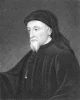
Geoffrey Chaucer is considered the father of English Literature.
Image source: Britannica
An Outline History of English Literature
Here is a clear and structured outline of the history of English literature, starting from the Classical Period and continuing up to the Postmodern Age:
| Major Periods | Highlights |
| The Classical Period (1200 BCE-455 BCE) | Homeric or Heroic Period (1200-800 BCE) Classical Greek Period (800-200 BCE) Classical Roman Period (200 BCE-455 BCE) Patristic Period (c.70 CE-455 CE) |
| The Medieval Period (455 CE-1485 CE) | The Old English (Anglo-Saxon) Period (423-1066 CE) The Middle English Period (c.1066-1450 CE) |
| The Renaissance and Reformation (1485-1660 CE) | The Postmodern Period (1945 onward) |
| The Enlightenment (Neoclassical) Period (1660-1790 CE) | Restoration Period (1660-1700) The Augustan Age (1700-1750) The Age of Johnson (1750-1790) |
| The Romantic Period (1790-1830 CE) | Romantic poets & Gothic writings |
| The Victorian Period and the 19th Century (1832-1901 CE) | Sentimental Novels & Intellectual Movements like Aestheticism and the Decadence. |
| The Modern Period (1914-1945 CE) | Modernist Writers, Realism, etc. |
| The Postmodern Period (1945 – onward) | Metafiction, Multiculturalism, Magic Poetry, etc. |
Old English Literature: 5th-14th Century
The history of English literature begins with the Germanic traditions of the Anglo Saxon settlers, covering roughly the 5th to 11th century AD. During this early period, some of the first long narrative poems were created, including Beowulf and Widsith. These works are important examples of early storytelling and reflect the strong narrative style of this stage in the history of English literature.

Beowulf is known as the first epic poem in English literature. Some other important works from this period include Genesis, Exodus, The Wanderer, The Wife’s Lament, The Husband’s Message, and The Battle of Maldon.
During this time, writers did not focus much on rhyming. Instead, they used alliteration, where similar sounds are repeated at the beginning of words. This style helped in oral storytelling, which was very common in that era.
Famous writers of Old English Literature include Cynewulf and Caedmon, who played a key role in shaping early English poetry.
Medieval English Literature: 14th to 15th Century
Medieval English Literature, also called the Later Middle English period, includes a wide variety of writings. During this time, many people in England were literate, and some even knew more than one language.
One of the most important writers of this period was Geoffrey Chaucer. He is best known for The “Canterbury Tales”, which is a collection of stories, although it was never completed. His other works include “The House of Fame” and “The Book of the Duchess”. Chaucer also worked in the royal court, which made him an important public figure of his time.
Another key writer was William Langland, known for his religious work “Piers Plowman”. This period included both religious and non-religious writings.
Popular literary forms of this time were morality plays, miracle plays, and interludes. “Everyman” is a well known morality play. Miracle plays were based on stories from the Bible and were often performed in churches.
Elizabethan Age a.k.a. The Golden Age of English Literature: (16th Century to Early 17th Century)
The Elizabethan Age is one of the most important and brightest periods in the history of English literature. It is often called the Golden Age because of the rapid growth in poetry, drama, and prose. Sir Thomas Wyatt and Henry Howard, Earl of Surrey, played a key role in shaping this period. Wyatt introduced the sonnet form to England, while Surrey introduced blank verse, which later became widely used by writers like William Shakespeare, Christopher Marlowe, and John Milton. One of the earliest printed poetry collections of this time was Tottel’s Miscellany.
This period produced many great writers and famous literary works. It was a time of great intellectual and religious changes, which influenced literature deeply. Humanism became popular, and many translations and original works appeared, such as Sir Thomas Hoby’s work on Castiglione and Sir Thomas North’s translation of Plutarch. Edmund Spenser, often called the poet’s poet, gained fame for The Shepherd’s Calendar. Other important writers of this time include Sir Philip Sidney, Michael Drayton, Sir Walter Raleigh, and Ben Jonson. A famous group called the University Wits included educated writers from Oxford University and Cambridge, such as John Lyly, Christopher Marlowe, Thomas Nashe, and George Peele.
John Donne made a strong impact with his metaphysical poetry and sonnets. Francis Bacon contributed by promoting scientific thinking and writing essays based on logic and observation. Drama became very popular during this time. The first comedy play of this period was Ralph Roister Doister by Nicholas Udall. William Shakespeare played a major role by writing famous tragedies like Hamlet, King Lear, Othello, and Julius Caesar, along with comedies like A Midsummer Night’s Dream, As You Like It, and Romeo and Juliet. Other important writers of this period include John Webster, Thomas Kyd, George Peele, and Ben Jonson.
Restoration Age (17th-18th Century)
The Restoration Age brought a major change in the history of English literature and strongly reflected the political conflicts of the late 17th century. One of the most important writers of this period was John Dryden. He became famous for his heroic poem Astra Radix and the satirical work Mac Flecknoe. He often used mock poetry to criticise his contemporaries and also wrote An Essay on Criticism. During the same period, Oliver Goldsmith gained popularity through his well-known works The Traveller and The Deserted Village.
Another key figure linked to this era was John Milton, a powerful and often controversial writer. His major works include Paradise Lost, Paradise Regained, and Samson Agonistes. Other important literary names, such as Thomas Grey, William Blake, and Robert Burns, also made valuable contributions that were widely appreciated. In addition, the philosopher John Locke played a significant role with his work An Essay Concerning Human Understanding, where he explored ideas about human intelligence, society, and the functioning of civil life.
The 18th-century English Literature
The 18th century marked the end of the Restoration period in English literature. This era saw the rise of political writing and the beginning of novels as a new literary form. Writers like Robert Harley, Daniel Defoe, and Jonathan Swift were important voices in political literature. By the middle and later part of the century, novels started gaining popularity and became a key part of literature.
Daniel Defoe played a major role in shaping prose narratives. His famous novel Robinson Crusoe is considered one of the earliest examples of English novels. He was among the first writers to bring novel writing into the literary world. In prose writing, Richard Steele and Jonathan Swift were also well known for their unique satirical writing style.
The Romantic Period: From the 19th Century
The Romantic period in the history of English literature brought fresh ideas and new styles in writing. Writers moved away from old poetic rules and focused more on emotions, imagination, and personal experiences. Poetry in this period mainly highlights nature, love, and individual thoughts. Famous poets like William Blake, William Wordsworth, and Samuel Taylor Coleridge created powerful works inspired by nature and human feelings. Later poets such as Percy Bysshe Shelley, John Keats, and Lord Byron continued this tradition.
During this time, novels became popular as a source of entertainment for a growing number of readers. Many novels also reflected important events like the French Revolution. One important type of novel that developed was the Gothic novel, known for its dark and mysterious themes. Key writers in this genre include Horace Walpole, Matthew Lewis, Ann Radcliffe, and Mary Shelley. At the same time, Jane Austen followed a more traditional style and wrote famous romantic novels such as Pride and Prejudice, Emma, Persuasion, and Northanger Abbey.
20th Century Literature
The 20th century marks the start of modern English literature after the Victorian age. Rudyard Kipling is one of the most important writers of this period. He was born in India, later moved to Lahore, and supported colonisation. His well-known works include Kim, Life’s Handicap, and The Jungle Book.
Many major literary works were produced during this time. E. M. Forster wrote A Passage to India, while H. G. Wells is known for The Time Machine, The Invisible Man, and The First Men in the Moon.
D. H. Lawrence also played a key role in shaping 20th century literature. Other important writers include James Joyce, Virginia Woolf, George Orwell, William Golding, John Galsworthy, George Bernard Shaw, Harold Pinter, and T. S. Eliot, who were widely known for their work in drama.
In poetry, leading figures of this century include W. B. Yeats, T. S. Eliot, W. H. Auden, Thomas Hardy, Gerard Manley Hopkins, and Dylan Thomas. Some well-known war poets of this period include Rupert Brooke, Siegfried Sassoon, and Wilfred Owen.
Also Read: Top 10 English Literature Interview Questions and Answers
History of English Literature Books
To understand the history of English literature clearly, it is important to study well-known books that explain different literary periods and their timelines in a simple way. Here are some of the best books that help you learn the history of English literature easily:
| History of English Literature Books | Author | Link |
| The Routledge History of Literature in English | Ronald Carter | Buy here |
| History of English Literature | Edward Albert | — |
| The Cambridge History of English Literature | George Sampson | Buy here |
| The Short Oxford History of English Literature | Andrew Sanders | Buy here |
| History of English Literature | Legouis & Cazamia | Buy here |
| A Critical History of English Literature | David Daiches | Buy here |
| A History of English Literature | Michael Alexander | Buy here |
| The Pelican Guide to English Literature | Boris Ford | Buy here |
| English Social History | G M Trevelyan | Buy here |
History of Indian English Literature
The history of Indian English literature began with early writers like Henry Louis Vivian Derozio, Rabindranath Tagore, and Sri Aurobindo. While many Indian authors continued writing in their regional languages, these writers chose English and gave rise to what we now call Indian English literature. Below are some key features of its development:
- The growth of Indian English literature was not simple. It became more complex during the freedom struggle and the years after independence. Since English was the language of British rule, Indian writers who used it often faced criticism.
- During this time, several writers supported the use of English. One such voice was Sujit Mukherjee, who called English a “link language”. India has many languages, and people from different regions may not understand each other. Even Hindi was not widely understood in some parts. English helped connect people across regions, which increased its importance in literature.
- Writers like R. K. Narayan and Salman Rushdie developed a unique style by mixing Indian words with English. This style was later called “chutnification”. It showed how Indian writers adapted English to express their own culture.
- Over time, Indian English literature became a way for the world to understand India. It began to reflect everyday life, traditions, and beliefs. For example, in Malgudi Days, R. K. Narayan presents the life of a small Indian town and its culture.
- Writers such as Salman Rushdie and Khushwant Singh wrote about the partition of India and its impact. Their works show how literature became a space to record history and human experiences, and this continues today.
- Translation also played an important role. Rabindranath Tagore translated his Bengali work Gitanjali into English. This led to the growth of Indian writing in translation as a separate field.
- In modern times, writers like Arundhati Roy and Aravind Adiga show that Indian English literature is still active and evolving. Their works continue to share stories about India’s diverse cultures and traditions, helping readers understand the country better.
Love English Lit? Prove it by Acing this Basic English Test!
World Literature Quiz

The history of English literature takes you on a journey through different time periods, starting from classic works like Beowulf to modern novels that explore global themes. Every literary period introduced new writing styles, ideas, and voices that still influence authors and readers today. Whether you are a student, researcher, or someone who enjoys reading, learning about English literature helps you understand the past and see how human thoughts and creativity have changed over time.
FAQs
The history of English Literature begins in the 5th century around 450, when Anglo Saxons and other Germanic tribes settled in England. The earliest writings were in Old English, which is the first form of the English language. One of the oldest and most famous works from this time is Beowulf, a heroic poem that shows early storytelling styles and cultural values.
The most important 8 periods of English Literature are:
1. Old English (Anglo-Saxon Period): 450–1066
2. Middle English Period: 1066-1500
3. The Renaissance: 1500-1600
4. The Neoclassical Period: 1600-1785
5. The Romantic Period: 1785-1832
6. The Victorian Age: 1832-1901
7. The Edwardian Period: 1901-1914
8. The Georgian Period: 1910-1936
9. The Modern Period: Early 20th century
10. The Postmodern Period: Mid-20th century
Geoffrey Chaucer is known as the father of English Literature. He is famous for writing The Canterbury Tales, which is one of the most important works in Middle English. Some of his other works include The House of Fame and The Book of the Duchess.
The first period of English Literature is the Old English Period, also known as the Anglo-Saxon Period. It lasted from 450 to 1066 and includes some of the earliest written works in English.
Middle English literature developed between 1150 and 1500. During this time, the English language changed due to the influence of French and Latin. A well-known work from this period is The Canterbury Tales by Geoffrey Chaucer, which reflects society and storytelling in a new way.
William Shakespeare is considered one of the greatest writers in English Literature. He wrote plays and poems, including tragedies, comedies, and sonnets. His works helped shape modern storytelling, language, and character development.
The Anglo-Saxon period (5th–11th centuries) was pivotal in forming the roots of English literature. Works like Beowulf reflect themes of heroism, loyalty, and the human struggle, laying the foundation for later English literary traditions.
World War I (1914-1918) significantly influenced literature by prompting writers like Wilfred Owen, Siegfried Sassoon, and Virginia Woolf to explore themes of trauma, disillusionment, and the horrors of war. Their works captured the profound psychological and societal impacts of the conflict.
The development of the English language can be divided into seven stages:
1. Pre English before 450 which includes Celtic and Roman Latin influence in Britain
2. Early Old English from 450 to 850 with Anglo Saxon roots and Christian influence
3. Later Old English from 850 to 1100 influenced by Viking Norse culture
4. Middle English from 1100 to 1450 shaped by Norman French and writers like Chaucer
5. Early Modern English from 1450 to 1750 with the printing press, Renaissance, and Shakespeare
6. Modern English from 1750 to 1950 influenced by the Industrial Revolution and British expansion
7. Late Modern English from 1950 to present with global usage, internet language, and different English varieties
Do Checkout
Hope you have a comprehensive understanding of the history of English literature through this blog. You can download the history of English literature from the blog to read it anywhere. And if you are interested in studying a degree in English Literature? Sign up for an e-meeting with our Leverage Edu experts and let us help you find the best course and university that aligns with your interests, aspirations, and career goals!


 2,00,000+ students realized their study abroad dream with us. Take the first step today.
14 comments
I am happy to read the information like this .we need more such as the details of the social , and political background of each era .
Hi!
Thank you for your feedback! We will try to make blogs on these topics. Meanwhile, you can check out our popular blogs and subscribe to our newsletter.
Really extraordinary material
Thank you!
Thnkx
Great work 💓💓💓
Thank you for your comment!
Thanks a lot for the post
These is much helpable👍
Thankyou Ankita!
Good version 👌
Hi, Sir! Thank you for liking our blog!
Here we are referring you some other blogs to read: History Of Indian Civil Services
History of Indian Art
The History of the Braille Script, the Language of the Blind
Hi, Sir
Thank you for liking our blog!
Here we are referring you some other blogs to read: History Of Indian Civil Services
History of Indian Art
The History of the Braille Script, the Language of the Blind
Such an extraordinary document.Thank you for provided us this type of material.