

 One app for all your study abroad needs













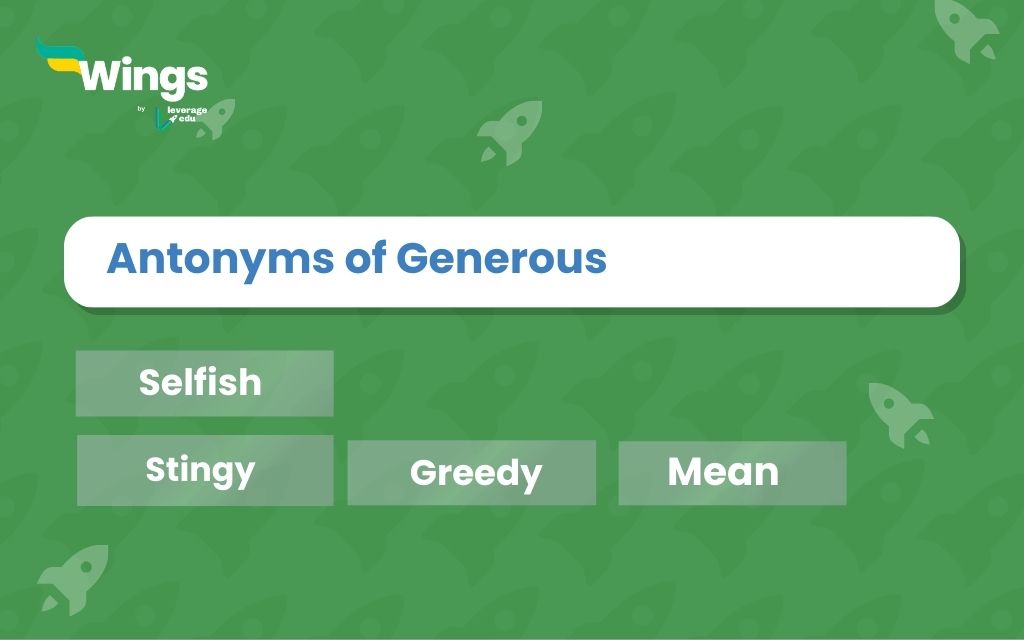
People misuse the antonyms of generous all the time, and it shows. Calling someone “stingy” when you mean “selfish,” or using “cheap” where “miserly” fits, instantly weakens your writing. This isn’t a small mistake. It costs marks in exams and credibility in communication. Vocabulary is power, and sloppy word choice exposes weak understanding. This blog on antonyms of generous cuts through the confusion with precise meanings, real context, and usable examples.
This Blog Includes:
- What Are the Antonyms of Generous?
- Most Common Antonyms of Generous With Meanings & Usage
- Antonyms of Generous to Describe a Person or Personality
- Formal vs Informal Antonyms of Generous With Examples
- Antonyms of Generous in Money, Time, and Behavior Contexts
- Sentence Examples Using Antonyms of Generous
- Commonly Confused Words Mistaken as Antonyms of Generous
- Complete List of Antonyms of Generous (A–Z)
- FAQs
What Are the Antonyms of Generous?
The antonyms of generous are words used to describe a person who does not give freely with money, time, help, or kindness. While generous shows willingness to share without expecting anything in return, its antonyms reflect the opposite behavior. These words often highlight selfishness, reluctance, or excessive concern for personal gain.
Common antonyms of generous include stingy, miserly, selfish, greedy, and tightfisted. Each of these words carries a slightly different meaning. For example, stingy focuses on unwillingness to spend, while greedy refers to wanting more than one needs. Because of this, the correct antonym of generous depends on the situation and context.
Most Common Antonyms of Generous With Meanings & Usage
The most common antonyms of generous are used to describe people who hesitate to give, share, or help others. Below are the key antonyms of generous explained clearly with meanings and correct usage.
Stingy
Meaning: Stingy describes a person who is unwilling to spend money or share resources, even when it is reasonable or expected.
Usage: This word is commonly used in informal and academic contexts to describe tight control over spending or sharing.
Example: He is stingy with his money and avoids paying for even basic needs.
Miserly
Meaning: Miserly refers to extreme unwillingness to spend money and often implies hoarding wealth unnecessarily.
Usage: It is stronger than stingy and usually carries a negative tone in formal writing.
Example: His miserly habits made it difficult for others to rely on him financially.
Selfish
Meaning: Selfish describes someone who prioritizes personal benefit over the needs of others.
Usage: This antonym of generous applies to money, time, emotions, and effort, not just finances.
Example: Refusing to help during a group project was seen as selfish behavior.
Greedy
Meaning: Greedy means wanting more than what is needed, especially at the expense of others.
Usage: It is used when the lack of generosity comes from excessive desire rather than fear of loss.
Example: His greedy attitude led him to take more than his fair share.
Tightfisted
Meaning: Tightfisted describes a person who strongly resists spending money or giving financial help.
Usage: This term is often used in British English and appears in both spoken and written contexts.
Example: The tightfisted manager refused to approve reasonable expenses.
Ungenerous
Meaning: Ungenerous directly refers to the absence of generosity in actions or attitude.
Usage: It is commonly used in formal and academic writing for neutral description.
Example: His ungenerous response disappointed those who expected support.
Antonyms of Generous to Describe a Person or Personality
When describing a person or personality, the antonyms of generous focus on behavior, attitude, and mindset rather than just money. These words help explain how someone treats others, shares resources, or responds to situations that require kindness or support.
A stingy person avoids giving or sharing, even when it would be reasonable to do so. This trait often shows up in financial matters but can also apply to time or effort. A miserly individual takes this behavior to an extreme, showing obsession with saving and an unwillingness to help others financially.
Someone described as selfish consistently puts personal needs above everyone else’s. This trait reflects a lack of emotional and moral generosity, not just material sharing. A greedy personality goes a step further by actively wanting more than necessary, often ignoring fairness or the needs of others.
A tightfisted person is overly cautious about spending or giving money, while an ungenerous personality shows little willingness to offer help, praise, or resources. These antonyms of generous are commonly used in character descriptions, essays, and moral discussions to highlight negative personal traits clearly and accurately.
This Explains Everything: List of Abbreviation with Full Forms A to Z
Formal vs Informal Antonyms of Generous With Examples
The antonyms of generous can be used in both formal and informal contexts, but the choice of word depends on tone, setting, and audience. The table below shows unique antonyms of generous, divided into formal and informal usage, along with examples.
| Context | Antonym of Generous | Meaning | Example Sentence |
| Formal | Parsimonious | Extremely unwilling to spend or give resources | The committee criticized his parsimonious approach to funding. |
| Formal | Niggardly | Reluctant to give or share, especially resources | The support offered was seen as niggardly and insufficient. |
| Formal | Closefisted | Unwilling to give or spend money | His closefisted policies affected employee morale. |
| Formal | Penurious | Marked by extreme frugality or poverty | The penurious allocation of funds slowed the project. |
| Informal | Cheap | Unwilling to spend money despite having enough | Everyone avoided splitting bills with him because he was cheap. |
| Informal | Skinflint | A person who hates spending money | The skinflint refused to contribute to the group gift. |
| Informal | Penny-pinching | Extremely careful about spending small amounts of money | Her penny-pinching habits frustrated her friends. |
| Informal | Grasping | Always trying to get more for oneself | His grasping nature damaged his reputation at work. |
Antonyms of Generous in Money, Time, and Behavior Contexts
The meaning of generous changes depending on whether it refers to money, time, or behavior. Because of this, the antonyms of generous also vary by context. Using the right word helps avoid confusion and makes your writing more accurate, especially in academic and exam-based answers.
In terms of money, antonyms of generous describe reluctance to spend or share financial resources. Words such as parsimonious, penurious, and tight are used to show extreme caution or unwillingness in spending. These terms often appear in economic discussions, essays, and character descriptions related to finances.
When generosity is about time or effort, the antonyms focus on unwillingness to help or participate. A person described as uncooperative or reluctant avoids giving time, attention, or support to others. These words are commonly used in workplace or group-task contexts.
For behavior and attitude, antonyms of generous highlight self-centered or indifferent actions. Terms like callous, mean-spirited, and unsympathetic describe people who lack kindness or emotional generosity.
Here’s More Clarity: 55+ Phrases with Meaning to Boost Your Vocabulary
Sentence Examples Using Antonyms of Generous
These examples show how different antonyms fit naturally into everyday writing without sounding forced or incorrect.
- The stingy landlord refused to fix basic problems in the apartment despite repeated requests.
- His miserly attitude toward donations disappointed the entire community.
- She was criticized for her selfish refusal to share credit for the group’s success.
- The manager’s tightfisted approach to bonuses lowered employee morale.
- His greedy behavior became clear when he took more resources than he needed.
- The parsimonious budget allocation slowed the progress of the research project.
- Her ungenerous response to the crisis surprised those who expected support.
- A callous reaction to the situation showed a lack of emotional generosity.
- His cheap habits made social outings uncomfortable for everyone involved.
- The unsympathetic tone of the reply reflected a lack of kindness and care.
Commonly Confused Words Mistaken as Antonyms of Generous
Many words are often mistakenly thought to be antonyms of generous, but their meanings do not fully oppose generosity. Using them incorrectly can weaken your writing or change the intended meaning. Here is the list of those words:
| Word | Meaning | Why It Is Often Mistaken? | Correct Understanding |
| Thrifty | Spending money carefully | People assume careful spending equals ungenerous behavior | Being thrifty is about managing resources wisely, not refusing to give or share |
| Frugal | Avoiding waste, economical with resources | Mistaken for stinginess | Frugal people can still be generous and helpful when needed |
| Economical | Efficient use of resources | Confused with selfishness | Economical focuses on efficiency, not lack of generosity |
| Reserved | Quiet or restrained in social behavior | Thought to show unwillingness to share | Reserved individuals may still be generous with money, time, or help |
| Introverted | Preferring solitude and limited social interaction | Misinterpreted as ungenerous personality | Introversion relates to social energy, not generosity or willingness to give |
Complete List of Antonyms of Generous (A–Z)
This comprehensive A–Z list covers unique antonyms of generous along with their meanings and examples. Some letters may not have commonly used antonyms, but we focus on words that are practical for students.
| Letter | Antonym of Generous | Meaning | Example Sentence |
| A | Avaricious | Having an extreme desire for wealth and possessions | His avaricious nature prevented him from donating to charity. |
| B | Barefisted | Reluctant to share money or resources | The barefisted manager refused to approve team expenses. |
| C | Closefisted | Unwilling to spend or give money | She is closefisted and never contributes to group gifts. |
| D | Denying | Refusing to give or share | He was denying help even when it was urgently needed. |
| E | Exacting | Strict and unwilling to give freely | Her exacting standards extended to every financial contribution. |
| F | Frugal | Economical or careful with resources (misunderstood as stingy) | Although frugal, he still helped friends in need. |
| G | Greedy | Always wanting more than needed | His greedy attitude led him to take more than his fair share. |
| H | Hoarding | Accumulating wealth or goods without sharing | Hoarding food during the festival upset everyone. |
| I | Inconsiderate | Not thinking of others’ needs | His inconsiderate behavior showed a lack of generosity. |
| J | Jealous | Envious of others’ possessions | She was too jealous to share her resources. |
| K | Know-it-all (figurative) | Self-centered and not collaborative | His know-it-all attitude prevented him from being generous with ideas. |
| L | Lacking | Deficient in generosity | He is lacking in generosity when it comes to volunteering. |
| M | Miserly | Extremely unwilling to spend or share | His miserly habits frustrated everyone around him. |
| N | Narrow-minded | Unwilling to consider others’ needs | Her narrow-minded approach made her ungenerous. |
| O | Oppressive | Domineering and denying help | The boss’s oppressive policies discouraged generosity. |
| P | Parsimonious | Excessively unwilling to spend | The parsimonious donor gave only the minimum required. |
| Q | Quarrelsome | Self-focused and unwilling to share | His quarrelsome nature kept him from supporting team efforts. |
| R | Reluctant | Hesitant to give or assist | She was reluctant to share her notes with classmates. |
| S | Stingy | Unwilling to spend or share resources | The stingy host refused to offer drinks to guests. |
| T | Tightfisted | Very unwilling to give money | The tightfisted landlord never donated to charity. |
| U | Ungenerous | Lacking generosity in actions or attitude | His ungenerous response disappointed everyone at the meeting. |
| V | Vindictive | Seeking to harm rather than give or help | Her vindictive streak stopped her from contributing to the cause. |
| W | Withholding | Holding back resources or support | He was withholding crucial information from the team. |
| X | Xerophilous (figurative) | Extremely “dry” or ungiving in attitude | His xerophilous approach made him unsympathetic to requests. |
| Y | Yieldless | Not giving or yielding to others’ needs | The yieldless manager refused to approve any extra resources. |
| Z | Zealous (negative context) | Overly focused on self-interest, ignoring others | His zealous pursuit of profit showed little generosity. |
Enjoying it? Why not try: List of Conjunctions: Words, Rules & Uses in English Grammar
FAQs
Ans: The opposite of generous is someone who is unwilling to give freely, whether with money, time, or kindness. Common antonyms include stingy, miserly, selfish, and greedy. The correct opposite depends on the context in which generosity is being discussed.
Ans: Yes, stingy is one of the most accurate antonyms of generous. It describes a person who avoids spending or sharing, even when it is reasonable to do so. This word is commonly used in everyday language and exam-based writing.
Ans: Greedy can be an antonym of generous, but only in certain contexts. It refers to wanting more than one needs and focusing on personal gain. While generosity is about giving, greed is about taking, which makes them opposites in behavior, not always in spending.
Ans: Miser is a strong antonym of generous when talking about money. It refers to someone who hoards wealth and avoids spending, even when necessary. However, it does not always apply to generosity of time or emotions.
Ans: Most antonyms of generous describe negative traits, but their severity varies. Words like thrifty can sound neutral depending on context, while stingy and miserly are clearly negative. Choosing the right antonym depends on tone, intent, and situation.
Hand-Picked Reads Fot You!
| Antonyms of Whisper | Antonyms of Float |
| Antonyms of Lazy | Antonyms of Awful |
| Antonyms of Panicked | Antonyms of Plaintively |
This was everything you needed to clearly understand the antonyms of generous. You now know what each opposite actually means, where it fits, and how to use it correctly in real sentences instead of forcing random words. That’s how strong vocabulary is built. Keep learning and stay connected with Learn English on Leverage Edu for more helpful and student-friendly blogs. And if this helped you, don’t forget to share, rate, and drop a comment. Your support helps more students find the good stuff.

 60,000+ students trusted us with their dreams. Take the first step today!