

 One app for all your study abroad needs













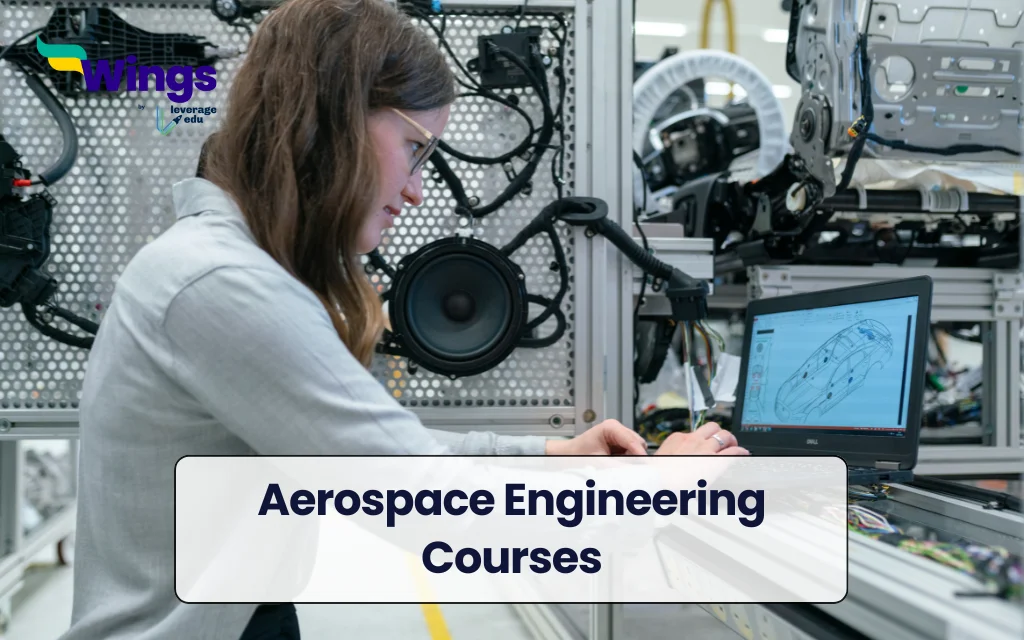
Aerospace Engineering is an exciting field for international students passionate about designing and developing aircraft and spacecraft, with programs typically lasting 3-4 years for a Bachelor’s, 1-2 years for a Master’s, and 3-6 years for a Ph.D. Annual tuition fees for international students can range significantly by country: 30,000-65,000 USD in the USA, CAD 35,000-80,000 in Canada, 20,000- 35,000 GBP in the UK, and more affordably in Germany at 0-3,000 EUR for public universities, with private institutions ranging higher. Beyond tuition, students must budget for living expenses, averaging 1,000-2,000 USD per month. Admission is highly competitive, requiring strong academic records in STEM subjects, standardized test scores (SAT/ACT/GRE), and English proficiency (IELTS/TOEFL), along with essential documents like SOPs and LORs.
Top study destinations include the USA, UK, Canada, Germany, and France, all offering the best aerospace industries and ample scholarship opportunities to help offset costs, leading to diverse and promising career paths in areas like aircraft design, propulsion systems, and research and development.
This Blog Includes:
- Why Study Aerospace Engineering Abroad?
- Skills Required to Become an Aerospace Engineer
- Aerospace Engineering Courses Abroad
- List of Colleges for Aerospace Engineering in India
- Eligibility Criteria for Aerospace Engineering
- Top Universities for Aerospace Engineering Abroad
- Core Responsibilities
- Job Opportunities After Aerospace Engineering
- FAQs
Why Study Aerospace Engineering Abroad?
Studying Aerospace Engineering abroad offers an unparalleled opportunity to gain a global perspective on a field that is inherently international. This highly specialized discipline, focused on the design, development, and maintenance of aircraft and spacecraft, benefits immensely from diverse academic environments and exposure to the best research and industry practices across different nations.
- Many of the world’s top-ranked universities for Aerospace Engineering offer access to advanced curricula, state-of-the-art facilities, and renowned faculty who are often leaders in their specific sub-fields (e.g., aerodynamics, propulsion, space systems, avionics, materials science).
- Studying abroad provides direct exposure to different industry ecosystems, regulatory frameworks, and market demands.
- Top international universities often have the best research programs, frequently in partnership with government agencies (like NASA, ESA, DLR) and private companies.
- Living and studying in a new country fosters adaptability, independence, and problem-solving skills.
- The global aerospace industry is continuously evolving, with strong demand for qualified engineers in areas like sustainable aviation (electric and hybrid aircraft, biofuels), unmanned aerial vehicles (drones), and space exploration (manned missions, satellite technology).
Skills Required to Become an Aerospace Engineer
Becoming a successful Aerospace Engineer requires a robust blend of technical expertise, critical thinking, and essential soft skills. Here’s a breakdown of the key abilities needed:
- Strong Foundation in Math and Physics
- A deep understanding of Aerodynamics and Fluid Dynamics
- Knowledge of various propulsion technologies
- Engineers must understand material properties (composites, alloys, lightweight metals) and structural analysis to ensure durability, safety, and optimal performance under stress.
- Expertise in tools like CATIA, SolidWorks, AutoCAD, MATLAB, ANSYS, Fluent, and Abaqus is indispensable for creating 3D models, simulating performance, analyzing stress, and validating designs virtually before physical prototyping.
- Understanding how aircraft and spacecraft move through the atmosphere and space, including stability, control, and orbital mechanics.
- The ability to approach complex projects holistically, breaking down large systems into manageable components, identifying dependencies, and ensuring seamless integration across various disciplines.
- Using computer models and simulations to predict performance, identify potential issues, and refine designs.
- Knowledge of various manufacturing techniques, including machining, welding, and composite processing, and an understanding of quality control in aerospace production.
- Problem-Solving and Analytical Thinking
- Communication Skills (Written and Verbal)
- Teamwork and Collaboration
- Ethical and Safety Awareness
- Leadership (as experience grows)
Aerospace Engineering Courses Abroad
Studying Aerospace Engineering abroad can be an excellent opportunity for international students. Here’s a breakdown of typical courses, universities, and average fees for Diploma, Undergraduate (UG), and Postgraduate (PG) programs.
Diploma Programs in Aerospace Engineering
For international students considering a quicker entry into the aerospace industry or seeking a foundational stepping stone to higher education, Diploma programs in Aerospace Engineering offer a practical and focused curriculum. These programs, typically shorter in duration than a full bachelor’s degree, emphasize hands-on skills and direct industry relevance, preparing graduates for technical roles in manufacturing, maintenance, or operations within the aviation and aerospace sectors.
| Course Name | Universities | Average Annual Fees |
| Diploma in Aerospace Engineering | Centennial College (Canada) | CAD 11,000 – CAD 14,000 |
| Aerospace Manufacturing Engineering Technician | Fanshawe College (Canada) | CAD 12,000 – CAD 15,000 |
| Advanced Diploma in Aviation | Polytechnic West (Australia) | AUD 9,000 – AUD 12,000 |
| UG Diploma in Aerospace Engineering | University of New South Wales College (UNSW College) (Australia) | AUD 43,440 |
| Aircraft Maintenance Engineering Diploma | Various colleges in UK, Canada, Australia | £8,000 – £15,000 GBP, CAD 10,000 – CAD 18,000 |
Undergraduate Programs in Aerospace Engineering
Embarking on a Bachelor’s degree in Aerospace Engineering abroad provides international students with a comprehensive and in-depth understanding of the principles governing aircraft and spacecraft design, development, and operation. These undergraduate programs, typically lasting three to four years, lay the essential theoretical and practical groundwork in core areas like aerodynamics, propulsion, structures, and avionics, often leading to highly sought-after roles in the global aerospace industry.
| Course Name | Universities | Average Annual Fees |
| B.S. in Aerospace Engineering | Massachusetts Institute of Technology (MIT), USA | 50,000 – 65,000 USD |
| California Institute of Technology (Caltech), USA | 55,000 – 65,000 USD | |
| Georgia Institute of Technology (Georgia Tech), USA | 35,000 – 50,000 USD | |
| Purdue University, USA | 30,000 – 45,000 USD | |
| University of Michigan – Ann Arbor, USA | 45,000 – 60,000 USD | |
| BEng / MEng Aerospace Engineering | Imperial College London, UK | £30,000 – £40,000 GBP |
| University of Bristol, UK | £25,000 – £35,000 GBP | |
| University of Manchester, UK | £25,000 – £35,000 GBP | |
| B.Eng. Aeronautical Engineering | Technical University of Munich (TUM), Germany | €0 – €3,000 EUR (Public universities, mostly administrative fees) |
| RWTH Aachen University, Germany | €0 – €3,000 EUR | |
| Bachelor of Aerospace Engineering | University of Toronto, Canada | CAD 45,000 – CAD 65,000 |
| McGill University, Canada | CAD 35,000 – CAD 55,000 | |
| Bachelor of Engineering (Honours) (Aerospace) | The University of Sydney, Australia | AUD 35,000 – AUD 50,000 |
| University of New South Wales (UNSW), Australia | AUD 40,000 – AUD 55,000 | |
| BSc in Aerospace Engineering | Delft University of Technology (TU Delft), Netherlands | €15,000 – €20,000 EUR |
Postgraduate Programs in Aerospace Engineering
For international students aiming to specialize, delve into advanced research, or assume leadership roles, Postgraduate programs (Master’s and Ph.D.) in Aerospace Engineering offer the next level of academic rigor and expertise. Master’s degrees, usually 1-2 years, provide focused knowledge in niche areas like space systems or advanced materials, while Ph.D. programs, spanning 3-6 years, are research-intensive, pushing the boundaries of current aerospace knowledge and often leading to innovative contributions to the field.
| Course Name | Universities | Average Annual Fees |
| M.S. in Aerospace Engineering | Massachusetts Institute of Technology (MIT), USA | 50,000 – 60,000 USD |
| Georgia Institute of Technology (Georgia Tech), USA | 20,000 – 35,000 USD | |
| Purdue University, USA | 20,000 – 30,000 USD | |
| University of Texas at Austin, USA | 18,000 – 30,000 USD | |
| M.Sc. Aerospace Vehicle Design / Engineering | Cranfield University, UK | £20,000 – £30,000 GBP |
| Imperial College London, UK | £28,000 – £38,000 GBP | |
| University of Manchester, UK | £22,000 – £30,000 GBP | |
| M.Sc. Aerospace Engineering | Technical University of Munich (TUM), Germany | €0 – €3,000 EUR (Public universities, mostly administrative fees) |
| ISAE-Supaéro, France | €12,000 – €18,000 EUR | |
| M.Eng. Aerospace Engineering | University of Toronto, Canada | CAD 25,000 – CAD 40,000 |
| McGill University, Canada | CAD 20,000 – CAD 35,000 | |
| M.Sc. Aerospace Engineering | Delft University of Technology (TU Delft), Netherlands | €18,000 – €25,000 EUR |
Aerospace Engineering Courses in India
Courses in this field are readily available in all the favoured study destinations of students. Given below is a list of some popular courses available in this specialised domain of study:
- Diploma in Aeronautical Engineering
- Diploma in Aircraft Maintenance Engineering
- BE/ BTech in Aerospace Engineering
- BS/ BS(Hons) in Aerospace Engineering
- MS in Aerospace Engineering
- ME/MTech in Aerospace Engineering
- PhD in Aerospace Engineering
Check Out: List of Top Aerospace Engineering Courses
List of Colleges for Aerospace Engineering in India
Most students opt to attain a degree in Aerospace Engineering from abroad, but several colleges in India offer both bachelor’s and master’s degrees in Aerospace Engineering. Here is a list of such Indian colleges:
| University Name | Program Level | Average Total Program Fees |
| Indian Institute of Technology (IIT) Bombay | B.Tech. | ₹8,83,000 – ₹10,00,000 |
| Indian Institute of Technology (IIT) Madras | B.Tech. | ₹8,00,000 – ₹10,00,000 |
| Indian Institute of Technology (IIT) Kanpur | B.Tech. | ₹8,00,000 – ₹9,19,000 |
| Indian Institute of Technology (IIT) Kharagpur | B.Tech. | ₹8,00,000 – ₹10,30,000 |
| Indian Institute of Space Science and Technology (IIST), Thiruvananthapuram | B.Tech. | ₹5,50,000 – ₹6,00,000 |
| Vellore Institute of Technology (VIT), Vellore | B.Tech. | ₹7,80,000 – ₹8,50,000 |
| Manipal Institute of Technology (MIT), Manipal | B.Tech. (Aeronautical) | ₹13,00,000 – ₹19,58,000 |
| SRM Institute of Science and Technology (SRMIST), Chennai | B.Tech. | ₹12,00,000 – ₹16,00,000 |
| Hindustan Institute of Technology and Science (HITS), Chennai | B.Tech. | ₹9,00,000 – ₹14,40,000 |
| Amity University, Noida | B.Tech. | ₹8,00,000 – ₹12,00,000 |
| Lovely Professional University (LPU), Jalandhar | B.Tech. | ₹8,40,000 – ₹11,20,000 |
| PEC Chandigarh (Punjab Engineering College) | B.E. | ₹7,71,000 – ₹8,00,000 |
| RV College of Engineering (RVCE), Bangalore | B.E. | ₹16,00,000 – ₹33,60,000 |
| SASTRA Deemed University, Thanjavur | B.Tech. | ₹7,00,000 – ₹8,00,000 |
| BMS College of Engineering (BMSCE), Bangalore | B.E. | ₹16,00,000 |
| Ramaiah Institute of Technology (RIT), Bangalore | B.E. | ₹12,56,000 |
| IITs (various) | M.Tech./Ph.D. | ₹20,000 – ₹2,70,000 (M.Tech.); ₹50,000 – ₹2,00,000 (Ph.D.) |
| Indian Institute of Science (IISc), Bengaluru | M.Tech./Ph.D. | ₹40,000 – ₹1,50,000 (M.Tech./Ph.D.) |
| Defence Institute of Advanced Technology (DIAT), Pune | M.Tech. | ₹2,00,000 – ₹2,50,000 |
| Anna University, Chennai | B.E./M.E./Ph.D. | ₹50,000 – ₹2,00,000 (UG/PG, varies) |
| Government Polytechnics / AME Institutes | Diploma | ₹50,000 – ₹6,00,000 (for entire course) |
Eligibility Criteria for Aerospace Engineering
If you are planning to pursue any of these courses, here are the major eligibility requirements you need to fulfill:
- The applicant must pass 10+2 with Physics, Chemistry, and Mathematics or 3-year engineering degree (preferably in aero/aeronautical engineering) from any recognized Board/University at the time of admission.
- If you want to study these courses in India, you have to qualify for any of these entrance exams like JEE, KCET, MHT CET, TNEA, Indian Institute of Aeronautics Entrance Exam, etc., for bachelor’s degree programs and GATE for master’s degree programs.
- If you plan to pursue a degree in this field abroad, you will have to provide GRE scores along with language proficiency scores of IELTS/TOEFL/PTE, as well as an SOP and LORs.
Top Universities for Aerospace Engineering Abroad
Here is the list of best universities to pursue Aerospace Engineering courses from abroad:
| University Name | Country | Program Level | Average Total Program Fees |
| Massachusetts Institute of Technology (MIT) | USA | B.S./M.S./Ph.D. | 50,000 – 65,000 USD per year |
| California Institute of Technology (Caltech) | USA | B.S./M.S./Ph.D. | 60,000 – 70,000 USD per year |
| Georgia Institute of Technology (Georgia Tech) | USA | B.S./M.S./Ph.D. | 30,000 – 45,000 USD per year |
| Purdue University | USA | B.S./M.S./Ph.D. | 25,000 – 35,000 USD per year |
| Stanford University | USA | B.S./M.S./Ph.D. | 55,000 – 65,000 USD per year |
| University of Michigan – Ann Arbor | USA | B.S./M.S./Ph.D. | 50,000 – 60,000 USD per year |
| University of Toronto | Canada | B.Eng./M.Eng./Ph.D. | CAD 35,000 – CAD 65,000 per year |
| McGill University | Canada | B.Eng./M.Eng./Ph.D. | CAD 35,000 – CAD 55,000 per year |
| Centennial College | Canada | Diploma | CAD 11,000 – CAD 18,000 per year |
| Imperial College London | UK | BEng/MEng/M.Sc./Ph.D. | £28,000 – £40,000 GBP per year |
| Cranfield University | UK | M.Sc. | £20,000 – £30,000 GBP per year |
| University of Bristol | UK | BEng/MEng/M.Sc. | £30,000 – £45,000 GBP per year |
| Technical University of Munich (TUM) | Germany | B.Sc./M.Sc./Ph.D. | €0 – €3,000 EUR per year (Public, administrative fees); higher for private universities |
| RWTH Aachen University | Germany | B.Sc./M.Sc./Ph.D. | €0 – €3,000 EUR per year (Public, administrative fees) |
| Delft University of Technology (TU Delft) | Netherlands | B.Sc./M.Sc./Ph.D. | €15,000 – €25,000 EUR per year |
| ISAE-Supaéro | France | M.Sc. (Master of Science) | €12,000 – €18,000 EUR per year |
| ETH Zurich | Switzerland | M.Sc./Ph.D. | CHF 1,390 – CHF 4,300 per semester; often covered by funding |
| EPFL (Swiss Federal Institute of Technology Lausanne) | Switzerland | M.Sc./Ph.D. | CHF 2,000 – CHF 15,000 per semester |
| Nanyang Technological University (NTU) | Singapore | B.Eng./M.Sc./Ph.D. | SGD 20,000 – SGD 40,000 per year |
| The University of Sydney | Australia | B.Eng./M.Eng. | AUD 40,000 – AUD 55,000 per year |
Also Read: Colleges for Aerospace Engineering in India
Core Responsibilities
Before you take up any Aerospace Engineering courses, one must know what does the course entails. Here is the list of responsibilities that are to be a part of these courses:
- To come up with a possible solution regarding the malfunctioning of damaged products. You have to find the source of the problem.
- Your role is equally crucial in terms of space designing and manufacturing and testing of aircraft.
- You have to ensure that the product you designed meets with the principles of engineering and environmental policies.
- You have to perform ground and flight testing process.
Job Opportunities After Aerospace Engineering
There are numerous opportunities available for candidates pursuing Aerospace Engineering courses. Given below are some of the choicest job profiles for students with this degree:
| Company Name | Country/Region | Average Annual Salary |
| Hindustan Aeronautics Limited (HAL) | India | ₹15,03,390 (₹15 Lakhs) |
| The Boeing Company | India | ₹8,71,080 (₹8.7 Lakhs) |
| Airbus | India | ₹7,35,298 (₹7.35 Lakhs) |
| Mahindra Aerospace | India | ₹21,60,000 (₹21.6 Lakhs) |
| ISRO (Indian Space Research Organisation) | India | ₹5,61,000 – ₹17,75,000 (Basic Pay Scale) |
| DRDO (Defence Research & Development Organisation) | India | ₹4,68,000 – ₹8,04,000 (Basic Pay) |
| Boeing | USA | 90,800 – 153,000 USD |
| Lockheed Martin | USA | 99,200 – 158,000+ USD |
| NASA | USA | 108,638 USD |
| Airbus | France | 48,796 EUR |
| Rolls-Royce | UK | 38,892 – 56,657 GBP |
| Safran | France | 35,000 – 75,000 EUR |
| General Electric (GE Aerospace) | USA | 90,000 – 150,000+ USD |
| Northrop Grumman | USA | 95,000 – 160,000+ USD |
| SpaceX | USA | 100,000 – 180,000+ USD |
FAQs
A Bachelor of Technology (B.Tech.) or Bachelor of Engineering (B.E.) in Aerospace Engineering provides the foundational knowledge in aerodynamics, propulsion, structures, and avionics, which is essential for most entry-level roles. For those aiming for specialized research, design, or leadership positions, a Master of Technology (M.Tech.) or Ph.D. with a specialization in areas like Spacecraft Design, Propulsion Systems, Computational Fluid Dynamics (CFD), or Avionics is highly recommended, as it allows for deeper expertise in high-demand and cutting-edge areas of the industry.
Yes, you can pursue Aerospace Engineering after 12th grade. To do so, you’ll need to enroll in an undergraduate Bachelor’s degree program (B.Tech. or B.E.) in Aerospace Engineering or Aeronautical Engineering. The key eligibility requirement is usually having completed your 12th standard (or equivalent) with Physics, Chemistry, and Mathematics (PCM) as compulsory subjects, along with meeting minimum aggregate marks set by the university, and often, clearing competitive entrance exams like JEE Main & Advanced in India, or meeting specific SAT/ACT scores and English proficiency tests like IELTS/TOEFL for universities abroad.
An Aerospace Engineer at ISRO, typically joining as a Scientist/Engineer ‘SC’, can expect a starting basic pay of around INR 56,100 per month. Including Dearness Allowance (DA), House Rent Allowance (HRA), and Transport Allowance, the gross monthly salary can be approximately INR 84,360. With deductions, the in-hand salary for an entry-level Aerospace Engineer at ISRO is around INR 72,360 per month. Salaries increase with experience and promotions, potentially reaching INR 15,00,000 to INR 25,00,000 per annum for more experienced professionals.
Yes, you can pursue Aerospace Engineering without clearing JEE. Many private universities and state-level engineering colleges in India offer Aerospace or Aeronautical Engineering programs and admit students through their own university-specific entrance exams (like VITEEE, SRMJEEE, MET, KIITEE, AME CET, etc.), state-level entrance exams (like MHT CET, KCET, COMEDK UGET, TNEA, WBJEE), or even directly based on 12th board examination scores for certain colleges. Additionally, options like diploma courses or pursuing studies abroad (where SAT/ACT or other country-specific exams might be required instead of JEE) also exist.
The primary entrance tests for Aerospace Engineering vary by country and program level. In India, for undergraduate (B.Tech.) programs, the JEE Main and JEE Advanced are crucial for IITs and NITs, while private universities conduct their own exams like BITSAT, SRMJEEE, VITEEE, and LPUNEST. For postgraduate (M.Tech.) programs, the GATE exam is almost always required for top public institutions. When looking to study abroad, there typically isn’t a single universal “aerospace entrance test.” Instead, universities focus on standardized tests like the SAT or ACT for undergraduate admissions in the USA, and the GRE for graduate programs (though some are becoming optional). Additionally, English proficiency tests like IELTS or TOEFL are mandatory for non-native English speakers. Academic transcripts, letters of recommendation, and a strong Statement of Purpose are also vital components of the application process.
RELATED BLOGS
So, this was all about the “Aerospace Engineering Courses”. Many Indian students dream of pursuing education abroad due to the exposure and career growth it offers. Consider joining a free counseling session with Leverage Edu if you plan to study abroad.


 60,000+ students trusted us with their dreams. Take the first step today!