

 One app for all your study abroad needs

















Unseen passages for ICSE class 10 with examples and tips are essential for understanding how to read, analyze, and answer questions effectively. These passages test your comprehension skills and also your ability to think critically and manage time under exam pressure. In this blog, we provide carefully selected examples, practice exercises, and actionable tips designed to improve your reading speed, accuracy, and confidence.
This Blog Includes:
- Unseen Passage for Class 10 Students: What to Expect?
- 7+ Unseen Passages for ICSE Class 10 with Examples
- Passage 1: The Role of Artificial Intelligence in Daily Life
- Passage 2: Challenges Faced by Urban Wildlife
- Passage 3: Lessons from Historical Monuments
- Passage 4: The Rise of Renewable Energy Sources
- Passage 5: The Science Behind Natural Disasters
- Passage 6: Digital Learning: Boon or Bane?
- Passage 7: Volunteering in Community Development
- 10-Minute Strategy to Ace ICSE Class 10 Reading Comprehension
- Unsolved Unseen Passage for ICSE Class 10 with Practice Questions
- FAQs
Unseen Passage for Class 10 Students: What to Expect?
An unseen passage is simply a short piece of text you have never read before. It could be about science, nature, travel, or even a small story about a kid saving a bird. The goal is to check how well you can read, understand, and explain a piece of writing.
In the ICSE Class 10 English exam, unseen passages usually appear in the Reading Skills section, which carries around 20 marks. You will get one passage followed by a few questions. These questions test how clearly you can find meaning, notice details, and express ideas in your own words.
You don’t need to memorize anything for this section. What really matters is your focus, so it means the better you read, the faster you will catch the answers.
The examiner just wants to see how you handle new information without panicking. So when you sit in the exam hall:
- Take a deep breath.
- Read slowly once.
- Start connecting ideas like puzzle pieces.
7+ Unseen Passages for ICSE Class 10 with Examples
In this section, you will find 7 carefully selected unseen passages designed to reflect the type of passages you might encounter in the ICSE Class 10 English exam. These passages cover diverse topics. These passages vary in length and difficulty, testing comprehension, inference, and analytical skills. Stay calm, focus on the main ideas, and apply smart reading strategies to think critically and answer confidently.
Passage 1: The Role of Artificial Intelligence in Daily Life
Artificial Intelligence (AI) has become a normal part of our daily routine. It helps us unlock our phones with face ID, get music or movie suggestions, and even assists doctors in detecting diseases early. Farmers use AI to predict weather and improve crops, while teachers use it to create better learning plans for students. However, AI also raises worries about privacy and job loss. Experts believe that AI cannot replace human creativity or emotions. If used wisely, AI can make life easier, smarter, and more efficient for everyone.
Questions
Q1. Explain how Artificial Intelligence is used in daily life, with two examples from the passage.
Q2. In what ways does AI assist professionals in different fields such as education and agriculture?
Q3. What concerns do people have about the increasing use of AI, and why?
Q4. Complete the sentence: Experts believe that AI cannot replace human ______ and ______.
Q5. According to the passage, how can AI benefit society if used properly?
Answers
A1. AI is used to unlock phones with face ID and suggest music or movies based on preferences.
A2. Teachers use AI to create better learning plans, and farmers use it to predict weather and improve crops.
A3. People worry about privacy and job loss because machines can perform certain tasks faster than humans.
A4. Experts believe that AI cannot replace human creativity and emotions.
A5. If used wisely, AI can make life easier, smarter, and more efficient for everyone.
Passage 2: Challenges Faced by Urban Wildlife
As cities expand, many animals struggle to survive in changing environments. Birds build nests on tall buildings, monkeys search for food in dustbins, and stray dogs wander through crowded streets. Pollution, traffic, and loud noises disturb their natural behaviour. Some animals even fall sick after eating plastic or waste. Still, a few species adapt, pigeons live on rooftops, and squirrels hide in parks. Urban wildlife reminds us that cities belong to all living creatures, and humans must ensure cleaner and safer spaces for them to thrive.
Questions
Q1. What are some of the main reasons animals struggle to live in cities?
Q2. How have certain animals adapted to life in urban environments? Give two examples.
Q3. Explain how pollution and noise affect urban wildlife according to the passage.
Q4. Complete the sentence: Urban wildlife teaches us that cities belong to ________.
Q5. Suggest one step humans can take to make cities safer for animals.
Answers
A1. Animals struggle in cities due to lack of space, food, and safety caused by urban growth.
A2. Birds build nests on buildings, and pigeons live on rooftops.
A3. Pollution and noise disturb animals’ natural behaviour and can make them sick.
A4. Urban wildlife teaches us that cities belong to all living creatures.
A5. Humans can keep surroundings clean and reduce pollution to make cities safer for animals.
Also Read: Unseen Poem for Class 9 with Questions and Answers
Passage 3: Lessons from Historical Monuments
Historical monuments are more than just old buildings, they are stories carved in stone. They remind us of the people, struggles, and ideas that shaped our world. From the Taj Mahal to the Red Fort, every monument teaches something unique about love, courage, art, or leadership. These structures also help us understand our culture and values. Sadly, many monuments are damaged by pollution and neglect. Protecting them is not just about saving the past, it’s about respecting our roots and learning from history to build a wiser future.
Fill in the Blanks
Q1. Historical monuments are described as ______ carved in stone.
Q2. Every monument teaches something about love, ______, art, or leadership.
Q3. Many monuments are damaged by ______ and neglect.
Q4. Protecting monuments is about respecting our ______ and learning from history.
Q5. Monuments help us understand our ______ and values.
Answers
A1. stories
A2. courage
A3. pollution
A4. roots
A5. culture
Passage 4: The Rise of Renewable Energy Sources
Renewable energy sources, such as solar, wind, and hydroelectric power, are becoming increasingly important in today’s world. They provide energy without depleting natural resources or causing significant pollution. Governments and companies are investing in renewable energy projects to reduce dependence on fossil fuels and fight climate change. Solar panels convert sunlight into electricity, wind turbines generate power from moving air, and dams use flowing water to produce energy. Although the initial cost is high, renewable energy is sustainable and offers long-term economic and environmental benefits for societies worldwide.
Fill in the Blanks
Q1. Renewable energy sources include solar, ______, and hydroelectric power.
Q2. These sources provide energy without depleting ______ resources or causing significant pollution.
Q3. Governments invest in renewable energy to reduce dependence on ______ fuels.
Q4. Solar panels convert ______ into electricity.
Q5. Although the initial cost is high, renewable energy is ______ and offers long-term benefits.
Answer Sheet
A1. wind
A2. natural
A3. fossil
A4. sunlight
A5. sustainable
Passage 5: The Science Behind Natural Disasters
Natural disasters occur due to sudden changes in the Earth’s environment. Earthquakes happen when tectonic plates shift, while volcanic eruptions occur when molten rock escapes from the Earth’s crust. Floods can result from heavy rainfall, melting glaciers, or dam failures. Hurricanes form over warm ocean waters and gain strength from the heat and moisture in the air. Scientists use technology to predict disasters, but complete prevention is not yet possible. Understanding the science behind these events helps communities prepare and reduce damage, saving lives and minimizing economic losses.
True/False Questions
Q1. Earthquakes are caused by sudden shifts in tectonic plates.
Q2. Volcanic eruptions occur due to heavy rainfall.
Q3. Floods may result from melting glaciers or dam failures.
Q4. Hurricanes form only over cold ocean waters.
Q5. Studying the science behind natural disasters can help reduce their impact.
Answers
A1. True
A2. False (volcanic eruptions occur when molten rock escapes from the Earth’s crust)
A3. True
A4. False (hurricanes form over warm ocean waters)
A5. True
Passage 6: Digital Learning: Boon or Bane?
Digital learning has transformed education by making lessons accessible anytime and anywhere. Students can watch videos, attend virtual classes, and access online resources to improve understanding. It allows personalized learning and encourages self-paced study. However, excessive screen time can affect health, reduce social interactions, and cause distractions. Not all students have equal access to devices or stable internet, creating a digital divide. Teachers and parents need to guide students to use technology responsibly. When balanced properly, digital learning can enhance education, but misuse may create more problems than benefits.
True/False Questions
Q1. Digital learning allows students to access lessons anytime and anywhere.
Q2. Excessive screen time can improve social interaction among students.
Q3. Not all students have equal access to devices or internet, causing a digital divide.
Q4. Teachers and parents play no role in guiding students during digital learning.
Q5. When used responsibly, digital learning can enhance education.
Answers
A1. True
A2. False (excessive screen time can reduce social interactions)
A3. True
A4. False (teachers and parents need to guide students responsibly)
A5. True
Passage 7: Volunteering in Community Development
Volunteering plays a vital role in improving communities. People who volunteer help in schools, hospitals, environmental projects, and social programs. Through volunteering, individuals learn new skills, build relationships, and contribute positively to society. Communities benefit from the extra support, better services, and increased awareness of social issues. Volunteering also promotes empathy, responsibility, and teamwork among participants. Governments and organizations often encourage volunteering to foster social cohesion. Although it requires time and effort, the rewards of volunteering, both personal and communal, make it a valuable activity for everyone.
Multiple Choice Questions (MCQs)
Q1. Which of the following is NOT mentioned as a place where people can volunteer?
a) Schools
b) Hospitals
c) Banks
d) Environmental projects
Q2. What is one personal benefit of volunteering mentioned in the passage?
a) Earning money
b) Learning new skills
c) Gaining political power
d) Avoiding responsibilities
Q3. How does volunteering help communities?
a) It creates traffic
b) It provides extra support and awareness
c) It decreases social interaction
d) It increases taxes
Q4. Which qualities does volunteering promote in participants?
a) Empathy, responsibility, teamwork
b) Laziness and procrastination
c) Individualism and secrecy
d) Aggression and selfishness
Q5. Why do governments encourage volunteering?
a) To reduce unemployment
b) To foster social cohesion
c) To increase pollution
d) To replace education
Answers
A1. c) Banks
A2. b) Learning new skills
A3. b) It provides extra support and awareness
A4. a) Empathy, responsibility, teamwork
A5. b) To foster social cohesion
10-Minute Strategy to Ace ICSE Class 10 Reading Comprehension
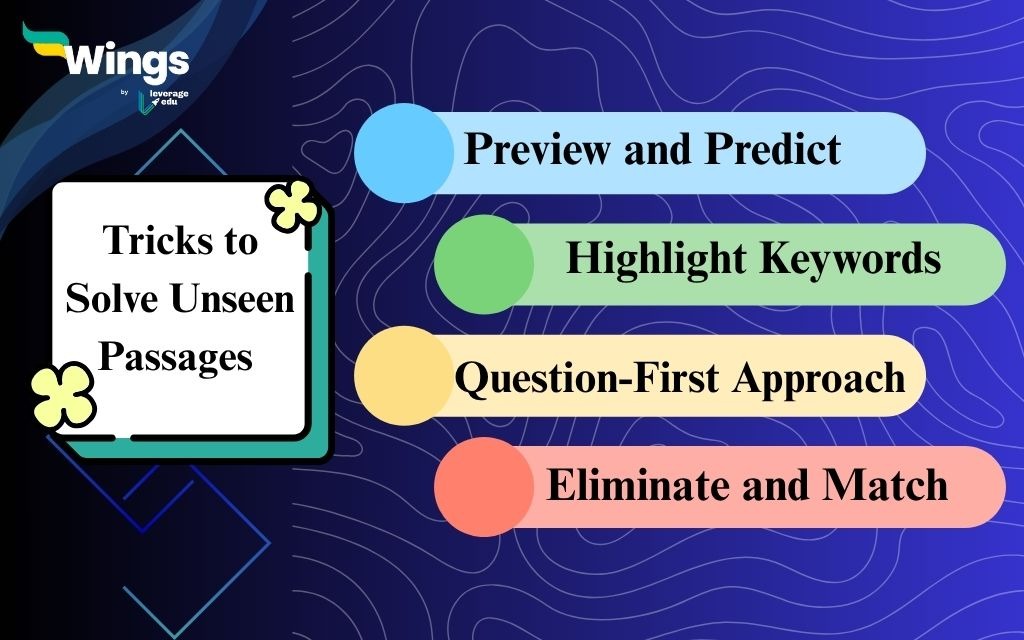
Reading comprehension in ICSE Class 10 exams can seem tough, but with the right approach, you can score full marks quickly. Here are some 10-minute strategies designed to give you an edge in the exam hall.
Preview and Predict
Spend the first 1–2 minutes scanning the passage’s title, headings, and first/last sentences of paragraphs. Try to predict the topic and flow. Your brain starts linking ideas even before you read fully.
Highlight Keywords Mentally
Instead of underlining everything, mentally mark important words or phrases like names, dates, numbers, or cause-and-effect words. This saves time and keeps your focus sharp.
Question-First Approach
Read the questions before the detailed reading. Your brain now knows what to look for. This trick reduces re-reading and helps you spot answers faster.
Eliminate and Match Technique
When choosing answers, especially for MCQs or tricky inferences, eliminate obviously wrong options first. Match the remaining options with what you remember from your chunk summaries. Your brain loves pattern-matching, and this reduces mistakes drastically.
Also Read: English Unseen Passage for Class 7: CBSE Worksheet (Free PDF)
Unsolved Unseen Passage for ICSE Class 10 with Practice Questions
In this section, you will find five unseen passages designed for ICSE Class 10 practice. These passages are completely unsolved, so it is your chance to apply the strategies we discussed earlier. Treat each passage as if you are sitting in the exam hall. Later, you may cross-check your answers in ChatGPT.
Unsolved Unseen Passage 1: The Mystery of the Deep Ocean
The deep ocean remains one of the least explored areas on Earth. Despite advances in technology, scientists have discovered only a fraction of the species that live in its depths. Pressure increases dramatically with depth, temperatures drop near freezing, and sunlight cannot penetrate beyond a certain level, creating extreme conditions for life. Yet, bizarre and fascinating creatures thrive here, many of which produce their own light through bioluminescence. Human activities such as deep-sea mining and pollution now threaten these fragile ecosystems. Understanding the deep ocean is crucial, not only for science but also for preserving the planet’s biodiversity.
Questions
Q1. Why is the deep ocean considered one of the least explored areas on Earth?
Q2. What are the extreme conditions mentioned in the passage that make survival difficult?
Q3. Explain the role of bioluminescence in deep-sea creatures.
Q4. Complete the sentence: Human activities like ______ and ______ are threatening deep-sea ecosystems.
Q5. Why is it important to study the deep ocean, according to the passage?
Unsolved Unseen Passage 2: How Sports Shape Character
Participation in sports is more than just physical activity. It plays a significant role in shaping character. Athletes learn discipline, teamwork, and resilience as they train and compete. Facing victories and defeats teaches humility, patience, and the importance of effort. Sports also encourage decision-making under pressure and help individuals manage stress effectively. Beyond personal growth, engaging in sports fosters social interaction and strengthens community bonds. However, excessive competition or pressure from adults can lead to stress and burnout. Balancing enjoyment and discipline is key to gaining the full benefits of sports.
Questions
Q1. Analyze how participation in sports contributes to both personal and social development according to the passage.
Q2. Explain the psychological benefits of experiencing victories and defeats in competitive sports.
Q3. How does engaging in sports enhance decision-making and stress management skills?
Q4. Evaluate the potential negative consequences of excessive competition or external pressure in sports.
Q5. Discuss why balancing enjoyment with discipline is crucial for long-term benefits in sports.
Unsolved Unseen Passage 3: The Life of a Young Entrepreneur
Starting a business at a young age is both exciting and challenging. Young entrepreneurs often face long hours, tight budgets, and high expectations. They need creativity, determination, and strong problem-solving skills to succeed. Networking and mentorship help them learn faster and avoid common mistakes. Despite the risks, the experience teaches valuable lessons in leadership, resilience, and time management. Many young entrepreneurs also contribute to their communities by creating jobs and innovative solutions. Their journey is a mix of failures and successes, shaping them into capable and confident individuals.
Fill in the Blanks
Q1. Young entrepreneurs face long hours, tight budgets, and high ______.
Q2. To succeed, they need creativity, determination, and strong ______ skills.
Q3. Networking and ______ help young entrepreneurs avoid common mistakes.
Q4. The experience teaches valuable lessons in leadership, resilience, and ______ management.
Q5. Many young entrepreneurs contribute to their communities by creating ______ and innovative solutions.
Unsolved Unseen Passage 4: Conservation of Endangered Species
Many species around the world are facing the threat of extinction due to habitat loss, poaching, and climate change. Endangered species play a critical role in maintaining the balance of ecosystems. Conservation efforts such as wildlife sanctuaries, breeding programs, and strict anti-poaching laws aim to protect these animals. Public awareness and education also help reduce human impact on wildlife. Scientists warn that losing even a single species can disrupt food chains and harm the environment. Protecting endangered species is not just about saving animals. It is essential for sustaining life on Earth.
True/False Questions
Q1. Habitat loss, poaching, and climate change are major threats to endangered species.
Q2. Endangered species have little impact on the balance of ecosystems.
Q3. Wildlife sanctuaries and breeding programs are part of conservation efforts.
Q4. Public awareness does not contribute significantly to wildlife conservation.
Q5. Protecting endangered species is important for sustaining life on Earth.
Unsolved Unseen Passage 5: The Importance of Mental Health Awareness
Mental health is as important as physical health, yet it is often overlooked. Stress, anxiety, and depression can affect anyone, regardless of age or background. Raising awareness about mental health helps people recognize symptoms, seek timely help, and support those in need. Schools, workplaces, and communities are increasingly promoting mental well-being through workshops, counseling, and open conversations. Early intervention and understanding reduce stigma and improve overall productivity and happiness. Mental health awareness is essential for building a compassionate, resilient, and healthy society.
Multiple Choice Questions (MCQs)
Q1. Why is mental health considered important according to the passage?
a) It is less important than physical health
b) It affects overall well-being and productivity
c) Only adults need to worry about it
d) It cannot be improved
Q2. What are some common mental health challenges mentioned in the passage?
a) Stress, anxiety, and depression
b) Fever, cold, and flu
c) Allergies and infections
d) Fatigue and dehydration
Q3. How can awareness help people regarding mental health?
a) By ignoring the problem
b) By recognizing symptoms and seeking help
c) By comparing themselves with others
d) By avoiding communication
Q4. Where are efforts being made to promote mental well-being?
a) Only hospitals
b) Schools, workplaces, and communities
c) Only gyms
d) Shopping malls
Q5. What is the ultimate goal of mental health awareness according to the passage?
a) To build a compassionate and resilient society
b) To increase competition among people
c) To reduce physical exercise
d) To ignore emotional problems
Also Read: Unseen Poem for Class 8 with Questions and Answers
FAQs
Ans: Focus on reading carefully, understanding the main ideas, and practicing time management. Use strategies like chunk reading, highlighting key points mentally, and reviewing questions before detailed reading. Regular practice with solved and unsolved passages builds speed and accuracy.
Ans: Students can expect a mix of questions, including short answers, long answers, inferential questions, multiple choice questions (MCQs), true/false, and sometimes fill-in-the-blank. Practicing all types ensures readiness for the exam.
Ans: Yes, unseen passages are a mandatory part of the Reading Comprehension section and carry significant marks. Regular practice helps students tackle them confidently.
Relatable Reads
This was all about unseen passages for ICSE class 10 with examples and tips, along with practice passages to test your skills. Regular practice, careful reading, and applying smart strategies will help you improve comprehension skills. For more such helpful guides on grammar, vocabulary, and competitive exam preparation, make sure to check out the Learn English page on Leverage Edu and stay updated!

 60,000+ students trusted us with their dreams. Take the first step today!