

 One app for all your study abroad needs













Article Summary
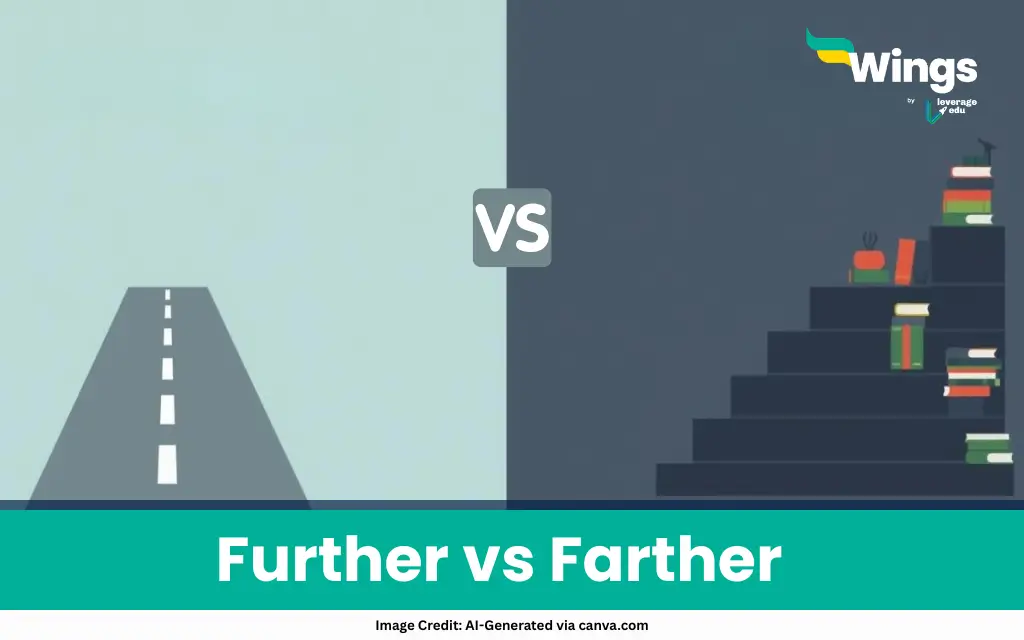
- Farther refers to measurable, physical distance, such as places or routes you can see or travel, and is used in sentences like “The school is farther from my house,” with a memory tip linking the word “far” to real distance.
- Further describes figurative or abstract distance, including ideas, time, education, or progress, and appears in examples like “She wants to study further after graduation,” with a memory trick connecting further to the “future” and advancement.
- The key difference between further vs farther is usage context: farther is preferred for physical distance, while further is used for ideas or progress, with American English following this distinction more strictly and British English often using further in both contexts.
Have you ever paused mid-sentence and thought that I write Furthur or Farther in the sentences? These two words look and sound similar, which is why they can confuse many English speakers like you. One tiny letter change can change the meaning of the sentence. In this guide, we will break it down for you to understand the difference between Furthur and Farther, with rules to remember, real examples, and memory tricks so you never mix them up again.
This Blog Includes:
- What Does “Farther” Mean?
- What Does “Further” Mean?
- Further vs Farther: Key Differences
- When to Use Farther?
- When to Use Further?
- Further vs Farther Examples in Sentences
- Common Mistakes Students Make While Using Further and Farther
- Easy Trick to Remember Further vs Farther
- Further vs Farther in American vs British English
- Practice Questions for Further vs Farther
- FAQs
What Does “Farther” Mean?
Farther is used when talking about physical distance or something you can measure in space. If you can actually see or travel the distance, “farther” is usually the correct word.
Farther means at a greater distance. It refers to how far something is in the real, physical world. Use further when describing places, movement, or locations you can measure in kilometres, meters, miles, or steps.
Example Sentences
- The school is farther from my house than the market.
- She walked farther than anyone else in the race.
- We drove farther down the road to find a hotel.
Memory Tip
Think of the word “far” inside farther. It relates to far in distance or something you can physically travel.
What Does “Further” Mean?
Further is used for figurative or abstract distance, which includes ideas, time, progress, or level of understanding. You can’t measure it physically.
Further means to a greater degree, extent, or level. It often refers to progress, discussions, or additional information. Further is basically used for Figurative or Abstract Distance. Use further when talking about education, improvement, discussions, or time, not physical space.
Example Sentences
- We need to discuss this matter further.
- She wants to study further after graduation.
- For further details, contact the office.
Memory Trick
Link further with the future as it relates to progress, development, and moving ahead in ideas, not physical distance.
Also Read: Formation of Adjectives from Nouns, Verbs, Prefixes, and Suffixes
Further vs Farther: Key Differences
Look at the clear difference between Furthur and Farther from the table below:
| Feature | Farther | Further |
| Meaning | Refers to the physical distance you can see or measure | Refers to figurative or abstract distance |
| Usage | Used for measurable space (roads, places, steps) | Used for ideas, time, progress, or degree |
| Example | Walk farther down the road | We need further discussion |
When to Use Farther?
Use farther when talking about actual, physical distance. If the distance can be measured in kilometres, miles, meters, or steps, this is the right choice.
Distance You Can Measure
If you can calculate or see the distance, use farther. It relates to real space.
Travel-Related Contexts
Farther is used commonly in sentences about trips, routes, or locations.
Examples:
- She ran farther than her friends.
- The hospital is farther from here than the mall.
- We moved farther away from the city.
When to Use Further?
Use further when talking about non-physical ideas like education, improvement, discussions, or time. It can be used in various contexts as mentioned below:
Education and Progress
Further is often used when referring to learning or advancement.
Additional Information
This word can be used when something more needs to be added or explained.
Degree or Extent
‘Further’ word can be used to describe how much something develops or continues.
Examples:
- I plan to study further after graduation.
- For further details, visit the website.
- This topic needs further explanation.
Further vs Farther Examples in Sentences
Understanding the difference between further and farther is easier with examples. Here’s a side-by-side comparison to help you see how each word is correctly used:
| Word | Correct Example | Incorrect Example |
| Farther | “She ran farther than anyone else in the race.” | “We need to discuss this farther.” (non-physical idea) |
| Further | “We need to discuss this further before deciding.” | “She ran further than anyone else in the race.” (physical distance) |
| Farther | “The store is farther down the road.” | “Let’s explore this idea farther.” (non-physical idea) |
| Further | “He wants to further his education abroad.” | “The mountains are further than the river.” (physical distance) |
Tips:
- Farther is generally used for measurable, physical distance.
- Further is used for figurative ideas, progress, or additional information.
Common Mistakes Students Make While Using Further and Farther
Many learners confuse these words in writing and exams. Some of the common mistakes that Students Make While Using Further and Farther, includes:
1. Using Farther for Non-Physical Ideas
Farther should refer to measurable, physical distance.
Mistake: “We need to discuss this farther before deciding.”
Correction: “We need to discuss this further before deciding.”
Tip: If you can’t measure it, use further.
2. Mixing Both Words in Formal Writing
Some students alternate between further and farther incorrectly in essays or reports.
Mistake: “We walked farther into the project.”
Correction: “We explored the project further.”
3. Exam Errors and Multiple Choice Confusion
Standardised tests often test the difference between further and farther.
Mistake: Choosing farther for figurative contexts because it “sounds right.”
Tip: Remember: A = action (further for ideas/progress); Physical distance = farther.
4. Overusing Further for Physical Distance
While further is acceptable for physical distance in British English, overusing it in American English can be marked as less precise.
Also Read: Understanding the Duolingo English Test’s New Security Feature
Easy Trick to Remember Further vs Farther
Here’s a simple memory trick to remember the difference between Further vs Farther:
- Farther = physical distance → remember the word far inside farther.
- Further = future/progress → anything abstract, figurative, or related to advancement.
Example:
- Physical: “The city is farther than we thought.”
- Figurative: “We need to discuss this further to reach a decision.”
Further vs Farther in American vs British English
While further and farther are understood globally, howevbere its usage patterns differ slightly between American and British English as mentioned below:
- American English:
- Both further and farther are used, but farther is preferred for physical distance.
- Further is typically reserved for figurative ideas, progress, or additional information.
- Example:
- Physical: “The gas station is farther down the road.”
- Figurative: “We need to discuss this further before deciding.”
- British English:
- Further is more commonly used in both physical and figurative contexts.
- Farther is rarely used and may appear only in literary or old-fashioned contexts.
- Example:
- “The village is further along the path.”
- “We need to investigate this further.”
Acceptable Variations for American English and British English:
| Variant | American English | British English |
| Farther (physical) | Preferred | Rarely used |
| Further (figurative) | Standard | Standard |
| Further (physical) | Acceptable | Common |
Tip: When writing for an international audience, further is generally safe in all contexts.
Practice Questions for Further vs Farther
Test your understanding of further vs farther by looking at the exercise mentioned below:
Fill in the Blanks
- The bookstore is a little ______ down the street.
- We need to discuss this matter ______ before making a decision.
- Her research helped to ______ our understanding of climate change.
- The mountains are much ______ than they appeared from the train.
Multiple Choice
- Which is correct?
a) I ran further than my friend.
b) I ran farther than my friend. - Which is correct?
a) Let’s talk farther about the new project.
b) Let’s talk further about the new project.
Answer Key:
- farther
- further
- further
- farther
- b) farther
- b) further
Understanding the difference between further and farther becomes easy when you remember one simple rule: use farther for measurable, physical distance and further for abstract ideas, progress, or additional information. With the memory tricks, examples, and usage tips shared in this guide, you can avoid common mistakes and choose the correct word confidently in both writing and exams. Consistent practice will help you master this small but important distinction in English.
FAQs
Use farther for physical, measurable distance, and further for figurative distance, progress, degree, or additional information. Think: “Farther = feet/miles, Further = ideas/advancement.”
In American English, farther is preferred for physical distance, while further is mostly reserved for figurative use. This distinction keeps writing precise and measurable.
Correct usage: “Money goes farther”, because it implies tangible, measurable value. Further would be incorrect here in strict American English usage.
British English is more flexible; further is often used for both physical and figurative distance, while farther is still acceptable for physical distance but is less common.
The common mistakes we make while using further/farther are:
Using farther for abstract ideas
Mixing both in formal writing
Overusing further for a measurable distance
Confusing in exams or professional contexts
Related Reads:
Want to avoid common grammar mistakes like Further vs Farther in your exam? Explore more easy grammar guides in our IELTS Preparation Series and boost your band score with confidence. You can also follow Leverage Edu for more exciting and informative blogs.

 60,000+ students trusted us with their dreams. Take the first step today!