

 One app for all your study abroad needs

















Holiday homework is one of the best ways to ensure that students don’t lose touch with their studies while still enjoying their vacation. Holiday homework consists of projects and activities that not only promote learning but are also fun and enjoyable for students. In this blog, we bring you 7 creative ideas for holiday homework for Class 4 Science. These ideas are a lot of fun to create and execute and they will make sure that students learn one concept or another. To learn about those ideas, keep reading this blog.
Holiday Homework for Class 4 Science: Activities and Projects
After understanding why holiday homework is useful, exploring meaningful and fun activities becomes the next step. The ideas below are designed to help Class 4 students learn through observation, creativity, and simple experiments. Each activity encourages hands-on learning and helps students connect science with the world around them in an enjoyable way.
General Instructions for Class 4 Science: Activities and Projects:
- Read each task carefully before starting.
- Use neat handwriting and label diagrams clearly.
- Collect materials responsibly and with permission.
- Record dates if the activity involves observation over time.
- Keep the work neat, organised, and easy to follow.
- Submit all completed work in a single folder or notebook.
1. World of Plants
The World of Plants topic inspires students to explore plant life through fun and hands-on activities.
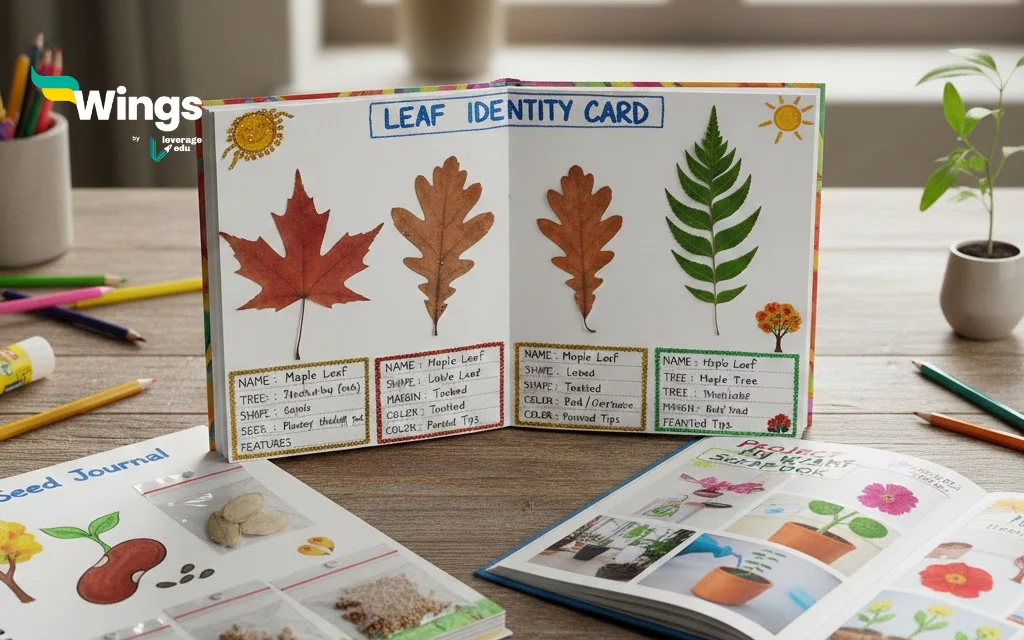
In this section, we will discuss Creative Ideas for Holiday Homework for Class 4, including Activity 1: Leaf Identity Card, Activity 2: Seed Journal, and Project: My Plant Scrapbook. Students can identify different leaves, observe seed growth, and compile a scrapbook to showcase plant diversity. World of Plants activities help improve observation and recording skills, make learning interactive, and encourage curiosity about nature, turning holiday homework into an engaging science experience.
Activity 1: Leaf Identity Card
Collect 4 to 5 different leaves from plants around your home or garden. Paste each leaf on a separate sheet of paper. Write the name of the plant, where you found the leaf, its shape and colour, and the type of plant (tree, shrub, herb, climber, or creeper).
Observe the leaf carefully and note if it is smooth, rough, or has a waxy coating. Also observe the vein pattern (parallel or net-like). Make a texture rubbing of the leaf by placing it under a sheet of paper and gently rubbing over it with a pencil. Finally, write one interesting fact about the plant, such as its use for food, medicine, or decoration.
Activity 2: Seed Journal
Take an empty plastic bottle and, with an adult’s help, cut it so that approximately ¾ of the bottle remains from the bottom. Carefully make 3 to 4 small drainage holes at the bottom of the bottle using scissors (adult supervision required).
Fill the bottle with soil and plant seeds of your choice, such as beans, peas, or mustard. Water the seeds lightly each day and place the bottle in a spot where it can receive adequate sunlight. Observe the growth of the plant every day for 2 to 3 weeks. Create a growth chart to record your daily observations, including the date, plant height, number of leaves, and small drawings showing how the plant changes over time.
Project for Holiday Homework for Class 4 Science: My Plant Scrapbook
Create a scrapbook to explore different types of plants around you. Collect pictures, drawings, or cut-outs of plants such as herbs, shrubs, trees, climbers, and creepers. Dedicate one page to each plant type. On each page, paste an example and write the plant’s name, its type, and one interesting fact, such as its use for food, medicine, shade, or decoration. You can also include leaf rubbings, small drawings, or short notes about where the plant typically grows and any special features it has.
2. Material Mania
The Material Mania topic encourages students to explore different materials used in daily life and understand their properties.
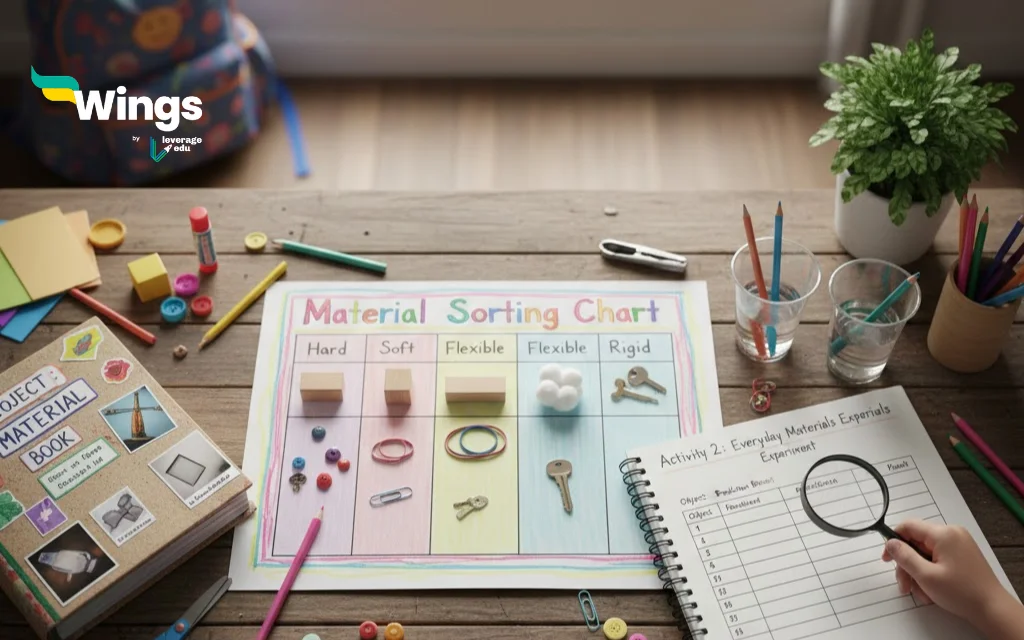
In this section, we will discuss Creative Ideas For Holiday Homework for Class 4, including Activity 1: Material Sorting Chart, Activity 2: Everyday Materials Experiment, and Project: My Material Book. Students can classify materials as natural or synthetic, test their properties like hardness or flexibility, and compile a book showcasing different materials and their uses. These activities help develop observation and analytical skills, make learning interactive, and turn holiday homework into a fun and practical science experience.
Activity 1: Material Sorting Chart
Collect small items from around your home, such as plastic spoons, small pieces of glass (with adult supervision), metal keys, paper scraps, cloth pieces, or wooden objects like ice cream sticks.
Paste each lightweight item on a sheet of paper, or draw and colour them if you cannot paste them safely. Create a chart with two columns to classify the items into natural materials (like wood, cotton, wool, stone, rubber) and synthetic materials (like plastic, nylon, polyester, acrylic). Observe each item carefully and write one or two properties, such as hard, soft, flexible, brittle, transparent, or waterproof. You may also note whether the item can be easily bent, broken, or torn.
Activity 2: Everyday Materials Experiment
Choose 3–4 materials from your home, such as a metal spoon, a plastic bottle piece, a cloth scrap, and paper. Test each material for different properties, like:
- Flexibility: Can it bend without breaking?
- Hardness: Can it be scratched easily with your fingernail or a coin?
- Water absorption: Does it absorb water or repel it and stay dry?
- Strength: Can it be torn or broken easily?
Record your observations in a table with columns for Material Name, Flexibility, Hardness, Water Absorption, and Strength. You can also make small drawings or take photos of the materials before and after testing to show any changes.
Safety tip: Always ask an adult before testing any materials, especially glass or sharp metal objects.
Project Holiday Homework for Class 4 Science: My Material Book
Create a small book or scrapbook to explore different materials around you. Collect pictures, drawings, or small samples of materials such as wood, metal, plastic, glass, cloth, and paper. Dedicate one page to each material and include:
Name of the material
- Type of material (natural or synthetic)
- Two or three properties (hard, soft, flexible, brittle, transparent, waterproof, etc.)
- Two common uses in everyday life
You can also add small experiments or observations about the material, such as:
- Does it float or sink in water?
- Does it conduct heat (gets warm quickly)?
- Can it be easily bent, stretched, or compressed?
- Is it recyclable?
Make your book colourful and informative by adding borders, labels, and interesting facts about each material.
3. Science of Superheroes
Science of Superheroes helps students explore real scientific concepts through the exciting world of superheroes.
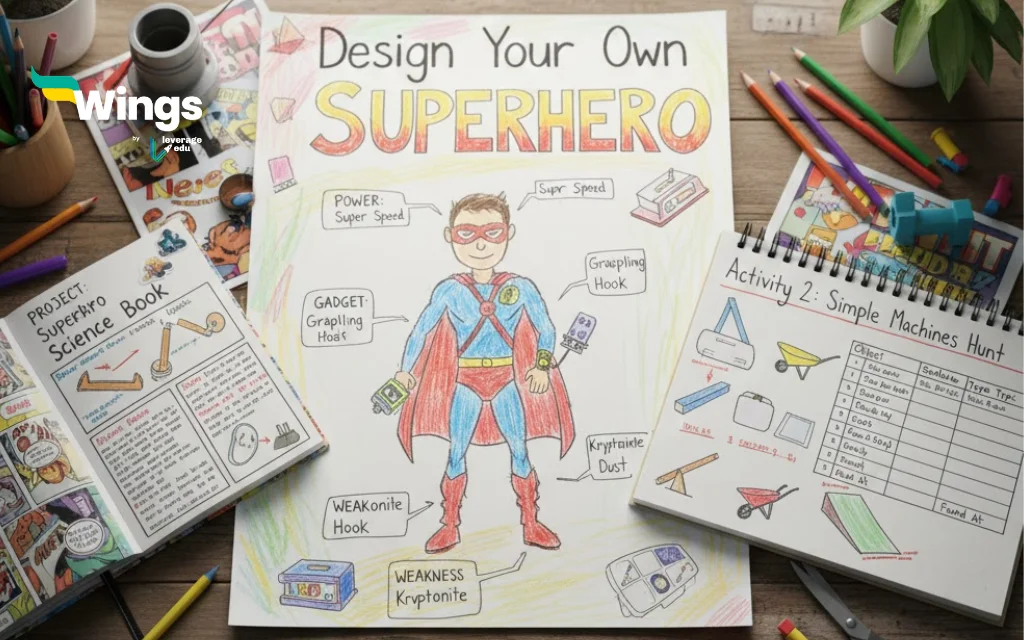
In the section of Creative Ideas For Holiday Homework for Class 4, including Activity 1: Design Your Own Superhero, Activity 2: Simple Machines Hunt, and Project: Superhero Science Book. Students investigate forces, energy, simple machines, and human abilities by connecting them to superhero powers. These activities encourage creative thinking while learning about physics, biology, and technology in a fun and relatable way.
Activity 1: Design Your Own Superhero
Create your own superhero with special powers based on real science. Draw your superhero and give them a name. Choose one superpower, such as super strength, super speed, flight, or invisibility. Research and write about the real science behind this power. Explain what your superhero would use the power for and how they would help people. Include a colourful drawing of your superhero in action.
Activity 2: Simple Machines Hunt
Look around your home and find examples of simple machines like levers (scissors, bottle opener), wheels and axles (doorknobs, toy cars), inclined planes (ramps, slides), pulleys (window blinds), wedges (knife, axe), and screws (jar lids, light bulbs). Take photos or draw pictures of at least 5 simple machines. For each, write its name, how it works, and how it makes work easier. Think about how a superhero might use this simple machine in their adventures.
Project Holiday Homework for Class 4 Science: Superhero Science Book
Create a book featuring 4 to 5 superheroes (from movies, comics, or imagination). Dedicate one page for each superhero with a drawing or picture, their superpower, the real science concept behind it, and whether this power could exist with current science. Make the book colourful and engaging with illustrations and scientific facts.
Explore: Creative Holiday Homework for Class 5 All Subjects
4. Chemistry of the Kitchen
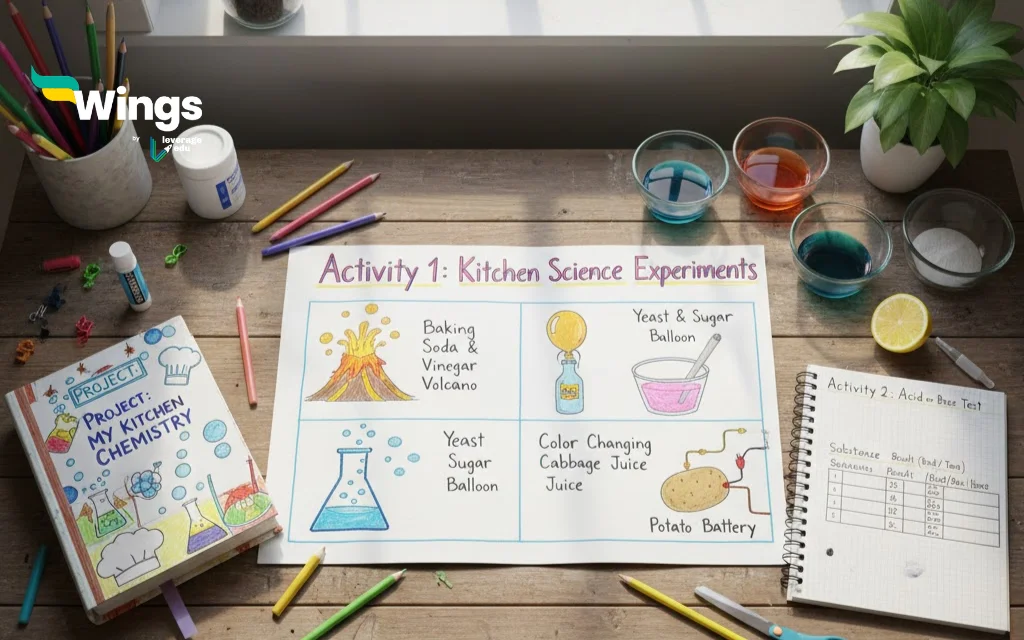
Chemistry of the Kitchen introduces students to basic chemical reactions and properties using safe household ingredients. In this section, we will discuss Creative Ideas for Holiday Homework for Class 4, including Activity 1: Kitchen Science Experiments, Activity 2: Acid or Base Test, and Project: My Kitchen Chemistry Book. Students conduct simple experiments to observe changes in matter, learn about acids and bases, and understand how ingredients interact. This hands-on approach makes chemistry accessible, exciting, and safe.
Activity 1: Kitchen Science Experiments
Conduct 3 simple kitchen experiments with adult supervision:
- Volcano Eruption: Mix 2 tablespoons of baking soda in a small cup. Add a few drops of food colouring (optional) and then pour in 4 tablespoons of vinegar. Observe the fizzing reaction.
- Invisible Ink: Dip a cotton swab in lemon juice and write a secret message on white paper. Let it dry completely. Hold the paper near a warm light bulb (with adult help) and watch your message appear.
- Dancing Raisins: Fill a clear glass with colourless soda (like Sprite or 7Up). Drop in 5–6 raisins and watch them dance up and down due to the carbon dioxide bubbles.
For each experiment, record what materials you used, what you did (steps), what you observed, and why you think it happened.
Activity 2: Acid or Base Test
Make a natural indicator using red cabbage. Ask an adult to help you boil chopped red cabbage in water for 10 minutes. Let it cool and strain the purple liquid. This is your indicator. Collect small amounts of safe household liquids like lemon juice, soap water, vinegar, baking soda solution, and milk. Add a few drops of your cabbage indicator to each liquid in separate small cups.
Observe the colour change: acids turn the indicator pink or red, while bases turn it green or blue. Create a chart showing each liquid and whether it is an acid or base based on the color change.
Project for Holiday Homework for Class 4 Science: My Kitchen Chemistry Book
Create a colourful book documenting your kitchen experiments. Include pages for each experiment with the title, materials needed, step-by-step instructions with drawings, observations, and scientific explanation. Add safety tips for each experiment, such as washing hands, wearing an apron, and working with adult supervision. Include interesting facts about chemistry in cooking, like how baking powder helps cakes rise or how salt preserves food.
5. Shadow Study Project
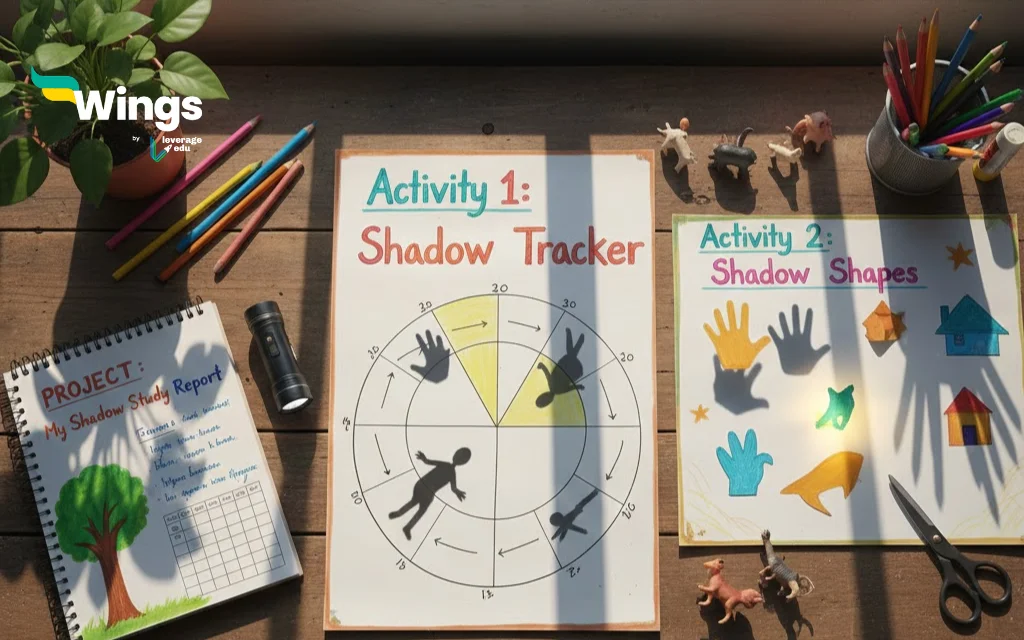
Shadow study project helps students understand the relationship between light, objects, and shadows. In this section, we will discuss Creative Ideas For Holiday Homework for Class 4 including Activity 1: Shadow Tracker, Activity 2: Shadow Shapes, and Project: My Shadow Study Report. Students learn how shadows change with sunlight and light sources while developing observation skills.
Activity 1: Shadow Tracker
On a sunny day, choose an outdoor spot that gets sunlight all day. Place a stick or pole vertically in the ground (or use a fixed object like a tree or pole). Mark the spot clearly. At three different times, early morning (around 8 AM), midday (around 12 noon), and late afternoon (around 4 PM), measure the length of the shadow using a measuring tape or ruler.
Trace the shadow’s position on the ground with chalk or mark it with stones. Record the time, shadow length, and direction for each observation. Draw what you observed and write about how and why the shadow changed throughout the day.
Activity 2: Shadow Shapes
Use a flashlight in a dark room to create shadows of different objects like toys, your hand, a cup, or a book. Place the object between the flashlight and a wall. Move the flashlight closer and farther from the object and observe how the shadow changes in size.
Try moving the flashlight to different angles and observe how the shadow’s shape changes. Make drawings showing how the same object creates different shadows when the light source moves. Write your observations about what happens to shadows when the light source is close versus far away.
Project for Holiday Homework for Class 4 Science: My Shadow Study Report
Create a detailed report of your shadow observations. Include a title page with your name and project title. Make a chart showing the shadow measurements from Activity 1 with columns for Time, Shadow Length, Shadow Direction, and a small drawing. Add photographs or drawings of your shadow tracker at different times of the day.
Write a conclusion explaining why shadows change during the day (because the sun’s position changes as Earth rotates). Include interesting facts about shadows, such as how sundials use shadows to tell time or how shadows are shortest at noon.
6. Weather Station at Home
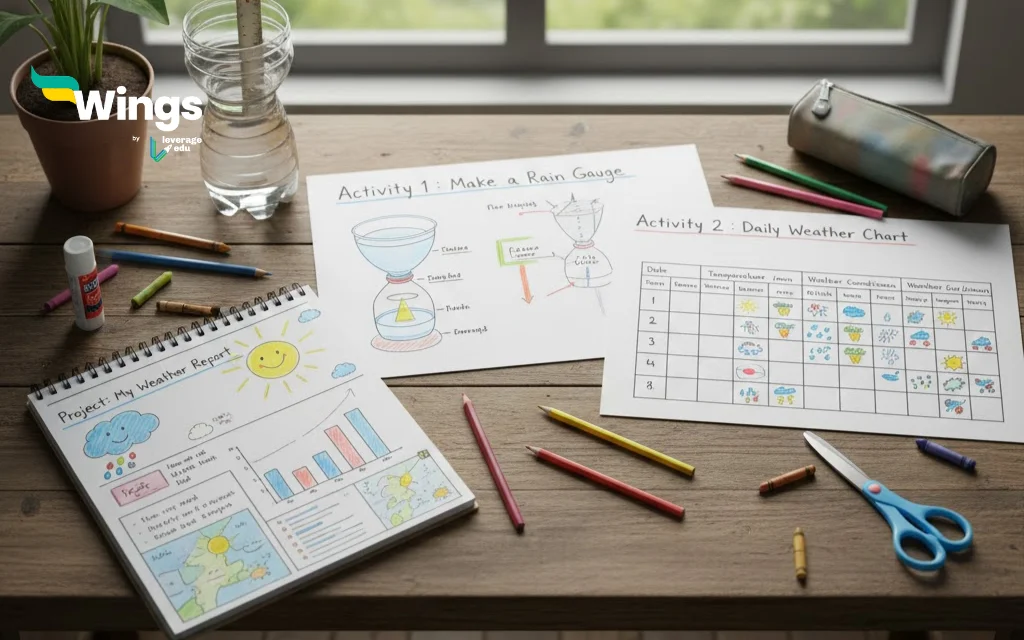
Weather Station at Home turns students into young meteorologists who observe and record weather patterns. In this section, we will discuss Creative Ideas For Holiday Homework for Class 4 including Activity 1: Make a Rain Gauge, Activity 2: Daily Weather Chart, and Project: My Weather Report. Students learn to track temperature, rainfall, wind, and sky conditions, developing data collection and pattern recognition skills.
Activity 1: Make a Rain Gauge
Create a simple rain gauge using a clear plastic bottle. Cut off the top third of the bottle and invert it into the bottom part to create a funnel. Use a ruler and permanent marker to draw a scale on the side of the bottle, marking lines every centimetre or half-inch. Place your rain gauge outdoors in an open area away from trees or buildings.
After it rains, check the water level and record the amount of rainfall. Empty the gauge after each measurement. Keep a rain log for 2 to 3 weeks, recording the date and rainfall amount. If it doesn’t rain, record 0 mm or no rain for that day.
Activity 2: Daily Weather Chart
Create a weather observation chart to record daily weather for two weeks. Each day at the same time (preferably morning or afternoon), observe and record: temperature (check a thermometer or weather app), sky condition (sunny, cloudy, partly cloudy, rainy, stormy), wind (calm, breezy, windy, very windy), and any special observations (rainbow, fog, thunder).
You can use simple drawings or weather symbols like a sun for sunny, clouds for cloudy, and raindrops for rainy. At the end of two weeks, look at your chart and identify patterns, such as which days were warmest or if there were more sunny or cloudy days.
Project for Holiday Homework for Class 4 Science: My Weather Report
Compile your weather data into a comprehensive report. Create a title page saying My Weather Station Report with your name and dates of observation. Include your daily weather chart with all recordings. Make graphs showing temperature changes over the two weeks and total rainfall collected. Write a summary of the weather patterns you observed, such as It rained 3 times in two weeks or The warmest day was [date] with a temperature of [X] degrees. Add drawings or photos of different weather conditions you observed. Include interesting weather facts, like how clouds form or what causes wind.
Explore: Computer Holiday Homework for Classes 1 to 10
7. Magnet Hunt and Sorting
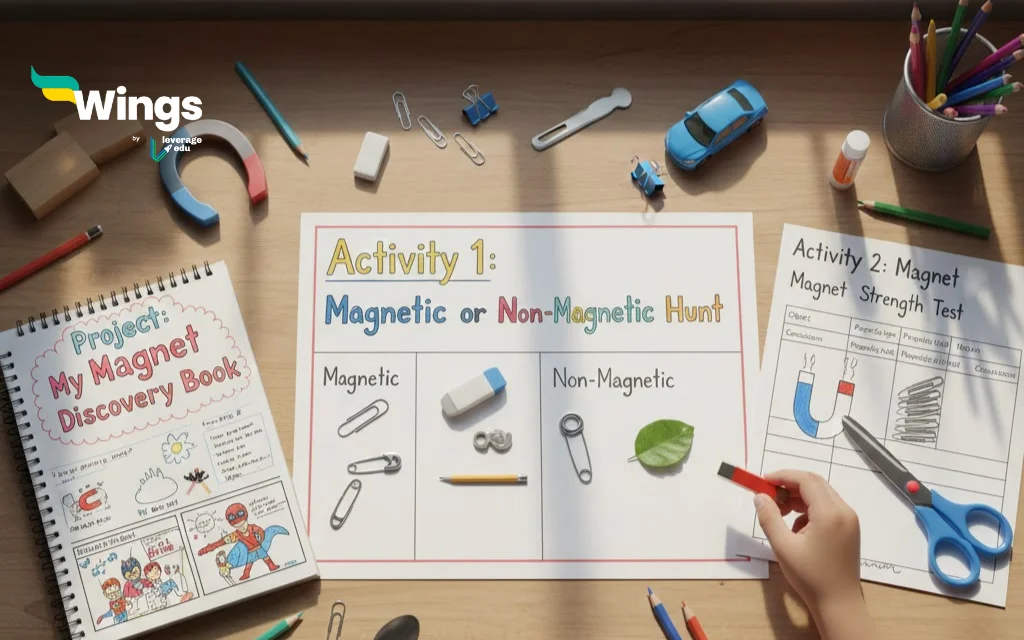
Magnet Hunt and Sorting introduces students to the fascinating world of magnetism. In this section, we will discuss Creative Ideas For Holiday Homework for Class 4 including Activity 1: Magnetic or Non-Magnetic Hunt, Activity 2: Magnet Strength Test, and Project: My Magnet Discovery Book. Students explore which materials are magnetic, learn properties of magnets, and develop classification and observation skills.
Activity 1: Magnetic or Non-Magnetic Hunt
Get a small magnet (refrigerator magnet or bar magnet) and test at least 15–20 different objects around your home. Try items made of different materials like iron nails, aluminium foil, copper coins, plastic toys, wooden spoons, glass bottles, paper clips, keys, fabric, rubber bands, and ceramic items.
For each object, test whether the magnet attracts it or not. Create a two-column chart with headings Magnetic Materials and Non-Magnetic Materials. Draw or paste pictures of each item in the correct column. Notice which types of materials are magnetic, and you will discover that most magnetic items contain iron or steel.
Activity 2: Magnet Strength Test
Collect 2–3 different magnets of various sizes (small refrigerator magnet, larger bar magnet, horseshoe magnet if available). Test the strength of each magnet by seeing how many paper clips it can hold in a chain. Hold the magnet and attach paper clips one by one until they start falling off. Count and record how many paper clips each magnet can hold.
Also test how far away each magnet can attract a paper clip by slowly moving it closer until the paper clip moves. Measure this distance with a ruler. Record your observations in a table and determine which magnet is strongest.
Project for Holiday Homework for Class 4 Science: My Magnet Discovery Book
Create a colourful book about magnetism. Include a page showing your magnetic and non-magnetic materials chart with drawings or photos. Add a page explaining what you learned about which materials are attracted to magnets (metals containing iron). Include your magnet strength test results with a comparison chart or bar graph.
Write about the uses of magnets in everyday life, such as in refrigerator doors, compasses, speakers, and toys. Add interesting facts about magnets, like how Earth itself is a giant magnet or how magnets have north and south poles that attract and repel. Make your book interactive by attaching a small magnet to test items throughout your book.
8. Animal Adaptation Scrapbook
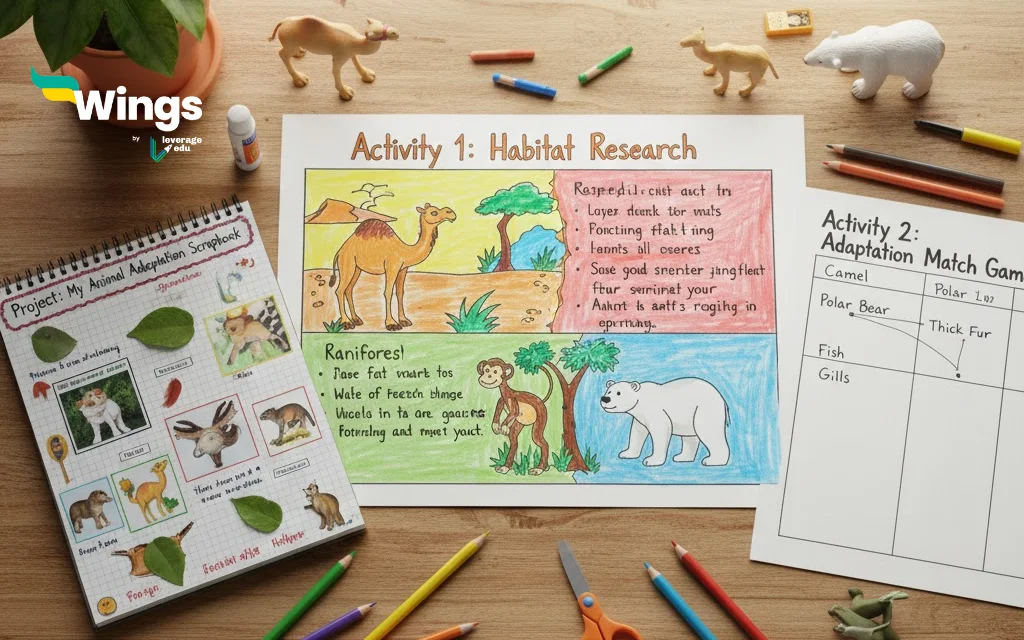
The Animal Adaptation Scrapbook helps students understand how animals have special features that help them survive in different environments. In this section, we will discuss Creative Ideas For Holiday Homework for Class 4, including Activity 1: Habitat Research, Activity 2: Adaptation Match Game, and Project: My Animal Adaptation Scrapbook. Students explore various habitats and learn about physical and behavioural adaptations, developing research skills, understanding of ecosystems, and appreciation for biodiversity.
Activity 1: Habitat Research
Choose four different habitats: desert, ocean, arctic/polar regions, and rainforest. For each habitat, research and find information about 2–3 animals that live there. For each animal, write about: the animal’s name, the habitat where it lives, special body features (like thick fur, long legs, fins, or camouflage colours), how these features help the animal survive (keep warm, find food, escape predators, store water), and one interesting fact about the animal. Include pictures or drawings of each animal in its habitat.
Activity 2: Adaptation Match Game
Create a matching activity with animal adaptations. Draw or print pictures of 6 to 8 animals with unique adaptations, such as: camel (stores water in hump), polar bear (thick white fur for warmth and camouflage), giraffe (long neck to reach tall trees), penguin (streamlined body for swimming), chameleon (changes color for camouflage), owl (large eyes for night vision), cactus plant (stores water, has spines), and duck (webbed feet for swimming).
On separate cards, write the adaptation for each animal. Mix them up and practice matching each animal with its special adaptation. Paste the completed matches in your scrapbook.
Project for Holiday Homework for Class 4 Science: My Animal Adaptation Scrapbook
Create a beautiful scrapbook showcasing animal adaptations across different habitats. Dedicate 2 to 3 pages to each habitat (desert, ocean, arctic, rainforest). For each habitat page, include: the habitat name and a description of its conditions (hot, cold, wet, dry), pictures or drawings of 2 to 3 animals from that habitat, labeled diagrams showing each animal’s special adaptations (arrows pointing to thick fur, long legs, fins, and likewise.), and explanations of how each adaptation helps survival.
Add a comparison page showing how different animals have solved similar problems in different ways (like how camels and cacti both store water). Include a Did You Know? section with fascinating adaptation facts, such as how Arctic foxes change fur colour with seasons or how some fish can produce their own light in deep oceans.
9. Recycling Craft Challenge
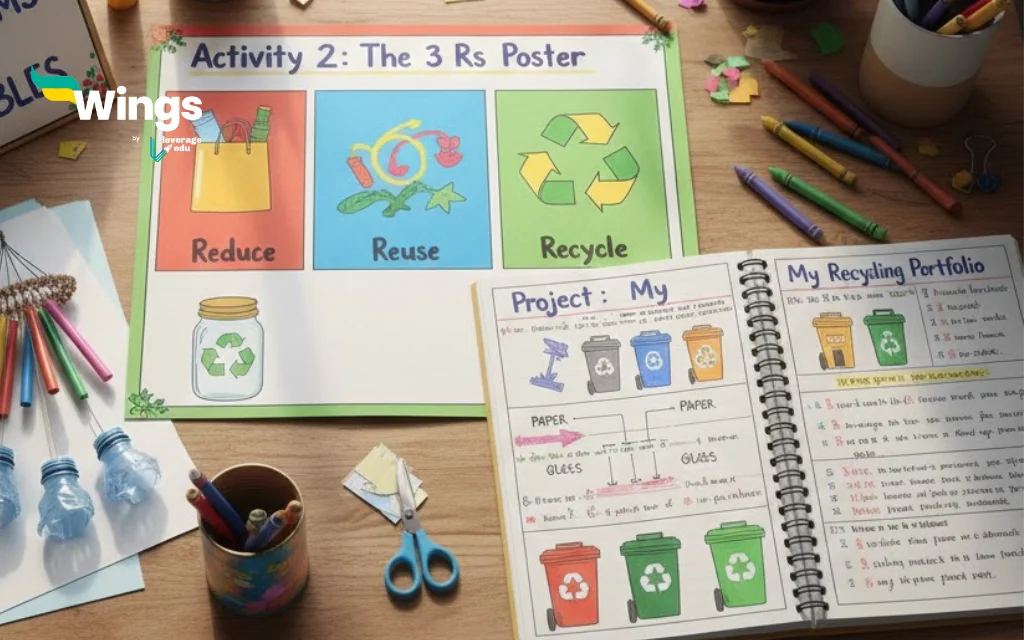
Recycling Craft Challenge teaches students about waste management, environmental conservation, and creativity through reusing materials. In this section, we will discuss Creative Ideas For Holiday Homework for Class 4 including Activity 1: Create Useful Items from Recyclables, Activity 2: The 3 Rs Poster, and Project: My Recycling Portfolio. Students transform recyclable items into useful or decorative objects, promoting sustainability, problem-solving, and artistic skills.
Activity 1: Create Useful Items from Recyclables
Collect clean recyclable materials from home, such as plastic bottles, cardboard boxes, tin cans, newspaper, old CDs, bottle caps, and egg cartons. Choose one or two items to create something useful. Ideas include: a pen holder from tin cans (cover with colored paper or paint), a bird feeder from a plastic bottle (cut openings and add a perch), a planter from a plastic bottle or carton, a piggy bank from a plastic bottle, or a desk organiser from a cardboard box with compartments.
Decorate your creation with paints, colored paper, or fabric scraps. Take photos of your creation and write about what materials you used, why you chose this project, and how it can be useful.
Activity 2: The 3 Rs Poster
Create an informative poster about the 3 Rs of waste management: Reduce, Reuse, and Recycle. Divide your poster into three sections. In the Reduce section, write and draw ways to use less (like using both sides of paper or turning off lights). In the Reuse section, show examples of using items again (like using glass jars for storage or shopping bags multiple times).
In the Recycle section, draw items that can be recycled (paper, plastic, glass, metal) and explain how recycling helps the environment. Make your poster colourful and add the slogan Save Earth, Reduce Waste
Project for Holiday Homework for Class 4 Science: My Recycling Portfolio
Create a complete portfolio documenting your recycling journey. Include photographs showing the before and after of your recycled craft-pictures of the waste materials you collected and the finished useful item. Write a detailed description of your creation process: materials used, steps you followed, challenges you faced, and how you solved them. Add a page about why recycling is important, including facts like Recycling one ton of paper saves 17 trees or Plastic takes 500+ years to decompose in landfills. Include drawings or collected examples of the recycling symbol found on products.
Write a pledge about how you will reduce waste at home and school, such as using reusable water bottles, avoiding single-use plastics, and properly sorting waste. Make your portfolio inspiring by adding creative borders and environmental messages.
10. States of Matter Exploration
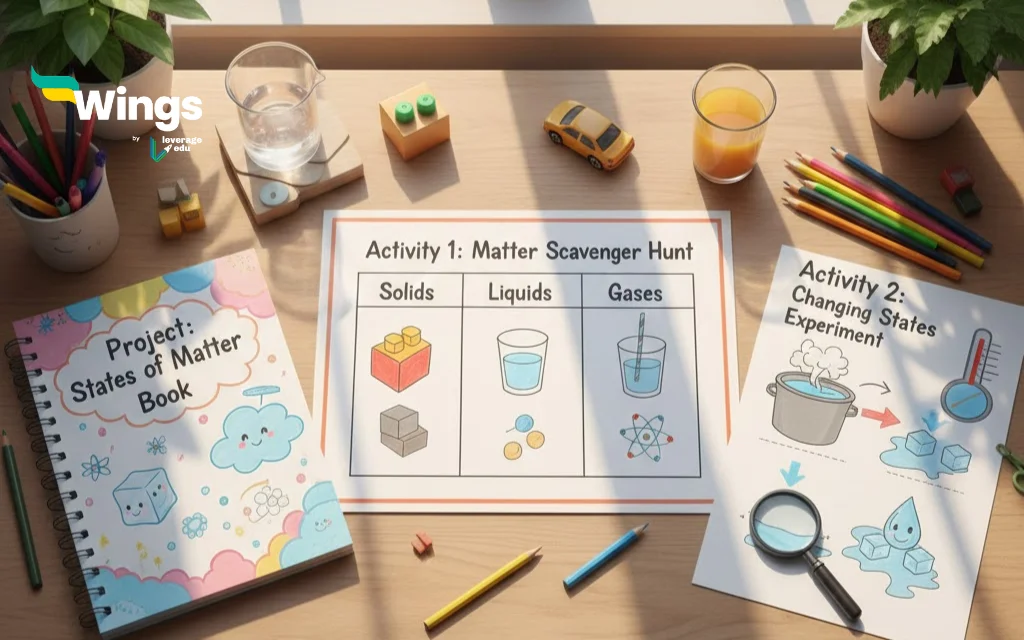
States of Matter Exploration helps students understand solids, liquids, and gases through observation and simple experiments. In this section, we will discuss Creative Ideas For Holiday Homework for Class 4, including Activity 1: Matter Scavenger Hunt, Activity 2: Changing States Experiment, and Project: States of Matter Book. Students learn how matter changes state and identify examples in their surroundings, making foundational chemistry concepts hands-on and interactive.
Activity 1: Matter Scavenger Hunt
Go on a scavenger hunt around your home to find examples of solids, liquids, and gases. Find at least 8–10 examples of each state. For solids, look for items like books, pencils, furniture, toys, or utensils. For liquids, find water, milk, juice, oil, or shampoo. For gases, think of air in balloons, steam from hot water, cooking gas smell, or air from a fan. Create a three-column chart with headings Solids, Liquids, and Gases. Draw or paste pictures of each item you found in the correct column. Below each item, write one property, such as has a definite shape for solids, takes the shape of a container for liquids, or fills the entire space for gases.
Activity 2: Changing States Experiment
Conduct simple experiments to observe matter changing states (with adult supervision):
- Freezing (Liquid to Solid): Fill an ice cube tray with water. Place it in the freezer. Check after a few hours and observe how liquid water becomes solid ice. Draw the before and after states.
- Melting (Solid to Liquid): Take an ice cube and place it in a bowl at room temperature. Observe how the solid ice melts into liquid water over time. Note how long it takes to completely melt.
- Evaporation (Liquid to Gas): Pour a small amount of water into a shallow plate. Mark the water level with a marker on the side. Place it in a sunny spot. Check it daily for 3–5 days and observe how the water slowly disappears as it evaporates into water vapor (gas).
- Condensation (Gas to Liquid): Fill a glass with ice-cold water. Observe water droplets forming on the outside of the glass. This happens when water vapour in the air touches the cold glass and changes back to liquid water.
Record each experiment with drawings showing the change, the time it took, and what you learned about states of matter.
Project for Holiday Homework for Class 4 Science: States of Matter Book
Create an educational book about the three states of matter. Make separate sections for solids, liquids, and gases. For each state, include: a definition in simple words, properties (shape, volume, how particles are arranged), 5 to 6 examples with colourful drawings or pictures, and one page showing how matter can change from one state to another. Include your scavenger hunt chart and experiment observations with before-and-after drawings.
Add a Matter All Around Us page showing how we use all three states in daily life, like ice (solid) in drinks, water (liquid) for washing, and steam (gas) for cooking. Include fun facts such as Water is the only substance commonly found in all three states on Earth, or The sun is made of gas so hot it glows. Make your book interactive with flaps or movable parts showing state changes.
Also Read: 10 Creative Ideas For Holiday Homework for Class 4 Science
Exploring the creative ideas for holiday homework for Class 4 Science allows students to connect classroom learning with the world around them. Each activity and project encourages hands-on observation, critical thinking, and creativity while making science fun and engaging. From studying plants and animals to experimenting with kitchen chemistry, shadows, and states of matter, these activities ensure that learning continues even during vacations. By completing these projects, students not only strengthen their scientific knowledge but also develop curiosity, problem-solving skills, and an appreciation for nature and technology, all in an enjoyable and interactive way.
FAQs
Ans: You can make your holiday homework creative by using various decorative materials like mirrors, glitter, poster acrylic colours, and likewise. You can decorate your holiday homework in numerous ways thus making it creative.
Ans: You can finish your holiday homework on time by making a schedule and sticking to it. Discipline is what you need to complete your holiday homework early.
Ans: Studying can be made fun by adopting creative and interesting means to gain knowledge. Also, it is important to give equal importance to playing or recreational time too so that the schedule doesn’t become boring.
Ans. The best science project for 4th grade is one that is simple, hands-on, and helps students observe and learn scientific concepts in a fun way. Projects like growing plants in a bottle (Seed Journal), creating a Leaf Identity Card, exploring kitchen chemistry, studying shadows, or making a Food Chain Mobile are excellent choices. These projects allow students to experiment, record observations, and connect science with real-life examples, making learning interactive and enjoyable.
Ans. Science topics for grade 4 usually cover a wide range of concepts from life, physical, and earth sciences. Some common topics include:
– Plants and animals (adaptations, habitats, food chains)
– States of matter (solid, liquid, gas)
– Simple machines and forces
– Light, shadows, and magnetism
– Weather and climate observations
– Human body and senses
– Basic chemistry (kitchen experiments, acids, and bases)
– Environmental studies (recycling, conservation, natural resources)
Explore interesting ideas for school children here:
To refer to interesting ideas related to children’s school education activities, follow Leverage Edu now!!

 60,000+ students trusted us with their dreams. Take the first step today!