

 One app for all your study abroad needs













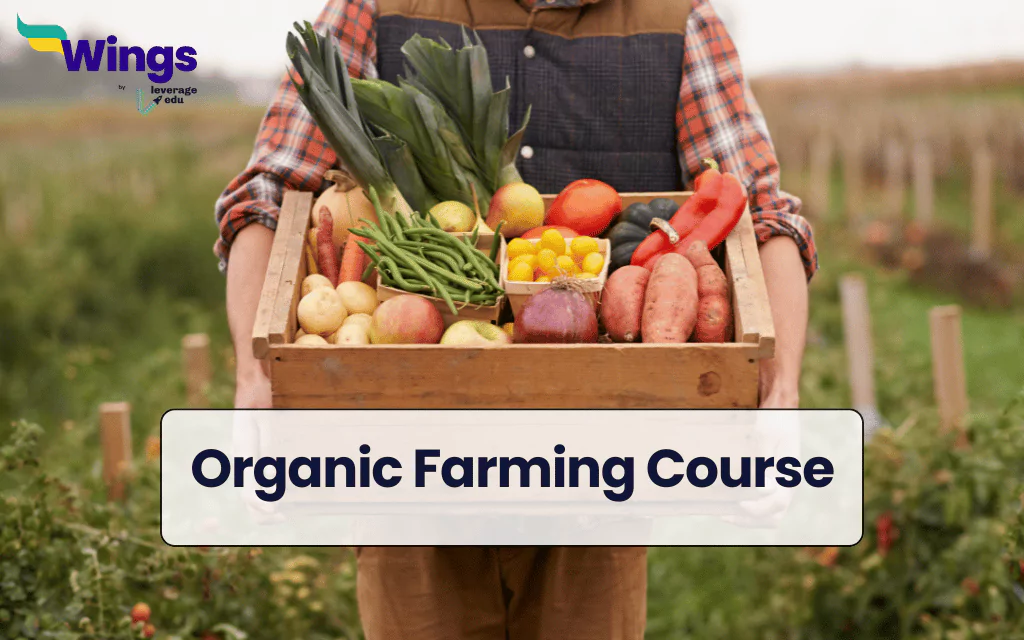
Organic farming is not just about producing chemical-free products but also about farming that focuses on the betterment of nature. In a world where our actions are threatening nature itself, organic farming is one way of reducing our negative impact on the environment.
The best part about Organic Farming is that you don’t really need a big land to start and can start producing your own organic fruits and vegetables at home! Want to pursue a course in Organic Farming? Read this blog to know the top Organic Farming courses, colleges, and scope!
This Blog Includes:
- What is Organic Farming?
- Why Study Organic Farming
- Types of Organic Farming Course
- Some Popular Online Courses in Organic Farming Courses
- Major Subjects Covered in Organic Farming Courses
- Top Universities and Colleges for Organic Farming Course
- Top Colleges for Organic Farming Courses in India
- Eligibility Criteria
- Document Required for Organic Farming Courses
- Career Options After Organic Farming Courses
- Books for Organic Farming
- FAQs
What is Organic Farming?
An agricultural method known as organic farming places a high priority on sustainability by avoiding or drastically lowering the use of synthetic inputs such as chemical fertilisers, pesticides, hormones, and feed additives. In order to mobilise nutrients and safeguard plants as much as possible, it instead uses natural techniques such as crop rotations, animal manures, off-farm organic waste, mineral-grade rock additions, and biological systems.
Many people assume that this type of organic is just about using eco-friendly fertilisers and pesticides. But organic farming is much more than that. It’s an art in itself, and like every art, it needs to be learned. To put it simply, Organic Farming is a complex, sustainable method of farming which involves the use of various scientific techniques and methods aiming to increase productivity and also preserve the soil quality.
Why Study Organic Farming
Studying organic farming helps you understand sustainable methods of food production while promoting health, environmental conservation, and profitability. It equips learners with practical skills to grow chemical-free crops, meet rising market demand, and build rewarding careers in agriculture and agribusiness.
Here we have added some major benefits of doing organic farming courses:
- Healthier Food Production: Organic farming helps us to produce safe, chemical-free crops.
- Environmental Sustainability: It helps us to reduce solid degradation of water, pollution, and carbon footprint.
- Career Opportunities: Pursuing an organic farming course opens a path in organic farming, agro-tourism, research, consultancy, and organic product businesses.
- Government Support: Many governments provide subsidies, training, and certifications for organic farmers.
Also Read: Best Courses After 12th PCM
Types of Organic Farming Course
Organic farming courses are offered at various levels, from short-term certificate programs to full-fledged degrees. While short-term and certificate courses in Organic Farming are the most popular, there are various degree-level programs available, which you can also choose from!
Here are some of the different types of organic farming courses:
| Diploma Courses | Undergraduate Courses | Postgraduate Courses |
| Certificate in Organic Farming for Sustainable Agricultural Production | Sustainable agriculture and Food systems – Specialisation in applied agriculture (B.A) | Master’s in Agricultural Economics |
| Short Course in Alternative Farming | Agribusiness (B.Sc.) | Master’s in Food and Rural Development Research |
| Short Course in Soil Management | Bachelor’s in Sustainable Food and Farming | Master’s in Food Safety |
| Short Course in MEDEA – Mediterranean diet, biodiversity and functional food | Bachelor’s in Farm Management | Master’s in Agroecology |
| Short Course in Introduction to Organic Farming | Sustainable Farm Management and Agribusiness (B.Sc.) | Master’s in Multifunctional Agriculture |
| Inspection and Certification of organic produce | Bachelor’s in Land, farming and community | Master’s in Horticulture, emphasis – Urban |
| Short Course in Renewable Energy | Bachelor’s in Organic Agriculture Systems | Master’s in Sustainable and Efficient Food |
| Short Course in Organic Production System | Bachelor’s in Horticulture | Master’s in Plant and Soil Sciences |
| Economics and Marketing of Organic Products | Master’s in Environmental engineering and sustainable energy |
Some Popular Online Courses in Organic Farming Courses
Several online platforms and universities offer organic farming courses that cover topics like soil management, organic fertilisers, pest control, and sustainable agriculture. These flexible programs are ideal for students, professionals, and aspiring farmers who want to learn at their own pace. Here are some of the popular online courses in organic farming:
| Course Name | Provider | Duration |
| Best Sustainable Agriculture Course | University of Florida | 20 hours |
| Best Course on Organic Farming | NPTEL and IIT, Kharagpur | 20 hours |
| Also Great Agribusiness Course | Università Bocconi | 5-6 hours |
| Best Course for Beginners in Agricultural GIS | NPTEL and IIT, Bombay | 8 hours |
| Best Digital Agriculture Technologies (DATs) Course | World Bank Group) | 10-15 hours |
| Best Farming Course for Beginners | The Dutch Farmer | 3-4 hours |
Major Subjects Covered in Organic Farming Courses
Organic farming courses cover a wide range of topics, including soil fertility, composting, pest management, crop rotation, organic certification, and sustainable farm practices. These subjects help students gain both practical and theoretical knowledge to run successful organic farms. Here are some of the major subjects covered in organic farming courses:
| Introduction to Organic Agriculture | Crop Rotation | Companion Planting |
| Soil Science | Disease Management | Composting |
| Soil Fertility Management | Organic Pest | Organic Certification Standard |
| Sustainable Farm Management | Marketing and Business Strategies for Organic Products | Organic Fertilisers |
Top Universities and Colleges for Organic Farming Course
In recent times, universities across the world have realised the importance of organic farming and therefore included related courses in their curriculum.
So, here is a list of the top universities from different parts of the world that offer a variety of courses in organic farming:
| Institution Name | Location |
| Institute of Technology | Carlow |
| Warnborough College | United Kingdom |
| Hame University of Applied Sciences | Finland |
| University of Hohenheim, | Germany |
| University of Milano | Italy |
| Washington State University | USA |
| SRUC Scotland’s Rural College | Scotland |
| Nord University | Norway |
| Purdue University | USA |
| Aarhus University | Denmark |
| University of Massachusetts | Massachusetts |
| Wageningen University & Research | Netherlands |
Top Colleges for Organic Farming Courses in India
Several reputed agricultural universities and institutes in India offer organic farming courses, running from certificate programs to advanced degrees. These colleges provide practical training, research opportunities, and exposure to sustainable framing practice.
Here we have mentioned the best colleges for organic farming courses in India:
| University | Location |
| Indira Gandhi National Open University | Delhi |
| Gujarat Organic Agricultural University | Gujrat |
| Acharya NG Ranga Agricultural University | Andhra Pradesh |
| Global Open University | Nagaland |
| University of Science and Technology | Meghalaya |
| National Academy of Agricultural Sciences | Delhi |
Eligibility Criteria
Like in every other course, admission into Organic farming courses in any university requires the fulfillment of certain criteria. Though the actual course requirements might vary as per the course and university, here are some general admission requirements for degree and diploma-level organic farming courses:
- 10+2 from a recognised board for diploma and bachelor’s level courses in Organic Farming.
- For master’s Courses: An undergraduate degree in the same or related field.
- For MS and MSc courses in Organic Farming, you might be required to provide GRE scores.
- Candidates applying for Universities abroad must also provide scores of English proficiency exams like TOEFL and IELTS, along with SOP and LORs.
Document Required for Organic Farming Courses
When applying for organic farming courses, candidates need to submit certain documents during the admission process. The list of documents may vary depending on the institutes and level of the course, but generally includes:
- Academic Certification
- Transfer Certificate (TC)
- Proof of Identity
- Passport-size
- Photographs
- Statement of Purpose
- Letter of recommendation
- A valid visa
Career Options After Organic Farming Courses
After pursuing organic farming courses, the students will find themselves in the midst of a variety of opportunities. From the skills and interests developed during the course duration, one can decide which path to take.
Job Prospect and Average Salary
Completing an organic farming course opens up a wide range of career opportunities in agriculture, research, entrepreneurship, and consultancy. With growing demand for organic products worldwide, professionals in this field have strong job prospects.
Here we have mentioned the job prospects with their average salary that you can explore after completing an organic farming course:
| Career Option | Average Salary in India per year | Average Salary Abroad per year |
| Organic Farmer (Own venture) | INR 3-6 LPA | $30,000 |
| Agricultural Consultant | INR 4-7 LPA | $45,000- $70,000 |
| Researcher/Scientist | INR 5-8 LPA | $50,000- $80,000 |
| Argi-enterpreneure | INR 6-12 LPA | $40,000- $60,000 |
| NGO/Government Role | INR 3-5 LPA | $35,000- $55,000 |
Also Read: Preservation of Wildlife: 100, 300, 400, and 500 Word Speeches
Books for Organic Farming
Books on organic farming provide in-depth knowledge of natural farming methods, soil health, pest management, and sustainable agriculture. They are a valuable resource for students and farmer enthusiasts looking to strengthen their understanding alongside formal courses. Here are some of the best books with their sources that you can consider to study organic farming.
| Popular Books | Online Link to Study |
| The One‑Straw Revolution: An Introduction to Natural Farming by Masanobu Fukuoka | https://www.amazon.in/One-Straw-Revolution-Introduction-Natural-Classics/dp/1590173139 |
| The Organic Farming Manual: A Comprehensive Guide to Starting and Running a Certified Organic Farm by Ann Larkin Hansen | https://www.amazon.in/Organic-Farming-Manual-Larkin-Hansen/dp/1603424792 |
| The Market Gardener: A Successful Grower’s Handbook for Small-Scale Organic Farming by Jean-Martin Fortier and Marie Bilodeau | https://www.amazon.in/Market-Gardener-Successful-Handbook-Small-scale/dp/0865717656 |
| Organic Farming: Everything You Need to Know by Peter V. Fossel | https://www.amazon.in/Organic-Farming-Everything-Need-Know/dp/0760324697 |
| The Holistic Orchard: Tree Fruits and Berries the Biological Way by Michael Phillips | https://www.amazon.in/Holistic-Orchard-fruits-berries-biological/dp/1933392134 |
FAQs
The B.Sc. Organic Farming program is a specialised undergraduate program that emphasises sustainable farming practices free of genetically modified organisms, petrochemical pesticides, and fertilisers.
The accrediting body would grant the eligible operators the Certificate of Registration, Transaction Certificate, and Product Certificate upon compliance with the National Programme for Organic Production (NPOP). The certification committee’s decision will determine whether or not this certificate is issued.
B.Sc. Agronomy, B.Sc. Soil Science, and B.Sc. Plant Pathology is one of the best main agriculture courses to pursue. These courses are not only a graduate degree but also a complete course that helps you learn about agriculture.
Related Reads
We hope that we provided you with all the necessary information regarding Organic farming courses. Want to study a course in Sustainable Agriculture abroad? Our Leverage Edu experts are here to guide you in cherry-picking the right course and university. Sign up for a free session with us today.


 60,000+ students trusted us with their dreams. Take the first step today!