

 One app for all your study abroad needs















English learning apps will ghost you after week one, YouTube hacks will fry your brain with “5 tips to sound fluent fast,” and somehow your grammar’s still fighting for its life. The truth? Real progress still lives inside English Learning Books, the OGs that actually fix your basics instead of faking fluency. This blog breaks down the best English Grammar books for every level, so you can finally sound like you know what you’re saying.
This Blog Includes:
- Books Still Work?! Here’s Why They’re the OG Way to Learn English
- How to Pick an English Book That Actually Fits Your Level
- Beginner-Friendly English Learning Books That Make English Finally Click
- How to Read English Books Without Getting Bored
- Advanced English Books for When It’s Time to Level Up for Real
- Unhinged Yet Genius English Books That Actually Teach You Something
- How Long Till You Finally Start Speaking Like a Main Character?
- Books vs YouTube: The Ultimate Fight for Your 10-Second Attention Span
- FAQs
Books Still Work?! Here’s Why They’re the OG Way to Learn English
Everything today screams “digital.” You’ve got apps, reels, and ChatGPT that vanish faster than your attention span. But here’s the thing, books never stopped working. They don’t glitch, distract, or serve ads mid-lesson. They build real understanding, word by word, rule by rule.
When you learn from books on English Grammar, you move slow on purpose. You remember better because your brain actually thinks instead of just scrolling. Every page gives structure, grammar rules, examples, and exercises that guide you step-by-step.
Books train your brain to use English in context. They give you control over your learning speed, which means you’re not chasing a timer or fake streaks. That’s why even today, books remain the most trusted way to master English.
How to Pick an English Book That Actually Fits Your Level
Most people buy random English books and then cry two chapters in. That’s because the book doesn’t match their level. Picking the right one isn’t about how cool the cover looks, it’s about where you actually stand. Here’s the cheat code:
| Level | What You Should Look For | Book Type That Works Best |
| Beginner (A1–A2) | You still think too long before speaking, and grammar feels like a puzzle. | Books with simple examples, visuals, and short exercises. |
| Intermediate (B1–B2) | You can hold a convo but still mess up tenses or mix vocab. | Books that explain rules deeply but stay readable like Murphy’s. |
| Advanced (C1–C2) | You already speak fine but need fluency, style, and precision. | Grammar deep dives, idioms, and writing-style books. |
Quick tip: Open any book you’re planning to buy. If you can’t understand more than 80% of the first page, it’s too advanced. If you understand 100%, it’s too easy. You want that tiny struggle zone, that’s where learning happens.
Beginner-Friendly English Learning Books That Make English Finally Click
The thing is that some English books feel like punishment. But these? They’re your personal language glow-up kit. Each one’s built different and actually helps you get English, not fear it.
English Grammar in Use – Raymond Murphy
This one’s the grammar book everyone secretly swears by. Murphy doesn’t baby you, he just explains English like a friend who’s good at it. Every page has short lessons with real-life examples like “I’ve lost my phone” instead of robotic textbook stuff. Each chapter ends with exercises that test if you’re a grammar god yet or still mixing “has” and “have.”
Spoiler: By the time you finish it, you’ll start mentally correcting your friends’ English and enjoying it.
Essential English Grammar – Raymond Murphy
If Grammar in use feels a bit too much, this one hits the sweet spot. It’s made for total beginners who still get scared of tenses. Every rule is explained in one page max, followed by mini tasks so you don’t zone out. The vibe is like “Let’s fix your basics quietly before we unleash you into the wild.”
Spoiler: You’ll end up using this as your daily grammar diary, quick check, fix, move on.
Side by Side – Steven J. Molinsky & Bill Bliss
This book is like your first English sitcom. It doesn’t throw grammar at you but it drops you into real conversations between weirdly funny characters doing everyday stuff. You’ll literally learn grammar by reading mini stories about people talking, arguing, or flirting.
Spoiler: You’ll start repeating dialogues without even realizing you’re speaking English.
Practice Makes Perfect: Basic English – Julie Lachance
This one feels like a self-paced English gym, less “teacher shouting rules” and more “hey, let’s try this together.” It’s packed with real examples, fill-in-the-blanks, and test-yourself moments. The book slowly levels up with you, starting with simple stuff like is/are and moving to tricky tenses before you even notice.
Spoiler: You’ll end up finishing it faster than you thought because it’s secretly addictive.
Oxford Picture Dictionary – Jayme Adelson-Goldstein
This is like a visual encyclopedia for English learners over 4,000 words and phrases explained with bright, detailed pictures. You’ll learn how to name everything, from stuff in your kitchen to random tools you didn’t know had names.
Spoiler: You’ll flip through it for fun like a comic book, and somehow, your vocabulary will explode.
Don’t Miss This Seriously: 9+ Best Books for Idioms and Phrases to Take Your English to Another Level!
How to Read English Books Without Getting Bored
Reading English books can feel like chewing cardboard sometimes. You start all excited, then boom, two pages later, you’re thinking about snacks or scrolling memes. But reading can be fun if you stop treating it like homework and start treating it like lowkey entertainment that just happens to make your English pop off. Here’s how to make it work without dying of boredom halfway through.
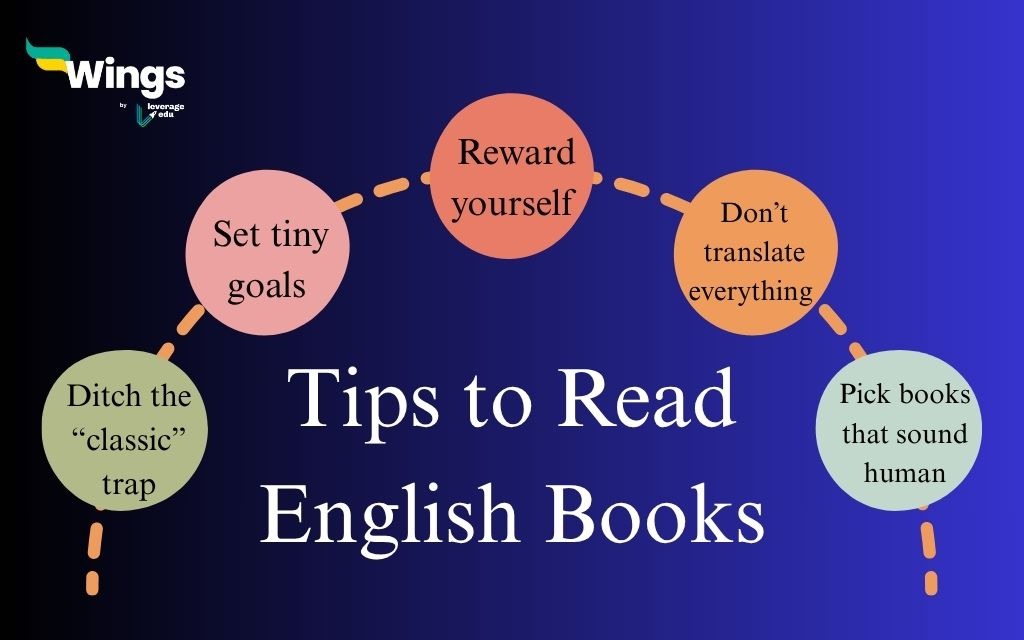
1. Ditch the “classic” trap
You don’t have to start with Pride and Prejudice just to look intellectual. Pick stories that actually fit your vibe, short thrillers, spicy romances, weird dystopias, or even fanfiction. Reading is reading, and slang-packed dialogues teach you more real English than some century-old novel ever will.
2. Set tiny goals
Forget those “read 50 pages daily” lies. Read one. That’s it. Then two. Then maybe a chapter. It’s all about tricking your brain into liking English. Before you know it, you’ll be halfway through the book and lowkey invested in fake characters’ lives.
3. Reward yourself
Finished a chapter? Scroll TikTok. Learned five new phrases? Snack time. Tricking your brain with mini rewards keeps your focus alive. English is a long game, not a one-sit binge.
4. Don’t translate everything
If you stop every second to check meanings, you’ll hate reading forever. Instead, guess from the story. Context is your bestie. Translating is the worst energy leak when you’re just trying to enjoy the book.
5. Pick books that sound human
Modern authors use language you’ll actually use IRL, contractions, slang, sarcasm. You’ll pick up natural rhythm without realizing it. Plus, they’re easier to finish than those dusty old textbooks pretending to be “classics.”
Advanced English Books for When It’s Time to Level Up for Real
Okay, you’ve survived the beginner phase, congrats! Now it’s time to stop saying “very good” and start sounding like you belong in a BBC panel debate. These advanced English learning books are power-ups for your brain. Each one gives you that “main character in a language exam” energy. Let’s break them down.
English Collocations in Use: Advanced – Felicity O’Dell & Michael McCarthy
If you’ve ever said “strong rain” instead of “heavy rain,” this book was made for you. It teaches how native speakers actually combine words, not textbook-style, but real-life English that sounds smooth. Every chapter gives context, examples, and practice exercises that slowly rewire your brain into thinking in natural English.
Spoiler: By the time you’re done, you’ll sound like someone who gets it.
The Elements of Style – Strunk & White
This one’s old-school but timeless, think of it as the holy grail of writing clean, sharp English. It’s short, strict, and brutally honest. It tells you what to stop saying, what to fix, and how to make your writing punch harder. You’ll start cutting fluff, writing like a pro, and realizing your school essays were crimes against grammar.
Spoiler: Every writer, speaker, and perfectionist English learner ends up here eventually.
Fluent English: Perfect Natural Speech – Barbara Raifsnider
This one is a fluency manual. It teaches how to sound natural, not robotic. You get dialogues, idioms, pronunciation tips, and real-world sentence flow. It’s basically how to stop translating in your head and start talking like you were born doing this. Each lesson hits listening, speaking, and phrasing.
Spoiler: It gives “I live abroad now” energy.
Advanced Grammar in Use – Martin Hewings
If Raymond Murphy’s beginner books were your training wheels, this one’s the sports bike. It dives deep, conditionals, passive voice, and weird tenses that even English teachers avoid. The best part? It explains tough grammar like it’s some girlypop gossip, simple, clean, and backed with examples that actually make sense.
Spoiler: It’s basically “grammar therapy” for people ready to get serious.
Word Power Made Easy – Norman Lewis
This is where vocabulary stops being random and starts being addictive. It breaks complex words into roots, meanings, and origins, so instead of memorizing, you understand. You’ll start decoding words like a detective. Each chapter makes you smarter without even trying.
Spoiler: By the end, you’ll be dropping words like “meticulous” and “gregarious” just because you can.
You’ll Regret Skipping This: Best Books to Improve Your Verbal and Non-verbal Communication Skills
Unhinged Yet Genius English Books That Actually Teach You Something
These books aren’t “Book To Learn English” in the boring, classroom sense. They’re the ones that mess with your brain first, then leave you fluent, self-aware, and questioning everything you’ve ever written. If traditional grammar guides are teachers, these are that one unhinged friend who still ends up being right about everything.
The Subtle Art of Not Giving a F*ck – Mark Manson
This one’s not just about English, it’s about thinking, feeling, and expressing like a real human. Manson’s writing style is brutally honest, full of sarcasm, and weirdly therapeutic. Every line hits like a punch, but it secretly trains your brain to process natural English flow, sentence rhythm, tone, emphasis, and emotional pacing.
Spoiler: You’ll end up learning how to write and think in clean, punchy English that actually sounds alive.
Eats, Shoots & Leaves – Lynne Truss
This is where punctuation becomes juicy. Yes, punctuation. Truss makes commas and apostrophes feel like gossip-worthy drama. You’ll laugh and learn how one misplaced comma can change “Let’s eat, Grandma” to “Let’s eat Grandma.”
Spoiler: It’s the most chaotic grammar lesson you’ll ever enjoy, sharp humor, savage examples, and a reminder that tiny dots and curves can control meaning.
Wordslut: A Feminist Guide to Taking Back the English Language – Amanda Montell
Montell drags English through pop culture, history, and internet slang, and somehow makes linguistics hot. It’s a language rebellion guide that makes you see how words shape gender, identity, and power. You’ll catch yourself learning advanced vocab, speech patterns, and how modern English evolves, all while feeling like you’re reading a manifesto written by your smartest mutual on X.
Spoiler: It’s addictive. Period.
Because Internet: Understanding the New Rules of Language – Gretchen McCulloch
Finally, a linguist who actually gets memes. This book breaks down how the internet reshaped English, why “lol” doesn’t mean laughing anymore, why “…” can change your tone, and why lowercase texting is a whole personality. You’ll learn real sociolinguistics in a way that feels like scrolling Twitter, fast, funny, and full of “omg that’s so true” moments.
Spoiler: This one would feel like scrolling on TikTok but in a book!
The Dictionary of Obscure Sorrows – John Koenig
Koenig basically invented new words for feelings we’ve all had but couldn’t explain. Every page gives a word to an emotion you thought was too complicated to name, from “sonder” (the realization that everyone has their own story) to “vellichor” (nostalgia for old bookstores). It’s poetry, philosophy, and emotional English mastery all in one.
Spoiler: You’ll walk away more articulate, introspective, and slightly destroyed in the best way.
How Long Till You Finally Start Speaking Like a Main Character?
Everyone wants that main character English. The kind where you drop one sentence and people go, “Damn, who wrote your dialogue?” But here’s the truth bomb: fluency doesn’t come in a week, and no, one YouTube binge won’t do it either.
If you’re starting from zero, it usually takes around 6–12 months of consistent practice (we’re talking daily reading, listening, and speaking) to reach a comfy conversational level, that’s your “I can talk without overthinking every word” phase. But to sound truly fluent, like “Netflix subtitle off, TED Talk energy on”, give it 1.5 to 2 years of solid input and output. Here’s the real cheat code:
- Read daily: Even 10 pages a day wires your brain for natural sentence flow.
- Shadow dialogues: Mimic how natives speak. Don’t just learn what they say, copy how.
- Speak out loud: To your mirror, your dog, or your ceiling fan. You’re building muscle memory.
- Consume real English: Podcasts, shows, memes, Reddit. This is where actual fluency hides.
- Use what you learn immediately: New word? Drop it in a text or caption. Make it stick.
NOTE THIS! There’s no shortcut but here’s the fun part: every time you understand a meme, nail a phrase, or finally use that “fancy” word right, you level up. You’re not just learning English, you’re building your main character arc.
Books vs YouTube: The Ultimate Fight for Your 10-Second Attention Span
Books want your focus. YouTube wants your soul. One makes you think, the other makes you scroll, so who wins in learning English?
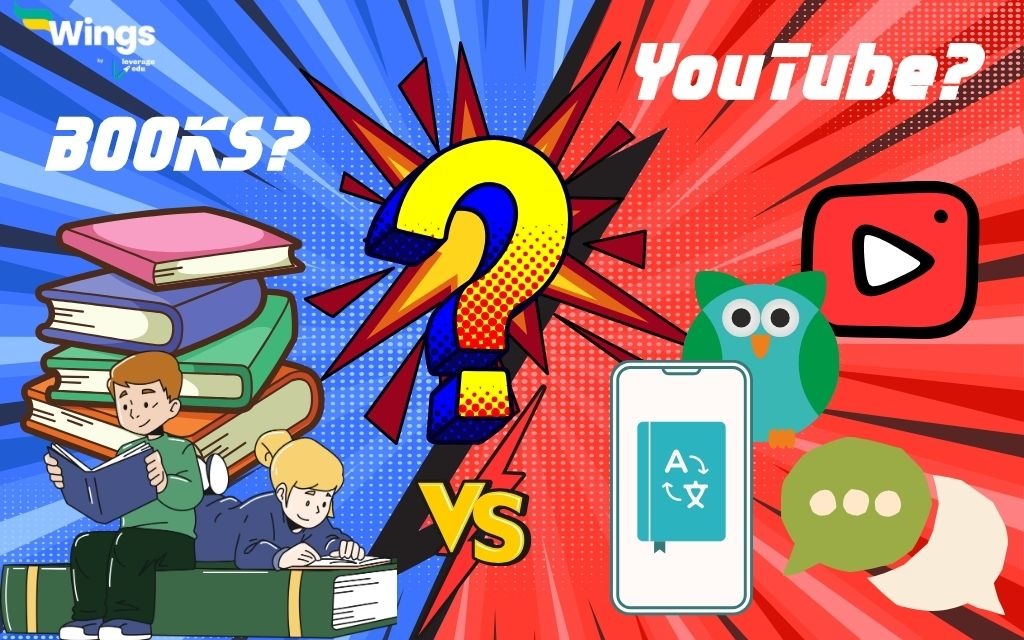
Books: They’re the slow grind. No flashy edits, no dopamine hits, just pure brain reps. They also build focus and attention span. Books make you see how English works, sentence flow, tone, rhythm, and context. You remember more because your brain actually does the work. Painful? Yeah. Worth it? Absolutely.
YouTube & Apps: They’re fast, loud, and addictive, perfect for lazy days. You pick up accents, pronunciation, and slang but it’s passive. You feel productive, but you’re really just binging with subtitles. Great for a boost, not for depth.
Verdict: YouTube gives speed. Books give power. The real winner? The one who uses both, reads to understand and watches to apply. Balance is important.
You’ll Want to Bookmark This One: How to Learn English Step by Step for Beginners Without Stress?
FAQs
Ans: It depends on your level. If you’re a beginner, English Grammar in Use by Raymond Murphy is unbeatable. For advanced learners, Fluent English by Barbara Raifsnider or Word Power Made Easy by Norman Lewis will level up your fluency and vocab. Go for books that match your vibe and your level, that’s the real trick.
Ans: You can’t become fluent in 30 days, but you can build a strong base. If you study daily, reading, listening, speaking, and writing, you’ll start thinking in English faster than you expect. Fluency takes time, but 30 days can be your glow-up phase if you stay consistent.
Ans: 100%. With the right mix of books, apps, and actual practice, self-study works. Read daily, talk out loud, and use every new word in real life, even if it feels cringe. You don’t need a classroom; you just need consistency and the will to roast your own grammar mistakes until you fix them.
Relatable Reads You Don’t Wanna Skip!
So yeah, that’s your full starter pack of 5+ English Learning Books that actually work. Pick one, stay consistent, and you’ll start sounding fluent before you even realize it. For more honest tips, keep stalking our Learn English page on Leverage Edu because we drop gold everyday.

 60,000+ students trusted us with their dreams. Take the first step today!