

 One app for all your study abroad needs













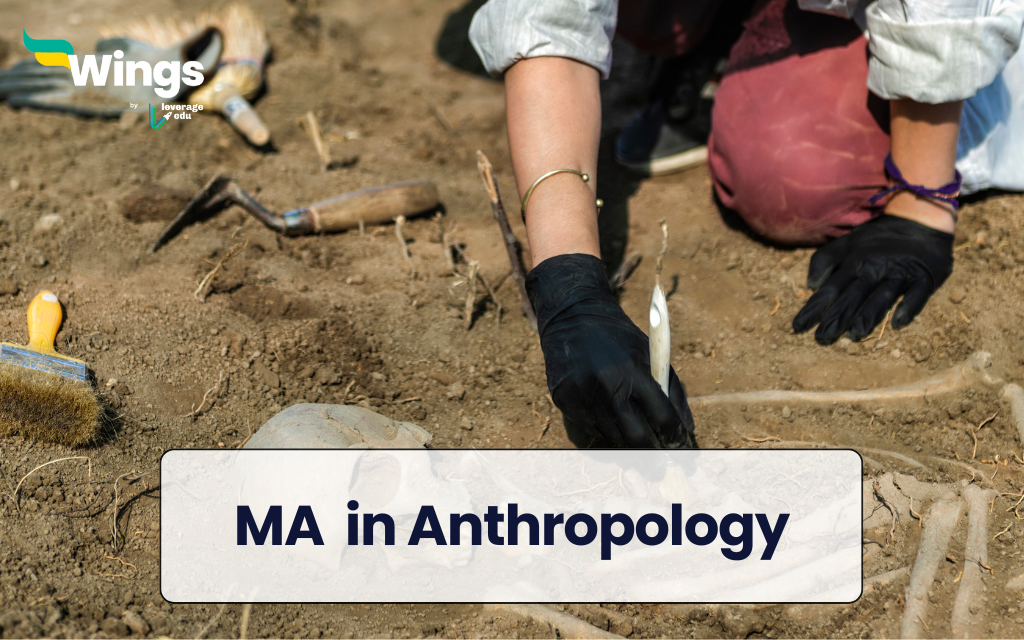
MA Anthropology is an excellent choice for students who want to explore human history, culture, and society in depth. The subject combines theory with fieldwork, giving students practical knowledge along with a strong academic foundation. Universities with well-structured anthropology programs offer access to experienced faculty, research opportunities, and international exposure, helping graduates build successful careers in teaching, research, heritage management, and global development.
This guide introduces the top 10 universities for MA Anthropology, explains their course highlights and admission process, and also helps students understand what a portfolio means in a job application. With the right planning, students can choose the best program for their goals and prepare confidently for future opportunities.
This Blog Includes:
- MA Anthropology Course: An Overview
- Admission Process for MA Anthropology
- Top Entrance Exams for MA Anthropology
- Syllabus of the MA Anthropology Course
- 10 Top Colleges in India for MA Anthropology
- Is Distance Education Available for MA Anthropology Course
- Career Opportunities After MA in Anthropology Course
- FAQs
MA Anthropology Course: An Overview
MA Anthropology is a postgraduate program designed for students who want to study human societies, cultures, and biological development in depth. The course usually takes one to two years to complete, depending on the university. Students are generally required to have a bachelor’s degree in Anthropology or a related field, though some universities accept candidates from other disciplines if they have relevant coursework.
| Name of Educational Program | MA Anthropology |
| Purpose | Designed for students who want to study human societies, cultures, and biological development in depth. |
| Duration | Usually 1–2 years, depending on the university. |
| Eligibility | Bachelor’s degree in Anthropology or a related field. Some universities accept candidates from other disciplines with relevant coursework. |
| Focus Areas | Cultural Anthropology, Social Anthropology, Archaeology, Biological Anthropology, and Research Methods. |
| Practical Component | Fieldwork, laboratory research, ethnographic studies, and thesis or major projects. |
| Skills Developed | Research, analytical thinking, cross-cultural understanding, communication, and problem-solving skills. |
Admission Process for MA Anthropology
Applying for a Master of Arts (MA) in Anthropology requires understanding the academic requirements and the steps involved in the admission process. Universities assess candidates based on their qualifications, skills, and potential to succeed in a research- and theory-oriented program. While the exact criteria can vary, the general process is quite similar across institutions
Eligibility Criteria
Before applying for an MA in Anthropology, students must meet certain eligibility requirements that ensure they are academically prepared for the program.
Academic Qualification:
Most universities ask for a bachelor’s degree from a recognised institution. While having a background in Anthropology or related fields can be helpful, students from other disciplines are often eligible as well.
Minimum Marks:
Many universities expect a minimum score of around 50% in undergraduate studies. Some relaxation may be given for reserved categories.
Entrance Examinations: Admission is usually based on either undergraduate performance or scores from entrance exams conducted at the national or university level. Common examples include CUET PG and UGC NET.
English Language Proficiency:
Students from non-English-speaking backgrounds or international applicants generally need to provide TOEFL or IELTS scores to demonstrate proficiency.
Application Process for MA Anthropology
After understanding the eligibility criteria, it is important to know how to navigate the application process to secure admission in an MA Anthropology program.
1. Candidates start by registering on the university’s official admission portal using a valid email ID and mobile number.
2. The online form requires details like personal information, academic records, and contact information. Accuracy is essential to avoid delays.
3. Scanned copies of documents are required, such as:
- Undergraduate mark sheets and certificates
- Identity proof
- Passport-size photographs and signature
- Caste or reservation certificate (if applicable)
- Migration or transfer certificate
4. A non-refundable fee is paid online to complete the application with respect to the academic institutions.
5. If an entrance exam is part of the selection process, candidates must appear for it. Shortlisted students are invited for counselling, where original documents are verified and admission fees are paid to secure the seat.
Explore: MA Subject List: Course-wise List, Application Process, Details
Top Entrance Exams for MA Anthropology
Students who are aiming for admission to MA Anthropology programs often need to appear for specific entrance exams. These exams assess a candidate’s knowledge, analytical skills, and aptitude in social sciences and related areas, helping universities select suitable candidates for their graduate programs.
| Top Entrance Exams for MA Anthropology | Description | Name of Universities/Institutions |
| CUET PG (Common University Entrance Test – Postgraduate) | A national-level entrance exam for admission to various postgraduate programs, including Anthropology. Tests general aptitude, reasoning, and subject knowledge. | Participating in central and state universities across India |
| UGC NET (National Eligibility Test) | Conducted by the University Grants Commission to determine eligibility for junior research fellowships and lectureships. Anthropology is one of the subjects offered. | National-level; qualifying allows eligibility for research and teaching positions |
| Delhi University Entrance Test (DUET) | University-specific test for admission to postgraduate courses, including MA Anthropology. | Delhi University |
| Banaras Hindu University (BHU) PET – Postgraduate Entrance Test | University-level exam for postgraduate programs in social sciences. | BHU |
| Jawaharlal Nehru University (JNU) Entrance Exam | Conducted for admission to MA programs in School of Social Sciences, including Anthropology. | JNU, New Delhi |
| Tata Institute of Social Sciences (TISS) NET/Entrance Test | TISS conducts its own entrance for social sciences and interdisciplinary programs. | TISS, Mumbai |
| Other State-Level University Exams | Some state universities have their own entrance tests for MA Anthropology admissions. | University of Hyderabad, Jamia Millia Islamia |
Note:
The above exams usually test subject knowledge, general aptitude, and analytical skills. Some universities may also consider undergraduate marks or interviews as part of the selection process.
Syllabus of the MA Anthropology Course
The syllabus for MA Anthropology may vary slightly between universities, but it aims to build a solid foundation in theory and practical skills. The following table outlines a typical semester-wise structure and key subjects.
| Semester | Core Subjects / Papers | Description |
| Semester 1 | Introduction to Anthropology | Covers the basic concepts, history, and scope of Anthropology. Students learn about human evolution, culture, and society. |
| Physical / Biological Anthropology | Focuses on human evolution, genetics, primatology, and biological adaptation. Students study human anatomy, fossil records, and evolutionary processes. | |
| Social and Cultural Anthropology | Explores social structures, cultural norms, rituals, and institutions. Students examine societies across time and space, with an emphasis on ethnography. | |
| Research Methods in Anthropology | Introduces qualitative and quantitative research methods, including surveys, interviews, fieldwork techniques, and data analysis. | |
| Semester 2 | Archaeological Anthropology | Focuses on the study of past human societies through material remains. Students learn excavation methods, dating techniques, and interpretation of artifacts. |
| Linguistic Anthropology | Examines language in social and cultural contexts. Covers topics like language evolution, communication, and the role of language in social identity. | |
| Economic and Political Anthropology | Analyses systems of production, exchange, power structures, and governance in human societies. | |
| Elective / Optional Paper | Universities may offer electives such as Medical Anthropology, Environmental Anthropology, or Visual Anthropology. | |
| Semester 3 | Applied Anthropology | Students learn how anthropological knowledge can be applied to solve contemporary issues in health, development, education, and policy. |
| Fieldwork / Practical Training | Hands-on experience in research projects, ethnographic studies, or community-based programs. | |
| Advanced Research Methods | In-depth training in research design, statistical analysis, and report writing. | |
| Elective / Specialisation Paper | Options may include Forensic Anthropology, Urban Anthropology, or Tribal Studies. | |
| Semester 4 | Dissertation / Thesis | Students carry out independent research under faculty supervision, culminating in a written dissertation. |
| Seminar / Presentation | Presentation of research findings and participation in academic seminars to develop communication and analytical skills. | |
| Applied Project / Internship | Some universities include internships or applied projects to provide exposure to real-world anthropological work. |
Also Read: MA Graphic Design
10 Top Colleges in India for MA Anthropology
Selection of the right college is an important step for students pursuing an MA in Anthropology. The top institutions in India offer a combination of strong academic programs, experienced faculty, and opportunities for research and fieldwork.
These universities not only provide theoretical knowledge but also focus on practical exposure, helping students gain a well-rounded understanding of human societies, cultures, and biological diversity.
| Top Universities for MA Anthropology | Location | Key Highlights of the College or University |
| University of Delhi | Benito Juarez Marg, South Campus, New Delhi, Delhi 110021 | Premier institution with strong emphasis on research and cultural studies. |
| Jawaharlal Nehru University | New Mehrauli Road, JNU Ring Rd, New Delhi 110067 | Rigorous academic environment and interdisciplinary approach in anthropology. |
| University of Hyderabad | Professor CR Rao Rd, Gachibowli, Hyderabad, Telangana 500046 | Comprehensive program with opportunities for fieldwork and research. |
| University of Calcutta | College St, Kolkata, West Bengal 700073 | One of the oldest universities offering a robust anthropology curriculum. |
| University of Mysore | Crawford Hall, Saraswathipuram, Mysuru, Karnataka 570005 | Recognised for research in cultural anthropology and tribal heritage studies. |
| Pondicherry University | Chinna Kalapet, Puducherry 605014 | Offers diverse anthropology courses focusing on South Asian cultures. |
| Rajiv Gandhi University | University Road, Papum Pare, Arunachal Pradesh 791112 | Specializes in tribal studies and indigenous cultures of Northeast India. |
| Banaras Hindu University | Varanasi, Uttar Pradesh 221005 | Provides practical and theoretical training with fieldwork opportunities. |
| University of Pune (Savitribai Phule Pune University) | Ganeshkhind, Pune, Maharashtra 411007 | Known for research in social and cultural anthropology. |
| North-Eastern Hill University (NEHU) | Shillong, Meghalaya 793022 | Focuses on ethnography and tribal studies in Northeast India. |
Note on Fee Structure:
The tuition and other fees for MA Anthropology programs vary across universities. Students are advised to check the official website of each institution for the most accurate and up-to-date fee details, including tuition, hostel charges, and other applicable costs.
Is Distance Education Available for MA Anthropology Course
Yes, pursuing an MA in Anthropology through distance education is possible in India. Several reputable institutions offer this program, providing flexibility for students who may be working or have other commitments.
| Name of Institution | Program or Eligibility Available | Mode & Duration |
| IGNOU | MA in Anthropology; Bachelor’s degree required; Open for all streams | Distance Learning, 2 years (maximum 5 years) |
| Tamil Nadu Open University (TNOU) | MA in Anthropology; Graduation from a recognized university; Some programs may require Anthropology background | Distance Mode, 2 years |
| IMTS Institute | MSc in Anthropology; Any bachelor’s degree accepted; Focus on research & applied projects | Distance Learning, 2 years |
Explore: MA in Ceramics: Top Universities, Course Curriculum, Job Profile
Career Opportunities After MA in Anthropology Course
After completing an MA in Anthropology, graduates can explore a variety of career paths that leverage their understanding of human culture, society, and biology.
This section highlights potential job opportunities in academia, research, corporate, and public sectors, along with average salary ranges in India.
| Career Opportunity | Job Role / Description | Average Salary |
| Academic / Lecturer | Teaching anthropology at colleges and universities, guiding research projects. | INR 4,00,000 – INR 8,00,000 per year |
| Research Analyst | Conducting field surveys, ethnographic studies, and analyzing social or cultural data. | INR 3,50,000 – INR 7,00,000 per year |
| Forensic Anthropologist | Assisting law enforcement in identifying human remains and analyzing forensic evidence. | INR 4,00,000 – INR 9,00,000 per year |
| Museum / Heritage Manager | Managing museums, heritage sites, or cultural resource projects, including exhibitions and preservation. | INR 3,50,000 – INR 6,50,000 per year |
| Social / Community Development Officer | Working with NGOs or government programs to implement social projects and community welfare initiatives. | INR 3,00,000 – INR 6,00,000 per year |
| Corporate Anthropologist / UX Researcher | Applying anthropological insights to consumer behavior, product development, and corporate research. | INR 5,00,000 – INR 10,00,000 per year |
| Environmental / Applied Anthropologist | Studying the relationship between humans and their environment for conservation, sustainability, or policy planning. | INR 3,50,000 – INR 7,00,000 per year |
| Ph.D. Scholar / Research Fellow | Pursuing advanced research in specialised areas of anthropology at universities or research institutes. | INR 3,00,000 – INR 6,00,000 per year |
MA in Anthropology opens doors to diverse career paths where graduates can apply their knowledge of human behavior, culture, and biology. By combining academic expertise with practical skills gained during the program, students can pursue rewarding roles in research, education, public service, and specialized fields.
Explore more insightful Courses Blogs here
| IGNOU MA English Admission | Masters in Education Management |
| IGNOU MA Admission | IGNOU MA History Admission |
| MA Musicology: Top Universities, Fees, Eligibility | IGNOU MA Psychology Admission |
FAQs
Ans. The MA Anthropology program generally lasts two years and is divided into four semesters. Some universities may offer part-time or distance learning options, which can extend the duration.
Ans. MA Anthropology focuses on social and cultural studies. It explores human behavior and traditions. MSc Anthropology emphasizes scientific and biological research, such as human evolution and genetics. Choose MA for humanities. Choose MSc for science-oriented careers.
Ans. Applicants must hold a bachelor’s degree in anthropology or a related field such as sociology, psychology, or social sciences. Some universities may also accept candidates from non-related backgrounds if they clear entrance exams or meet additional requirements.
Ans. Yes, many top colleges require candidates to appear for entrance exams. Popular exams include DUET (Delhi University Entrance Test), BHU PET, and JNU Entrance Test. Some universities may also consider merit-based admission.
Ans. Graduates can pursue careers in research, teaching, cultural resource management, NGOs, government agencies, and social consultancy. Further studies like a PhD in Anthropology, can open doors to academic and specialised research roles globally.
We hope this blog on the topic ‘MA Anthropology: Eligibility, Admission & Top Colleges’ helped you learn something new. To explore more, follow Leverage Edu now.


 60,000+ students trusted us with their dreams. Take the first step today!
4 comments
Hie
Very thankful for the above information provided.
Just wanted to ask more about the eligibility criteria as I am pursuing forestry Hons , so am I eligible for MA in anthropology ?
Hi Pragati,
Thank you for your comment, if you are planning to study MA Anthropology abroad then please call our experts on 1800 572 000 and they will help you with all your requirements. Best of luck!
You have shared a lot of useful knowledge and this article made us understand the whole topic very easily.
How can I contact you for more details? Sincerely
Hey MNHABEEB,
We are equally delighted to receive your compliment. You can book a free counselling session with our expert at Leverage Edu for your study abroad journey by calling us on our toll-free number 1800-572-000 or dropping an email at [email protected]