

 One app for all your study abroad needs













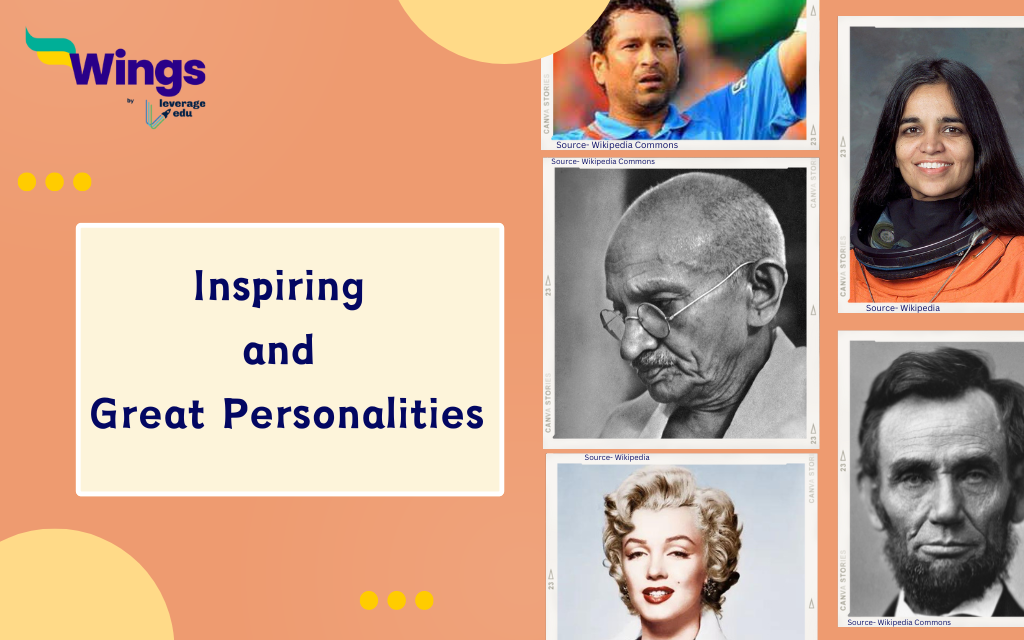
It is exciting how the great personalities of India or the famous personalities of the world influence not only adults but also children. For instance, when you ask young students what they want to become when they grow up, you are sure to find answers like “I want to become a scientist like Albert Einstein” or “I want to become a cricketer like Sachin R Tendulkar.”
Reading stories of important personalities of India and famous personalities in the world can motivate students to dream big and learn from their journeys. Keeping that in mind, here is a comprehensive blog on great personalities of the world and India to improve your general knowledge.
This Blog Includes:
List of Great Personalities of India
From the independence era to the present day, there have been many famous personalities of India who have contributed to nation-building in their own capacities and in different fields. While some are renowned for leaving a mark on the nation’s history, others have represented India on the global level through difficult endeavours.
Here is a list of famous personalities of India with names and pictures for students.
1. Dr APJ Abdul Kalam
Dr Avul Pakir Jainulabdeen Abdul Kalam, popularly known as APJ Abdul Kalam, was a celebrated aerospace scientist and visionary leader of India. Popularly known as the Missile Man of India, he played an important role in advancing the nation’s civilian space program and military missile development. His contributions ranged from establishing the launch vehicle facility and ballistic missile projects to supporting India’s second nuclear tests at Pokhran.
Spending nearly four decades at ISRO and DRDO, Dr Kalam made groundbreaking contributions to projects such as the Prithvi missile (1988) and the Agni missile (1989).
Later, he served as the 11th President of India from 2002 to 2007, inspiring the nation with his simplicity, integrity, and vision for a developed India. After his presidency, he continued to motivate students as a visiting professor at IITs, IIMs, and other institutions, encouraging innovation and global competitiveness.
His remarkable achievements earned him numerous accolades, including the Bharat Ratna, Padma Bhushan, Padma Vibhushan, King Charles II Medal, and the Hoover Medal. Revered by millions, Dr Kalam remains one of India’s greatest personalities.
| Full Name | Dr Avul Pakir Jainulabdeen Abdul Kalam |
| Known As | APJ Abdul Kalam |
| Field | Aerospace Science, Missile Development |
| Key Contributions | Prithvi and Agni missiles, Launch vehicle facility, Pokhran nuclear tests support |
| Positions Held | Scientist at ISRO & DRDO, 11th President of India (2002–2007) |
| Post-Retirement Work | Visiting professor at IITs, IIMs, and other universities |
| Awards | Bharat Ratna, Padma Bhushan, Padma Vibhushan, King Charles II Medal, Hoover Medal |
| Legacy | Inspirational leader and mentor to millions, “Missile Man of India” |
2. Sachin Tendulkar
Sachin Ramesh Tendulkar, fondly known as the Master Blaster, is celebrated worldwide for his extraordinary cricketing career and continues to carry India’s pride with his iconic No. 10 jersey.
Widely regarded as one of the finest right-handed batsmen in the history of international cricket, he began his journey at the age of 11, made his first-class debut at 15, and played his first Test match against Pakistan at 16. In India, where cricket is akin to religion, Tendulkar has earned the status of a modern legend and is often referred to as the “God of Cricket.”
Beyond his on-field achievements, Tendulkar is admired for his contributions to society and his ability to inspire generations. His exceptional skill and dedication have left a lasting impact on cricket fans and students aspiring for careers in sports and sports management. Every time he walked onto the pitch, he carried the hopes of millions, making cricket an even more beloved sport globally.
| Full Name | Sachin Ramesh Tendulkar |
| Known As | Master Blaster, God of Cricket |
| Field | Cricket |
| Key Achievements | Youngest Indian to debut in Test cricket, numerous match-winning innings, highest run-scorer in international cricket |
| Career Milestones | First-class debut at 15, Test debut at 16, iconic performances in ODIs and World Cups |
| Impact | Inspired generations of cricketers and sports enthusiasts; a symbol of national pride |
| Legacy | Considered a cricketing legend and role model worldwide |
3. Kalpana Chawla
Kalpana Chawla, born in 1962 in Haryana, India, was a visionary astronaut who inspired generations with her courage, curiosity, and determination. Fascinated by the universe from a young age, her imaginative spirit, reflected even in her name, which means imagination, guided her journey toward space exploration. As a child, she and her brother would ride bicycles to watch aeroplanes, nurturing her early passion for flight.
Chawla rose to prominence as the first Indian woman and the second Indian citizen to fly in space in 1997. Her extraordinary achievements made her a role model for young women and aspiring scientists across the world.
Tragically, she was one of the seven crew members who lost their lives in the Space Shuttle Columbia disaster on February 1, 2003. In recognition of her contributions, she was posthumously awarded the Congressional Space Medal of Honour, and numerous streets, colleges, and institutions bear her name in tribute. Kalpana Chawla remains a symbol of courage, exploration, and inspiration for India and the world.
| Full Name | Kalpana Chawla |
| Born | 1962, Haryana, India |
| Field | Aerospace, Space Exploration |
| Key Achievements | First Indian woman and second Indian in space, Columbia mission (1997) |
| Early Inspiration | Fascinated by the universe from childhood; passion for flight |
| Tragic Incident | Died in Space Shuttle Columbia disaster, February 1, 2003 |
| Posthumous Recognition | Congressional Space Medal of Honor, various institutions and streets named in her honor |
| Legacy | National hero of India; inspiration for young women and scientists worldwide |
4. Satyajit Ray
Satyajit Ray, born in 1921 in Bengal, is celebrated as one of the greatest filmmakers and storytellers of the 20th century. His work in cinema has left an enduring impact on both Indian and global film industries. Renowned director Akira Kurosawa once said, “Not to have seen the cinema of Ray means existing in the world without seeing the sun or the moon,” highlighting the profound influence of his art.
Ray was a true polymath, excelling not only as a film director but also as a screenwriter, music composer, graphic artist, lyricist, and author. His versatility and mastery across multiple creative fields set him apart in the history of modern cinema.
Among his critically acclaimed films are Pather Panchali, Charulata, The Music Room, and The Big City. His work earned him numerous accolades, including the National Film Award, BAFTA, and Ramon Magsaysay Award.
Satyajit Ray’s genius and dedication continue to inspire students and professionals pursuing Film Studies, Film Editing, and Acting courses worldwide. He remains a towering figure in Indian cinema and a source of motivation for aspiring artists.
| Full Name | Satyajit Ray |
| Born | 1921, Bengal, India |
| Field | Film Direction, Screenwriting, Music, Graphic Arts, Writing |
| Key Achievements | Critically acclaimed films including Pather Panchali, Charulata, The Music Room, The Big City |
| Awards | National Film Award, BAFTA, Ramon Magsaysay Award |
| Skills | Director, Screenwriter, Composer, Graphic Artist, Lyricist, Author |
| Legacy | Influential filmmaker and polymath inspiring Film Studies and performing arts globally |
3. Ratan Tata
Ratan Tata, born on December 28, 1937, in Mumbai, is a visionary industrialist and philanthropist who transformed India’s business landscape. As the chairman of Tata Sons, he modernised operations, fostered innovation, and expanded the global footprint of the Tata Group through landmark acquisitions such as Jaguar Land Rover and Corus Steel. Known for his integrity and social responsibility, Ratan Tata continues to be an enduring symbol of excellence and leadership.
During his tenure at Tata Group, Ratan Tata introduced transformative initiatives, including the launch of the Tata Nano, the world’s most affordable car, aimed at empowering middle-class families. His leadership ensured that Tata became a globally recognised conglomerate while maintaining a commitment to ethical business practices.
Beyond business, Ratan Tata has made significant philanthropic contributions, focusing on education, healthcare, and rural development. He established the Tata Scholarship at Cornell University, donated to Harvard Business School, supported IIT Bombay’s Tata Centre for Technology and Design, and funded research and social initiatives through Tata Trusts. His legacy is a blend of corporate success and meaningful societal impact.
| Full Name | Ratan Tata |
| Born | December 28, 1937, Mumbai, India |
| Field | Industrialist, Philanthropy |
| Key Achievements | Led Tata Group global acquisitions (Jaguar Land Rover, Corus Steel, Tetley), launched Tata Nano |
| Positions Held | Chairman of Tata Sons (1991 onward) |
| Philanthropy | Tata Scholarship at Cornell University, Harvard Business School donation, Tata Center at IIT Bombay, Tata Trusts initiatives |
| Legacy | Visionary business leader and philanthropist inspiring innovation, ethics, and social responsibility |
4. Bhimrao Ramji Ambedkar
Bhimrao Ramji Ambedkar (1891–1956), popularly known as Dr. B.R. Ambedkar, was a visionary leader, social reformer, and the principal architect of the Indian Constitution. Born into a Dalit Mahar family in Mhow, he faced caste-based discrimination from a young age but remained steadfast in his pursuit of education and social justice. Supported by a scholarship from the Gaekwar of Baroda, Ambedkar studied at prestigious universities in the United States, Britain, and Germany.
Ambedkar dedicated his life to advocating for the rights of Dalits and marginalised communities. He founded journals, campaigned for legislative representation, and challenged prevailing social norms, including Mahatma Gandhi’s approach to untouchability. His seminal work, What Congress and Gandhi Have Done to the Untouchables (1945), critically examined caste inequities.
In 1947, Ambedkar was appointed chairman of the committee responsible for drafting the Indian Constitution. His efforts ensured the inclusion of fundamental rights and the abolition of untouchability, laying the foundation for a just and equitable society. He was posthumously awarded the Bharat Ratna in 1990 and remains a symbol of resilience, equality, and social reform, inspiring generations across India and beyond.
| Full Name | Bhimrao Ramji Ambedkar |
| Known As | B.R. Ambedkar |
| Born | 1891, Mhow, India |
| Field | Social Reform, Law, Politics |
| Key Contributions | Principal architect of the Indian Constitution, advocacy for Dalit rights, founding of social journals |
| Major Works | What Congress and Gandhi Have Done to the Untouchables (1945) |
| Positions Held | Chairman of the Drafting Committee of the Indian Constitution |
| Awards | Bharat Ratna (posthumously, 1990) |
| Legacy | Symbol of social justice, equality, and empowerment of marginalised communities |
5. Indra Gandhi
Indira Gandhi (1917–1984) was India’s first female Prime Minister and a prominent political leader who served four terms between 1966–77 and 1980–84. Born in Allahabad, she was the daughter of Jawaharlal Nehru, India’s first Prime Minister, and a key figure in the Congress Party.
Her leadership saw significant milestones, including India’s victory in the 1971 war, which led to the creation of Bangladesh. While her tenure included controversial periods, such as the Emergency (1975–77) marked by curtailed civil liberties and press censorship, she demonstrated resilience by returning to power in 1980.
Indira Gandhi emphasised industrial development and strengthened India’s ties with the Soviet Union. She remains a symbol of determination, decisiveness, and political acumen in India’s history.
| Full Name | Indira Priyadarshini Gandhi |
| Born | 1917, Allahabad, India |
| Field | Politics, Governance |
| Key Achievements | First female Prime Minister of India, led India in 1971 war, industrial development initiatives |
| Terms as PM | 1966–77, 1980–84 |
| Major Events | 1971 India-Pakistan war (Bangladesh creation), Emergency (1975–77) |
| Legacy | Symbol of decisive leadership, resilience, and pioneering role for women in politics |
6. Mother Teresa
Mother Teresa, born on August 27, 1910, in Skopje (now part of North Macedonia), dedicated her life to serving the poor and vulnerable with compassion and humility. She joined the Sisters of Loreto in Ireland in 1928 and later moved to Calcutta (now Kolkata), where she began her work as a teacher. During this time, she felt a deep calling to step beyond the classroom and care for the sick and destitute.
In 1952, she opened Nirmal Hriday (Place for the Pure of Heart), a hospice for the dying, which became the foundation of her lifelong mission. She went on to establish the Missionaries of Charity, a congregation committed to helping those abandoned and in need. Her work soon expanded to schools, dispensaries, and homes for orphans, the disabled, and the blind. What began in India later reached more than 90 countries.
Her tireless service earned her worldwide recognition, including the Nobel Peace Prize in 1979. Even while facing personal health challenges and inner struggles, she stayed true to her mission of kindness and care. In 2016, she was canonized as Saint Teresa of Calcutta, and her life continues to inspire people across the world to live with empathy and serve others selflessly.
| Full Name | Mother Teresa (Anjezë Gonxhe Bojaxhiu) |
| Born | August 27, 1910, Skopje (now North Macedonia) |
| Work | Humanitarian service, Missionaries of Charity |
| Key Initiatives | Nirmal Hriday hospice, schools, homes for orphans and the disabled |
| Reach | Charitable work expanded to over 90 countries |
| Awards | Nobel Peace Prize (1979) and global recognition |
| Canonization | Declared Saint Teresa of Calcutta in 2016 |
| Legacy | A symbol of compassion, service, and humanity |
7. Lal Bahadur Shastri
Lal Bahadur Shastri, India’s second Prime Minister, served from 1964 to 1966 and is remembered for his humility, integrity, and strong leadership. Deeply influenced by Mahatma Gandhi, he joined the non-cooperation movement against British rule in 1921 and was briefly imprisoned. Later, he studied at Kashi Vidyapitha, where he received the title Shastri, meaning scholar of the scriptures.
After independence in 1947, Shastri held key positions in both Uttar Pradesh and the central government. As a minister, he worked in the railway and transport departments, gaining recognition for his practical approach and ability to resolve issues with calmness and fairness.
Following the death of Jawaharlal Nehru in 1964, Shastri became the Prime Minister. His leadership during the Indo-Pakistan war of 1965 strengthened national unity, and his slogan Jai Jawan Jai Kisan captured the spirit of self-reliance. Tragically, he passed away in Tashkent in January 1966, shortly after signing a peace agreement with Pakistan. Shastri is remembered as a leader who embodied honesty, simplicity, and unwavering dedication to the nation.
| Full Name | Lal Bahadur Shastri |
| Born | October 2, 1904 |
| Died | January 11, 1966 |
| Title | 2nd Prime Minister of India (1964–1966) |
| Early Inspiration | Influenced by Mahatma Gandhi, joined non-cooperation movement |
| Key Roles | Railway and Transport Minister, Prime Minister of India |
| Major Contribution | Leadership during 1965 Indo-Pak war; gave the slogan “Jai Jawan Jai Kisan” |
| Legacy | Symbol of honesty, courage, and simplicity in public life |
8. Rabindranath Tagore
Rabindranath Tagore, born on May 7, 1861, in Kolkata, was a poet, writer, artist, and thinker whose influence shaped modern Indian literature and culture. He introduced fresh forms of prose and poetry in Bengali and wrote in simple, accessible language that connected with people from all walks of life. In 1913, he became the first non-European to receive the Nobel Prize in Literature, making India’s voice heard on the global stage.
Tagore’s childhood and youth were deeply rooted in Indian traditions, yet he embraced modern ideas. His time in rural Bengal inspired much of his creative work, as he closely observed the lives of common people. Some of his most celebrated works include Gitanjali, a collection of poems, and Jana Gana Mana, which later became India’s national anthem.
In 1901, he established Shantiniketan, a school that blended Indian and Western approaches to education. This later grew into Visva-Bharati University, which continues to attract students worldwide. Beyond writing, Tagore explored painting, music, and social reforms, leaving behind a vast legacy as one of India’s greatest cultural icons.
| Full Name | Rabindranath Tagore |
| Born | May 7, 1861 |
| Died | August 7, 1941 |
| Title | Poet, Writer, Artist, Philosopher |
| Major Works | Gitanjali, Jana Gana Mana, short stories, plays, novels |
| Institution Founded | Shantiniketan, later Visva-Bharati University |
| Awards and Honours | Nobel Prize in Literature (1913) |
| Legacy | Pioneer of modern Indian literature and culture, author of India’s national anthem |
Explore: Famous Indian Personalities Whom Aspirants Should Know to Crack Competitive Exams
Top 15 Great Personalities of the World
Our world has always been shaped by extraordinary individuals whose vision, courage, and determination changed the course of history. From political leaders and scientists to activists, artists, and innovators, these personalities have left behind a legacy that continues to inspire generations. Here is a look at some of the greatest figures of all time and their remarkable contributions.
Here are a few details about some great personalities from around the world whose inspiring stories have the power to influence anyone. Take a look and get inspired!
| Name of Great Personalities of the World | Year of Birth – Death | Professional or /Title | Major Contributions |
| Abraham Lincoln | 1809 – 1865 | 16th President of the US | Led the nation during the Civil War, abolished slavery with the Emancipation Proclamation |
| Charles Darwin | 1809 – 1882 | Scientist, Naturalist | Developed the theory of evolution by natural selection |
| Thomas Alva Edison | 1847 – 1931 | Inventor, Businessman | Patented over 1,000 inventions including the light bulb, phonograph, and motion picture camera |
| Walt Disney | 1901 – 1966 | Motion Picture Producer, Showman | Created Mickey Mouse, founded Disneyland and Disney World |
| John F. Kennedy | 1917 – 1963 | 35th President of the US | Handled the Cuban Missile Crisis, promoted civil rights, youngest elected US president |
| Nelson Mandela | 1918 – 2013 | Anti-Apartheid Leader, President of South Africa | Ended apartheid, became South Africa’s first black president, Nobel Peace Prize laureate |
| Marilyn Monroe | 1926 – 1962 | Actress, Singer, Model | Iconic Hollywood star, remembered for films like Gentlemen Prefer Blondes and Some Like It Hot |
| Martin Luther King Jr. | 1929 – 1968 | Civil Rights Leader | Led the Civil Rights Movement, delivered “I Have a Dream” speech, Nobel Peace Prize in 1964 |
| Anne Frank | 1929 – 1945 | Diarist | Wrote The Diary of a Young Girl, documenting life during the Holocaust |
| Albert Einstein | 1879 – 1955 | Theoretical Physicist | Developed the theory of relativity, transformed modern physics |
| Leo Tolstoy | 1828 – 1910 | Writer | Authored classics like War and Peace and Anna Karenina |
| Rosa Parks | 1913 – 2005 | Activist | Sparked the Montgomery Bus Boycott, pivotal in the US Civil Rights Movement |
| Coco Chanel | 1883 – 1971 | Fashion Designer, Businesswoman | Revolutionized women’s fashion, founded the global brand Chanel |
| Michael Jackson | 1958 – 2009 | Singer, Songwriter, Dancer | Known as the King of Pop, transformed music and dance with hits like Thriller and Billie Jean |
| Satyajit Ray | 1921 – 1992 | Filmmaker, Writer, Illustrator | Directed the Apu Trilogy, won an Oscar for lifetime achievement, key figure in world cinema |
| Muhammad Ali | 1942 – 2016 | Boxer, Activist | Heavyweight champion, outspoken activist, humanitarian |
| Bill Gates | 1955 – Present | Businessman, Co-founder of Microsoft | Revolutionised personal computing, major philanthropist through Bill & Melinda Gates Foundation |
1. Coco Chanel
Gabrielle Bonheur Coco Chanel was a French fashion designer and businesswoman who changed the face of modern fashion. She founded the Chanel brand, which introduced timeless designs such as the little black dress, tweed jackets, bell-bottomed trousers, and gold-chained handbags. Her most iconic creation, the Chanel No. 5 fragrance, remains one of the best-selling perfumes in the world.
Chanel strongly believed that fashion should not be limited to couture alone, and she integrated accessories and fragrances into everyday style. She began her journey as a seamstress and stage performer, saving enough to open her first boutique in Paris in 1913, followed by another in Deauville.
Her passion and personal involvement in every detail of her work quickly made her a global fashion icon. From sewing in an orphanage to creating a brand recognized worldwide, Coco Chanel’s story continues to inspire students and professionals who dream of making a mark in the world of fashion design.
| Full Name | Gabrielle Bonheur Chanel |
| Born | August 19, 1883 |
| Died | January 10, 1971 |
| Profession | Fashion Designer, Businesswoman |
| Brand Founded | Chanel |
| Key Contributions | Little Black Dress, Chanel No. 5, tweed jackets, redefining women’s fashion |
| Legacy | Revolutionized women’s clothing and accessories, global fashion icon |
3. Anne Frank
Anne Frank, a German-born Jewish diarist, became one of the most poignant voices of the Holocaust through her writings. When her family went into hiding from the Nazis in Amsterdam, she received a diary as a gift on her thirteenth birthday and began documenting her life in the Secret Annex. For two years, she recorded her fears, hopes, and reflections while living under constant threat until the family was discovered and deported to concentration camps.
Writing became Anne’s way of enduring hardship. Along with her diary, she attempted short stories and even started a novel, channeling her creativity and resilience into words. Her diary was later found by family friends who had helped them in hiding and was published posthumously as The Diary of Anne Frank.
Anne’s father, Otto Frank, the only surviving member of the family, was deeply moved when he read her diary, realising a side of his daughter he had never fully known. Translated into over 50 languages, Anne’s diary offers the world a deeply human perspective on the Holocaust through the eyes of a young girl whose voice continues to inspire courage and empathy.
| Full Name | Annelies Marie Frank |
| Born | June 12, 1929 |
| Died | February/March 1945 (Bergen-Belsen concentration camp) |
| Known For | Diarist, Holocaust victim |
| Notable Work | The Diary of Anne Frank |
| Key Themes | Hope, resilience, life in hiding during the Holocaust |
| Legacy | Her diary remains a powerful testimony of the human spirit and a reminder of the Holocaust’s impact |
4. Nelson Mandela
Nelson Mandela, born Rolihlahla Mandela in the village of Mvezo, South Africa, grew up hearing stories of his ancestors’ courage in the wars of resistance. Inspired by these tales, he developed a deep sense of justice and commitment to his people’s freedom.
In the 1940s, Mandela pursued law at the University of Witwatersrand, where he interacted with people from diverse backgrounds. Around this time, he joined the African National Congress (ANC), where young leaders were working to mobilize rural peasants and workers against racial discrimination. Mandela became a driving force in the ANC, promoting methods such as boycotts, strikes, non-cooperation, and civil disobedience to challenge apartheid.
His defiance made him a central figure in the anti-apartheid struggle. Arrested multiple times, Mandela spent 27 years in prison, during which he became a global symbol of resistance and hope. Released in 1990, he played a vital role in ending apartheid and establishing multiracial democracy in South Africa. In 1993, he was awarded the Nobel Peace Prize, and in 1994, he became the country’s first black president. His leadership and resilience continue to inspire movements for justice and equality across the world.
| Full Name | Nelson Rolihlahla Mandela |
| Born | July 18, 1918 |
| Died | December 5, 2013 |
| Profession/Title | Anti-apartheid leader, Lawyer, President of South Africa |
| Political Role | Leader of African National Congress (ANC), President of South Africa (1994–1999) |
| Key Contributions | Fought apartheid, promoted nonviolent resistance, advanced reconciliation and democracy |
| Awards and Honours | Nobel Peace Prize (1993), Bharat Ratna, Presidential Medal of Freedom |
| Legacy | Symbol of justice, peace, and human rights worldwide |
5. Albert Einstein
Albert Einstein, one of the most influential scientists of the 20th century, is best known for his groundbreaking equation E = mc² and the theory of relativity, which reshaped modern physics and expanded on Newton’s earlier work. His discovery of the law of the photoelectric effect laid the foundation for quantum theory, earning him the Nobel Prize in Physics in 1921.
Einstein’s academic journey began at the Federal Polytechnic School in Zurich, where he earned his diploma, followed by a PhD from the University of Zurich. Interestingly, he started his career in a patent office before fully devoting himself to scientific research. Over time, he taught and conducted research at prestigious institutions such as the University of Bern, Humboldt University of Berlin, Caltech, and the University of Oxford.
Regarded as a visionary, Einstein’s contributions extended beyond physics. He was also an advocate for peace, education, and humanitarian causes. His Quest for a theory of everything, a unifying explanation of the physical universe, remains unfinished but continues to inspire scientists worldwide.
| Full Name | Albert Einstein |
| Born | March 14, 1879 |
| Died | April 18, 1955 |
| Profession/Title | Theoretical Physicist |
| Key Contributions | Theory of relativity, equation E = mc², law of photoelectric effect |
| Academic Roles | Taught at University of Bern, Humboldt University of Berlin, Caltech, University of Oxford |
| Major Award | Nobel Prize in Physics (1921) |
| Legacy | Revolutionised physics, symbol of scientific genius, inspired the pursuit of a unifying “theory of everything” |
6. Abraham Lincoln
Abraham Lincoln, remembered as one of the greatest leaders in American history, was born on February 12, 1809, in Kentucky. Coming from a humble background, he received only limited formal education but pursued knowledge with determination. A self-taught lawyer and legislator, he rose to become the 16th President of the United States at a time when the nation was on the brink of Civil War.
Lincoln’s leadership style was pragmatic and adaptive. Rather than creating rigid policies, he responded to challenges as they arose, blending his political judgment with strategic direction for the military. His sharp insight and common sense helped him guide the Union to victory. More than just a wartime leader, Lincoln became a symbol of justice through his Emancipation Proclamation, which laid the foundation for the abolition of slavery in America.
His legacy rests not only on preserving the Union but also on reshaping the moral and social fabric of the United States. Lincoln’s vision of equality and liberty continues to inspire generations across the world.
| Full Name | Abraham Lincoln |
| Born | February 12, 1809 |
| Died | April 15, 1865 |
| Profession/Title | 16th President of the United States |
| Key Contribution | Led the Union during the Civil War, issued the Emancipation Proclamation |
| Leadership Style | Pragmatic, problem-solving, focused on military strategy and statecraft |
| Legacy | Preserved the Union, ended slavery, symbol of equality and justice |
7. Walt Disney
Walt Disney, one of the most influential figures in the entertainment industry, was born on December 5, 1901, in Chicago, Illinois. Coming from a modest background, his love for art began when a family doctor asked him to draw a horse, sparking a lifelong passion for sketching. He nurtured his skills by drawing cartoons from his father’s newspapers and gradually built a career in animation.
Disney went on to create Mickey Mouse, one of the most iconic characters in history, and revolutionized the world of animation with sound, color, and storytelling. He later expanded his creative vision by establishing Disneyland and Disney World, magical theme parks that brought his imagination to life and continue to enchant millions.
His inspiring spirit, innovative ideas, and relentless pursuit of creativity transformed entertainment, making him a global icon. Walt Disney’s legacy is not just in his characters and films but also in the dreams and joy he continues to inspire across generations.
| Full Name | Walter Elias Disney |
| Born | December 5, 1901 |
| Died | December 15, 1966 |
| Profession/Title | American Motion Picture Producer, Animator, Showman |
| Key Contributions | Creator of Mickey Mouse, revolutionized animation, founded Disneyland & Disney World |
| Legacy | Pioneer of modern animation, symbol of imagination and creativity |
8. Michael Jackson
Michael Joseph Jackson, widely celebrated as the King of Pop, was one of the most influential and best-selling entertainers of all time. Born on August 29, 1958, in Gary, Indiana, he began performing at the age of five with his family band, the Jackson 5. Guided by his father, Joseph Walter Jackson, Michael quickly emerged as the standout performer, captivating audiences with his voice, stage presence, and energy.
As a solo artist, Jackson transformed the music industry with groundbreaking albums such as Thriller, Bad, Dangerous, and HIStory. His 1982 album Thriller remains one of the best-selling albums in history. Known for his signature dance moves like the moonwalk, his crystal-studded gloves, and his bold fashion choices, he set trends that defined the 1980s and beyond.
Over a career spanning more than four decades, Jackson earned 13 Grammy Awards, 31 Guinness World Records, 26 American Music Awards, and numerous Billboard chart records. His artistry, innovation, and dedication made him a global cultural icon whose music continues to inspire millions around the world.
| Full Name | Michael Joseph Jackson |
| Born | August 29, 1958 |
| Died | June 25, 2009 |
| Profession/Title | Singer, Songwriter, Dancer, Entertainer |
| Key Contributions | Revolutionized pop music, introduced iconic dance moves like the moonwalk, best-selling albums including Thriller |
| Awards and Achievements | 13 Grammy Awards, 31 Guinness World Records, 26 American Music Awards, record-breaking Billboard hits |
| Legacy | Known as the King of Pop, one of the most influential entertainers in music history |
Also Read: Oxford University Indian Alumni: Famous Indian People who Graduated from Oxford
Latest Influential Personalities from India and the World
These modern-day leaders, innovators, and changemakers have made a strong impact in their fields. From technology and sports to social work and entertainment, their work continues to inspire and influence people across the globe. The table below highlights their key details and major contributions.
| Name | Born | Nationality | Profession/Title | Major Contribution |
| Donald Trump | June 14, 1946 | American | President of the United States | Won 2024 Presidential Election, inaugurated January 20, 2025 |
| Narendra Modi | September 17, 1950 | Indian | Prime Minister of India (3rd term) | Most popular democratically elected leader globally with 80% approval rating |
| Elon Musk | June 28, 1971 | American | CEO Tesla/SpaceX, Owner X | Revolutionary work in electric vehicles, space exploration, AI |
| Mukesh Ambani | April 19, 1957 | Indian | Chairman, Reliance Industries | India’s richest person, telecom & retail revolution |
| Satya Nadella | August 19, 1967 | Indian-American | CEO Microsoft | AI revolution, cloud computing transformation |
| Sundar Pichai | June 10, 1972 | Indian-American | CEO Alphabet/Google | Search technology, AI development, global tech leadership |
| Gautam Adani | June 24, 1962 | Indian | Chairman, Adani Group | Infrastructure & renewable energy, top 10 influential Indians 2024 |
| Jensen Huang | February 17, 1963 | Taiwanese-American | CEO NVIDIA | AI chip revolution, computing transformation |
| Demis Hassabis | July 27, 1976 | British | Co-founder & CEO, Google DeepMind | AI breakthrough research, AlphaFold protein folding |
| Mark Zuckerberg | May 14, 1984 | American | CEO Meta/Facebook | Social media revolution, metaverse development |
| Ratan Tata | December 28, 1937 | Indian | Chairman Emeritus, Tata Sons | Industrial leadership, philanthropy, business ethics |
| Amit Shah | October 22, 1964 | Indian | Home Minister of India | Second position in top influential Indians for seventh consecutive year |
| Sunil Mittal | October 23, 1957 | Indian | Chairman, Bharti Airtel | Telecom industry transformation in India |
| Anand Mahindra | May 1, 1955 | Indian | Chairman, Mahindra Group | Automotive industry leadership, innovation |
| N. Chandrasekaran | May 1, 1963 | Indian | Chairman, Tata Sons | Digital transformation, IT services leadership |
| Reshma Kewalramani | 1970s | Indian-American | CEO, Vertex Pharmaceuticals | Featured in TIME 100 2025, pharmaceutical innovation |
| Serena Williams | September 26, 1981 | American | Former Tennis Player/Entrepreneur | 23 Grand Slam titles, business ventures, advocacy |
| Ed Sheeran | February 17, 1991 | British | Singer-songwriter | Global music influence, cultural impact |
| Snoop Dogg | October 20, 1971 | American | Artist/Entrepreneur | Music industry influence, business ventures |
| Demi Moore | November 11, 1962 | American | Actor/Producer | Film industry influence, cultural impact |
| Muhammad Yunus | June 28, 1940 | Bangladeshi | Economist/Social Entrepreneur | Nobel Peace Prize winner, microfinance pioneer |
| Ana Botín | October 4, 1960 | Spanish | Executive Chairman, Santander Group | First woman to lead major global bank, digital banking transformation |
| Caitlin Clark | January 22, 2002 | American | Professional Basketball Player | Women’s sports revolution, cultural phenomenon |
| Jacinda Ardern | July 26, 1980 | New Zealander | Former Prime Minister | Global leadership icon, progressive governance |
| Nadia Murad | March 10, 1993 | Iraqi-Kurdish | Human Rights Activist | Nobel Peace Prize winner, advocate for survivors of violence |
The stories of these great personalities of India and the world show how vision, perseverance, and creativity can shape the world. From innovators and leaders to artists and activists, their contributions continue to inspire generations. By learning from their journeys, we can embrace courage, pursue our goals, and strive to make a meaningful difference in our own lives and communities.
FAQs
Ans. Modern influential personalities include global leaders, tech innovators, social activists, and entertainers who have made significant contributions in their fields. Examples include Elon Musk, Narendra Modi, Jacinda Ardern, and Reshma Kewalramani.
Ans. Indian personalities in the list include Narendra Modi, Mukesh Ambani, Gautam Adani, Sundar Pichai, Satya Nadella, Ratan Tata, Anand Mahindra, Amit Shah, and Sunil Mittal, recognised for leadership in politics, business, and technology.
Ans. Leaders in technology and AI include Elon Musk (Tesla & SpaceX), Sundar Pichai (Alphabet/Google), Satya Nadella (Microsoft), Jensen Huang (NVIDIA), and Demis Hassabis (Google DeepMind).
Ans. Muhammad Yunus (microfinance), Nadia Murad (human rights), Jacinda Ardern (progressive governance), and Serena Williams (women’s advocacy) are noted for their social contributions.
Ans. Yes, Caitlin Clark (born 2002), a professional basketball player, represents the rising generation making a global impact in sports and culture.
Explore more insightful Blogs here
We hope this blog on the topic ‘Great Personalities of India and of the World’ helped you learn something new. To explore more, follow Leverage Edu now.


 60,000+ students trusted us with their dreams. Take the first step today!