

 One app for all your study abroad needs













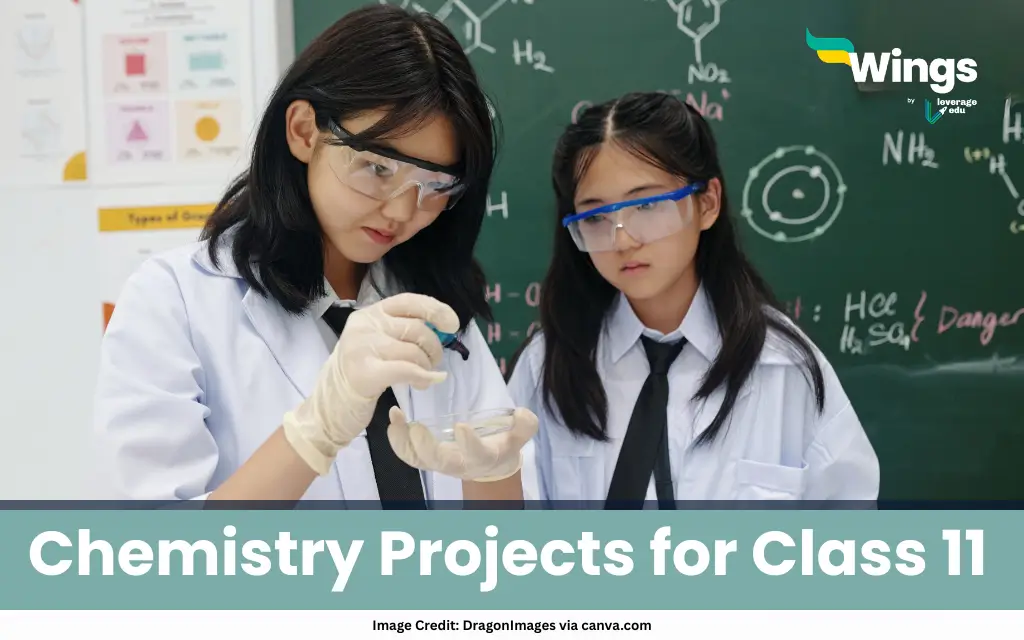
Chemistry Projects for Class 11 are not hard. They are just badly explained. Students lose marks not because they lack intelligence but because they pick random topics or copy experiments at the last minute. Teachers notice that instantly.
This blog fixes that. Here, Chemistry Projects for Class 11 are broken down into clear concepts that actually align with the syllabus. Read this once, and you will know exactly what to do and why it works.
This Blog Includes:
- What Are Chemistry Projects for Class 11?
- 100 Popular Chemistry Projects for Class 11
- Investigatory Projects in Chemistry for Class 11
- Easy Chemistry Models for Class 11 Students
- Creative Chemistry Chart Paper Projects for Class 11
- Innovative Chemistry Chart Paper Projects for Class 11
- Organic Chemistry Project Topics for Class 11 CBSE Board
- Inorganic Chemistry Project Topics for Class 11 ICSE Board
- How to Select the Right Chemistry Project for Class 11?
- Helpful Resources for Chemistry Projects
- Common Mistakes & Tips for Presenting Chemistry Projects
- FAQs
What Are Chemistry Projects for Class 11?
Chemistry Projects for Class 11 are practical assignments that help students apply chemistry concepts they learn in class. These projects are part of an internal assessment in Indian boards like CBSE and ISC.
A project can be an investigatory project in chemistry for class 11, a simple chemistry experiment for class 11, a working or non-working chemistry model for class 11, or a visual chemistry chart paper project for class 11. Each format checks how well a student understands a topic.
These projects are usually based on the NCERT syllabus and are evaluated on concept clarity and presentation during vthe iva. Simple, well-explained projects score better than complicated ones with poor understanding.
100 Popular Chemistry Projects for Class 11
Chemistry projects in Class 11 are meant to test how well students can apply textbook concepts in practical formats. These projects cover experiments, models, investigatory work, and chart-based explanations. Here is a list covering every major chemistry project format students are asked to prepare. Let us now move into the category-wise breakdown.
Investigatory Projects in Chemistry for Class 11
An investigatory project in chemistry for class 11 focuses on observation, data collection, and logical conclusions. These projects involve studying chemical behaviour under controlled conditions and presenting findings in a structured format.
They are ideal for students who enjoy analysis and explanation. Below is a list of investigatory topics commonly accepted by Indian schools. Here are the ideas students can explore:
- Study of pH values of household liquids
- Effect of temperature on the solubility of salts
- Comparative study of natural and synthetic indicators
- Rate of evaporation of different liquids
- Corrosion of iron in different environments
- Foaming capacity of soaps and detergents
- Study of water hardness in different samples
- Effect of concentration on reaction rate
- Presence of adulterants in food items
- Study of rust prevention methods
- Conductivity of electrolytes and non-electrolytes
- Acid strength comparison using indicators
- Effect of light on chemical reactions
- Study of emulsions and their stability
- Comparative study of fertilizers
- Chemical composition of clean vs polluted water
- Effect of catalysts on decomposition reactions
Read or Regret: How to Study Physical Chemistry for NEET?
Easy Chemistry Models for Class 11 Students
Chemistry models for class 11 help students visually explain chemical concepts without performing reactions. These models are safe, reusable, and ideal for classroom evaluation.
They work well for students who prefer structure and presentation over experiments. Teachers value models that explain processes clearly. Here are simple and effective model ideas:
- Atomic structure model
- Bohr model of hydrogen atom
- Types of chemical reactions model
- Electrochemical cell model
- Electrolysis of water model
- Hybridisation model
- Periodic table trends model
- Hydrogen bonding model
- States of matter model
- Colloids and suspensions model
- Distillation process model
- Water purification model
- Corrosion prevention model
- Polymer formation model
- Carbon cycle model
- Green chemistry principles model
- Le Chatelier’s principle model
Creative Chemistry Chart Paper Projects for Class 11
A chemistry chart paper project class 11 explains concepts using diagrams, flowcharts, and short explanations. These projects are quick to prepare and ideal for theory-heavy topics.
They are useful when lab access is limited. Neat visuals and correct labeling matter most here. Below are chart-based project ideas students can use:
- Classification of elements
- Types of chemical bonds
- Acid, base and salt chart
- Uses of metals and non-metals
- Petroleum refining process
- Environmental pollution types
- Greenhouse effect explanation
- Ozone layer depletion
- Types of solutions
- Electrochemical series chart
- Redox reactions flowchart
- Properties of acids and bases
- Chemical equations balancing steps
- Industrial chemicals and uses
- Allotropes of carbon
- States of matter comparison
- Safety symbols in chemistry
Innovative Chemistry Chart Paper Projects for Class 11
These chart projects go beyond definitions and focus on application and comparison. Innovation here means better structure, clearer flow and real-life linkage. Teachers appreciate charts that explain “why” and “how” rather than just listing facts. Here are slightly advanced chart paper topics for higher scoring potential:
- Chemistry in daily life chart
- Role of chemistry in agriculture
- Chemistry behind food preservation
- Chemical hazards and prevention
- Chemistry in medicines
- Sustainable chemistry practices
- Plastic types and recycling
- Air pollution control methods
- Water treatment stages
- Chemistry of detergents
- Uses of acids in industry
- Chemistry of fuels
- Chemical fertilizers comparison
- Laboratory safety rules
- Chemistry in cosmetics
- Chemical indicators comparison
Organic Chemistry Project Topics for Class 11 CBSE Board
Organic chemistry projects focus on carbon compounds, reactions, and applications. CBSE schools prefer projects that explain structures, reactions, and uses clearly.
These projects can be investigatory, chart-based, or model-oriented. Below are organic chemistry topics aligned with the CBSE syllabus. Here is the list:
- Classification of hydrocarbons
- Alkanes and their properties
- Alkenes and their reactions
- Alkynes structure and uses
- Homologous series explanation
- Functional groups chart
- Ethanol properties and uses
- Methane preparation and uses
- Isomerism types
- Nomenclature rules
- Polymerisation reactions
- Natural vs synthetic polymers
- Organic compounds in daily life
- Fuels and combustion chemistry
- Soaps and detergents chemistry
- Alcohols and their reactions
Inorganic Chemistry Project Topics for Class 11 ICSE Board
Inorganic chemistry projects focus on elements, compounds, and periodic trends. ICSE schools emphasise clarity, classification, and application-based explanation.
These projects work well as charts or models. Below are inorganic topics commonly approved by ICSE schools. Here is the final set of ideas:
- Periodic table classification
- Properties of alkali metals
- Properties of alkaline earth metals
- Hydrogen properties and uses
- Noble gases characteristics
- Preparation of industrial chemicals
- Ammonia preparation and uses
- Sulphuric acid manufacture
- Chlorine preparation and uses
- Oxides classification
- Metals extraction process
- Electrochemical series and reactivity order
- Biofertilizers and their advantages
- Alloys and their uses
- Chemical properties of salts
- Chemical properties of bases
- Environmental chemistry basics
How to Select the Right Chemistry Project for Class 11?
Selecting the right project is the step where most students either score or lose marks. The goal is not to impress but to match the syllabus. Here are the key tips to choose the right project:
- Pick a topic directly linked to your NCERT chapters, especially ones already taught in class, so explaining the concept feels natural.
- Decide the format first, whether it is an investigatory project in chemistry for class 11, a chemistry experiment class 11, a chemistry model for class 11, or a chemistry chart paper project class 11, based on what you can execute neatly.
- Avoid topics that need advanced chemicals or lab access you do not have, because incomplete experiments cost marks.
- Choose a topic you can explain in your own words without memorising lines, since viva matters as much as the project file.
- Check if enough information is available from NCERT books and school notes so facts stay accurate and updated for 2026 standards.
- Finalise a project that can be completed comfortably within the given time without last-minute rush or copying.
Read This Before You Forget: How to Get Admission in IIT After 12th?
Helpful Resources for Chemistry Projects
Having the right resources saves time. Good resources help with correct concepts and clear explanations that match school expectations.
Here are helpful resources for chemistry projects that actually work for Class 11.
- NCERT Chemistry textbook is the first and most important resource, as most Chemistry Projects for Class 11 are evaluated strictly on syllabus-based concepts.
- School laboratory manuals and practical notebooks help in planning a safe chemistry experiment class 11 with the correct procedure and observations.
- Teacher-approved reference books like Pradeep’s or Modern ABC Chemistry help in understanding concepts clearly for an investigatory project in chemistry for class 11.
- Educational YouTube channels run by Indian teachers are useful for visualising chemistry models for class 11, but concepts should always be cross-checked with NCERT.
- School library project files and previous-year samples give clarity on format, structure and presentation style expected in a chemistry chart paper project class 11.
Too Good to Skip: Who is the Father of Chemistry?
Common Mistakes & Tips for Presenting Chemistry Projects
Presentation is where many good projects lose marks. The concept may be correct, but an unclear explanation or a poor structure sends the wrong signal to the evaluator. Here are the most common mistakes students make while presenting Chemistry Projects for Class 11, along with fixes that actually work.
| Common Mistake | Tip or Practical Solution |
| Choosing a project that you cannot explain fully | Select a topic you can explain without reading. If you cannot explain it in simple words, change the topic early. |
| Overcrowded project file with copied content | Write short points in your own words. Teachers notice copied language instantly. |
| Models or experiments that do not work properly | Test your chemistry experiment class 11 or model at least once before submission day. |
| Poor labeling in charts or models | Use clear labels with readable handwriting or printed tags, especially in a chemistry chart paper project, class 11. |
| Memorising answers for viva | Understand the logic behind the project so answers sound natural, not rehearsed. |
| Weak introduction during presentation | Start by stating the aim and concept clearly before showing the project. |
| Rushing explanations due to nervousness | Practice explaining the project in two minutes at home to control speed and flow. |
FAQs
Topics for Chemistry Projects for Class 11 include an investigatory project in chemistry for class 11, a simple chemistry experiment class 11, working or non-working chemistry models for class 11, and a chemistry chart paper project class 11. Popular themes cover acids and bases, organic and inorganic reactions, polymers, environmental chemistry, and daily life applications. Students can select projects based on their interests and syllabus alignment.
The best topic depends on your interest, resources, and time. Simple investigatory projects in chemistry for class 11 that you can explain confidently usually score well. Topics linking real-life applications, such as water testing, reaction rate studies, or chemical indicators, are preferred by teachers.
Cool projects include pH testing of household liquids, corrosion prevention experiments, polymer creation, or visually appealing chemistry models for class 11. Chemistry chart paper project class 11 showcasing environmental chemistry or renewable fuels also stands out in fairs. Projects that are simple, safe, and visually clear attract attention and high marks.
Advanced ideas include studying reaction kinetics, enzyme-like catalytic reactions, electrolysis variations, or the chemistry behind biofuels. Investigatory projects in chemistry for class 11 with measurable results and clear graphs make a project advanced. Make sure these are feasible in your school lab and follow safety rules.
Interesting topics are those that connect chemistry to everyday life. Examples are the chemistry of detergents, food preservatives, fuels, or natural indicators. Chemistry Projects for Class 11 that explain practical concepts visually through experiments, models, or chart papers are more engaging for both students and teachers.
Relatable Reads Picked Just for You
This was everything you needed to finally understand Chemistry Projects for Class 11 the right way. Now you know how to choose the right project and present your work with confidence instead of confusion. Keep learning and stay connected with the School Education page on Leverage Edu for more helpful and student-friendly blogs. And if this helped you, don’t forget to share, rate and drop a comment. Your support helps more students find the good stuff.


 60,000+ students trusted us with their dreams. Take the first step today!