One app for all your study abroad needs

















IELTS Speaking Hometown Vocabulary refers to the set of words and phrases that candidates can use to describe their hometown in detail during the speaking section of the IELTS exam. This vocabulary includes words related to geographical location, climate, landmarks, cultural events, traditions, cuisine, and other aspects that characterise a place. Using this specialised vocabulary can help candidates to communicate more effectively and accurately, while also demonstrating their ability to use a wide range of vocabulary and language functions. Read this blog to know more about IELTS Speaking Hometown Vocabulary.
This Blog Includes:
- Why is it Important to Learn IELTS Speaking Hometown Vocabulary?
- Common IELTS Speaking Hometown Vocabulary
- IELTS Speaking Vocabulary: Describing Locations and Hometown Size
- IELTS Speaking Vocabulary: Climate and Environment of a Hometown
- IELTS Speaking Vocabulary: Infrastructure and Development
- IELTS Speaking Vocabulary: Activities and Lifestyle in a Hometown
- IELTS Speaking Vocabulary: Describing Safety and Comfort in a Hometown
- IELTS Speaking Vocabulary: Economic Aspects of a Hometown
- IELTS Speaking Vocabulary: Nature and Surroundings
- IELTS Speaking Vocabulary: Hometown, History and Heritage
- IELTS Speaking Vocabulary: Facilities and Services in Hometown
- IELTS Speaking Vocabulary: Describing People and Lifestyle of Hometown
- Popular Idiomatic Expressions for IELTS Speaking Topic: Hometown
- Comprehensive List of Synonyms for IELTS Speaking Hometown Topic
- IELTS Speaking Hometown Vocabulary: Practice Excercise
- Common Mistakes in IELTS Speaking Hometown Vocabulary
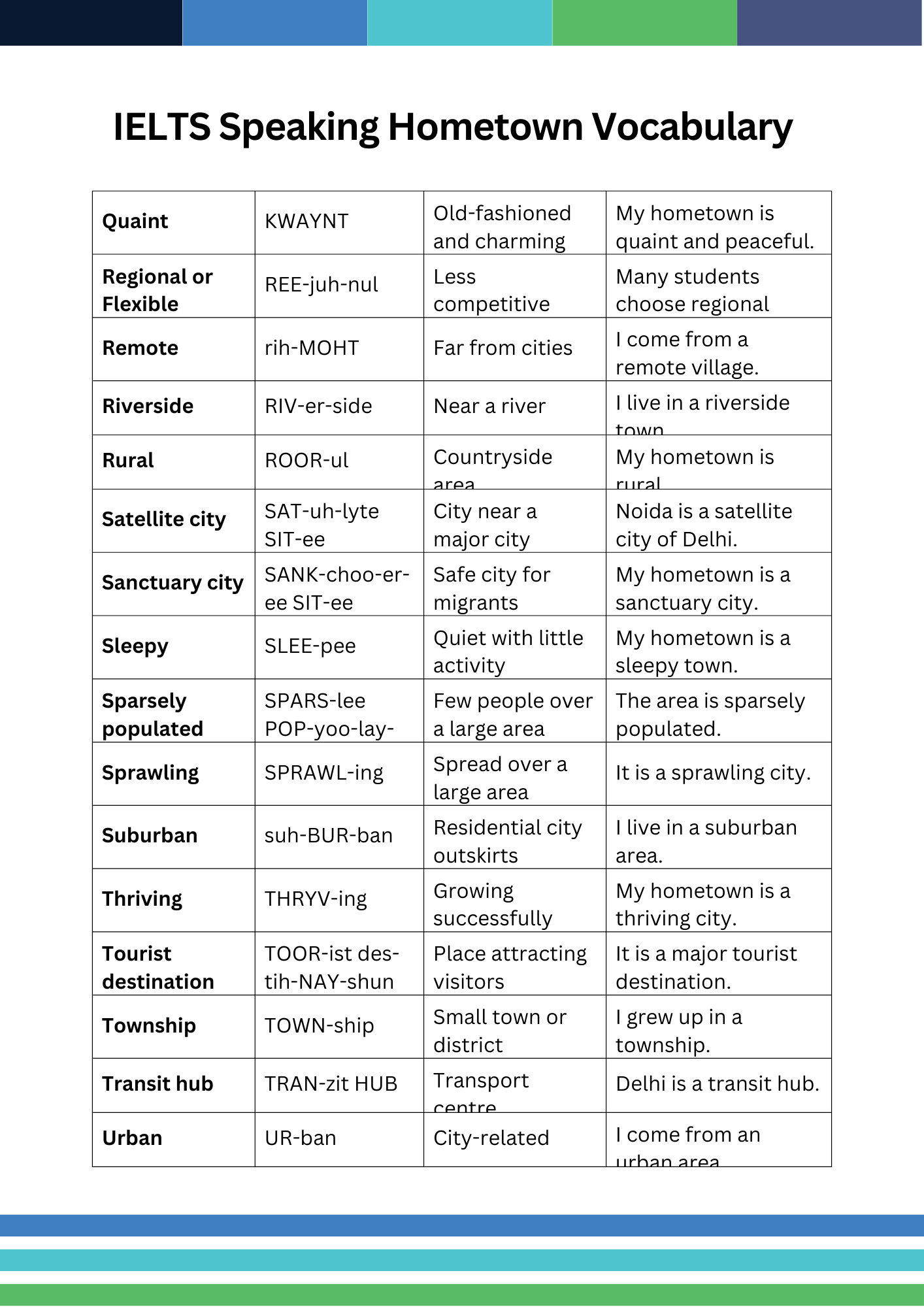
- IELTS Hometown Vocabulary PDF
- FAQs
Why is it Important to Learn IELTS Speaking Hometown Vocabulary?
The topic IELTS Speaking hometown vocabulary is a common one in the IELTS Speaking test, especially in Part 1, where you are asked about familiar topics. It is not just about describing where you live; in fact, it is a way to demonstrate your English language skills. The intent of the examiner is to listen to the range of your vocabulary, accuracy of grammar, fluency, and coherence. Being able to talk about your hometown fluently and naturally allows you to showcase these IELTS speaking skills effectively. Further, topics like IELTS Speaking Hometown Vocabulary often connect to broader IELTS themes like describing experiences, expressing opinions (about your hometown), and discussing changes (in your hometown).
Common IELTS Speaking Hometown Vocabulary
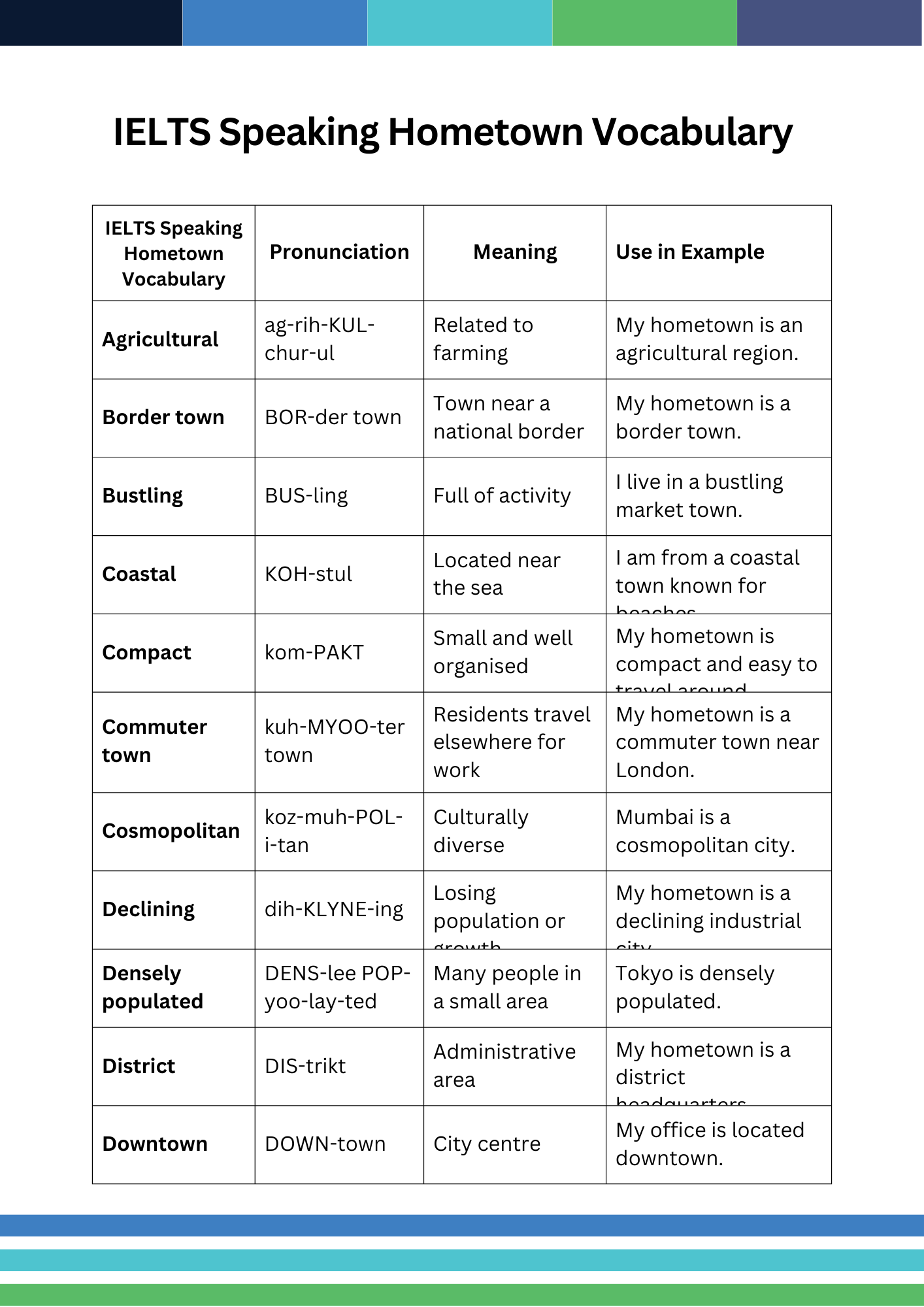
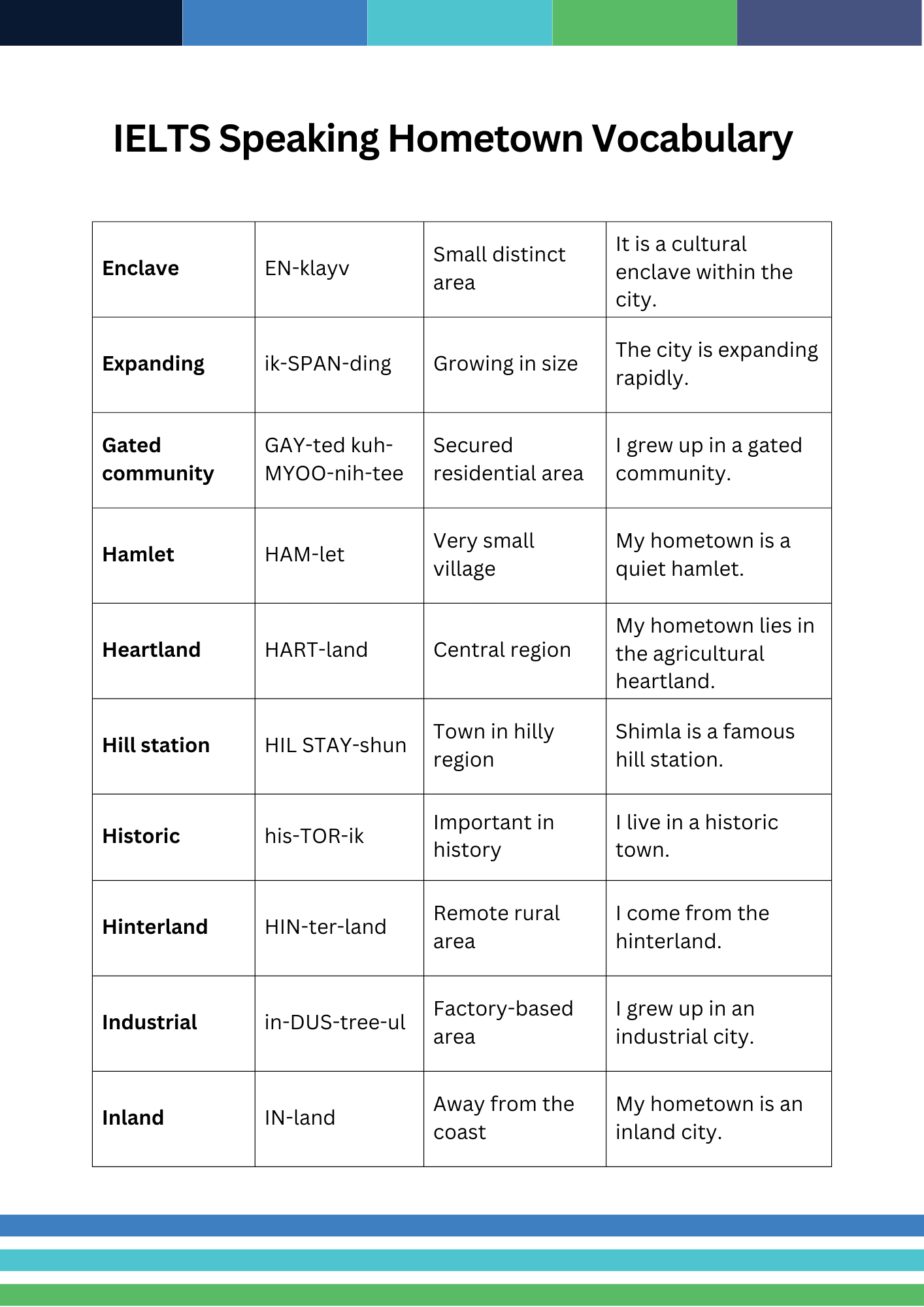
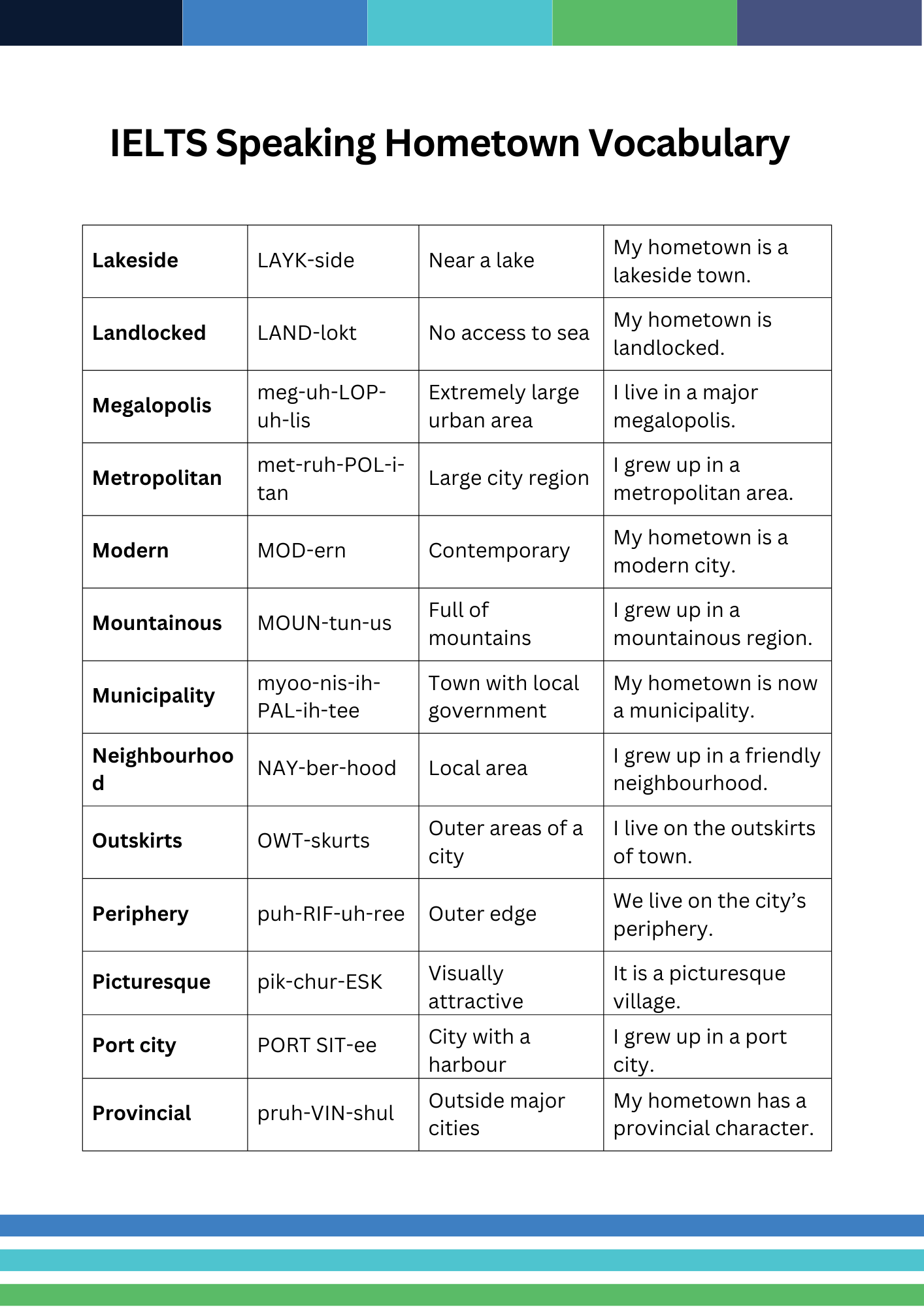
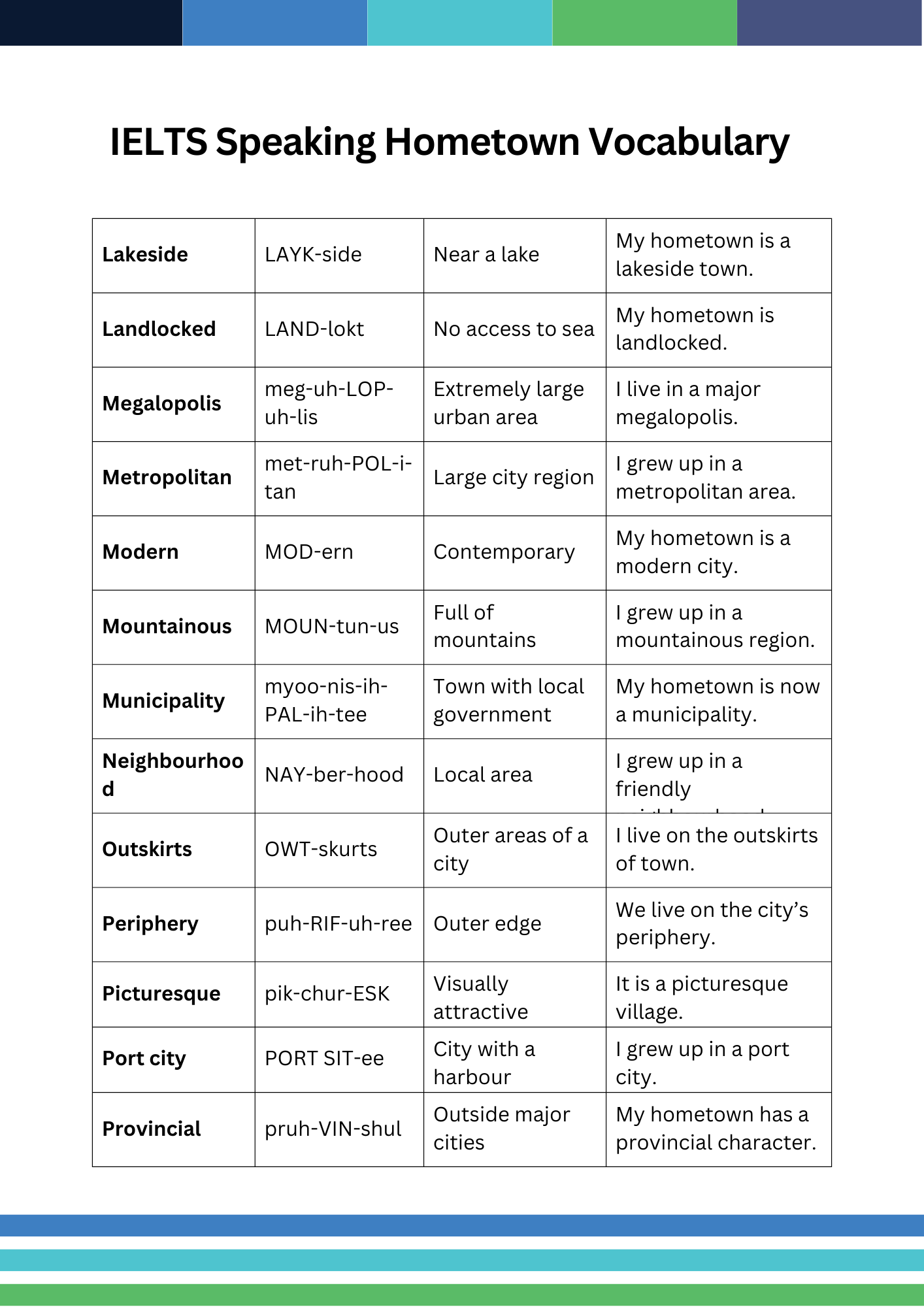
Here are some important and Common IELTS Speaking Hometown Vocabulary that can help learners in enhancing their performance in the IELTS Speaking test:
IELTS Speaking Vocabulary: Describing Locations and Hometown Size
| Word Describing Locations and Size of Hometown | Pronunciation | Meaning | Example Usage |
| Village | /ˈvɪlɪdʒ/ | Small rural community | I come from a small village in the countryside |
| Hamlet | /ˈhæmlɪt/ | Very small village | It’s just a hamlet with about 200 people |
| Township | /ˈtaʊnʃɪp/ | Small administrative area | Our township covers several rural areas |
| Town | /taʊn/ | Larger than village, smaller than city | My hometown is a medium-sized town |
| City | /ˈsɪti/ | Large urban area | The city has over one million inhabitants |
| Metropolis | /məˈtrɒpəlɪs/ | Very large city | Tokyo is a major metropolis in Asia |
| Metropolitan | /ˌmetrəˈpɒlɪtən/ | Relating to large city area | The metropolitan area includes suburbs |
| Borough | /ˈbʌrə/ | Administrative town division | I live in the central borough of the city |
| Municipality | /mjuˌnɪsɪˈpæləti/ | Self-governing town | Our municipality provides excellent services |
| Suburban | /səˈbɜːbən/ | Residential area outside city | I grew up in a suburban neighbourhood |
| Urban | /ˈɜːbən/ | City-related | I prefer urban life to rural living |
| Rural | /ˈrʊərəl/ | Countryside area | Rural areas have cleaner air |
| Compact | /kəmˈpækt/ | Small but well-organised | It’s a compact city with everything nearby |
| Sprawling | /ˈsprɔːlɪŋ/ | Spread over large area | The sprawling suburbs extend for miles |
| Bustling | /ˈbʌsəlɪŋ/ | Full of activity | The bustling market is always crowded |
| Cosmopolitan | /ˌkɒzməˈpɒlɪtən/ | Internationally diverse city | It’s a cosmopolitan city with many cultures |
| District | /ˈdɪstrɪkt/ | Administrative division | The financial district has many banks |
| Settlement | /ˈsetəlmənt/ | Established community | The ancient settlement dates back centuries |
| Community | /kəˈmjuːnəti/ | Group of people living together | Our community is very close-knit |
| Locality | /ləʊˈkæləti/ | Centre of activity | The locality is known for its restaurants |
| Coastal | /ˈkəʊstəl/ | Near the sea | My hometown is a coastal city with beaches |
| Inland | /ˈɪnlænd/ | Away from coast | It’s located inland, far from the ocean |
| Riverside | /ˈrɪvəsaɪd/ | Along a river | We live in a riverside community |
| Mountainous | /ˈmaʊntənəs/ | Having many mountains | The mountainous region is perfect for hiking |
| Plains | /pleɪnz/ | Flat land areas | The vast plains stretch to the horizon |
| Valley | /ˈvæli/ | Low area between hills | Our town sits in a beautiful valley |
| Peninsula | /pəˈnɪnsjələ/ | Land surrounded by water on three sides | The peninsula offers stunning ocean views |
| Island | /ˈaɪlənd/ | Land surrounded by water | The island has a population of 10,000 |
| Northern | /ˈnɔːðən/ | In the north | I’m from the northern part of the country |
| Southern | /ˈsʌðən/ | In the south | Southern regions have warmer weather |
| Eastern | /ˈiːstən/ | In the east | The eastern districts are more industrial |
| Western | /ˈwestən/ | In the west | Western areas are known for agriculture |
| Central | /ˈsentrəl/ | In the middle | The central location is very convenient |
| Remote | /rɪˈməʊt/ | Far from other places | It’s quite remote, hours from the city |
| Isolated | /ˈaɪsəleɪtɪd/ | Separated from others | The isolated village has few visitors |
| Adjacent | /əˈdʒeɪsənt/ | Next to something | My town is adjacent to the capital |
| Surrounding | /səˈraʊndɪŋ/ | Around something | The surrounding countryside is beautiful |
| Outskirts | /ˈaʊtskɜːts/ | Outer areas of town | I live on the outskirts of the city |
| Downtown | /ˌdaʊnˈtaʊn/ | Central business area | Downtown has all the major shops |
| Uptown | /ˌʌpˈtaʊn/ | Residential area away from center | Uptown is quieter than downtown |
| Accessible | /əkˈsesəbəl/ | Easy to reach | The town is easily accessible by train |
| Connected | /kəˈnektɪd/ | Linked by transport | We’re well connected to major cities |
| Secluded | /sɪˈkluːdɪd/ | Private and away from others | It’s a secluded spot perfect for relaxation |
| Gateway | /ˈɡeɪtweɪ/ | Entry point to region | Our city is the gateway to the mountains |
| Hub | /hʌb/ | Residential area away from centre | It serves as a transportation hub |
| Junction | /ˈdʒʌŋkʃən/ | Where routes meet | The town sits at a major railway junction |
| Crossroads | /ˈkrɒsrəʊdz/ | Where paths intersect | We’re located at important crossroads |
| Transit | /ˈtrænzɪt/ | Movement through area | Many people use it as a transit point |
| Enormous | /ɪˈnɔːməs/ | Extremely large | The enormous city spans several districts |
| Massive | /ˈmæsɪv/ | Very big and heavy | It’s a massive urban development |
| Extensive | /ɪkˈstensɪv/ | Covering large area | The city has extensive suburban areas |
| Vast | /vɑːst/ | Extremely large | The vast metropolitan area houses millions |
| Immense | /ɪˈmens/ | Extremely large | The immense cityscape stretches endlessly |
| Tiny | /ˈtaɪni/ | Extremely small | It’s a tiny village with one main street |
| Modest | /ˈmɒdɪst/ | Small to medium size | It’s a modest town with basic amenities |
| Considerable | /kənˈsɪdərəbəl/ | Large in size or amount | There’s been considerable urban growth |
| Substantial | /səbˈstænʃəl/ | Large and solid | The town has seen substantial expansion |
| Miniature | /ˈmɪnɪtʃər/ | Very small in size | It’s like a miniature version of Paris |
| Populated | /ˈpɒpjuleɪtɪd/ | Having people living there | The area is densely populated |
| Densely | /ˈdensli/ | Closely packed | The town centre is always lively |
| Sparsely | /ˈspɑːsli/ | Thinly scattered | Rural areas are sparsely populated |
| Crowded | /ˈkraʊdɪd/ | Full of people | The downtown area gets very crowded |
| Inhabited | /ɪnˈhæbɪtɪd/ | Lived in | The island has been inhabited for centuries |
| Residential | /ˌrezɪˈdenʃəl/ | For housing | It’s primarily a residential area |
| Commercial | /kəˈmɜːʃəl/ | For business | The commercial district has many shops |
| Industrial | /ɪnˈdʌstriəl/ | For manufacturing | The industrial zone employs many people |
| Peaceful | /ˈpiːsfəl/ | Calm and quiet | It’s a peaceful place to raise children |
| Tranquil | /ˈtræŋkwɪl/ | Very peaceful | The tranquil countryside is very relaxing |
| Serene | /səˈriːn/ | Calm and peaceful | The serene lake reflects the mountains |
| Vibrant | /ˈvaɪbrənt/ | Full of energy | The city has a vibrant nightlife scene |
| Dynamic | /daɪˈnæmɪk/ | Constantly changing | It’s a dynamic city with rapid development |
| Lively | /ˈlaɪvli/ | Full of activity | The town center is always lively |
| Hectic | /ˈhektɪk/ | Very busy and stressful | Life in the city can be quite hectic |
| Thriving | /ˈθraɪvɪŋ/ | Prosperous and growing | The thriving port brings wealth |
| Historic | /hɪˈstɒrɪk/ | Having historical importance | It’s a historic town with ancient buildings |
| Ancient | /ˈeɪnʃənt/ | Very old | The ancient city dates back 2000 years |
| Modern | /ˈmɒdən/ | Contemporary | It’s a modern city with new infrastructure |
| Traditional | /trəˈdɪʃənəl/ | Following old customs | The traditional village preserves old ways |
| Progressive | /prəˈɡresɪv/ | Forward-thinking | It’s a progressive city with green policies |
| Conservative | /kənˈsɜːvətɪv/ | Traditional in approach | The conservative town resists change |
| Multicultural | /ˌmʌltiˈkʌltʃərəl/ | Having many cultures | It’s a multicultural society with diversity |
| Diverse | /daɪˈvɜːs/ | Varied and different | The diverse population brings richness |
| Picturesque | /ˌpɪktʃəˈresk/ | Attractive like a picture | The picturesque village attracts tourists |
| Scenic | /ˈsiːnɪk/ | Having beautiful views | The scenic route passes through valleys |
| Quaint | /kweɪnt/ | Charmingly old-fashioned | The quaint cottages line cobbled streets |
| Charming | /ˈtʃɑːmɪŋ/ | Attractive and delightful | It’s a charming place with friendly people |
| Developed | /dɪˈveləpt/ | Advanced and modern | It’s a well-developed area with good facilities |
| Developing | /dɪˈveləpɪŋ/ | Growing and improving | The developing suburb has new construction |
| Established | /ɪˈstæblɪʃt/ | Long-existing and stable | It’s an established neighborhood with history |
| Emerging | /ɪˈmɜːdʒɪŋ/ | Beginning to develop | The emerging district shows great potential |
| Flourishing | /ˈflʌrɪʃɪŋ/ | Growing successfully | The flourishing arts scene attracts visitors |
| Declining | /dɪˈklaɪnɪŋ/ | Becoming worse | The declining industrial area needs investment |
| Renovated | /ˈrenəveɪtɪd/ | Restored and improved | The renovated old town looks beautiful |
| Landlocked | /ˈlændlɒkt/ | Surrounded by land, no sea access | The landlocked country has no coastline |
| Waterfront | /ˈwɔːtəfrʌnt/ | Area next to water | The waterfront development has luxury apartments |
| Hillside | /ˈhɪlsaɪd/ | Slope of a hill | Houses dot the hillside overlooking the valley |
| Plateau | /ˈplætəʊ/ | Flat elevated land | The town sits on a plateau above sea level |
| Suburb | /ˈsʌbɜːb/ | Residential area outside the city centre | It’s an established neighbourhood with history |
IELTS Speaking Vocabulary: Climate and Environment of a Hometown
| Word Describing Climate and Environment of a Hometown | Pronunciation | Meaning | Example Usage |
| Monsoon season | /mɒnˈsuːn ˈsiːzn/ | Time of heavy seasonal rain | Farmers rely on the monsoon season for crops. |
| Smog | /smɒɡ/ | Air pollution combining smoke and fog | Smog reduces visibility and affects health. |
| Frostbite | /ˈfrɒstbaɪt/ | Injury caused by extreme cold | People wear warm clothes to avoid frostbite. |
| Avalanche | /ˈævəlæntʃ/ | A large mass of snow, ice, or rocks falling rapidly | During winter, the mountain slopes near my hometown are prone to avalanches. |
| Tropical climate | /ˈtrɒpɪkəl ˈklaɪmɪt/ | Hot and humid climate near the equator | My hometown has a tropical climate with heavy rainfall. |
| Windstorm | /ˈwɪndstɔːrm/ | Strong wind causing damage | Windstorms uproot trees and power lines. |
| Humidity | /hjuːˈmɪdəti/ | Amount of moisture in the air | Humidity levels are very high during monsoon. |
| Landslide | /ˈlændslaɪd/ | Movement of rock or soil down a slope | Heavy rain caused a landslide near my town. |
| Blizzard | /ˈblɪzərd/ | A severe snowstorm with strong winds | Last year, a blizzard covered my hometown in thick snow for two days. |
| Wildfire | /ˈwaɪldˌfaɪər/ | Uncontrolled fire in forested areas | Wildfires in summer destroyed large areas of forest. |
| Drought | /draʊt/ | A prolonged period with very little or no rainfall | Severe droughts affect the agriculture in my hometown every few years. |
| Rainfall | /ˈreɪnˌfɔːl/ | The amount of rain in a period | Heavy rainfall caused minor flooding in the streets. |
| Tornado | /tɔːrˈneɪdoʊ/ | A violent rotating column of air | Tornado warnings are rare but serious in some regions. |
| Fog | /fɒɡ/ | Thick mist reducing visibility | Fog covers my hometown early in winter mornings. |
| Typhoon | /taɪˈfuːn/ | A tropical storm in the Pacific region | Typhoons sometimes hit coastal areas near my hometown. |
| Greenhouse gases | /ˈɡriːnhaʊs ˈɡæsɪz/ | Gases that trap heat in the atmosphere | Carbon dioxide is one of the main greenhouse gases. |
| Haze | /heɪz/ | Slight obscuring of the sky due to dust or smoke | Pollution causes haze during the summer. |
| Polar climate | /ˈpoʊlər ˈklaɪmɪt/ | Extremely cold regions near poles | The polar climate is harsh and icy. |
| Ice storm | /aɪs stɔːrm/ | Storm with freezing rain forming ice | Ice storms make roads slippery and dangerous. |
| Weather | /ˈwɛðər/ | The state of the atmosphere at a place | The weather in my hometown is mostly sunny in spring. |
| Rain | /reɪn/ | Water falling from clouds | We get moderate rain every summer in my hometown. |
| Sandstorm | /ˈsændstɔːrm/ | Strong wind carrying sand | Sandstorms are common in desert regions. |
| Solar energy | /ˈsoʊlər ˈɛnərdʒi/ | Energy from the sun | Solar energy is widely used in our town. |
| Ice | /aɪs/ | Frozen water | Ice forms on the lake during the coldest months. |
| Extreme weather | /ɪkˈstriːm ˈwɛðər/ | Severe weather events | Extreme weather, like floods, is more common now. |
| Precipitation | /prɪˌsɪpɪˈteɪʃən/ | Rain, snow, or other forms of water from the sky | Annual precipitation is high in my hometown. |
| Temperature range | /ˈtɛmpərətʃər reɪndʒ/ | Difference between the highest and lowest temperatures | The temperature range is wider in winter months. |
| Weather pattern | /ˈwɛðər ˈpætərn/ | Typical climate trends in an area | Changing weather patterns affect local farming. |
| Deforestation | /diˌfɒrɪˈsteɪʃən/ | Cutting down of forests | Deforestation near my town has caused soil erosion. |
| Snowstorm | /ˈsnoʊstɔːrm/ | A storm with heavy snow | Snowstorms can block roads in the hilly areas. |
| Overcast sky | /ˌoʊvərˈkæst skaɪ/ | Sky fully covered with clouds | An overcast sky made the day gloomy. |
| Freezing point | /ˈfriːzɪŋ pɔɪnt/ | The temperature at which water freezes | The freezing point is often reached in January. |
| Microclimate | /ˈmaɪkrəʊˌklaɪmɪt/ | Localised weather conditions | The park has a cooler microclimate than the city centre. |
| Hurricane | /ˈhʌrɪkən/ | A powerful tropical storm with strong winds | Hurricanes occasionally affect coastal towns near my hometown. |
| Tornado warning | /tɔːrˈneɪdoʊ ˈwɔːrnɪŋ/ | Alert about an approaching tornado | Residents took shelter after a tornado warning. |
| Lightning | /ˈlaɪtnɪŋ/ | A sudden flash of electricity in the sky | Lightning during storms can be very dramatic in my hometown. |
| Thunderstorm | /ˈθʌndərstɔːrm/ | Storm with thunder and lightning | Thunderstorms are common in summer evenings. |
| Breezy | /ˈbriːzi/ | Having light wind; pleasantly windy | The evenings in my hometown are often breezy and relaxing. |
| Wind chill | /wɪnd ʧɪl/ | Cooling effect of wind on temperature | The wind chill makes winter mornings feel colder. |
| Mild | /maɪld/ | Not extreme; moderate | Winters here are mild compared to northern regions. |
| Freezing | /ˈfriːzɪŋ/ | Extremely cold, at or below 0°C | The river freezes during the freezing winters in my hometown. |
| Hot | /hɒt/ | Having a high temperature | Summers are hot and humid in my hometown. |
| Sunny | /ˈsʌni/ | Bright with sunlight | Sunny days make the afternoons warm and pleasant. |
| Cloudy | /ˈklaʊdi/ | Covered with clouds | Today, the sky is cloudy and it might rain later. |
| Cold | /koʊld/ | Having a low temperature | It gets very cold in my hometown during December and January. |
| Overcast | /ˌoʊvərˈkæst/ | Sky covered with clouds | The sky is overcast, so it feels gloomy outside. |
| Foggy | /ˈfɒɡi/ | Filled with or covered by fog | Early mornings are usually foggy in my hometown. |
| Coastal city | /ˈkəʊstəl ˈsɪti/ | A city located on the coast | My hometown is a beautiful coastal city. |
| Coastal town | /ˈkəʊstəl taʊn/ | A town located near the sea | Fishing is common in coastal towns. |
| Icequake | /ˈaɪskweɪk/ | Shaking caused by moving ice | Icequakes are rare but can be felt in freezing regions. |
| Desert | /ˈdɛzərt/ | A dry area with very little rainfall | Desert areas are hot and dry in summer. |
| Xerophyte | /ˈzɪrəˌfaɪt/ | Plant adapted to survive in dry conditions | Cacti are xerophytes found in arid regions. |
| Zephyr | /ˈzɛfər/ | Gentle, mild breeze | A gentle zephyr blows through the hills in spring. |
| Ocean breeze | /ˈoʊʃən briːz/ | Cool wind from the sea | The ocean breeze keeps the coastal town comfortable. |
| Altitude | /ˈæltɪtjuːd/ | Height above sea level | The altitude of my hometown makes the air cooler than the plains. |
| Wild animals | /waɪld ˈænɪməlz/ | Animals living in the wild | The forests near my hometown are home to many wild animals. |
| Wildlife | /ˈwaɪldlaɪf/ | Animals living in their natural habitat | The nearby national park is rich in wildlife. |
| Renewable resources | /rɪˈnuːəbl rɪˈsɔːrsɪz/ | Resources that can be naturally replenished | Solar energy is a renewable resource. |
| Evaporation | /ɪˌvæpəˈreɪʃən/ | Process of liquid turning into vapour | Evaporation from rivers increases in the hot season. |
IELTS Speaking Vocabulary: Infrastructure and Development
| Word Describing Infrastructure and Development | Pronunciation | Meaning | Example Usage |
| Transportation Infrastructure | |||
| Infrastructure | /ˈɪnfrəstrʌktʃər/ | Basic physical systems of a country | The infrastructure in my city has improved significantly |
| Transportation | /ˌtrænspɔːˈteɪʃən/ | System of moving people and goods | Public transportation is very efficient here |
| Network | /ˈnetwɜːk/ | Connected system of roads, rails and likewise | The railway network connects all major cities |
| Highway | /ˈhaɪweɪ/ | Main road for fast travel | The new highway reduced travel time by half |
| Motorway | /ˈməʊtəweɪ/ | High-speed road with multiple lanes | The motorway bypass avoids city traffic |
| Boulevard | /ˈbuːləvɑːd/ | Wide street with trees | The main boulevard has beautiful landscaping |
| Intersection | /ˌɪntəˈsekʃən/ | Where roads cross | Traffic lights control the busy intersection |
| Roundabout | /ˈraʊndəbaʊt/ | Circular junction | The roundabout improves traffic flow |
| Overpass | /ˈəʊvəpɑːs/ | Bridge carrying road over another | The overpass eliminates traffic congestion |
| Underpass | /ˈʌndəpɑːs/ | Road or path going under another | Pedestrians use the underpass to cross safely |
| Tunnel | /ˈtʌnəl/ | Underground passage | The tunnel connects both sides of the river |
| Bridge | /brɪdʒ/ | Structure spanning over obstacles | The suspension bridge is an engineering marvel |
| Subway | /ˈsʌbweɪ/ | Underground railway system | The subway system serves millions daily |
| Metro | /ˈmetrəʊ/ | Urban rapid transit system | The metro has expanded to cover suburbs |
| Railway | /ˈreɪlweɪ/ | Track system for trains | The railway line connects rural areas |
| Terminal | /ˈtɜːmɪnəl/ | End point of transport route | The new terminal handles more passengers |
| Platform | /ˈplætfɔːm/ | Raised area for boarding trains | Passengers wait on the platform |
| Station | /ˈsteɪʃən/ | Stop for public transport | The train station is in the city centre |
| Public Utilities | |||
| Utilities | /juːˈtɪlətiz/ | Basic services like water, gas, electricity | All utilities are included in the rent |
| Electricity | /ɪˌlekˈtrɪsəti/ | Power supply | The electricity grid is very reliable |
| Grid | /ɡrɪd/ | Network distributing electricity | Solar panels connect to the power grid |
| Sewage | /ˈsuːɪdʒ/ | Waste water system | The sewage treatment plant was upgraded |
| Drainage | /ˈdreɪnɪdʒ/ | System removing excess water | Good drainage prevents flooding |
| Pipeline | /ˈpaɪplaɪn/ | System of pipes for liquids/gases | The gas pipeline supplies the entire region |
| Waterworks | /ˈwɔːtəwɜːks/ | Water supply system | The waterworks provides clean drinking water |
| Power station | /ˈpaʊə steɪʃən/ | Facility generating electricity | The power station runs on renewable energy |
| Substation | /ˈsʌbsteɪʃən/ | Electrical distribution point | The new substation improved power reliability |
| Telecommunications | |||
| Telecommunications | /ˌtelikəˌmjuːnɪˈkeɪʃənz/ | Communication systems | Telecommunications infrastructure is modern |
| Broadband | /ˈbrɔːdbænd/ | High-speed internet connection | Fibre broadband is available citywide |
| Fiber optic | /ˈfaɪbər ˈɒptɪk/ | High-speed data transmission cables | Fibre optic cables provide fast internet |
| Network coverage | /ˈnetwɜːk ˈkʌvərɪdʒ/ | Area served by communication network | Mobile network coverage is excellent |
| Antenna | /ænˈtenə/ | Device for transmitting/receiving signals | New antennas improve signal strength |
| Tower | /ˈtaʊər/ | Tall structure for communication | Cell towers provide mobile coverage |
| Development Terms | |||
| Development | /dɪˈveləpmənt/ | Process of growth and improvement | Urban development is happening rapidly |
| Urban planning | /ˈɜːbən ˈplænɪŋ/ | Designing city layout | Good urban planning prevents overcrowding |
| Zoning | /ˈzəʊnɪŋ/ | Dividing areas for different uses | Zoning laws separate residential and commercial areas |
| Construction | /kənˈstrʌkʃən/ | Building process | Construction of the mall will start soon |
| Renovation | /ˌrenəˈveɪʃən/ | Improving existing buildings | The renovation restored the historic building |
| Modern architecture characterises the district | /ˌmɒdənaɪˈzeɪʃən/ | Making more modern | Infrastructure modernisation is ongoing |
| Expansion | /ɪkˈspænʃən/ | Making larger | Airport expansion will double capacity |
| Upgrade | /ˈʌpɡreɪd/ | Improving to higher standard | The upgrade improved service quality |
| Redevelopment | /ˌriːdɪˈveləpmənt/ | Rebuilding an area | City centre redevelopment attracts investment |
| Gentrification | /ˌdʒentrɪfɪˈkeɪʃən/ | Upgrading area, often displacing residents | Gentrification changed the neighbourhood’s character |
| Public Facilities | |||
| Facilities | /fəˈsɪlətiz/ | Buildings/equipment for specific purposes | Sports facilities are available for everyone |
| Hospital | /ˈhɒspɪtəl/ | Medical care facility | The hospital has excellent emergency services |
| Clinic | /ˈklɪnɪk/ | Small medical facility | A local clinic serves basic health needs |
| School | /skuːl/ | Educational institution | Public schools provide quality education |
| Library | /ˈlaɪbrəri/ | Public book and information centre | The library offers digital resources |
| Museum | /mjuːˈziəm/ | Cultural exhibition facility | The museum showcases local history |
| Park | /pɑːk/ | Public green space | The park provides recreation for families |
| Playground | /ˈpleɪɡraʊnd/ | Children’s play area | The playground has new safety equipment |
| Stadium | /ˈsteɪdiəm/ | Sports venue | The stadium hosts international matches |
| Arena | /əˈriːnə/ | Indoor sports/entertainment venue | The arena seats 20,000 spectators |
| Housing and Buildings | |||
| Housing | /ˈhaʊzɪŋ/ | Places where people live | Affordable housing is a priority |
| Residential | /ˌrezɪˈdenʃəl/ | For housing purposes | The residential district is quiet |
| Apartment block | /əˈpɑːtmənt blɒk/ | Multi-story residential building | The apartment block has 50 units |
| High-rise | /ˈhaɪ raɪz/ | Very tall building | High-rise buildings dominate the skyline |
| Skyscraper | /ˈskaɪskreɪpər/ | Extremely tall building | The skyscraper is 40 stories high |
| Complex | /ˈkɒmpleks/ | Group of connected buildings | The shopping complex has many stores |
| Mall | /mɔːl/ | Large shopping center | The mall attracts visitors from neighbouring cities |
| Office building | /ˈɒfɪs ˈbɪldɪŋ/ | Building for businesses | The office building is fully occupied |
| Planning and Design | |||
| Architecture | /ˈɑːkɪtektʃər/ | Design of buildings | Modern architecture characterizes the district |
| Layout | /ˈleɪaʊt/ | Arrangement of elements | The city layout is well organised |
| Blueprint | /ˈbluːprɪnt/ | Detailed plan | Architects reviewed the blueprint carefully |
| Master plan | /ˈmɑːstə plæn/ | Large shopping centre | The master plan guides city growth |
| Permit | /ˈpɜːmɪt/ | Official permission | Building permits are required for construction |
| Regulation | /ˌreɡjuˈleɪʃən/ | Official rule | Building regulations ensure safety standards |
| Code | /kəʊd/ | Set of rules/standards | The building code requires earthquake resistance |
| Quality Descriptors | |||
| Modern | /ˈmɒdən/ | Contemporary and up-to-date | The modern facility has latest technology |
| State-of-the-art | /ˌsteɪt əv ði ˈɑːt/ | Most advanced available | The hospital has state-of-the-art equipment |
| Cutting-edge | /ˈkʌtɪŋ edʒ/ | Most advanced technology | Cutting-edge design makes it energy efficient |
| Outdated | /ˌaʊtˈdeɪtɪd/ | Old and no longer suitable | The outdated system needs replacement |
| Obsolete | /ˈɒbsəliːt/ | No longer in use | The old technology became obsolete |
| Efficient | /ɪˈfɪʃənt/ | Working well without waste | The efficient design saves energy |
| Sustainable | /səˈsteɪnəbəl/ | Environmentally friendly | Sustainable development protects the environment |
| Eco-friendly | /ˈiːkəʊ ˈfrendli/ | Not harmful to environment | Eco-friendly buildings use solar power |
| Problems and Solutions | |||
| Congestion | /kənˈdʒestʃən/ | Overcrowding causing delays | Traffic congestion is worst during rush hour |
| Bottleneck | /ˈbɒtəlnek/ | Point of congestion | The bridge creates a traffic bottleneck |
| Breakdown | /ˈbreɪkdaʊn/ | System failure | Power breakdown affected the entire area |
| Maintenance | /ˈmeɪntənəns/ | Keeping in good condition | Regular maintenance prevents problems |
| Repair | /rɪˈpeər/ | Fixing something broken | Road repairs will improve safety |
| Replacement | /rɪˈpleɪsmənt/ | Substituting with new | Pipeline replacement is necessary |
| Investment | /ɪnˈvestmənt/ | Money spent for future benefit | Government investment improved infrastructure |
| Funding | /ˈfʌndɪŋ/ | Money for a project | Funding comes from taxes and bonds |
| Budget | /ˈbʌdʒɪt/ | Planned spending | The budget covers infrastructure improvements |
| Environmental Aspects | |||
| Green space | /ɡriːn speɪs/ | Areas with plants and trees | Green spaces improve air quality |
| Pollution | /pəˈluːʃən/ | Environmental contamination | Reducing pollution is a priority |
| Emission | /ɪˈmɪʃən/ | Release of gases/particles | Lower emissions benefit public health |
| Renewable | /rɪˈnjuːəbəl/ | Can be used repeatedly | Renewable energy reduces carbon footprint |
| Solar panel | /ˈsəʊlər ˈpænəl/ | Device converting sunlight to electricity | Solar panels power street lights |
| Wind turbine | /wɪnd ˈtɜːbaɪn/ | Device generating electricity from wind | Wind turbines provide clean energy |
| Connectivity Aspects | |||
| Accessibility | /əkˌsesəˈbɪləti/ | Ease of reaching/using | Wheelchair accessibility is mandatory |
| Connection | /kəˈnekʃən/ | Link between places/systems | Good connections reduce travel time |
| Route | /ruːt/ | Path from one place to another | The scenic route attracts tourists |
| Gateway | /ˈɡeɪtweɪ/ | Entry point | The airport is the gateway to the region |
| Hub | /hʌb/ | Central connection point | The transport hub serves multiple lines |
IELTS Speaking Vocabulary: Activities and Lifestyle in a Hometown
| Words Describing Speaking Vocabulary | Pronunciation | Meaning | Example Usage |
| Afternoon stroll | /ˌæftərˈnuːn stroʊl/ | Walking in the afternoon for leisure | People enjoy an afternoon stroll in the park. |
| Amusement park | /əˈmjuːzmənt pɑːrk/ | Park with rides and entertainment | Families visit the amusement park on weekends. |
| Art gallery | /ɑːrt ˈɡæləri/ | Place to display art | The art gallery hosts exhibitions every month. |
| Baking | /ˈbeɪkɪŋ/ | Preparing food using an oven | Baking bread is a popular hobby in my hometown. |
| Barbecue | /ˈbɑːrbɪkjuː/ | Cooking food outdoors on a grill | We often have a barbecue in the backyard. |
| Beach outing | /biːʧ ˈaʊtɪŋ/ | Trip to the beach for fun | Beach outings are common during summer. |
| Birdwatching | /ˈbɜːrdˌwɒʧɪŋ/ | Observing birds in nature | Birdwatching is popular near local forests. |
| Bowling | /ˈboʊlɪŋ/ | Sport of rolling a ball to knock down pins | Bowling is a fun activity with friends. |
| Camping | /ˈkæmpɪŋ/ | Staying outdoors in tents | Families go camping in the nearby hills. |
| Cycling | /ˈsaɪklɪŋ/ | Riding a bicycle for exercise or transport | Cycling is a common morning activity. |
| Cinema | /ˈsɪnəmə/ | Place to watch movies | The local cinema shows international films. |
| Community service | /kəˈmjuːnɪti ˈsɜːrvɪs/ | Volunteering to help others | Students participate in community service regularly. |
| Concert | /ˈkɒnsərt/ | Musical performance | The annual concert attracts large crowds. |
| Cooking | /ˈkʊkɪŋ/ | Preparing meals | Cooking traditional dishes is part of daily life. |
| Cricket | /ˈkrɪkɪt/ | Popular bat-and-ball sport | Cricket is widely played in my hometown. |
| Cultural festival | /ˈkʌltʃərəl ˈfɛstəvəl/ | Event celebrating local culture | The cultural festival showcases dance and music. |
| Cycling trail | /ˈsaɪklɪŋ treɪl/ | Path for cycling | The cycling trail passes through scenic areas. |
| Dancing | /ˈdænsɪŋ/ | Moving rhythmically to music | Fighting skills practised for sport |
| Dining out | /ˈdaɪnɪŋ aʊt/ | Eating at restaurants | Dining out is popular during weekends. |
| Fishing | /ˈfɪʃɪŋ/ | Catching fish for food or sport | Fishing is common in the nearby river. |
| Football | /ˈfʊtbɔːl/ | Team sport played with a ball | Football matches attract local supporters. |
| Gardening | /ˈɡɑːrdənɪŋ/ | Growing plants and flowers | Gardening is a relaxing hobby. |
| Gym | /dʒɪm/ | Place for physical exercise | Many people visit the gym to stay fit. |
| Hiking | /ˈhaɪkɪŋ/ | Walking long distances in nature | Hiking is common in the nearby hills. |
| Horse riding | /hɔːrs ˈraɪdɪŋ/ | Riding horses for sport or leisure | Horse riding clubs are popular in rural areas. |
| Ice skating | /aɪs ˈskeɪtɪŋ/ | Moving on ice using skates | Ice skating is popular during winter. |
| Jogging | /ˈdʒɒɡɪŋ/ | Running slowly for exercise | Jogging in the park is a daily routine. |
| Karaoke | /ˌkærəˈoʊki/ | Singing along to recorded music | Dancing is a favourite pastime for teenagers. |
| Library visit | /ˈlaɪbrəri ˈvɪzɪt/ | Going to read or borrow books | Students often make library visits after school. |
| Martial arts | /ˈmɑːrʃəl ɑːrts/ | Children enjoy music classes at the community centre. | Martial arts classes are offered in town halls. |
| Meditation | /ˌmɛdɪˈteɪʃən/ | Practice of focusing the mind | Meditation helps reduce stress in daily life. |
| Music class | /ˈmjuzɪk klæs/ | Learning music instruments or singing | Children enjoy music classes at the community center. |
| Museum visit | /mjuːˈziːəm ˈvɪzɪt/ | Going to see historical or cultural exhibits | Museum visits are popular among students. |
| Nightlife | /ˈnaɪtˌlaɪf/ | Evening entertainment in a city | Nightlife in the city includes cafes and live music. |
| Painting | /ˈpeɪntɪŋ/ | Creating art using colours | Painting is a common hobby among locals. |
| Park walk | /pɑːrk wɔːk/ | Walking in a park | Park walks are refreshing in the mornings. |
| Photography | /fəˌtɒɡrəˈfi/ | Taking photos as a hobby | Photography enthusiasts capture natural beauty. |
| Picnic | /ˈpɪknɪk/ | Outdoor meal for fun | Families organise picnics near the river. |
| Reading | /ˈriːdɪŋ/ | Looking at and understanding books | Reading is a daily habit for many residents. |
| Running | /ˈrʌnɪŋ/ | Moving quickly on foot | Running is common in school playgrounds. |
| Sailing | /ˈseɪlɪŋ/ | Traveling on water in a boat | Sailing is popular in coastal towns. |
| Shopping | /ˈʃɒpɪŋ/ | Buying goods from stores | Shopping is a weekend activity for families. |
| Socializing | /ˈsoʊʃəˌlaɪzɪŋ/ | Interacting with friends or community | Tai chi is practised in parks in the mornings. |
| Soccer | /ˈsɒkər/ | Team sport played with a ball | Soccer is played in parks and schools. |
| Street food | /striːt fuːd/ | Food sold by vendors in public areas | Street food is popular among teenagers. |
| Swimming | /ˈswɪmɪŋ/ | Moving through water | Swimming is a summer activity in rivers and pools. |
| Tai chi | /taɪ ˈtʃiː/ | Chinese martial art for health | Tai chi is practiced in parks in the mornings. |
| Theater | /ˈθɪətər/ | Place for plays and performances | The theater hosts drama and cultural shows. |
| Trekking | /ˈtrɛkɪŋ/ | Long walks in nature | Trekking is popular in the nearby hills. |
| Volleyball | /ˈvɒlibɔːl/ | Team sport with a ball over a net | Volleyball is played in schools and beaches. |
| Walking club | /ˈwɔːkɪŋ klʌb/ | Group organised for walking | Walking clubs promote fitness among residents. |
| Weekend trip | /ˈwiːkɛnd trɪp/ | Short leisure travel | Weekend trips to nearby towns are common. |
| Yoga | /ˈjoʊɡə/ | Physical and mental exercise | Yoga classes are popular for stress relief. |
| Zumba | /ˈzʊmbə/ | Dance fitness program | Zumba sessions are held in community halls. |
| Cycling club | /ˈsaɪklɪŋ klʌb/ | Group for bike enthusiasts | The cycling club explores new routes every week. |
| Fitness center | /ˈfɪtnəs ˈsɛntər/ | Place for exercise and workouts | Many residents visit the fitness center regularly. |
| Hiking trail | /ˈhaɪkɪŋ treɪl/ | Path for hiking | The hiking trail leads to a scenic viewpoint. |
| Local café | /ˈloʊkəl kæˈfeɪ/ | Small restaurant for drinks and snacks | Teenagers gather at the local café in the evenings. |
| Martial arts class | /ˈmɑːrʃəl ɑːrts klæs/ | Training in martial arts | Martial arts classes teach discipline and fitness. |
| Music festival | /ˈmjuzɪk ˈfɛstəvəl/ | Public event with music performances | The music festival attracts local and international artists. |
| Community gardening | /kəˈmjuːnɪti ˈɡɑːrdənɪŋ/ | Shared gardening by residents | Community gardening improves green spaces and social bonding. |
| Running track | /ˈrʌnɪŋ træk/ | Path for jogging or running | Students use the running track in the stadium. |
| Local library | /ˈloʊkəl ˈlaɪbrəri/ | Library in the community | The local library hosts reading competitions. |
| Weekend market | /ˈwiːkɛnd ˈmɑːrkɪt/ | Market operating on weekends | The weekend market sells handmade crafts and food. |
| Outdoor gym | /ˈaʊtdɔːr dʒɪm/ | Open-air exercise equipment | Many residents use the outdoor gym in the park. |
| Cultural center | /ˈkʌltʃərəl ˈsɛntər/ | Place for cultural activities | Dance and music classes are held at the cultural center. |
| Skateboarding | /ˈskeɪtbɔːrdɪŋ/ | Riding a skateboard | Teenagers enjoy skateboarding in the park. |
| Local sports club | /ˈloʊkəl spɔːrts klʌb/ | Club for sports enthusiasts | The local sports club trains players in different games. |
| Community hall | /kəˈmjuːnɪti hɔːl/ | Hall for social events | Wedding receptions are often held at the community hall. |
| Library reading session | /ˈlaɪbrəri ˈriːdɪŋ ˈsɛʃən/ | Organized reading in the library | Children attend the library reading session every week. |
| Local park festival | /ˈloʊkəl pɑːrk ˈfɛstəvəl/ | Festival held in a park | The local park festival includes games, food, and music. |
| Community dance | /kəˈmjuːnɪti dæns/ | Dance event for locals | Community dances strengthen social bonds. |
IELTS Speaking Vocabulary: Describing Safety and Comfort in a Hometown
| Words Describing Safety and Comfort | Pronunciation | Meaning | Example Usage |
| Ambulance service | /ˈæmbjələns ˈsɜːrvɪs/ | Emergency medical transport | The ambulance service responds quickly to accidents. |
| CCTV cameras | /ˌsiːsiːˈtiː ˈkæmərəz/ | Surveillance cameras for security | CCTV cameras are installed at busy intersections. |
| Child-friendly | /ʧaɪld ˈfrɛndli/ | Safe and suitable for children | The park is child-friendly with soft playground surfaces. |
| Community policing | /kəˈmjuːnɪti pəˈliːsɪŋ/ | Local police engaging with residents | Community policing helps reduce crime rates. |
| Crime-free | /kraɪm friː/ | Area with very low crime | The neighbourhood is largely crime-free. |
| Crosswalk | /ˈkrɔːswɔːk/ | Designated pedestrian crossing | Cars always stop at the crosswalk. |
| Disaster preparedness | /dɪˈzæstər prɪˌpɛərdˈnɛs/ | Being ready for emergencies | Disaster preparedness drills are held annually. |
| Emergency services | /ɪˈmɜːrdʒənsi ˈsɜːrvɪsɪz/ | Services for urgent situations | Emergency services are reliable in my hometown. |
| Fire safety | /ˈfaɪər ˈseɪfti/ | Measures to prevent or respond to fire | Fire safety checks are conducted in public buildings. |
| First aid | /fɜːrst eɪd/ | Immediate help for injuries | Schools provide first aid kits in classrooms. |
| Flood protection | /flʌd prəˈtɛkʃən/ | Measures to prevent flooding | The town has flood protection walls along the river. |
| Footpath | /ˈfʊtpæθ/ | Path for pedestrians | Footpaths make walking safe for residents. |
| Gated community | /ˈɡeɪtɪd kəˈmjuːnɪti/ | Residential area with restricted access | Many families prefer living in a gated community. |
| Healthcare | /ˈhɛlθˌkɛər/ | Medical services | Healthcare facilities are easily accessible in the town. |
| Home security | /hoʊm sɪˈkjʊərəti/ | Measures to protect homes | Home security systems prevent burglaries. |
| Hospital | /ˈhɒspɪtl/ | Medical treatment center | The town has a modern hospital with 24-hour services. |
| Insurance | /ɪnˈʃʊərəns/ | Protection against financial loss | Residents have health and property insurance. |
| Law enforcement | /lɔːr ɪnˈfɔːrsmənt/ | Agencies enforcing laws | Law enforcement ensures public safety. |
| Lighting | /ˈlaɪtɪŋ/ | Street or area illumination | Proper street lighting makes neighborhoods safer. |
| Lock | /lɒk/ | Device to secure doors or gates | Doors have strong locks for safety. |
| Medical center | /ˈmɛdɪkəl ˈsɛntər/ | Healthcare facility | The community centre acts as a refuge during storms. |
| Neighborhood watch | /ˈneɪbərˌhʊd wɒʧ/ | Community crime-prevention group | Proper street lighting makes neighbourhoods safer. |
| Noise control | /nɔɪz kənˈtroʊl/ | Measures to reduce noise pollution | Noise control improves residents’ comfort. |
| Occupational safety | /ˌɒkjʊˈpeɪʃənl ˈseɪfti/ | Safety at work | Factories follow strict occupational safety rules. |
| Parks | /pɑːrks/ | Public recreational green areas | Parks provide a safe place for relaxation. |
| Patrol | /pəˈtroʊl/ | Police monitoring area | Officers patrol neighbourhoods to ensure safety. |
| Public transport | /ˈpʌblɪk ˈtrænspɔːrt/ | Buses, trains for commuting | Public transport is reliable and safe. |
| Refuge | /ˈrɛfjudʒ/ | Safe place or shelter | My hometown has many safe neighbourhoods. |
| Residential area | /ˌrɛzɪˈdɛnʃəl ˈɛəriə/ | Zone for housing | The residential area is quiet and secure. |
| Road safety | /roʊd ˈseɪfti/ | Preventing accidents on roads | Road safety campaigns are common in schools. |
| Safe zone | /seɪf zoʊn/ | Area designated as secure | Children play in the safe zone of the park. |
| Security | /sɪˈkjʊərəti/ | Protection from danger or crime | Security guards monitor entrances at night. |
| Security camera | /sɪˈkjʊərəti ˈkæmərə/ | Device recording activity | Security cameras deter thefts in public areas. |
| Sidewalk | /ˈsaɪdwɔːk/ | Pavement for pedestrians | Sidewalks ensure safe walking for residents. |
| Streetlight | /ˈstriːtˌlaɪt/ | Lamp on a street | Streetlights improve night-time safety. |
| Surveillance | /sɜːrˈveɪləns/ | Monitoring for safety or security | Surveillance reduces crime rates in public areas. |
| Traffic rules | /ˈtræfɪk ruːlz/ | Regulations for road safety | Obeying traffic rules prevents accidents. |
| Traffic signs | /ˈtræfɪk saɪnz/ | Road indicators for guidance | Traffic signs help drivers navigate safely. |
| Traffic signals | /ˈtræfɪk ˈsɪɡnəlz/ | Lights controlling road traffic | Cars stop at traffic signals. |
| Volunteer fire brigade | /ˌvɒlənˈtɪər ˈfaɪər brɪˌɡeɪd/ | Community-based fire response | The volunteer fire brigade responds quickly to fires. |
| Walkway | /ˈwɔːkˌweɪ/ | Path for pedestrians | Walkways connect schools and parks safely. |
| Weatherproof | /ˈwɛðərpruːf/ | Protected against weather | Homes have weatherproof windows for comfort. |
| Well-lit | /wɛl lɪt/ | Properly illuminated | Well-lit streets increase night-time safety. |
| Emergency exit | /ɪˈmɜːrdʒənsi ˈɛɡzɪt/ | Safe route during emergencies | Emergency exits are marked in public buildings. |
| Safety drill | /ˈseɪfti drɪl/ | Practice for emergencies | Schools conduct safety drills regularly. |
| Disaster relief | /dɪˈzæstər rɪˈliːf/ | Aid during emergencies | Disaster relief teams help victims of floods. |
| Comfort | /ˈkʌmfərt/ | Physical ease and well-being | Comfort in homes includes heating and furniture. |
| Accessibility | /əkˌsɛsɪˈbɪləti/ | Ease of reaching places | Accessibility for disabled people is improving. |
| Public amenities | /ˈpʌblɪk əˈmɛnɪtiz/ | Facilities for community use | Public amenities include toilets, parks, and benches. |
| Street cleanliness | /striːt ˈklɛnlinəs/ | Maintaining tidy streets | Street cleanliness improves quality of life. |
| Disaster management | /dɪˈzæstər ˈmænɪdʒmənt/ | Planning for emergencies | Disaster management plans help reduce risks. |
| Safety sign | /ˈseɪfti saɪn/ | Sign indicating precautions | Safety signs warn people about hazards. |
| Emergency hotline | /ɪˈmɜːrdʒənsi ˈhaɪtˌlaɪn/ | Phone number for urgent help | The emergency hotline is available 24/7. |
| Fire extinguisher | /ˈfaɪər ɪkˈstɪŋɡwɪʃər/ | Device to put out fires | Fire extinguishers are installed in buildings. |
| Safe neighborhood | /seɪf ˈneɪbərˌhʊd/ | Area with low crime rates | Neighbourhood patrols improve local safety. |
| Medical insurance | /ˈmɛdɪkəl ɪnˈʃʊərəns/ | Coverage for healthcare expenses | Most families have medical insurance. |
| Public safety | /ˈpʌblɪk ˈseɪfti/ | Overall community protection | Public safety is ensured by local authorities. |
| Well-maintained roads | /wɛl meɪnˈteɪnd roʊdz/ | Roads kept in good condition | Well-maintained roads reduce accidents. |
| Safe housing | /seɪf ˈhaʊzɪŋ/ | Secure and comfortable homes | Safe housing is available in most suburbs. |
| Peaceful environment | /ˈpiːsfəl ɪnˈvaɪrənmənt/ | Calm and quiet surroundings | The town provides a peaceful environment for families. |
| Neighborhood patrol | /ˈneɪbərˌhʊd pəˈtroʊl/ | Community monitoring for security | Neighborhood patrols improve local safety. |
| Public lighting | /ˈpʌblɪk ˈlaɪtɪŋ/ | Street or area illumination | Public lighting prevents accidents and crime. |
| Safe playground | /seɪf ˈpleɪɡraʊnd/ | Playground designed to prevent injuries | Children play in a safe playground at the park. |
| Fire alarm | /ˈfaɪər əˌlɑːrm/ | Device warning of fire | Fire alarms are installed in all public buildings. |
| Comfortable living | /ˈkʌmfərtəbl ˈlɪvɪŋ/ | Living with ease and convenience | The town offers comfortable living with modern amenities. |
| Well-planned community | /wɛl plænd kəˈmjuːnɪti/ | Area organized for safety and convenience | A well-planned community includes parks, schools, and shops. |
| Safe streets | /seɪf striːts/ | Roads where people feel secure | Safe streets allow children to walk freely. |
| Accessible healthcare | /əkˈsɛsɪbəl ˈhɛlθˌkɛər/ | Easy-to-reach medical facilities | Accessible healthcare improves overall well-being. |
| Neighborhood safety | /ˈneɪbərˌhʊd ˈseɪfti/ | Security and protection in an area | Neighborhood safety is a priority for residents. |
IELTS Speaking Vocabulary: Economic Aspects of a Hometown
| Words Describing Economic Aspects of a Hometown | Pronunciation | Meaning | Example Usage |
| Agriculture | /ˈæɡrɪˌkʌltʃər/ | Farming and cultivation | Agriculture provides jobs for many locals. |
| Artisan | /ˈɑːrtɪzən/ | Skilled craft worker | Local artisans sell handmade products at the market. |
| Bank | /bæŋk/ | Financial institution | The town has several banks for residents and businesses. |
| Barter | /ˈbɑːrtər/ | Exchange of goods without money | Some villagers still use barter in remote areas. |
| Business | /ˈbɪznəs/ | Commercial activity | Small businesses drive the local economy. |
| Capital | /ˈkæpɪtl/ | Money for investment | Entrepreneurs need capital to start businesses. |
| Commerce | /ˈkɒmɜːrs/ | Trade or business activity | Commerce flourishes in the town center. |
| Cooperative | /kəʊˈɒpərətɪv/ | Organization owned by members | Farmers join cooperatives to sell crops collectively. |
| Cost of living | /kɒst əv ˈlɪvɪŋ/ | Expenses for daily life | The town has a moderate cost of living. |
| Credit | /ˈkrɛdɪt/ | Borrowed money for payment | Many local shops offer credit to trusted customers. |
| Currency | /ˈkʌrənsi/ | Type of money used | The local currency is accepted in all shops. |
| Debt | /dɛt/ | Money owed | Some families have debt due to loans. |
| Deposit | /dɪˈpɒzɪt/ | Money placed in a bank | A deposit is required to rent a shop. |
| Economy | /ɪˈkɒnəmi/ | Wealth and resources of an area | The town’s economy relies on agriculture and tourism. |
| Employment | /ɪmˈplɔɪmənt/ | Having a job | Employment opportunities attract young people. |
| Entrepreneur | /ˌɒntrəprəˈnɜːr/ | Business owner | Entrepreneurs create new shops and services. |
| Export | /ˈɛkspɔːrt/ | Selling goods to other places | The town exports fruits to nearby cities. |
| Factory | /ˈfæktri/ | Building producing goods | The textile factory provides jobs for locals. |
| Financial institution | /fəˈnænʃəl ɪnˌstɪˈtjuːʃən/ | Bank or credit union | Financial institutions support business growth. |
| Foreign investment | /ˈfɒrən ɪnˈvɛstmənt/ | Money from abroad | Foreign investment helps develop local industries. |
| GDP (Gross Domestic Product) | /ˌdʒiːdiːˈpiː/ | Total economic output | The town contributes modestly to national GDP. |
| Goods | /ɡʊdz/ | Items for sale | Local markets sell various goods. |
| Income | /ˈɪnkʌm/ | Money earned | Farmers have variable income depending on crops. |
| Industry | /ˈɪndəstri/ | Sector of production | The manufacturing industry employs many residents. |
| Infrastructure | /ˈɪnfrəˌstrʌktʃər/ | Basic facilities and structures | Infrastructure development attracts businesses. |
| Inflation | /ɪnˈfleɪʃən/ | Rise in prices | Inflation affects the cost of food and rent. |
| Investment | /ɪnˈvɛstmənt/ | Money used to earn profit | Investment in small businesses boosts the economy. |
| Job market | /dʒɒb ˈmɑːrkɪt/ | Availability of employment | The job market is expanding in urban areas. |
| Labor | /ˈleɪbər/ | Work done for pay | Skilled labor is needed for construction projects. |
| Land value | /lænd ˈvæljuː/ | Price of land | Land value increases near the city center. |
| Loan | /loʊn/ | Borrowed money | Banks offer loans to small business owners. |
| Local business | /ˈloʊkəl ˈbɪznəs/ | Company operating in the area | Local businesses include shops and restaurants. |
| Manufacturing | /ˌmænjuˈfæktʃərɪŋ/ | Producing goods on a large scale | Manufacturing drives economic growth. |
| Market | /ˈmɑːrkɪt/ | Place to buy and sell | The town market is crowded on weekends. |
| Microfinance | /ˌmaɪkroʊˈfaɪnæns/ | Small loans to individuals | Microfinance helps small entrepreneurs start businesses. |
| Mortgage | /ˈmɔːrɡɪdʒ/ | Loan to buy property | Many families pay mortgage for their homes. |
| Multinational company | /ˌmʌltiˈnæʃənəl ˈkʌmpəni/ | Company operating in several countries | Multinational companies invest in local industries. |
| Occupation | /ˌɒkjʊˈpeɪʃən/ | Type of work | Teaching is a common occupation. |
| Outsourcing | /ˈaʊtsɔːrsɪŋ/ | Hiring external services | Some companies outsource labor to reduce costs. |
| Pension | /ˈpɛnʃən/ | Retirement fund | Workers receive pensions after retirement. |
| Population | /ˌpɒpjʊˈleɪʃən/ | Number of residents | Population growth affects housing and jobs. |
| Poverty | /ˈpɒvərti/ | Lack of money | Poverty levels are higher in rural areas. |
| Profit | /ˈprɒfɪt/ | Earnings from business | Shops aim to maximize profit. |
| Property | /ˈprɒpərti/ | Land or building ownership | Property prices rise in central areas. |
| Public sector | /ˈpʌblɪk ˈsɛktər/ | Government-run services | Employment in the public sector is stable. |
| Real estate | /ˈrɪəl ɪsteɪt/ | Property buying and selling | Real estate is booming near the town center. |
| Revenue | /ˈrɛvəˌnjuː/ | Income from business or government | Revenue from tourism helps local development. |
| Retail | /ˈriːteɪl/ | Selling goods to consumers | Retail shops line the main street. |
| Salary | /ˈsæləri/ | Fixed payment for work | Teachers receive a monthly salary. |
| Service industry | /ˈsɜːrvɪs ˈɪndəstri/ | Jobs providing services | The service industry includes hotels and banks. |
| Shopping center | /ˈʃɒpɪŋ ˈsɛntər/ | Area with many shops | The shopping center attracts local shoppers. |
| Small business | /smɔːl ˈbɪznəs/ | Independently run company | Small businesses support the local economy. |
| Social enterprise | /ˈsoʊʃəl ˈɛntərpraɪz/ | Business for social benefit | Social enterprises create jobs and help communities. |
| Stock market | /stɒk ˈmɑːrkɪt/ | Trading of company shares | Investors watch the stock market closely. |
| Subsidy | /ˈsʌbsɪdi/ | Financial aid | Farmers receive subsidies for crop production. |
| Supply chain | /səˈplaɪ ʧeɪn/ | System of production and delivery | Efficient supply chains help businesses grow. |
| Tax | /tæks/ | Compulsory government payment | Taxes fund public services and infrastructure. |
| Trade | /treɪd/ | Buying and selling goods | Trade with nearby towns boosts the economy. |
| Tourism | /ˈtʊrɪzəm/ | Travel for leisure | Tourism generates income for local businesses. |
| Unemployment | /ˌʌnɛmˈplɔɪmənt/ | Lack of jobs | Youth unemployment is a concern in small towns. |
| Wage | /weɪdʒ/ | Payment for work | Daily wage workers earn low income. |
| Workforce | /ˈwɜːrkfɔːrs/ | People available for work | The workforce is skilled in manufacturing and services. |
| Workshop | /ˈwɜːrkʃɒp/ | Place for work or training | Workshops train youth in handicrafts. |
| Yield | /jiːld/ | Production output | Agricultural yield contributes to the town’s economy. |
| Urban development | /ˈɜːrbən dɪˈvɛləpmənt/ | Improvement of city infrastructure | Urban development attracts new businesses. |
| Venture capital | /ˈvɛnʧər ˈkæpɪtl/ | Investment in start-ups | Start-ups benefit from venture capital funding. |
| Economic growth | /ˌiːkəˈnɒmɪk ɡroʊθ/ | Increase in wealth and production | Economic growth improves living standards. |
| Local economy | /ˈloʊkəl ɪˈkɒnəmi/ | Economic activity in a town | Supporting local economy helps small business owners. |
| Financial aid | /fəˈnænʃəl eɪd/ | Money given to support expenses | Students receive financial aid for education. |
| Trade hub | /treɪd hʌb/ | Center for commerce | The town acts as a trade hub for nearby villages. |
| Investment opportunity | /ɪnˈvɛstmənt ˌɒpərˈtjuːnɪti/ | Chance to invest for profit | Real estate provides a good investment opportunity. |
| Business district | /ˈbɪznəs ˈdɪstrɪkt/ | Area with offices and shops | The business district is bustling during the day. |
| Cooperative society | /kəʊˈɒpərətɪv səˈsaɪəti/ | Community-owned organization | Farmers join cooperative societies for better profits. |
| Economic policy | /ˌiːkəˈnɒmɪk ˈpɒlɪsi/ | Government rules on economy | Economic policy affects local businesses. |
| Local enterprise | /ˈloʊkəl ˈɛntərpraɪz/ | Business in the town | Local enterprises include bakeries and cafes. |
| Commercial area | /kəˈmɜːrʃəl ˈɛəriə/ | Zone for shops and offices | The commercial area is always busy. |
| Export market | /ˈɛkspɔːrt ˈmɑːrkɪt/ | Foreign buyers for goods | Farmers target the export market for fruits. |
| Revenue generation | /ˈrɛvəˌnjuː ˌʤɛnəˈreɪʃən/ | Earning income | Tourism contributes to revenue generation. |
| Small-scale industry | /smɔːl skeɪl ˈɪndəstri/ | Minor local industry | Small-scale industries employ local workers. |
| Consumer spending | /kənˈsjuːmər ˈspɛndɪŋ/ | Money spent by people | High consumer spending boosts the economy. |
IELTS Speaking Vocabulary: Nature and Surroundings
| Words Describing Nature and Surroundings | Pronunciation | Meaning | Example Usage |
| Aquarium | /əˈkwɛːrɪəm/ | Place for keeping aquatic animals | The town has a small aquarium with exotic fish. |
| Arbor | /ˈɑːrbər/ | Shaded area with trees | A wooden arbor provides shade in the park. |
| Beach | /biːʧ/ | Sandy shore by the sea | Families enjoy weekends at the local beach. |
| Bluff | /blʌf/ | Steep cliff or hill | The town overlooks a scenic bluff. |
| Bog | /bɒɡ/ | Wet, marshy ground | Rare plants grow in the town’s bogs. |
| Brook | /brʊk/ | Small stream | A clear brook runs through the village. |
| Canyon | /ˈkænjən/ | Deep valley with steep sides | The hiking trail leads to a canyon. |
| Cliff | /klɪf/ | High steep rock face | Birds nest on the cliff edges. |
| Coast | /koʊst/ | Land along the sea | The coast has beautiful walking trails. |
| Conservation | /ˌkɒnsərˈveɪʃən/ | Protection of nature | The town promotes forest conservation. |
| Countryside | /ˈkʌntrisaɪd/ | Rural land outside cities | Countryside views surround the town. |
| Creek | /kriːk/ | Small stream or waterway | Children play by the creek in summer. |
| Desert | /ˈdɛzərt/ | Dry, sandy area with little water | Nearby desert landscapes attract tourists. |
| Dune | /duːn/ | Hill of sand shaped by wind | Sand dunes are common near the coast. |
| Ecosystem | /ˈiːkəʊˌsɪstəm/ | Community of living and non-living things | Local wetlands support a rich ecosystem. |
| Estuary | /ˈɛstjʊəri/ | Where river meets sea | Migratory birds feed in the estuary. |
| Fauna | /ˈfɔːnə/ | Animals of a region | The town is known for its diverse fauna. |
| Flora | /ˈflɔːrə/ | Plants of a region | Local flora includes wildflowers and shrubs. |
| Forest | /ˈfɒrɪst/ | Dense area of trees | The forest is ideal for hiking and camping. |
| Fountain | /ˈfaʊntən/ | Decorative water feature | A fountain stands at the town square. |
| Garden | /ˈɡɑːrdən/ | Planted area for flowers or vegetables | The botanical garden is open to visitors. |
| Glade | /ɡleɪd/ | Open space in a forest | Deer are often seen in forest glades. |
| Glacier | /ˈɡlæsiər/ | Large mass of ice | The nearby glacier attracts trekkers. |
| Grassland | /ˈɡræsˌlænd/ | Area covered with grass | Grazing animals roam the grassland. |
| Grove | /ɡroʊv/ | Small group of trees | A lemon grove produces fresh fruit. |
| Hill | /hɪl/ | Raised area of land | The town sits at the base of a hill. |
| Horizon | /həˈraɪzən/ | Line where sky meets land | The sunset colors the horizon beautifully. |
| Island | /ˈaɪlənd/ | Land surrounded by water | A small island lies near the town’s coast. |
| Lagoon | /ləˈɡuːn/ | Shallow water separated from the sea | Children swim safely in the lagoon. |
| Lake | /leɪk/ | Large body of water | Fishing is popular at the local lake. |
| Meadow | /ˈmɛdoʊ/ | Open field with grass and flowers | Horses graze in the meadow. |
| Mountain | /ˈmaʊntən/ | High landmass | The mountains provide hiking trails. |
| Nature reserve | /ˈneɪtʃər rɪˈzɜːrv/ | Protected area for wildlife | Tourists visit the nature reserve. |
| Oasis | /oʊˈeɪsɪs/ | Fertile spot in desert | Travelers rest at the desert oasis. |
| Ocean | /ˈoʊʃən/ | Vast body of saltwater | Waves crash along the ocean shore. |
| Park | /pɑːrk/ | Recreational green space | Families picnic in the town park. |
| Peak | /piːk/ | Top of a mountain | Climbers reach the mountain peak. |
| Pond | /pɒnd/ | Small body of still water | Ducks swim in the pond. |
| Rainforest | /ˈreɪnˌfɒrɪst/ | Dense, wet forest | The rainforest is rich in biodiversity. |
| River | /ˈrɪvər/ | Large flowing water | The river supports fishing and transport. |
| Rocky terrain | /ˈrɒki təˈreɪn/ | Land with many rocks | Hikers navigate the rocky terrain carefully. |
| Sand | /sænd/ | Fine particles on beaches | Children build castles in the sand. |
| Savannah | /səˈvænə/ | Grassland with scattered trees | Lions inhabit the savannah regions. |
| Sea | /siː/ | Large body of saltwater | Boats sail across the sea. |
| Stream | /striːm/ | Small flowing water | The stream provides water for crops. |
| Swamp | /swɒmp/ | Wetland area | Crocodiles live in the swamp. |
| Valley | /ˈvæli/ | Low land between hills | The valley is fertile for agriculture. |
| Volcano | /vɒlˈkeɪnoʊ/ | Mountain that erupts lava | The dormant volcano is a tourist spot. |
| Waterfall | /ˈwɔːtərˌfɔːl/ | Water falling from height | Tourists admire the waterfall’s beauty. |
| Wetland | /ˈwɛtlænd/ | Land saturated with water | Wetlands are important for biodiversity. |
| Woods | /wʊdz/ | Small forested area | Children explore the nearby woods. |
| Yard | /jɑːrd/ | Open space around home | Residents grow flowers in the yard. |
IELTS Speaking Vocabulary: Hometown, History and Heritage
| Words Describing Hometown, History and Heritage | Pronunciation | Meaning | Example Usage |
| Archaeology | /ˌɑːrkiˈɒlədʒi/ | Study of ancient cultures | Archaeology reveals the town’s historical artefacts. |
| Architecture | /ˌɑːrkɪˈtɛktʃər/ | Design of buildings | The old church showcases Gothic architecture. |
| Ancestry | /ˈænsɛstri/ | Family lineage | Many residents trace their ancestry to the town’s founders. |
| Artifact | /ˈɑːrtɪfækt/ | Object from the past | The museum displays ancient artefacts. |
| Castle | /ˈkæsəl/ | Large fortified building | The castle is a popular tourist attraction. |
| Cathedral | /kəˈθiːdrəl/ | Large church | The cathedral hosts weekly services and festivals. |
| Civilization | /ˌsɪvələˈzeɪʃən/ | Advanced human society | Ancient civilisations left ruins in the town. |
| Colonial | /kəˈloʊniəl/ | Relating to colonies | The colonial architecture reflects past rulers. |
| Culture | /ˈkʌltʃər/ | Customs and beliefs of a community | Local culture includes traditional dances. |
| Dynasty | /ˈdɪnəsti/ | Family of rulers | The dynasty ruled the region for centuries. |
| Era | /ˈɛrə/ | Period in history | The Victorian era influenced local architecture. |
| Festival | /ˈfɛstəvəl/ | Celebration or event | The town celebrates harvest festival annually. |
| Folklore | /ˈfoʊklɔːr/ | Traditional stories | Local folklore tells of legendary heroes. |
| Heritage | /ˈhɛrɪtɪdʒ/ | Cultural legacy | The town preserves its cultural heritage. |
| Historic | /hɪˈstɒrɪk/ | Significant in history | The town square is a historic landmark. |
| Landmark | /ˈlændˌmɑːrk/ | Recognizable feature | The lighthouse is a famous landmark. |
| Monument | /ˈmɒnjʊmənt/ | Structure commemorating people/events | The war monument honours soldiers. |
| Museum | /mjuːˈziːəm/ | Place exhibiting historical items | The museum houses old coins and documents. |
| Native | /ˈneɪtɪv/ | Original inhabitant | Native traditions are still followed. |
| Palace | /ˈpælɪs/ | Large royal residence | The palace attracts history enthusiasts. |
| Past | /pæst/ | Time gone by | Stories from the past inspire locals. |
| Patriotic | /ˌpeɪtriˈɒtɪk/ | Showing love for homeland | Patriotic songs are sung during festivals. |
| Pioneer | /ˌpaɪəˈnɪər/ | Early settler | The pioneers founded the town centuries ago. |
| Preservation | /ˌprɛzərˈveɪʃən/ | Protecting heritage | Preservation efforts maintain old monuments. |
| Relic | /ˈrɛlɪk/ | Surviving object from the past | Relics are displayed in the town museum. |
| Ruins | /ˈruːɪnz/ | Remains of old buildings | Tourists visit ancient ruins nearby. |
| Shrine | /ʃraɪn/ | Sacred place | The shrine attracts many pilgrims. |
| Site | /saɪt/ | Place of historical importance | Archaeologists study excavation sites. |
| Tradition | /trəˈdɪʃən/ | Custom passed through generations | Folk songs reflect local traditions. |
| Tomb | /tuːm/ | Burial place | The tomb is centuries old. |
| Tribal | /ˈtraɪbəl/ | Relating to tribes | Tribal art is displayed in galleries. |
| Vintage | /ˈvɪntɪdʒ/ | Classic, old-fashioned | The town has vintage buildings downtown. |
| Ancestral | /ænˈsɛstrəl/ | Related to forebears | Ancestral homes are preserved carefully. |
| Civic | /ˈsɪvɪk/ | Relating to town/city | Civic monuments commemorate historical events. |
| Chronicle | /ˈkrɒnɪkəl/ | Historical record | The library keeps a town chronicle. |
| Community | /kəˈmjuːnɪti/ | Group of residents | Community gatherings celebrate heritage. |
| Cultural center | /ˈkʌltʃərəl ˈsɛntər/ | Place for arts and history | The cultural center hosts exhibitions. |
| Dynasty | /ˈdɪnəsti/ | Line of rulers | A famous dynasty influenced the region. |
| Folkloric | /foʊkˈlɔːrɪk/ | Related to traditional stories | Folkloric tales teach moral lessons. |
| Historical | /hɪˈstɒrɪkəl/ | Pertaining to history | The historical library preserves old texts. |
| Iconic | /aɪˈkɒnɪk/ | Symbolic or famous | Legends immortalise the town’s heroes. |
| Immortal | /ɪˈmɔːrtəl/ | Remembered forever | Legends immortalize the town’s heroes. |
| Indigenous | /ɪnˈdɪdʒɪnəs/ | Native to the area | Indigenous art reflects local culture. |
| Legacy | /ˈlɛɡəsi/ | Something inherited from the past | The town’s legacy includes ancient crafts. |
| Lineage | /ˈlɪnɪɪdʒ/ | Family descent | Lineage records trace back several centuries. |
| Monumental | /ˌmɒnjʊˈmɛntl/ | Large or historic | The monumental statue dominates the square. |
| Oral history | /ˈɔːrəl ˈhɪstəri/ | Passed-down spoken stories | Elders preserve oral history of the town. |
| Pioneer settlement | /ˌpaɪəˈnɪər ˈsɛtlmənt/ | Early community | The pioneer settlement is now a heritage site. |
| Preservationist | /prɪˌzɜːˈveɪʃənɪst/ | Person protecting heritage | Preservationists maintain historic buildings. |
| Repository | /rɪˈpɒzɪtəri/ | Place storing historical items | The archive is a repository of old manuscripts. |
| Timeless | /ˈtaɪmlɪs/ | Not affected by time | The town has a timeless charm. |
| Traditional | /trəˈdɪʃənəl/ | Following customs | Traditional festivals are celebrated yearly. |
| Vestige | /ˈvɛstɪdʒ/ | Trace from the past | Ruins are the vestige of ancient civilisation. |
| Vintage architecture | /ˈvɪntɪdʒ ˌɑːrkɪˈtɛktʃər/ | Classic old-style buildings | Vintage architecture attracts photographers. |
IELTS Speaking Vocabulary: Facilities and Services in Hometown
| Words Describing Facilities and Services | Pronunciation | Meaning | Example Usage |
| Ambulance | /ˈæmbjʊləns/ | Vehicle for medical emergencies | The ambulance arrived quickly during the accident. |
| ATM | /ˌeɪˌtiːˈɛm/ | Automated teller machine | Residents withdraw cash from nearby ATMs. |
| Bank | /bæŋk/ | Financial institution | The town bank provides loans and savings accounts. |
| Bus station | /bʌs ˈsteɪʃən/ | Place where buses pick up passengers | The bus station is always crowded in the morning. |
| Community center | /kəˈmjuːnɪti ˈsɛntər/ | Public facility for gatherings | Local clubs meet at the community center. |
| Cinema | /ˈsɪnəmə/ | Movie theater | The cinema shows international films. |
| Clinic | /ˈklɪnɪk/ | Health facility for minor treatments | Residents visit the clinic for regular checkups. |
| College | /ˈkɒlɪdʒ/ | Educational institution | The town has a well-known engineering college. |
| Courthouse | /ˈkɔːrthaʊs/ | Building for legal proceedings | The courthouse handles civil and criminal cases. |
| Cybercafe | /ˈsaɪbərˌkæfeɪ/ | Internet cafe | Teenagers spend time at the cybercafe. |
| Department store | /dɪˈpɑːrtmənt stɔːr/ | Large retail store | The department store sells clothes, electronics, and groceries. |
| Fire station | /ˈfaɪər ˌsteɪʃən/ | Building for firefighters | The fire station responds to emergencies quickly. |
| Fitness center | /ˈfɪtnəs ˈsɛntər/ | Gym or workout facility | Local clubs meet at the community centre. |
| Gas station | /ɡæs ˈsteɪʃən/ | Fuel supply point | Drivers stop at the gas station frequently. |
| Grocery store | /ˈɡroʊsəri stɔːr/ | Shop selling food and daily items | The grocery store is open till late evening. |
| Hospital | /ˈhɒspɪtl/ | Health care facility | The town hospital handles emergencies 24/7. |
| Hotel | /hoʊˈtɛl/ | Place offering lodging | Tourists often stay in the town hotel. |
| Internet facility | /ˈɪntərnɛt fəˈsɪlɪti/ | Public internet access | Internet facilities are available in the library. |
| Library | /ˈlaɪbrəri/ | Place with books for reading or borrowing | Students study in the public library. |
| Market | /ˈmɑːrkɪt/ | Place to buy goods | Farmers sell fresh produce at the market. |
| Museum | /mjuːˈziːəm/ | Place exhibiting historical or cultural items | The museum displays local artifacts. |
| Park | /pɑːrk/ | Recreational outdoor area | Families spend weekends in the park. |
| Parking lot | /ˈpɑːrkɪŋ lɒt/ | Area to park vehicles | The shopping mall has a large parking lot. |
| Pharmacy | /ˈfɑːrməsi/ | Place selling medicines | Residents buy medicines at the pharmacy. |
| Police station | /pəˈliːs ˈsteɪʃən/ | Law enforcement office | The police station ensures town safety. |
| Post office | /poʊst ˈɒfɪs/ | Mail service building | People collect parcels from the post office. |
| Playground | /ˈpleɪɡraʊnd/ | Outdoor area for children | Kids enjoy swings at the playground. |
| Public transport | /ˈpʌblɪk ˈtrænspɔːrt/ | Buses, trains, or taxis for general use | Public transport is reliable in the town. |
| Recycling center | /rɪˈsaɪklɪŋ ˈsɛntər/ | Facility for sorting waste | Residents dispose of plastics at the recycling center. |
| Restaurant | /ˈrɛstərɒnt/ | Place to eat | The new restaurant serves international cuisine. |
| School | /skuːl/ | Educational institution for children | The school is well-equipped with labs. |
| Shopping mall | /ˈʃɒpɪŋ mɔːl/ | Large retail complex | The shopping mall has many stores and a cinema. |
| Sports facility | /spɔːrts fəˈsɪlɪti/ | Place for physical activities | The sports facility has a gym and a swimming pool. |
| Stadium | /ˈsteɪdiəm/ | Large sports arena | Football matches are held in the stadium. |
| Subway station | /ˈsʌbweɪ ˈsteɪʃən/ | Underground train station | The subway station connects the town to the city. |
| Supermarket | /ˈsuːpərˌmɑːrkɪt/ | Large shop selling groceries | The supermarket offers discounts every weekend. |
| Swimming pool | /ˈswɪmɪŋ puːl/ | Pool for swimming | The community swimming pool is open year-round. |
| Taxi service | /ˈtæksi ˈsɜːrvɪs/ | Vehicle transport service | Taxi service is available 24/7. |
| Theatre | /ˈθɪətər/ | Place for performances | Plays are performed in the town theatre. |
| Tourism office | /ˈtʊərɪzəm ˈɒfɪs/ | Office providing travel information | Tourists visit the tourism office for guidance. |
| Train station | /treɪn ˈsteɪʃən/ | Railway station | Residents join the fitness centre to stay healthy. |
| University | /ˌjuːnɪˈvɜːrsɪti/ | Higher education institution | The university attracts students nationwide. |
| Utility service | /juːˈtɪlɪti ˈsɜːrvɪs/ | Services like water and electricity | Reliable utility services improve living standards. |
| Veterinary clinic | /ˌvɛtəˈrɪnəri ˈklɪnɪk/ | Animal healthcare | Farmers visit the veterinary clinic for livestock care. |
| Waste disposal | /weɪst dɪsˈpoʊzəl/ | Proper garbage management | Efficient waste disposal keeps the town clean. |
| Wi-Fi hotspot | /waɪ faɪ ˈhɒtspɒt/ | Public wireless internet access | Students use the Wi-Fi hotspot at the library. |
| Youth center | /juːθ ˈsɛntər/ | Place for young people | The youth centre organises sports and cultural events. |
IELTS Speaking Vocabulary: Describing People and Lifestyle of Hometown
| Words Describing People and Lifestyle of Hometown | Pronunciation | Meaning | Example Usage |
| Adventurous | /ədˈvɛntʃərəs/ | Willing to take risks | The locals are adventurous and love outdoor activities. |
| Ambitious | /æmˈbɪʃəs/ | Determined to succeed | Many ambitious youths move to cities for jobs. |
| Artistic | /ɑːrˈtɪstɪk/ | Creative in arts | The town has artistic people who paint murals. |
| Busy | /ˈbɪzi/ | Actively engaged | People are always busy with work and chores. |
| Caring | /ˈkeərɪŋ/ | Kind and helpful | Residents are caring towards the elderly. |
| Cheerful | /ˈʧɪərfəl/ | Happy and positive | Children are cheerful in the school playground. |
| Community-oriented | /kəˈmjuːnɪti ˈɔːriəntɪd/ | Focused on communal welfare | Friendly to neighbours |
| Cooperative | /kəʊˈɒpərətɪv/ | Helpful and collaborative | Farmers are cooperative in sharing resources. |
| Curious | /ˈkjʊərɪəs/ | Interested in learning | Curious students explore nature around town. |
| Dependable | /dɪˈpɛndəbl/ | Reliable | Dependable neighbours help in emergencies. |
| Diligent | /ˈdɪlɪdʒənt/ | Hardworking | Diligent workers maintain local businesses. |
| Dynamic | /daɪˈnæmɪk/ | Energetic and active | The town has a dynamic youth population. |
| Educated | /ˈɛdjuˌkeɪtɪd/ | Having formal education | The town has an educated workforce. |
| Friendly | /ˈfrɛndli/ | Kind and welcoming | Friendly locals greet visitors warmly. |
| Generous | /ˈʤɛnərəs/ | Willing to give | Generous residents donate to charities. |
| Hardworking | /ˈhɑːrdˌwɜːrkɪŋ/ | Putting effort into work | Farmers are hardworking throughout the year. |
| Helpful | /ˈhɛlpfəl/ | Willing to assist | Helpful citizens guide tourists around town. |
| Honest | /ˈɒnɪst/ | Truthful and fair | Honest shopkeepers maintain customer trust. |
| Humble | /ˈhʌmbl/ | Modest and unpretentious | Humble elders share their experiences with youngsters. |
| Industrious | /ɪnˈdʌstrɪəs/ | Skilled and hardworking | Industrious artisans craft beautiful goods. |
| Innovative | /ˈɪnəˌveɪtɪv/ | Creative and original | Innovative entrepreneurs start new businesses. |
| Kind | /kaɪnd/ | Considerate and helpful | Kind teachers assist struggling students. |
| Laid-back | /ˌleɪdˈbæk/ | Relaxed and easygoing | People enjoy a laid-back lifestyle. |
| Loyal | /ˈlɔɪəl/ | Faithful to people or place | Residents are loyal to local traditions. |
| Modest | /ˈmɒdɪst/ | Humble and unassuming | Modest families live in simple homes. |
| Neighborly | /ˈneɪbərli/ | Friendly to neighbors | Neighbourly residents share meals during festivals. |
| Optimistic | /ˌɒptɪˈmɪstɪk/ | Hopeful about the future | Optimistic youths start their own ventures. |
| Outgoing | /ˈaʊtˌɡoʊɪŋ/ | Sociable and friendly | Outgoing students participate in community events. |
| Peaceful | /ˈpiːsfəl/ | Calm and quiet | The town is peaceful with low crime. |
| Polite | /pəˈlaɪt/ | Courteous and respectful | Polite locals greet everyone with a smile. |
| Productive | /prəˈdʌktɪv/ | Efficient and effective | Productive workers maintain gardens and farms. |
| Resourceful | /rɪˈsɔːrsfəl/ | Able to solve problems | Resourceful residents manage water shortages wisely. |
| Respectful | /rɪˈspɛktfəl/ | Showing regard for others | Respectful students listen to elders carefully. |
| Responsible | /rɪˈspɒnsəbl/ | Accountable for actions | Responsible citizens follow town rules. |
| Self-reliant | /sɛlf rɪˈlaɪənt/ | Independent and capable | Self-reliant villagers manage farms efficiently. |
| Sociable | /ˈsoʊʃəbl/ | Enjoying company of others | Sociable locals attend fairs and gatherings. |
| Spiritual | /ˈspɪrɪtʃʊəl/ | Connected to religious beliefs | Spiritual residents celebrate festivals devoutly. |
| Supportive | /səˈpɔːrtɪv/ | Helpful and encouraging | Supportive neighbours aid in emergencies. |
| Talented | /ˈtæləntɪd/ | Having special skills | Talented youths perform in local cultural events. |
| Traditional | /trəˈdɪʃənəl/ | Following customs | Traditional families preserve old rituals. |
| Trustworthy | /ˈtrʌstwɜːrði/ | Reliable and honest | Trustworthy locals manage community funds. |
| Understanding | /ˌʌndərˈstændɪŋ/ | Sympathetic and kind | Understanding teachers guide students patiently. |
| Urban | /ˈɜːrbən/ | Relating to the city | Urban lifestyle differs from rural living. |
| Vibrant | /ˈvaɪbrənt/ | Energetic and lively | Vibrant markets attract tourists. |
| Welcoming | /ˈwɛlkəmɪŋ/ | Friendly to guests | The town is known for its welcoming residents. |
| Well-mannered | /wɛl ˈmænərd/ | Polite and courteous | Well-mannered children greet elders respectfully. |
| Youthful | /ˈjuːθfəl/ | Young or lively | Youthful energy contributes to community events. |
| Zealous | /ˈzɛləs/ | Enthusiastic and passionate | Zealous volunteers organise local festivals. |
Popular Idiomatic Expressions for IELTS Speaking Topic: Hometown
Here are 20 popular idiomatic expressions related to hometown for IELTS Speaking, along with their meanings:
| Idiom | Meaning |
| Home is where the heart is | The place where you feel most comfortable and connected, is often your hometown or family home. |
| A home away from home | A place that feels just as comfortable as your own home, often referring to a familiar place in another city or country. |
| Hometown hero | Someone from your hometown who is well-known or admired. |
| Back to square one | Returning to the starting point, often after a setback or failure, in relation to a plan or situation. |
| The heart of the city | The central, most important part of a city, often with cultural, commercial, and historical significance. |
| In the heart of | Refers to something being located in the very center or core of an area, especially a town or city. |
| A local | Refers to someone who is from the area or region, often used when talking about people in your hometown. |
| A taste of home | Something that reminds you of your hometown, typically food or traditions. |
| A homebody | A person who enjoys staying at home and is not very social or adventurous. |
| Built from the ground up | Refers to something that has been developed or created from the very beginning, such as a new neighbourhood or community. |
| In the sticks | A term used to describe a rural area, far away from urban development. |
| Go back to your roots | Returning to where you grew up or where your family originates. |
| A stone’s throw away | Refers to something that is very close or near. |
| A small town with a big heart | A phrase used to describe a small, close-knit community with warm, welcoming people. |
| Make yourself at home | An expression used to make someone feel comfortable in your home or hometown, implying they should relax. |
| Not in my backyard | Refers to something unwanted or undesirable that is located near one’s home or community. |
| Bring the house down | To cause a lot of excitement or enthusiasm, often used when talking about events or celebrations in your hometown. |
| Put down roots | To settle in a place for a long time, often referring to making a home or family in a hometown. |
| A home run | A successful or highly effective action, project, or event, is often used in reference to community projects or plans. |
| As right as rain | To be in good condition is often used when talking about how things are going well in your hometown or community. |
Comprehensive List of Synonyms for IELTS Speaking Hometown Topic
Here’s a list of synonyms for hometown that you can use in your IELTS Speaking responses:
| Synonym | Meaning |
| Birthplace | The town or place where someone was born. |
| Native town | The town or city where you grew up or were born. |
| Home city | The city where you live or are from. |
| Homeplace | A more general term for the place where someone originates from. |
| Local area | The area around where you live, typically your hometown. |
| Hometown turf | A colloquial term for the place where you grew up or live. |
| Place of origin | The place where you originally come from. |
| Place of birth | The exact location where someone was born. |
| Residence | The place where one lives, which could refer to your hometown. |
| Settlement | A community or village often refers to where one was raised. |
| Community | The group of people living in a specific area, often your hometown. |
| Neighbourhood | A district or area within a town or city, often referring to a specific part of your hometown. |
| Township | A subdivision of a town or city, is sometimes used to refer to a small town. |
| Locality | A specific area or region, often used when referring to one’s hometown. |
| Familiar ground | Refers to a place you know well, often your hometown. |
| Rural area | A less developed area, typically referring to small towns or villages. |
| Metropolitan area | A large city or surrounding urban area, could be used for larger hometowns. |
| Old stomping grounds | An informal phrase referring to the place where someone used to live or visit frequently, usually their hometown. |
| Home Region | The region or area where one’s hometown is located. |
| Local town | A small town or village where someone is from. |
IELTS Speaking Hometown Vocabulary: Practice Excercise
Below are some IELTS Speaking Hometown Vocabulary Excercise to help you prepare for the IELTS Speaking Test. Each topic includes a focus area and strategies to structure for the Speaking Topic.
| 1. Describe your hometown and explain what makes it special to you. a. Start by introducing your hometown. For example: name, location, and population. b. Highlight its unique features. For example: scenic beauty, cultural diversity, and vibrant lifestyle. c. Explain why it holds a special place in your heart For example: childhood memories, family, community spirit). Example: My hometown is Jaipur, often called the Pink City of India. It’s famous for its stunning palaces and vibrant festivals. What makes it special to me is the warmth of the people and the rich traditions that I grew up experiencing, from kite flying during festivals to visiting the Amer Fort with my family. 2. Describe your hometown and compare it to a place you have visited. a. Mention a place you’ve visited. For example: another city, town, or country. b. Highlight similarities and differences. For example: Architecture, culture, and climate. Example: While my hometown, Jaipur, is known for its historical forts and desert climate, Singapore, which I visited last year, is famous for its modern skyscrapers and humid tropical weather. Both places are rich in culture, but Singapore feels more futuristic, whereas Jaipur takes you back in time. 3. Tell a story about an important historical event that took place in your hometown. a. Introduce the event and its significance. b. Provide details Example: date, people involved, outcome. c. Share your perspective on why it’s important. Example: One of the most significant events in Jaipur’s history was its construction by Maharaja Sawai Jai Singh II in 1727. The city was meticulously planned with wide streets and beautiful architecture. The event is memorable because it set a precedent for urban planning in India, making Jaipur unique even today. 4. Describe a landmark in your hometown that you find particularly interesting and explain why. a. Introduce the landmark. Example: name, location, significance. b. Share your opinion and justify it. Example: The Hawa Mahal, or Palace of Winds, is my favourite landmark in Jaipur. Its intricate architecture and historical significance make it fascinating. I love how it was designed to let royal women observe street festivals without being seen, which reflects the culture of its time. 5. Discuss the role of landmarks in preserving local culture and history. a. State your opinion about the importance of landmarks. b. Provide examples of how they preserve history and culture. Example: Landmarks like forts and museums play a crucial role in preserving local culture by showcasing historical artefacts and stories. In Jaipur, landmarks like the City Palace not only attract tourists but also remind locals of their royal heritage. |
Common Mistakes in IELTS Speaking Hometown Vocabulary
When speaking about your hometown during the IELTS exam, candidates often make small but significant mistakes. Here’s a list of these errors, explained in simple and human terms, to help you avoid them:
1. Overusing Common Adjectives
Many test-takers repeatedly use words like beautiful, big, or nice to describe their hometown. While these words are okay, they don’t make your answer stand out.
Mistake Example:
My hometown is a beautiful place with beautiful people and beautiful weather.
Better Alternative:
My hometown is picturesque, with rolling hills and vibrant markets that make it unique.
2. Giving Short or Vague Answers
Some candidates give one-liners without enough detail or explanation. This makes the response sound incomplete and unengaging.
Mistake Example:
My hometown is Jaipur. It is a nice city.
Better Alternative:
My hometown, Jaipur, is known for its colourful streets, rich cultural heritage, and iconic landmarks like the Amer Fort.
3. Straying Off-Topic
Test-takers sometimes go off on a tangent and talk about unrelated topics, such as personal stories or their favourite hobbies, instead of focusing on their hometown.
Mistake Example:
I love my hometown, but I also enjoy playing football, and I used to play every weekend with my friends.
Better Alternative:
What I love most about my hometown is the vibrant atmosphere during festivals, especially when everyone comes together to celebrate.
4. Using Incorrect Tenses
Confusing tenses when talking about past, present, and future aspects of your hometown can confuse the listener.
Mistake Example:
My hometown was very crowded these days because of the festival.
Better Alternative:
“My hometown is very crowded these days because of the festival.”
5. Lack of Specific Examples
Not providing examples or details makes your answer feel generic and less personal.
Mistake Example:
People in my hometown are friendly.
Better Alternative:
People in my hometown are known for their hospitality. For instance, during festivals, they invite neighbours and even tourists to join their celebrations.
6. Repeating Vocabulary
Using the same words multiple times in your response can make it sound monotonous and repetitive.
Mistake Example:
My hometown is big. The roads are big, and the markets are big too.
Better Alternative:
My hometown is expansive, with wide roads and bustling markets that cater to all kinds of shoppers.
7. Overusing Fillers
Frequent use of fillers like um, you know, or like shows a lack of confidence and preparation.
Mistake Example:
Um, my hometown is, like, very nice, you know, with, uh, lots of things to do.
Better Alternative:
My hometown is a lively place with plenty of activities, such as cultural events and outdoor markets.
8. Overgeneralising
Giving broad statements without details or explanations makes your answer feel incomplete.
Mistake Example:
The weather in my hometown is good.
Better Alternative:
The weather in my hometown is mostly sunny, which makes it perfect for outdoor activities like picnics in the park.
9. Forgetting to Compare When Asked
If the question asks for a comparison, some candidates fail to include one, leading to a lower score.
Mistake Example:
My hometown is better than other cities.
Better Alternative:
My hometown is quieter than Mumbai. While Mumbai is more fast-paced and has better job opportunities, my hometown offers a peaceful lifestyle.
10. Focusing Too Much on Negatives
Criticizing your hometown too much without mentioning any positives can give a bad impression.
Mistake Example:
My hometown is too crowded, and the traffic is horrible.
Better Alternative:
Although my hometown has some issues with traffic, its vibrant culture and friendly people make it a wonderful place to live.
IELTS Hometown Vocabulary PDF
The IELTS Hometown Vocabulary PDF is designed to help students describe their hometown clearly and confidently during the IELTS Speaking test. It includes carefully selected words and phrases related to location, size, population, and key features of a hometown. Each vocabulary item is explained with simple meanings and practical example sentences to support natural usage.
FAQs
You may be asked to describe your hometown, discussing the history, landmarks, local cuisine, festivals, tourist attractions, climate, economy, transportation, culture, challenges, and favorite memory. The questions will test your vocabulary and speaking skills.
Improving pronunciation skills for IELTS requires consistent practice and attention to details such as stress, intonation, and sound patterns. One can improve their skills by listening and imitating native speakers, using online guides and dictionaries, recording and listening to themselves, practising with a native speaker or tutor, and focusing on intonation patterns. Consistent practice using these tips can significantly improve pronunciation skills and result in a better score on the IELTS Speaking test.
Related Reads
We hope this blog on the topic ‘IELTS Speaking Hometown Vocabulary:’ helped you learn something new. Call Leverage Edu at 1800572000 and start your study abroad journey with expert guidance today!

 60,000+ students trusted us with their dreams. Take the first step today!