

 One app for all your study abroad needs













Considering your career planning in South Korea? This is one of the best ways to enhance your personal and professional life. South Korea’s economy has grown significantly, and wages reflect the country’s economic advancement. Before shifting to South Korea, let’s break down the average salary in South Korea with different factors such as education, experience level, specialisation, cities, and top job roles.
South Korea has the 4th largest economy in Asia and is home to global brands like Samsung, Hyundai, and LG. The country’s advanced technology sector, strong exports, and investment-friendly policies make it an excellent choice for job seekers. For a more detailed average salary in South Korea, refer to this article. Hope we will provide you with the best information to use different reliable salary sources.
This Blog Includes:
- What is the Average Salary in South Korea?
- Average Salary in South Korea By Experience Level
- Average Salary in South Korea By Education Level
- Average Salary in South Korea By Gender
- Average Salary in South Korea By Regions
- Average Salary in South Korea By Sector
- Top Growing Industries in South Korea
- Average Salary in South Korea By Industry
- FAQs
What is the Average Salary in South Korea?
The average salary in South Korea reflects a diverse earning spectrum across industries, offering insight into the country’s economic landscape. The average annual salary is approximately KRW 46,680,900, translating to a monthly average of KRW 3,890,075. On the lower end, salaries start at an annual minimum of KRW 11,794,200, which equates to KRW 982,850 per month.
At the upper end, professionals can earn as much as KRW 208,801,000 annually or KRW 17,400,083 monthly, depending on their field, expertise, and experience level. These figures showcase the financial opportunities available in South Korea, highlighting its potential as an attractive destination for both local and international professionals seeking competitive compensation packages.
Know How to Get Part-time Jobs in South Korea for International Students
Average Salary in South Korea By Experience Level
Fresh graduates and junior employees earn lower salaries but see rapid growth. Leadership roles and advanced skills significantly boost earnings. High salaries come with director, VP, and C-level positions.
Experience is a major determinant of salary levels in South Korea. As professionals gain expertise, they receive higher wages, bonuses, and additional benefits. Here’s a breakdown of the average salary in South Korea by experience:
| Experience Level | Average Salary Per Year |
| Junior Level | KRW 42,500,000 |
| Mid-Career | KRW 52,400,000 |
| Senior Level | KRW 75,300,000 |
| Top Management | KRW 110,200,000 |
Average Salary in South Korea By Education Level
University graduates earn nearly 80% more than high school diploma holders. A Master’s degree boosts salaries by 66% compared to a Bachelor’s degree. STEM fields (science, technology, engineering, mathematics) offer the highest salary increases with higher education.
In South Korea, educational attainment significantly influences earning potential, with higher degrees generally correlating with increased salaries. Here’s a breakdown of the average salary in South Korea by education level:
| Education Level | Average Salary Per Year |
| High School & Certificate | KRW 19,400,000 |
| Bachelor’s Degree | KRW 35,100,000 |
| Master’s Degree | KRW 58,300,000 |
Here is all about the Top 9 Internships in South Korea For International Students
Average Salary in South Korea By Gender
Men earn an average of 6.1% more than women in South Korea. Male employees generally earn more than female employees across most industries. The gender pay gap is wider in senior-level positions, where men occupy more executive roles. Women in STEM (science, technology, engineering, and mathematics) roles offer the highest-paying jobs in South Korea.
In South Korea, a significant gender pay gap persists, with female workers earning substantially less than their male counterparts. Here’s an overview of the average salary in South Korea by gender:
| Gender | Average Salary Per Year |
| Male | KRW 47,880,300 |
| Female | KRW 45,119,800 |
Average Salary in South Korea By Regions
Salaries in South Korea vary significantly by region, depending on economic development, industry presence, and cost of living. Major metropolitan areas like Seoul, Busan, and Incheon offer higher wages due to the concentration of multinational companies, financial institutions, and tech industries. In contrast, smaller cities tend to have lower salaries but also a lower cost of living.
In South Korea, average annual salaries vary across regions, reflecting economic activities, cost of living, and industry presence in each area. Here’s an overview of the average salary in South Korea by various cities:
| Regions | Average Salary Per Year |
| Bucheon | KRW 43,198,900 |
| Busan | KRW 51,479,800 |
| Daegu | KRW 49,561,800 |
| Daejeon | KRW 48,721,100 |
| Goyang | KRW 45,119,800 |
| Gwangju | KRW 47,758,300 |
| Ulsan | KRW 46,080,100 |
| Suwon | KRW 46,921,300 |
| Seoul | KRW 52,319,400 |
| Seongnam | KRW 44,040,700 |
| Incheon | KRW 50,519,600 |
Average Salary in South Korea By Sector
The average salary in South Korea by sector highlights how earnings differ across industries like IT, healthcare, finance, and education. This breakdown helps professionals understand which fields offer the best pay and career growth.
In South Korea, workers in the public sector make about 6% more than those in the private sector for the same position. Here’s an overview of the average salary in South Korea based on sector:
| Sector | Average Salary Per Year |
| Public Sector | KRW 47,880,300 |
| Private Sect | KRW 45,239,100 |
Top Growing Industries in South Korea
Choose industries with high demand and growth potential to maximise your salary in South Korea. Key sectors like IT, finance, healthcare, and engineering provide lucrative job opportunities, with salaries ranging from KRW 40M to KRW 150M per year, depending on experience and industry.
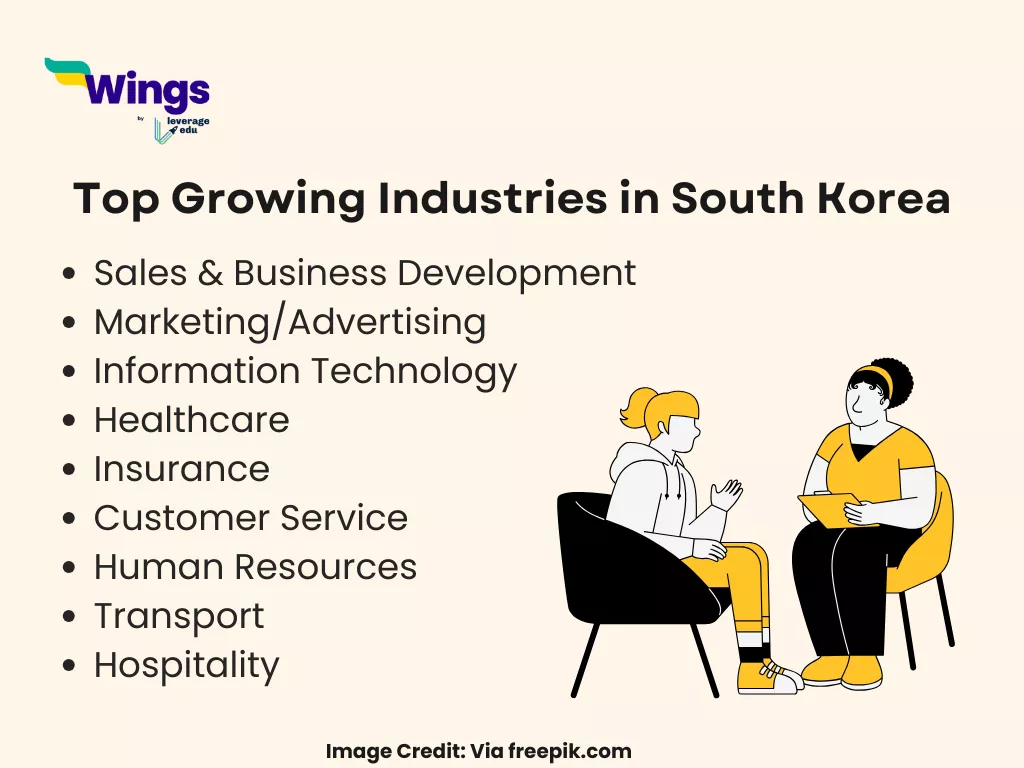
South Korea’s economy is characterised by dynamic growth across several key industries, each contributing significantly to the nation’s economic development. Here are some of the top growing sectors:
- Finance
- Architecture
- Sales & Business Development
- Marketing / Advertising
- Information Technology
- Healthcare
- Insurance
- Customer Service
- Human Resources
- Construction
- Transport
- Hospitality
Average Salary in South Korea By Industry
Many companies in South Korea offer performance-based bonuses, meaning experienced employees have higher earning potential beyond their base salary.
In South Korea, average salaries vary significantly across industries, reflecting the diverse economic landscape of the country. Here’s an overview of the average salary in South Korea in several popular industries:
| Industries | Average Salary Per Year |
| Human Resources | KRW 30,680,000 |
| Healthcare | KRW 67,000,000 |
| Information Technology | KRW 39,280,000 |
| Engineering | KRW 40,950,000 |
| Automobile | KRW 51,000,000 |
| Marketing | KRW 32,000,000 |
| Finanace | KRW 30,200,000 |
| Medical | KRW 40,400,000 |
Check out here: How to Find Jobs in South Korea
In conclusion, the average salary in South Korea offers competitive pay across industries, with earnings varying by profession, experience, and location. Understanding these salary trends helps job seekers and professionals plan their careers better in one of Asia’s strongest economies.
FAQs
The median salary in South Korea is KRW 3,500,000, which is about USD 2,603. As a result, 50% of South Korean workers make less than 3,500,000 KRW a month, while 50% make more.
The high starting salaries at big companies in South Korea were even more notable than those in Taiwan and Japan. South Korean college graduates’ average starting wage, adjusted for purchasing power parity (PPP), was KRW 45,401, which was almost 30.5% more than Japan’s KRW 34,794 starting compensation for businesses with ten or more employees.
According to data released in 2025, the average annual salary for Korean salaried workers is 41.23 million won (KRW 29,700), while the top 1 per cent of earners receive 331.34 million won. The National Tax Service (NTS) produced the information, which Rep.
A good salary in South Korea is typically around 3 to 4 million KRW per month, which allows for a comfortable lifestyle covering housing, living expenses, and savings.
This was all about the average salary range in South Korea. For more information about South Korea, follow Leverage Edu and Jobs Abroad.
Related Reads

 60,000+ students trusted us with their dreams. Take the first step today!
1 comment
good