

 One app for all your study abroad needs














Students are tired of English textbooks acting like we magically understand every fancy phrase teachers throw at us. Half the time you hear an idiom in class and your brain just silently crashes like a Windows XP pop up. That is exactly why learning idioms about education matters. These phrases show up in exams, essays, interviews and literally every adult conversation you are forced into. So instead of pretending to get them, this blog breaks the chaos with simple meanings and examples you can remember even at 2 AM while pulling an all nighter. Let’s decode them properly.
This Blog Includes:
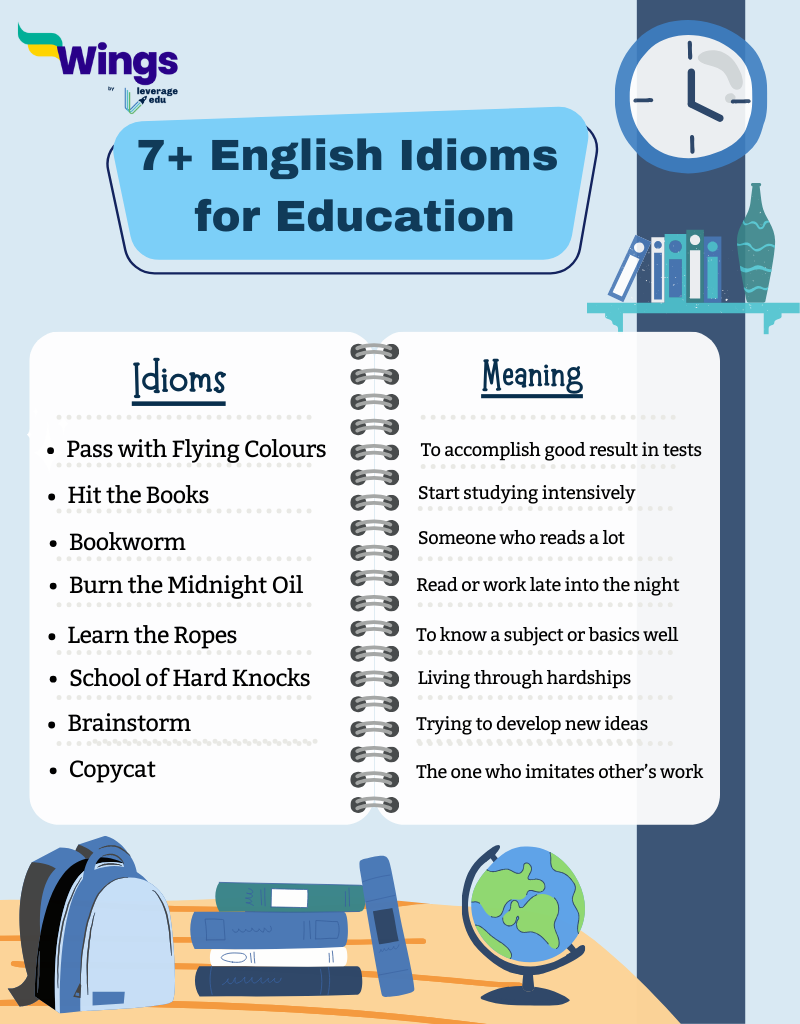
The school idioms are the phrases or expressions that we have been learning since we were taking education. Students should study idioms that are interesting and give education knowledge. They are phrases related to education that explain the importance of education in the lives of people. Here, is the list of idioms that one must read and implement in their life to excel in education.
1. Hit the Books
Meaning: The idiom Hit the books signifies that one should believe in action rather than anything else. It means to study hard or to start studying seriously.
Example: I have an exam tomorrow, so I need to hit the books tonight.
2. Learn the Ropes
Meaning: The meaning of Learn the Ropes is to learn the basics or the fundamental principles of something.
Example: As a new employee, I need to learn the ropes of this company’s policies and procedures.
3. Cut Classes
Meaning: While talking about an idiom about education that can best highlight slacking is Cut Classes. This idiom means to skip school or to miss a class without permission.
Example: If you cut classes too often, you might fail your exams.
Also Read: Understanding Idioms: Examples and Meanings
4. Ace a Test
Meaning: The idiom Ace a test means to get a perfect score on a test or to perform exceptionally well.
Example: I studied hard for my math exam, and I managed to ace it.
5. Pass with Flying Colours
Meaning: The idiom Pass with flying colours is symbolic of celebration, positivity, and optimism. The phrase refers to passing an exam or a test with a high score.
Example: I was nervous about my English exam, but I passed with flying colours.
6. Pull an All-Nighter
Meaning: When someone pulls an all-nighter then he stays up all night studying or working on a project.
Example: I had so much work to do that I had to pull an all-nighter.
Also Read: 7 Best Idioms for Achieving Goals You Should Know
7. Brainstorm
Meaning: The idiom Brainstorm signifies that one needs to generate ideas or solutions through group discussion or individual thinking.
Example: We need to brainstorm some ideas for our science project.
8. Cramming
Meaning: Cramming means studying intensively in a short amount of time, usually before an exam or a test.
Example: I didn’t have enough time to study for my history exam, so I had to cram all night.
9. Teach Someone a Lesson
Meaning: The idiom Teach someone a lesson is to punish someone or to make them realize their mistake.
Example: The teacher gave the student detention to teach him a lesson about being late to class.
Also Read: 7 Idioms and Phrases for SSC CHSL You Should Know
FAQs
Ans: One popular idiom for learning is “learn the ropes.” It means understanding how something works through practice and experience. This idiom is widely used in schools, workplaces and training settings, making it perfect for students improving their English skills.
Ans: A widely loved education quote is, “Education is the most powerful weapon which you can use to change the world,” by Nelson Mandela. It highlights how learning can transform lives and open opportunities. Students often use this quote in essays, speeches and assignments.
Ans: Some popular idioms include: hit the books, learn the ropes, ace a test, pull an all-nighter, pass with flying colours, teach someone a lesson, brainstorm, cram, cut classes, and soak up knowledge. These expressions appear often in English conversations, exams and academic writing. Learning them helps students sound more natural and confident.
Ans: In literacy, an idiom is a phrase with a meaning different from the literal words used. For example, “hit the books” does not mean physically hitting books, it means studying hard. Idioms help add colour, style and creativity to reading, writing and communication.
Ans: The idiom related to limited understanding is “a little knowledge is a dangerous thing.” It means knowing only a small part of something can lead to misunderstandings or wrong decisions. This phrase is commonly used in academic discussions, essays and everyday conversations about learning.
Relatable Reads Picked Just for You
| Idioms to Express Sadness | Proverbs of Education |
| Idioms to Express Surprise | Proverbs of Teaching |
| Idioms to Express Friendship | Proverbs of Peace |
This was everything you needed to finally understand idioms about education without feeling like the English language personally hates you. Now you know what each idiom means, how it is used and how to flex it confidently in exams, assignments and real conversations. Keep learning and stay connected with Learn English on Leverage Edu for more helpful and student-friendly blogs. And if this helped you, don’t forget to share, rate, and drop a comment. Your support helps more students find the good stuff.

 60,000+ students trusted us with their dreams. Take the first step today!