

 One app for all your study abroad needs

















World Braille Day 2026 is observed every year on 4 January to honour the birth anniversary of Louis Braille, the inventor of the Braille reading and writing system for people with visual impairments. This day highlights the importance of Braille as a powerful tool for education, communication, independence, and equal participation in society. The history of World Braille Day reminds us of the struggles faced by visually impaired individuals in accessing information, while its significance lies in promoting inclusivity, accessibility, and human rights across the world. In 2026, the day continues to focus on spreading awareness about inclusive education, assistive technologies, and the need for accessible formats in schools, workplaces, and public spaces.
Through this blog, we aim to explain the history and significance of World Braille Day in an informative way to help students and readers understand the importance of this global observance.
Contents
What Is World Braille Day?
World Braille Day is observed every year on 4 January to raise awareness about the importance of the Braille system and the rights of people with visual impairments. The day marks the birth anniversary of Louis Braille, who developed the Braille script to help visually impaired individuals read and write independently. World Braille Day highlights the role of Braille in promoting education, accessibility, equality, and social inclusion, while also encouraging governments and institutions to ensure information is available in accessible formats for everyone.
| Name of the Event | World Braille Day |
| Date | 4 January (Observed annually) |
| Aim | To honour and commemorate Louis Braille, the inventor of the Braille script, and to spread awareness about Braille as an accessible and essential mode of communication for people with visual impairments. |
| Established By | United Nations General Assembly |
| First Observed | 2019 (Officially recognised by the UN) |
Who is Louis Braille?
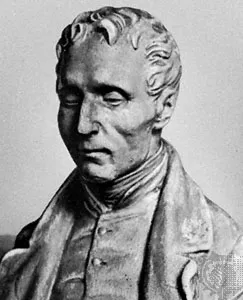
Louis Braille was a French educator and innovator who created the Braille reading and writing system for people with visual impairments. He is remembered worldwide for transforming access to education and information for the blind community.
- Louis Braille was born on 4 January 1809 in Coupvray, France.
- He lost his eyesight at the age of three due to an accident in his father’s workshop.
- He studied at the National Institute for Blind Youth (Paris), one of the first schools for blind students.
- At just 15 years old, he developed the Braille system, based on patterns of raised dots.
- The system allows visually impaired people to read and write using touch.
- Braille includes letters, numbers, punctuation, and musical notation.
- His invention made education and communication more accessible and independent for blind people.
- Although not widely accepted during his lifetime, Braille gained global recognition later.
- Today, the Braille script is used in almost every language worldwide.
- World Braille Day is observed every year on 4 January to honour his birth anniversary and contributions.
History of World Braille Day
The history of World Braille Day is rooted in the life and contribution of Louis Braille, whose invention changed the lives of millions of visually impaired people around the world.
- 4 January 1809 marks the birth of Louis Braille in France.
- Louis Braille invented the Braille reading and writing system as a teenager to help blind people access education.
- The Braille system gradually gained global acceptance as an effective method of literacy for visually impaired individuals.
- To recognise its importance, the United Nations General Assembly officially proclaimed 4 January as World Braille Day.
- The proclamation was made in November 2018.
- World Braille Day was first observed in 2019 across the world.
- The day highlights Braille as a basic human right, not just a communication tool.
- It supports the goals of the UN Convention on the Rights of Persons with Disabilities, which promotes equal access to information.
- Since its introduction, World Braille Day has been marked by awareness programs, seminars, and educational activities.
- The observance continues to promote inclusion, accessibility, and dignity for people with visual impairments.
Also Read: International Mind Body Wellness Day: Date, Theme & Significance
Significance of World Braille Day 2026
The significance of World Braille Day 2026 is to promote awareness about accessibility, literacy, and equal rights for people with visual impairments. Observed annually on 4 January, the day honours the contribution of Louis Braille and reinforces the importance of Braille in modern society.
- Highlights Braille as a basic human right, not just a communication tool.
- Promotes inclusive and quality education for visually impaired students.
- Encourages equal access to books, digital content, and public information in Braille format.
- Supports the goals of the United Nations for equality and accessibility.
- Raises awareness about the challenges faced by visually impaired individuals in daily life.
- Emphasises the role of Braille in employment, independence, and self-reliance.
- Encourages the use of assistive technologies, such as digital Braille displays.
- Promotes social inclusion and dignity for people with visual disabilities.
- Reminds governments and institutions to follow the UN Convention on the Rights of Persons with Disabilities.
- Inspires communities to build a more accessible and inclusive society.
Sava Shiksha Abhiyan v. Prakash Singh (2010)
In the 2010 landmark case of Sava Shiksha Abhiyan v. Prakash Singh, the need for equal educational opportunities and access for visually impaired students was highlighted. The case was centred around Prakash Singh, a young boy who was denied Braille textbooks at his government school. This not only hindered his learning but also violated his right to education under the Right of Children to Free and Compulsory Education Act (RTE Act).
The court was swift to recognise the crucial role of Braille in empowering visually impaired students. Consequently, it mandated all government schools to provide learning materials such as braille textbooks and expert faculty trained in braille instruction. This case judgment stands as the epitome of inclusive education across India.
Also Read: World Introvert Day: Date, Theme, History, Significance, and Interesting Facts
How is World Braille Day Celebrated?
Educational institutions often encourage students to learn about Braille and understand the challenges faced by visually impaired individuals. World Braille Day is observed through various activities worldwide:
- Awareness programs in schools and colleges
- Workshops on learning Braille
- Seminars on inclusive education
- Social media campaigns on accessibility
- Distribution of Braille books and learning tools
- Discussions on assistive technologies.
5 Quotes on World Braille Day
On this World Braille Day, you can add interesting quotes to make your social media posts and stories most informative. Here are a few ideas to consider:

Every raised dot whispers, ‘You are not alone’. – Helen Keller
Braille isn’t just a language, it’s a bridge between two worlds.
– Christel Ricker, German blind Paralympian runner

Literacy in Braille empowers individuals to participate fully in society and achieve their full potential. – Ban Ki-moon, former Secretary-General of the United Nations
Braille is not just a code, it’s a language of liberation.
– Helen Keller, American author and activist

“The invention of braille was a gift to the blind, a key that unlocked a prison.” – Robert Louis Stevenson
Also Read: National Science Fiction Day- History and Significance
Interesting Facts About Braille
These interesting facts show that Braille is much more than a reading system; it is a powerful tool for education, independence, and inclusion. From classrooms to technology and everyday life, Braille continues to empower visually impaired individuals and plays a vital role in building a more accessible and equal society.
- Braille is named after its inventor, Louis Braille, who created the system in 1824.
- The basic Braille cell has 6 dots, but advanced systems use 8-dot Braille for computers and digital devices.
- Each Braille dot is arranged in two vertical columns of three dots, making it easy to recognise through touch.
- One finger can read Braille faster than multiple fingers because it improves sensitivity and focus.
- Braille is not a language; it is a writing system used for many languages, including English, Hindi, Arabic, French, and Spanish.
- Unified English Braille (UEB) is the standard form of English Braille used in many countries today.
- Braille includes special codes for mathematics, science, and chemistry, making it useful for higher education.
- Braille music notation allows visually impaired musicians to read and write music independently.
- Braille books are usually larger and thicker than printed books because of raised dots.
- Currency notes in many countries have Braille markings to help visually impaired people identify money.
- Elevator buttons and public signboards often include Braille for accessibility.
- The United Nations declared World Braille Day in 2018 to promote the importance of Braille worldwide.
- January 4 was chosen because it is the birth anniversary of Louis Braille.
- Braille helps visually impaired children develop strong spelling and grammar skills, just like printed text helps sighted learners.
- Studies show that Braille-literate individuals have higher employment rates than those who do not know Braille.
- Braille is used in over 130 countries across the world.
- Digital Braille displays can convert text from computers and smartphones into Braille instantly.
- Braille can be written using tools like a slate and stylus, Braille typewriters, and electronic notetakers.
- Learning Braille at an early age helps visually impaired children become more independent.
- Braille signage is a key part of inclusive and universal design.
- Braille labels are used on medicine bottles to prevent dosage errors.
- Braille literacy is linked to better confidence and self-esteem among visually impaired students.
- Many countries include Braille education as part of their inclusive education policies.
- Braille can represent punctuation marks, emojis, and computer commands in digital formats.
- World Braille Day highlights the message that access to written communication is a human right.
Also Read: Essay on National Consumer Rights Day
FAQs
World Braille Day was established in November 2018 when the United Nations General Assembly officially proclaimed 4 January as World Braille Day, in honour of Louis Braille. The day was first observed globally in 2019 to promote awareness about Braille and the rights of people with visual impairments.
World Braille Day is celebrated every day on January 4 as it coincides with the birthdate of Louis Braille. He, at the very young age of merely 15 years, became the mastermind behind inventing the Braille system as a tactile system for reading and writing for blind or partially sighted people.
On this World Braille Day, you can use the power of social media to raise your voice and opinions by simply sharing engaging posts. Additionally, you can also use the popular hashtag #WorldBrailleDay as the cherry on top.
Related Blogs
| National Mathematics Day | World Saree Day |
| National Consumer Rights Day | Minorities Rights Day |
| International Day of Neutrality | Energy Conservation Day |
Hope you enjoyed reading about World Braille Day. For more information about such informative articles, check the trending events page of Leverage Edu.

 60,000+ students trusted us with their dreams. Take the first step today!