

 One app for all your study abroad needs













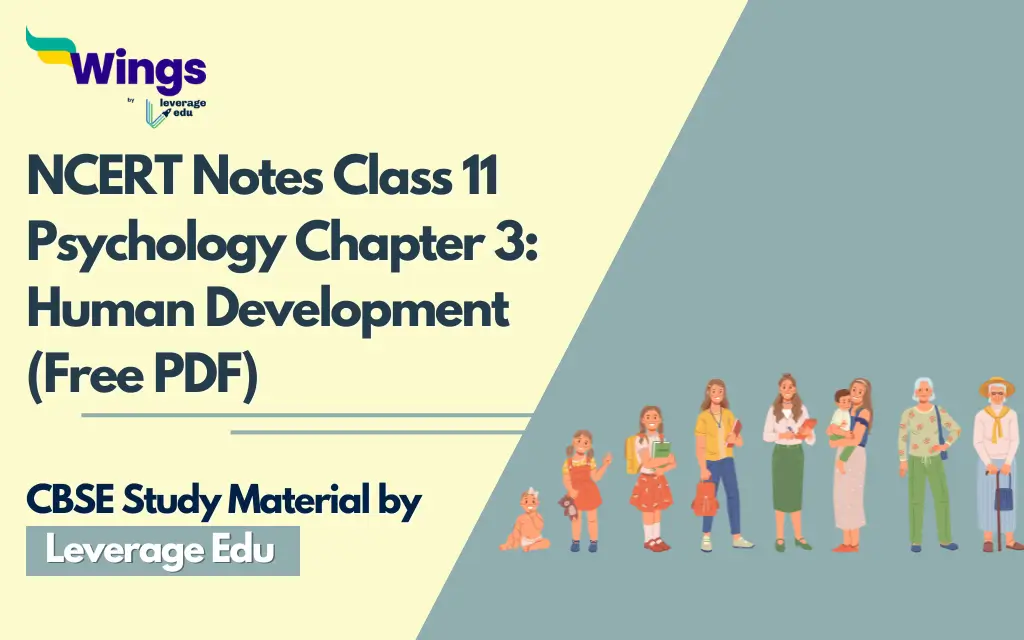
Human development is one of the most fascinating topics because it encompasses various stages of growth, from birth to death, influenced by several key psychological, physical, biological, chemical, and societal factors. This unit explores the meaning and process of development, the influence of heredity and context on human development, the stages of development and their characteristics, as well as relatable experiences. The free PDF will help you understand the key concepts more effectively, and with the help of this resource, you can easily revise the content.
Contents
- 1 Introduction
- 2 Meaning of Development
- 2.1 Life Span Perspective on Development
- 2.1.1 Development is lifelong
- 2.1.2 Development involves the interweaving of biological, cognitive, and socio-emotional processes
- 2.1.3 Development is multidirectional
- 2.1.4 Development is highly plastic.
- 2.1.5 Development is influenced by historical conditions
- 2.1.6 Development is studied by multiple disciplines
- 2.1.7 Individuals respond to changing contexts
- 2.1 Life Span Perspective on Development
- 3 Growth, Development, Maturation, and Evolution
- 4 Factors Affecting Development
- 5 Context of Development
- 6 Overview of Developmental Stages
- 7 Old Age
- 8 Important Definition in NCERT Class 11 Psychology Chapter 3: Human Development
- 9 FAQs
Explore Notes of Class 11 Psychology
Introduction
The introduction of the psychology chapter 3 human development is provided below as brief pointers.
- Human beings experience various types of changes throughout their lives, beginning from birth and continuing into old age.
- Over time, individuals learn to communicate, walk, count, read, and write as part of their development.
- They also develop a sense of morality, learning to differentiate between right and wrong.
- Life events such as making friends, experiencing puberty, getting married, raising children, and ageing are all part of the developmental journey.
- Although people differ in many ways, they also share common patterns of development (e.g., most children walk by age one and talk by age two).
- This chapter introduces the developmental changes that occur across the life span in various domains.
- Key stages covered include: prenatal period, infancy, childhood, adolescence, adulthood, and old age.
- Understanding these changes encourages personal growth, self-awareness, and prepares individuals for future development.
- Studying human development also enhances one’s ability to understand and relate to others more effectively.
Meaning of Development
In this section, we have discussed the meaning of development briefly.
- Development is commonly associated with physical changes, as seen in younger siblings, parents, grandparents, and peers.
- However, development also includes changes in thinking, language use, and social relationships, from conception to death.
- These changes occur in an integrated manner, not limited to just one domain of life.
- Development refers to a progressive, orderly, and predictable pattern of change that begins at conception and continues throughout life.
- It includes both growth and decline, such as the decline observed during old age.
Development is shaped by the interaction of three major processes:
- Biological processes: Changes due to genetic inheritance, such as height, weight, and organ development (brain, heart, lungs).
- Cognitive processes: Changes related to mental functions like thought, perception, attention, problem-solving, and experience.
- Socio-emotional processes: Changes in emotional expression, personality, and interactions with others (e.g., a child’s hug, a sibling’s affection, or an adolescent’s disappointment).
Life Span Perspective on Development
The Life-Span Perspective (LSP) considers development as a process that occurs throughout life, from conception to old age. It is based on several key assumptions that describe how development unfolds.
Development is lifelong
It takes place across all age groups, from conception to old age. Includes both gains and losses, which interact dynamically.
Development involves the interweaving of biological, cognitive, and socio-emotional processes
These three processes are inseparable and together influence a person’s development throughout life.
Development is multidirectional
Some components of development may increase while others decrease. For example, with age, wisdom may increase, but speed-related performance (like running) may decline.
Development is highly plastic.
Psychological abilities are modifiable; individuals can learn or improve skills at any stage. However, the degree of plasticity varies among individuals.
Development is influenced by historical conditions
Experiences vary across time periods. For instance, 20-year-olds during India’s freedom struggle had different life experiences from today’s youth. Similarly, career choices and aspirations have changed significantly over the decades.
Development is studied by multiple disciplines
Fields like psychology, anthropology, sociology, and neuroscience contribute to understanding lifespan development.
Individuals respond to changing contexts
Development is shaped by genetic inheritance, physical environment, social, historical, and cultural contexts. Life events such as accidents, the death of a parent, natural disasters, or positive events like winning an award can significantly influence the course of one’s development.
Also Read: 10 Psychology Facts About Dreaming of Someone
Growth, Development, Maturation, and Evolution
Below, we have discussed growth, development, maturation, and evolution.
- Growth refers to an increase in the size of body parts or of the organism as a whole.
- It can be measured or quantified, such as an increase in height or weight.
- Development is a process by which an individual grows and changes throughout the life cycle.
- It involves directional changes, having a definite relationship with earlier and later stages.
- Temporary changes, such as those caused by illness, are not considered developmental. It includes:
- Physical growth (e.g., change in size)
- Change in proportion (e.g., body ratio from child to adult),
- Change in features (e.g., disappearance of baby teeth)
- Acquisition of new features.
- These changes vary in pace and scope for each individual.
- Growth is a part of development, but development is broader.
- Maturation refers to changes that follow an orderly genetic sequence.
It is largely guided by heredity and forms common patterns in growth and development. - These behaviours emerge when the physical structure is ready, needing little practice.
- Efforts to accelerate them do not work if the infant is not maturationally ready.
- These changes seem to unfold from within, according to an inner genetic timetable.
- Evolution refers to species-specific changes across generations.
- It is a slow and gradual process.
- Natural selection plays a key role, favouring individuals or species that are better adapted for survival and reproduction.
- Evolutionary changes are passed from one generation to the next.
Factors Affecting Development
Factors affecting development are discussed below.
- People differ from one another in physical and psychological characteristics, such as skin colour, height, intelligence, memory, and emotional tendencies.
- Despite these differences, all humans belong to the same species — Homo sapiens.
- The interaction between heredity and environment explains both our similarities and differences.
Heredity (Genetic Factors)
Heredity refers to the transmission of genetic characteristics from one generation to the next.
- Every human inherits genetic codes from their parents, present in all body cells.
- These genetic codes determine human development and ensure that a fertilised human egg grows into a human, not another species.
- Human genetic structure includes approximately 80,000 or more genes, producing a wide variety of traits and behaviours.
- Not every individual inherits or expresses all available characteristics encoded in their genes.
- Two key terms related to heredity:
- Genotype: The actual genetic makeup or inherited characteristics of an individual.
- Phenotype: The observable and measurable traits (e.g., height, weight, eye colour, intelligence), which result from the interaction of genotype and environment.
Environment
Genes set the potential, but the environment influences how traits develop within those limits. For example, a child genetically predisposed to be introverted may become somewhat extroverted in a socially engaging environment. A person with genes for short stature cannot become very tall even in a nutritionally rich environment.
Interaction between Heredity and Environment
The interaction between heredity and environment is discussed below.
- Genes do not function in isolation
- Development occurs within an environmental context, making every individual unique.
- Parents contribute both heredity and environment:
- Their own genetic tendencies influence the kind of environment they create for their children.
- E.g., intellectually inclined parents often create a reading-rich environment, encouraging children to become readers.
- A child’s own genotype influences how others respond to them:
- A cooperative and attentive child is likely to receive more positive attention from teachers and parents.
- Children also actively select environments suited to their inherited traits:
- A musically talented child may seek out music-rich environments.
- A genetically inclined athlete may be drawn to sports settings.
- These heredity-environment interactions evolve and change from infancy to adolescence.
Also Read: Theories of Learning in Psychology: Definition, Types, and Concepts Involved
Context of Development
Development does not occur in isolation; it is embedded in a specific socio-cultural context. Life transitions such as schooling, adolescence, career, marriage, parenthood, and retirement are shaped by both biological changes and environmental conditions. The environment can change at any point during the life span and affects developmental progress.
Bronfenbrenner’s Contextual View of Development
Emphasises the role of environmental systems in shaping development. The environment is seen as a set of nested structures, each affecting the child’s development.
- Microsystem
The immediate setting in which the individual lives. Includes direct interactions with family, peers, teachers, and neighbourhood.
- Mesosystem
Refers to relationships between microsystems. Example: How a child’s parents interact with their teachers or view their friends. These interactions influence the child’s relationships and behaviour.
- Exosystem
Involves social settings not directly involving the child, but which affect their immediate environment. Example: A parent’s job transfer may cause stress in the family, impacting the child’s well-being and access to resources like schooling or medical care.
- Macrosystem
Represents the broader cultural context in which the child lives, including values, customs, and laws.
- Chronosystem
Includes life events and socio-historical circumstances that influence development over time. Examples: Parental divorce, economic setbacks, or other life-changing events.
Impact of Impoverished Environments
The key notes on the impact of impoverished environments on children are provided below.
- Children in poor environments may lack access to:
- Books, toys, and stimulating materials.
- Enriching experiences like museum or zoo visits.
- Effective role models.
- Peaceful and clean surroundings.
- As a result, such children may face learning difficulties and developmental disadvantages.
Durganand Sinha’s Ecological Model (Indian Context)
Sinha (1977) proposed a two-layered ecological model to understand child development in India. These layers do not function independently. Differences in individual development can be understood by looking at the person’s experience within this entire ecological context.
- Upper/Visible Layer
- Home conditions: Space, overcrowding, toys, and use of technology.
- Schooling quality: Type and quality of education, facilities provided.
- Peer interactions: Nature of activities and social interactions from early childhood.
- Surrounding Layer (Broader Environment)
- Geographical environment: Outdoor play areas, locality congestion, population density.
- Institutional setting: Social factors like caste and class.
- General amenities: Access to water, electricity, entertainment, etc.
Overview of Developmental Stages
The overview of various developmental stages is described below.
- Development is described in terms of distinct periods or stages.
- Individuals behave differently at different life stages, contributing to observable variation.
- Stages of life include infancy, childhood, adolescence, adulthood, and old age.
- Each stage is marked by a dominant feature or leading characteristic, giving it uniqueness.
- Development within each stage progresses towards a goal or ability that must be achieved before moving to the next stage.
- Variation in rate and time of development is natural across individuals.
- Certain behaviours or skills are more easily acquired during specific developmental stages.
- Developmental tasks are the social expectations tied to a particular stage of development.
Pre-natal Stage
The prenatal stage refers to the period from conception to birth, typically lasting around 40 weeks. Development during this stage is guided by the genetic blueprint, which continues influencing growth after birth. Both genetic and environmental factors affect development in this stage.
Influence of Maternal Characteristics
The mother’s age, nutrition, and emotional state impact prenatal development. Diseases or infections such as:
- Rubella (German measles)
- Genital herpes
- HIV (Human Immunodeficiency Virus)
Teratogens: Environmental Risks
Teratogens are environmental agents that disrupt normal development, potentially causing abnormalities or death. Common teratogens include:
- Drugs (e.g., marijuana, heroin, cocaine)
- Alcohol and tobacco
- Radiations (e.g., X-rays)
- Pollutants and toxic wastes (e.g., carbon monoxide, mercury, lead)
- Exposure to teratogens during pregnancy may:
- Causes congenital abnormalities
- Induce permanent genetic changes
- Impair the normal growth and development of the foe
Infancy
The brain develops at a remarkable rate before and after birth. Newborns have most brain cells at birth, but neural connections develop rapidly post-birth. Contrary to belief, newborns are not helpless; they can breathe, suck, swallow, and discharge wastes.
- In the first week, newborns can:
- Detect the direction of sounds,
- Distinguish the mother’s voice from other women’s,
- Imitate simple gestures like tongue protrusion and mouth opening.
Motor Development
The motor development is characterised by the following.
- Newborn movements are governed by reflexes, i.e., automatic and built-in responses to stimuli.
- Reflexes like coughing, blinking, and yawning persist throughout life.
- Reflexes are survival mechanisms and foundational to later motor development.
- As the brain matures, voluntary control over behaviour replaces reflexive actions.
- Motor skills such as grasping, reaching, sitting, crawling, walking, and running develop with age.
- The sequence of motor development is largely universal.
Sensory Abilities
Sensory abilities are characterised by the following.
- Newborns can recognise their mother’s voice within hours after birth.
- They prefer looking at certain stimuli, like faces.
- Vision is initially poor but reaches near-adult level by 12 months.
- Colour vision begins to develop and becomes complete by 3 months.
- Hearing is functional at birth; sound localisation improves with time.
- Newborns respond to touch and pain.
- Both smell and taste senses are present at birth.
Cognitive Development
Cognitive development is characterised by the following.
- Children actively construct an understanding of the world.
- Jean Piaget proposed that children’s minds develop in stages.
- From birth to two years, infants are in the sensorimotor stage:
- Learn through sensory experiences and interactions.
- Live in the present moment — what is out of sight doesn’t exist (lack of object permanence).
- By 8 months, begin to search for partially hidden objects — start developing object permanence.
- Vocalisation begins between 3 to 6 months, starting with babbling.
Socio-emotional Development
Socio-emotional development is characterised by the following.
- Infants are social beings from birth.
- Prefer familiar faces, respond to parents’ presence with cooing and gurgling.
- By 6–8 months, show a preference for the mother’s company and may cry if separated.
- An emotional bond with caregivers is called attachment.
Childhood
Some of the major characteristics of childhood are
- During early childhood, the rate of growth slows down compared to infancy.
- The child develops physically: gains height and weight, learns to walk, run, jump, and play.
- Socially, the child’s world expands from parents to other adults at home and school.
- The child begins to acquire the concepts of right and wrong (morality).
- The child performs tasks independently, sets goals, and meets adult expectations.
- Increased maturation of the brain and experiences aid in the development of cognitive abilities.
Physical Development
Follows two major principles:
- Cephalocaudal principle: development proceeds from head to tail — control is gained over upper body parts before the lower.
- Proximodistal trend: development proceeds from the central part of the body to the extremities, and control is gained over the torso before arms and legs.
- As children grow:
- Trunk lengthens, body fat decreases.
- The brain and head grow more rapidly than other parts of the body.
- Brain development aids in skills like eye-hand coordination, writing, and drawing.
- During middle and late childhood, significant increase in:
- Size and strength
- Skeletal and muscular systems
- Size of some body organs
Motor Development
Motor development involves
- Gross motor skills involve movement using arms and legs (e.g., running, jumping).
- Fine motor skills involve finger dexterity and eye-hand coordination.
- Development of hand preference (left/right) occurs during this stage.
- Major gross and fine motor achievements occur in early childhood.
Cognitive Development
Cognitive development is characterised by
- The development of object permanence allows the use of mental symbols to represent objects.
- Preoperational thought stage (Piaget):
- A child mentally represents objects not physically present.
- Engages in symbolic thought (e.g., drawing trees, people, etc.).
- Characteristics of preoperational thought:
- Egocentrism: sees the world from their own point of view; cannot appreciate others’ perspectives.
- Animism: attributes life-like qualities to inanimate objects (e.g., “the road hurt me”).
- Intuitive thought (ages 4–7): Children ask “why” questions to understand the world.
- Centration: focuses on one aspect of a situation (e.g., choosing a taller glass even if volume is the same).
- Concrete operational thought (ages 7–11):
- Begins logical thinking using mental operations.
- Capable of reversible mental actions.
- Understands conservation (e.g., a clay ball reshaped is still the same amount).
- Less egocentric; considers multiple characteristics.
- Cannot yet perform abstract reasoning.
Socio-emotional Development
Important dimensions are self-concept, gender identity, and moral development.
- Influenced by socialisation, a child forms an image of who they are and who they want to be.
- Increasing independence leads to self-initiated behaviour.
- Parental responses influence the development of initiative or guilt (Erikson).
- Early childhood: defines self using physical traits (“I am tall”).
- Middle/late childhood: defines self using internal traits (“I am smart”) and social roles (“I am in music club”).
- Develops social comparison (“I got more marks than Atul”).
Moral Development
Involves learning to differentiate between right and wrong, and empathising with others. Children pass through age-related stages of moral development (Lawrence Kohlberg)
- Before age 9, morality is based on external authority (punishment or reward).
- Early adolescence: adopts the rules of parents and society; rules are internalised to gain approval.
- Rules are viewed as absolute, and moral thinking is inflexible at this stage.
- Over time, children begin to form their moral code.
Adolescence and Its Challenges
Adolescence and its challenges are briefly described below.
- The term adolescence comes from Latin adolescere, meaning “to grow into maturity”.
- It is the transitional period between childhood and adulthood.
- Begins with puberty (attainment of sexual maturity).
- Involves rapid biological and psychological changes.
- While physical changes are universal, social and psychological experiences vary across cultures.
- Cultural views influence how adolescence is experienced — as problematic or as a time for taking responsibility.
Physical Development
The physical development in adolescence involves the following key events.
- Puberty marks the end of childhood and the start of adolescence.
- Characterised by:
- Growth spurt and development of primary and secondary sexual characteristics.
- In boys: facial hair, voice change, and growth acceleration.
- In girls, rapid height increase occurs around 10–11 years, followed by menarche.
- Genetics and environment influence the timing of puberty.
- Identical twins reach menarche closer in time than fraternal twins.
- Affluent girls may experience earlier puberty due to better nutrition.
- Psychological effects:
- Increased interest in the opposite sex and sexual matters.
- Awareness of sexuality is shaped by biological changes and societal emphasis.
- Many adolescents have limited knowledge or misconceptions about sex due to communication barriers with their parents.
- Development of sexual identity and acceptance of physical maturity are important developmental tasks.
Cognitive Development
Cognitive development involves the following key events.
- Thought becomes more:
- Abstract
- Logical
- Idealistic
- Adolescents begin examining thoughts, comparing themselves and others with ideal standards.
- Use of hypothetical-deductive reasoning begins (Piaget).
- Moral reasoning becomes more flexible:
- Adolescents develop a personal moral code.
- Social rules are no longer seen as absolute.
- May challenge societal norms if they conflict with personal ethics.
Egocentrism in Adolescence (David Elkind)
Egocentrism in adolescence explains the imaginary audience and personal fable.
- Imaginary Audience:
- The belief that others are always watching or judging them.
- Leads to self-consciousness.
- Personal Fable:
- Belief in their uniqueness.
- Feel that no one can understand them.
- Often expressed in diaries and imaginative stories.
Forming an Identity
Adolescents generally engage in the following activities.
- Key question: “Who am I?”
- Involves defining values, commitments, and beliefs.
- Detachment from parents allows the development of a personalised identity.
- Conflicts with parents and inner confusion may arise.
- Erikson’s stage: Identity vs. Role Confusion
- Successful coping leads to a strong sense of self.
- Failure can result in isolation or the loss of identity in a peer group.
- Adolescents often oscillate between independence and dependence.
- Influencing factors:
- Cultural background
- Family and societal values
- Ethnic and socio-economic status
- Increased reliance on peers for support and experimentation with social behaviour.
- Parents and peers play complementary roles.
- Vocational commitment plays a role in identity formation.
- Thinking about future goals, making career choices.
- Influenced by family expectations and cultural norms.
- Career counselling helps guide decisions.
Major Challenges in Adolescence
The following are the key challenges in adolescence.
1. Delinquency
- Includes behaviours from truancy, theft, vandalism, to criminal acts.
- Often associated with:
- Negative self-identity
- Low achievement
- Lack of parental support or discipline
- Poverty, unemployment, and alienation
- Positive changes such as new peer groups, role models, and self-worth can reduce delinquency.
2. Substance Abuse
- Adolescents may experiment with smoking, alcohol, and drugs.
- Reasons include:
- Peer pressure
- Desire for acceptance or adult-like behaviour
- Stress from school or social life
- Vulnerable adolescents often show:
- Impulsiveness, low self-esteem, anxiety, or depression
- Drug use can lead to physiological addiction and long-term consequences.
- Positive relationships with family and adults help prevent substance abuse.
- Example: Society for Theatre in Education Programme in New Delhi (endorsed by UNDCP) uses street plays to educate against drugs.
3. Eating Disorders
- Adolescents may become obsessed with body image.
- Anorexia Nervosa:
- Relentless pursuit of thinness through starvation.
- Influenced by peer comparison and media portrayal of thinness.
Adulthood
Adulthood is marked by being responsible, mature, self-supporting, and socially integrated.
- Individuals vary in when they assume adult roles (e.g., starting a job, getting married, staying with parents).
- The timing of major life events like marriage, career, and parenthood differs across and within cultures.
- Two major early adulthood tasks:
- Exploring adult life possibilities
- Developing a stable life structure
- The twenties represent the novice phase, where the transition from dependence to independence takes place.
Career and Work
Choosing an occupation, earning a living, and developing a career are central tasks. Starting a job involves:
- Adjusting to new roles and responsibilities
- Proving competence
- Meeting the expectations of employers and self
Marriage, Parenthood, and Family
Marriage adjustments involve:
- Understanding each other’s preferences
- Sharing household roles, especially in dual-income families
- Parenthood is both rewarding and challenging.
- Affected by the number of children, marital happiness, and social support
- Divorce or the death of a spouse may lead to single parenting.
- With more working women, dual-career family stress increases
- Despite stress, parenting offers growth and fulfilment
Physical and Cognitive Changes (Middle Adulthood)
Physical signs of ageing include:
- Decline in vision, hearing, and appearance (e.g., wrinkles, grey hair)
- Cognitive abilities:
- Long-term memory may decline more than short-term memory
- Wisdom may increase with age
- There are individual differences in cognitive abilities
Old Age
Old age is marked by the following life events.
Understanding Old Age
Old age is explained briefly below
- The start of “old age” is difficult to determine.
- Traditionally linked with retirement, but this is shifting.
- Older people today are often active, creative, and competent, especially in areas like politics, literature, business, art, and science.
- The stereotype of old age as a time of decline is changing.
Factors Influencing the Experience of Old Age
Factors influencing the experience of old age are briefly explained below.
- Socio-economic status, healthcare, societal attitude, and support systems shape old age experiences.
- Priorities across the lifespan:
- Early adulthood: work
- Middle adulthood: family
- Late adulthood: health
Retirement
Retirement can be defined as
- A major life change:
- Some view it negatively as a loss of purpose or self-esteem.
- Others view it positively as freedom to pursue interests.
- Older adults with openness to experiences and achievement motivation adjust better.
Family and Social Changes
The family and social changes are explained briefly below.
- Older adults face:
- Changing family roles (e.g., grandparenting)
- Children moving out, leading to loneliness and financial dependence.
- May experience:
- Feelings of hopelessness, depression, insecurity, and dependency
- Indian culture supports elder dependency on children for care.
End of Life and Death
The end of life and death are explained briefly below.
- Death is more common in late adulthood, but can occur at any age.
- Cause of death:
- Children/young adults: often accidental
- Older adults: typically due to chronic illnesses
- Spousal death is especially difficult:
- Triggers grief, loneliness, health problems, and financial difficulties
- Widows outnumber widowers (women live longer, marry older men)
- Support from children, grandchildren, and friends helps cope with loss.
Important Definition in NCERT Class 11 Psychology Chapter 3: Human Development
The following are the important definitions included in the psychology chapter 3, human development.
- Development: Lifelong pattern of change beginning at conception and continuing through life, involving growth and decline.
- Developmental stages: Distinct phases in life, like infancy, childhood, adolescence, adulthood, and old age, each with specific characteristics.
- Developmental tasks: Skills or behaviours expected to be achieved by individuals at specific stages of life.
- Growth: Quantitative increase in size or body parts, such as height and weight.
- Maturation: Genetically programmed changes that occur in an orderly sequence, like sitting or walking.
- Evolution: Slow, species-specific genetic changes over generations aiding survival and reproduction.
- Genotype: The genetic makeup inherited from parents.
- Phenotype: The observable traits of an individual resulting from the interaction of genotype and environment.
- Teratogens: Harmful agents like drugs or infections that can negatively affect prenatal development.
- Prenatal stage: The period from conception to birth, marked by rapid growth and sensitivity to environmental influence.
Explore Notes of Class 11 Psychology
Download the Solutions of Other Chapters of Class 11 Psychology
| Chapter 1 | Chapter 2 | Chapter 3 | Chapter 4 | Chapter 5 |
Related Reads
Explore notes on other subjects in the NCERT Class 11
FAQs
Ans: Developmental tasks are specific skills and behaviours that individuals are expected to achieve at certain stages of life. They are important because the successful completion of these tasks helps individuals progress smoothly to the next stage of development.
Ans: Adolescence is marked by abstract and logical thinking, increased self-awareness, and identity formation. In contrast, childhood involves concrete thinking, egocentrism, and the development of basic social and moral understanding.
Ans: Challenges in old age include retirement, widowhood, health decline, and dependency. Coping involves adjusting to new roles (like grandparenting), maintaining social connections, and receiving emotional and financial support from family and community.
For NCERT study material, follow NCERT Notes and Solutions Class 11 Psychology by Leverage Edu now.

 60,000+ students trusted us with their dreams. Take the first step today!