

 One app for all your study abroad needs

















Article Summary
- STEM education is an interdisciplinary learning approach that unites Science, Technology, Engineering, and Mathematics through hands-on, real-world problem-solving rather than teaching these subjects in isolation.
- Over the past 25 years, STEM has evolved from a National Science Foundation acronym into a global educational framework that builds critical thinking, creativity, collaboration, and research skills essential for 21st-century careers.
- STEM occupations command median wages more than double those of non-STEM roles and are projected to grow nearly three times as fast through 2033, yet persistent gender gaps and teacher-training challenges require urgent attention.
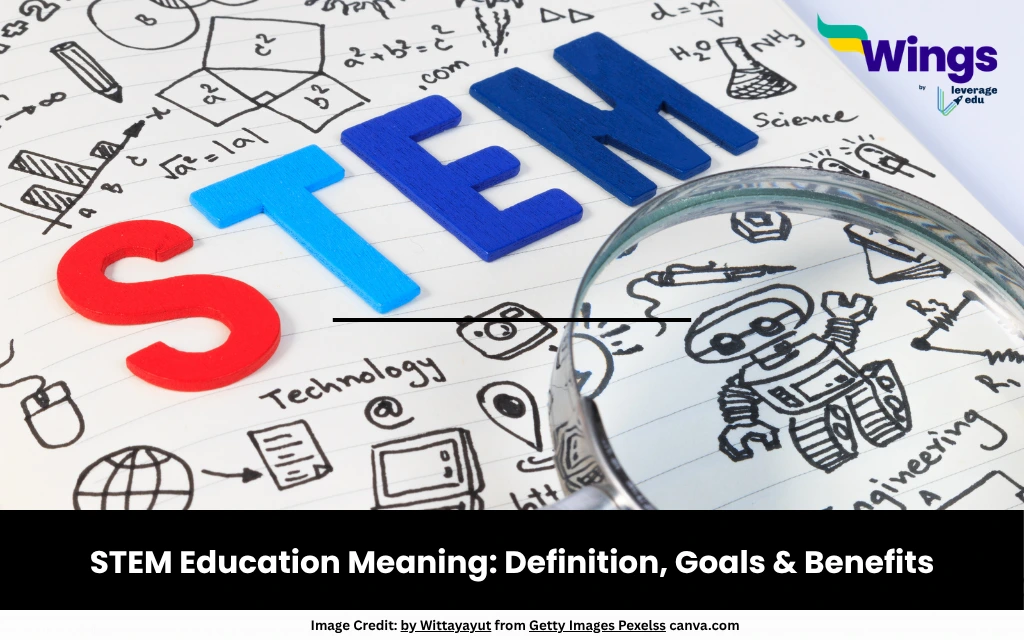
If you’ve been scrolling through school brochures, university course catalogues, or parenting forums lately, you’ve probably noticed one acronym appearing everywhere: STEM. We see teachers, parents hearing it frequently, scholarships prioritising it, and career counsellors insisting you pursue it. But what does STEM education actually mean, and why does it matter so much for your academic and career trajectory? At its core, STEM is an interdisciplinary educational approach that combines rigorous academic concepts with practical applications across Science, Technology, Engineering, and Mathematics.
This guide walks you through STEM’s origins, the skills it develops, how it plays out in actual classrooms, the career doors it opens, and the challenges educators face in making it accessible to everyone. Whether you’re a student mapping your academic path, a parent researching school options, or a teacher looking to understand the framework better, you’ll find clear answers here.
If you’re trying to figure out whether a STEM-focused degree aligns with your study abroad goals or career plans, a quick conversation with an experienced counsellor can save you months of research. Reach out to Leverage Edu for a free session tailored to your profile.
- Origins and Evolution of the STEM Concept
- Why STEM Education Matters Today
- Key Skills and Competencies Built Through STEM
- Real-World Examples of STEM Learning in Action
- STEM Degrees and Career Opportunities
- Challenges and Criticisms Surrounding STEM Education
- How to Foster STEM Learning at Home and School
- Conclusion
- FAQs
Defining the Four Pillars
STEM is a field and curriculum centred on education in the disciplines of science, technology, engineering, and mathematics. More than just a catchy label for these four subjects, it represents a shift in how we teach and learn. According to the National Science and Technology Association, STEM education is an experiential learning pedagogy in which knowledge and skills are integrated through projects or problems focused on developing college- and career-readiness proficiencies.
Here’s what makes STEM different from traditional subject-based teaching: it’s not a curriculum but a way of organising instruction. Instead of memorising formulas in isolation, you apply them. Instead of reading about the scientific method, you use it to answer questions that matter to your community. A STEM classroom might challenge you to build a prosthetic hand using everyday materials, programme a robot to navigate obstacles, or calculate the carbon footprint of your school canteen and propose reductions.
Common Variants: STEAM and eSTEM
As STEM gained traction, educators noticed something: students solved technical problems efficiently but sometimes struggled with user-centered design and creative communication. Enter STEAM, which adds Arts to the traditional four disciplines. Proponents argue that integrating the arts enhances critical thinking and problem-solving while cultivating creativity. A STEAM project might ask you to design an accessible public park (combining landscape engineering, environmental science, budgeting, and community storytelling through visual design).
| Acronym | Stands For | Focus Area |
|---|---|---|
| SMET | Science, Mathematics, Engineering, Technology | Original NSF shorthand (1990s) |
| STEM | Science, Technology, Engineering, Mathematics | Reordered for easier adoption (2001) |
| STEAM | Science, Technology, Engineering, Arts, Mathematics | Adds creative design and communication |
| eSTEM | Entrepreneurial STEM | Business development and innovation focus |
Evidence from Leading Organisations
Over the past 25 years, STEM education has evolved from a convenient clustering of four overlapping disciplines toward a more cohesive knowledge base and skill set critical for the 21st century. The shift reflects economic reality: our knowledge-based economy is driven by constant innovation, and the foundation of that innovation lies in a workforce equipped with STEM skills.
Also Read – STEM MBA
Origins and Evolution of the STEM Concept
The Birth of STEM in the 1990s
The acronym you hear today didn’t appear overnight. In the 1990s, the National Science Foundation began using SMET as shorthand for Science, Mathematics, Engineering, and Technology. Practical but clunky to pronounce, SMET never caught on with the public. Recognising the branding problem, NSF coined the STEM acronym, replacing the less easily said SMET. Credit for the reordering typically goes to Judith Ramaley, an NSF director who introduced STEM in 2001 by reshuffling the letters for better flow.
From STEM to STEAM: Timeline of Growth
STEM Evolution Timeline
| Era | Terminology | Key Driver |
|---|---|---|
| Early 1990s | SMET | NSF shorthand for science, mathematics, engineering, technology |
| 1992 | ATE Programme launch | NSF’s Advanced Technological Education programme funds two-year colleges for technical STEM careers |
| 2001 | STEM | NSF rebranding by Judith Ramaley for easier adoption |
| 2010s | STEAM | Arts integration is advocated to boost creativity and innovation |
| 2022 | NSF TIP Directorate | NSF’s first new directorate in 30 years focuses on industry partnerships and equitable STEM workforce development |
The evolution continues. In 2022, NSF created the Directorate for Technology, Innovation and Partnerships to bridge curiosity-driven research with industry application, grow jobs, and cultivate an equitable STEM workforce across the nation. This timeline shows that STEM isn’t a static label but a living framework that responds to economic shifts, technological breakthroughs, and calls for inclusivity.
Why STEM Education Matters Today
Workforce Readiness and Job Growth
If you’re weighing whether to pursue a STEM degree, the labour market data should catch your attention. The median wage for STEM occupations was $103,580 in 2024, more than twice the median wage for non-STEM occupations at $48,000. That gap isn’t coincidental: STEM roles generally require postsecondary education, specialised training, and ongoing skill development, which the market rewards accordingly.
According to the Bureau of Labor Statistics, STEM employment is projected to grow nearly 3 times as fast as non-STEM employment between 2023 and 2033. More than 85 percent of STEM occupations had annual mean wages above the U.S. average of $65,470 as of May 2023.
Addressing the Skills Gap
High demand doesn’t automatically mean every STEM graduate walks into a perfect job. The challenge for policymakers and educators is determining how to allocate funds most strategically to maximize the impact on preparing students for success in STEM fields. Traditional programmes often emphasise memorisation over application, theory over problem-solving, and individual work over collaboration. Effective STEM initiatives intentionally address these shortcomings by centering experiential learning, interdisciplinary projects, and real-world relevance.
For you, this means the quality of your STEM education matters as much as the credential itself. Look for programmes offering hands-on lab work, industry internships, capstone projects, and opportunities to present research. These experiences build the competencies employers actually seek.
Navigating which STEM pathway fits your strengths and career ambitions can feel overwhelming when you’re comparing university programmes across countries, degree structures, and specialisations. That’s where expert guidance makes a difference. Connect with Leverage Edu to explore STEM courses tailored to your profile and get personalised advice on applications, scholarships, and test prep.
Key Skills and Competencies Built Through STEM
Modern STEM education not only promotes skills such as critical thinking and problem-solving but also behavioural competencies such as perseverance, adaptability, cooperation, organisation, and responsibility. These aren’t abstract buzzwords. When you debug a programme that won’t compile, you’re practising systematic troubleshooting. When your robotics team disagrees on a design approach, you’re learning negotiation and compromise. When you present your science fair findings to judges, you’re building evidence-based argumentation skills.
Six Core STEM Skills
| Skill | Definition | Real-Life Application Example |
|---|---|---|
| Critical Thinking | Analysing evidence to reach reasoned conclusions | Debugging code teaches systematic troubleshooting |
| Creativity and Innovation | Generating novel solutions within constraints | Engineering design challenges produce novel product prototypes |
| Collaboration | Working in teams toward shared goals | Robotics clubs require role division and group decision-making |
| Communication | Presenting findings clearly | Science fair presentations develop evidence-based argumentation |
| Problem-Solving | Applying knowledge to real-world challenges | Water quality experiments link data collection to community action |
| Research and Analysis | Collecting and interpreting data systematically | Lab experiments build evidence-based reasoning skills |
An integrated approach to learning STEM promotes critical thinking, collaboration, and creativity while making STEM subjects more relevant, increasing motivation, and improving achievement and perseverance. This is why universities increasingly value STEM extracurriculars on applications: they demonstrate you’ve already developed these competencies beyond classroom theory.
Real-World Examples of STEM Learning in Action
School Robotics Club
Robotics and makerspace activities incorporate engineering design, scientific inquiry practices, and project-based learning with the potential to promote interdisciplinary approaches to integrated STEM education. As students design and construct robots or create solutions to solve real-world problems, they apply knowledge from all four STEM disciplines simultaneously. You might calculate gear ratios (mathematics), programme sensor responses (technology), design structural frames (engineering), and test battery efficiency (science) within a single project. Robotics competitions like FIRST Robotics or VEX add time pressure, budget constraints, and team dynamics that mirror professional engineering environments.
Project-Based Learning Across STEM
Students might work in teams to design a bridge using engineering principles, develop a coding project to solve a local community problem, or apply mathematical modelling to analyse scientific data. One school challenged students to reduce cafeteria food waste: teams audited waste volumes (data collection), researched composting chemistry (science), designed collection systems (engineering), calculated cost savings (mathematics), and created awareness campaigns (communication). The project resulted in measurable waste reduction and gave students a portfolio piece demonstrating applied STEM competencies.
These examples show STEM education at its best: messy, challenging, collaborative, and directly connected to outcomes that matter beyond test scores.
STEM Degrees and Career Opportunities
What Counts as a STEM Degree?
The National Science Foundation uses a broad definition that includes chemistry, computer and information technology science, engineering, geoscience, life sciences, mathematical sciences, physics and astronomy, and even social sciences like economics and psychology when research-focused. If your programme emphasises quantitative analysis, experimental design, or computational methods, it likely qualifies as STEM even if the subject area surprises you.
Fast-Growing Careers and Median Salaries
STEM degree helps you pave your way through several competitive & in demand fields, including Computer Science, Data Science, Civil Engineering, etc. The median salary for these courses ranged from $ 99,590 to $133,080.
| Degree Field | Career Example | Growth Rate (2024–34) | Median Salary (May 2024) |
|---|---|---|---|
| Computer Science | Software Developer | 15% | $133,080 |
| Data Science / Statistics | Data Scientist | 34% | $112,590 |
| Mechanical Engineering | Mechanical Engineer | 9% | $102,320 |
| Civil Engineering | Civil Engineer | 5% | $99,590 |
Transferable Skills Beyond Traditional STEM
Even if you don’t end up in a lab or coding all day, STEM training develops analytical thinking applicable to finance, healthcare management, policy analysis, and entrepreneurship. The ability to interpret data, identify patterns, test hypotheses, and communicate findings clearly matters in nearly every professional context today.
Challenges and Criticisms Surrounding STEM Education
Access Inequities: Gender, Geography, and Socioeconomic Gaps
Despite decades of advocacy, women make up only 35% of STEM graduates, a figure unchanged in 10 years. In OECD countries, women represent just 31% of those entering STEM programmes, compared with over 75% in education, health, and welfare fields. The proportion drops further to 29% in information and communication technologies and just 26% in engineering, manufacturing, and construction. Women held less than a quarter (25%) of science, engineering, and ICT jobs in 2022.
These gaps reflect systemic barriers: stereotype threat that discourages girls from STEM subjects early, lack of visible role models, unconscious bias in classrooms and hiring, and workplace cultures that can feel unwelcoming. Geography and socioeconomic status compound the problem. Students in under-resourced schools often lack access to advanced lab equipment, experienced STEM teachers, and extracurricular opportunities like robotics clubs or science Olympiads.
Curriculum Quality and Teacher Training
Studies show that K-12 maths and science teachers lacked confidence to teach engineering concepts, and technology teachers identified limited content knowledge in science and maths as barriers to teaching engineering design. Integrated STEM teaching requires educators comfortable moving across disciplinary boundaries, facilitating open-ended projects, and assessing collaborative work. Many teacher training programmes still prepare educators to teach single subjects in isolation.
The STEM Oversupply Debate
Some economists and journalists have questioned whether we’re overproducing STEM graduates relative to available high-skill jobs, pointing to underemployment in certain fields or graduates pivoting to non-STEM careers. The reality is nuanced: demand varies significantly by specialisation, geography, and level of education. Data science and software engineering face talent shortages, while some traditional lab-based sciences see more graduates than research positions.
The takeaway for you: STEM credentials open doors, but combining technical skills with domain expertise, communication ability, and adaptability positions you for long-term success regardless of market fluctuations.
How to Foster STEM Learning at Home and School
Five Quick-Start Tips
- Invest in age-appropriate maker kits: LEGO robotics sets, Arduino starter kits (available in India for ₹3,000–5,000), and chemistry sets turn abstract concepts into hands-on exploration.
- Introduce coding through gamified platforms: Scratch and Code.org offer free, beginner-friendly environments where you can create games and animations while learning computational thinking.
- Encourage everyday science questions: Turn curiosity into investigation. Why does ice float? How does yeast make bread rise? What makes the sky blue? Model looking up answers together and testing hypotheses.
- Join community STEM clubs or competitions: Science Olympiads, Maker Faires, hackathons, and regional robotics competitions provide peer learning and mentorship beyond school walls.
- Explore free online resources: Online platforms offers comprehensive STEM courses. NASA’s STEM Gateway provides lesson plans, virtual tours, and real mission data. MIT OpenCourseWare shares university-level materials for advanced learners.
Integrating Arts: The STEAM Approach
Maker spaces that blend 3D design with artistic expression let you prototype solutions that are both functional and user-centred. When you design a prosthetic hand, aesthetics matter alongside mechanics. When you visualise climate data, effective graphic design makes your findings accessible to non-specialists. STEAM recognises that innovation happens at the intersection of technical competence and creative communication.
Conclusion
STEM education is an interdisciplinary learning approach uniting Science, Technology, Engineering, and Mathematics through experiential, project-based problem-solving. Over 25 years, it has evolved from an acronym into a global framework building skills like critical thinking and creativity. STEM competencies enable you to explore several career opportunities with handsome wages. Yet access remains uneven. Persistent gender gaps, geographic disparities, and teacher training challenges mean many students who could thrive in STEM never get the chance.
Whether you’re a student mapping your academic path, a parent evaluating school options, or an educator designing curriculum, the opportunity is the same: apply one practical tip today. STEM learning doesn’t require expensive labs or advanced degrees to start. It requires curiosity, persistence, and the willingness to learn by doing.
If you’re ready to explore which STEM degrees and universities match your strengths and ambitions, or if you need guidance on entrance exams, scholarships, and application strategy, a conversation with experts who understand both STEM pathways and study abroad requirements can clarify your next steps. Reach out to Leverage Edu for personalised support.
FAQs
STEM learning can begin in preschool through play-based activities such as building blocks, simple experiments, and nature observation. Formal instruction typically starts in elementary school with age-appropriate challenges that scaffold over time. The National Science and Technology Association emphasises that STEM is a way of organising instruction adaptable to any developmental stage.
STEAM adds Arts to the traditional four STEM disciplines. Integrating creative design, visual thinking, and storytelling enhances innovation and problem-solving by encouraging students to consider user experience, aesthetics, and communication alongside technical functionality. Both approaches value interdisciplinary learning.
Common sources include government grants, corporate partnerships, nonprofit donations, and crowdfunding campaigns. Many schools start small with low-cost kits and scale up over time as they demonstrate impact and build community support.
While coding is a valuable skill, STEM education encompasses broader competencies. Not all STEM pathways require programming. Biology, chemistry, and mathematics careers often emphasise different tools like statistical software, lab techniques, or mathematical modelling. Computational thinking matters more than syntax.
STEM occupations are at the forefront of cutting-edge activities such as artificial intelligence, robotics, medical research, and high-tech manufacturing. Bureau of Labor Statistics projections show STEM employment growing much faster than the overall job market, with emerging fields like renewable energy, biotechnology, and data science offering expanding opportunities.


 2,00,000+ students realized their study abroad dream with us. Take the first step today.