

 One app for all your study abroad needs













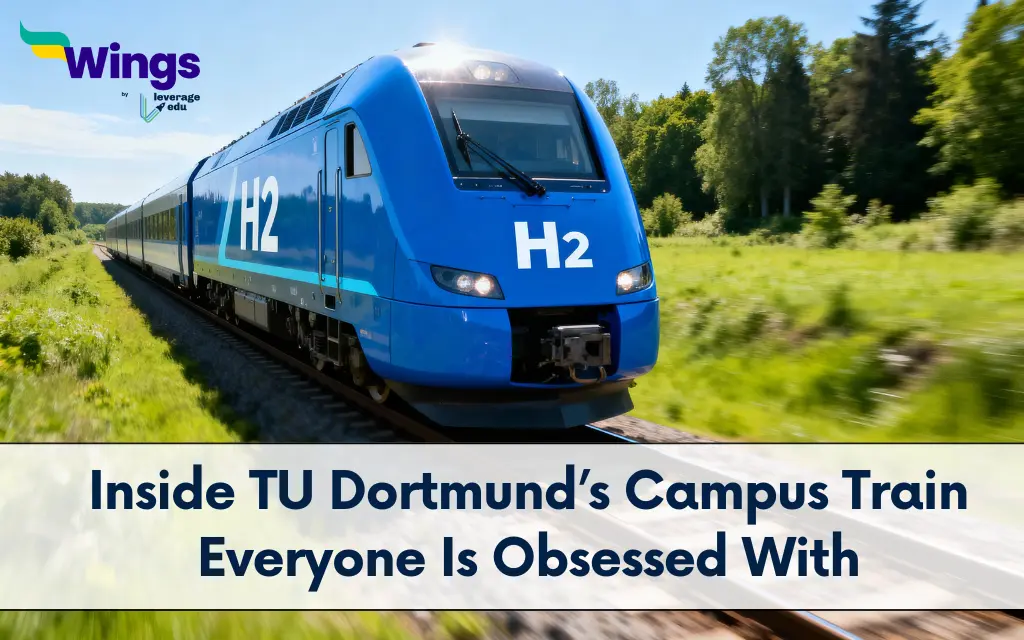
Key Summary
- TU Dortmund uses a fully automated, driverless suspended train (H-Bahn) to move students efficiently across its large campus, saving time and effort.
- The campus train is reliable, weather-resistant, and runs on a fixed elevated track, helping students reach classes on time without traffic or long walks.
- More than transport, the H-Bahn reflects smart campus planning—turning size into an advantage and improving daily student life.
Large university campuses waste time. Students miss lectures, arrive late, or burn energy just trying to move between buildings. TU Dortmund solved that problem without excuses. The TU Dortmund Campus Train is not a gimmick or a tourist attraction. It is a fully functional, driverless H-Bahn that moves students across campus daily. It cuts walking time, handles weather, and runs on schedule while students focus on classes, not distances. This system turns campus size into an advantage instead of a burden. At TU Dortmund, mobility is built into student life, not left to chance.
This Blog Includes:
What Is the TU Dortmund Campus Train?
The TU Dortmund Campus Train is an automated, driverless suspended train known as the H-Bahn. It operates within the university campus to move students and staff between key academic areas. The system runs on an overhead track, requires no driver, and functions as part of daily campus transport. It was designed to reduce travel time across the large TU Dortmund campus and is used regularly by students to reach lectures, labs, and facilities efficiently.
How Does the H-Bahn Even Work?
The H-Bahn runs on a suspended rail system, meaning the train hangs below an elevated track instead of moving on ground-level rails. This keeps it separate from roads, pedestrians, and campus traffic, allowing smooth and uninterrupted movement across the TU Dortmund campus. Here is how the system functions step by step:
- Suspended Track System: The rail is fixed on strong pillars across campus. The train hangs from this rail, which removes the risk of collisions and traffic delays.
- Bogie and Suspension Mechanism: Each train car is attached to the rail through a bogie system with multiple wheels. These wheels guide, balance, and stabilize the train while absorbing vibrations for a smooth ride.
- Fully Automated Control: The H-Bahn operates without a driver. Sensors along the track monitor speed, position, and distance between trains, while a central control system manages braking, acceleration, and station stops.
- Electric Power Supply: The train runs on electricity, making it quiet and energy-efficient. This also helps the system operate reliably throughout the day.
- Safety and Reliability: If the system detects any abnormal condition, it automatically slows down or stops the train to maintain safety.
Where Does the Campus Train Go?
The campus train runs on a fixed, elevated route that connects the most important parts of the university, not the whole city and not random corners of the campus. It links high-traffic areas where students actually go every day, like lecture buildings, labs, and central campus facilities. The stations are placed smartly, so once you get down, most classrooms are just a short walk away. Since the route never changes, the train moves the same way every day, which makes planning your classes easier and saves you from unnecessary walking or last-minute stress.
Read or Regret: Study Abroad: These 4 Countries Want You on Their Campuses by Academic Year 2026
Is the TU Dortmund H-Bahn Reliable?
Of course! It is reliable because it runs on a fixed, elevated track and does not deal with road traffic, signals, or people crossing its path. The system is fully automated, so software controls speed, distance, and stopping points instead of humans making mistakes. Sensors keep checking where the train is and how fast it is moving to keep everything smooth and on time. Small delays can happen during maintenance or extreme weather, but on normal days, students depend on it to move across campus without chaos or surprises.
Does the H-Bahn Survive Bad Weather?
The monorail is built to handle typical bad weather like rain, wind, and snow. Its elevated track keeps it safe from puddles, mud, and flooded paths, while the train’s electric and automated systems are designed to run in cold or wet conditions. In heavy snow or storms, the train may slow down slightly as a safety measure, but it rarely stops completely. Overall, the system keeps students moving reliably, no matter the weather, making it a dependable part of daily campus life.
Too Good to Skip: Discover the Most Beautiful College Campuses in the World!
How Do Students Use the Campus Train?
Using the TU Dortmund Campus Train is simple. First, students walk to the nearest H-Bahn station, which is usually located near lecture halls or central facilities. Once there, they wait for the train, which arrives frequently throughout the day, especially during class-change hours. Boarding is straightforward, just step in, find a seat or stand safely, and hold on while the train moves along the elevated track.
Students often plan their day around the train schedule to save time. Many use it to hop between labs, libraries, and classrooms without breaking a sweat. Some also grab short rides to catch up on messages, review notes, or even just chill while the train takes them to the next stop. Since the route is fixed and predictable, students can rely on it for punctuality and convenience throughout the day.
Does the Train Connect to the City?
The train primarily serves the campus itself and does not run through the city. However, some of its stations are close to public transport hubs, like local buses or regional trains, which makes it easy for students to transfer between the campus and the rest of Dortmund. Essentially, the H-Bahn handles internal campus travel efficiently, while city connections are accessible through short walks to nearby transport points.
Why Is the TU Dortmund Campus Train Famous?
The TU Dortmund Campus Train is famous not just for being a practical transport system but for how unusual and iconic it is. It has become a symbol of innovation, efficiency, and even a little bit of student culture hype. Beyond the daily commute, the H-Bahn captures attention for its design, uniqueness, and the stories students create around it.
- Suspended Like a Rollercoaster: Unlike regular shuttles, the train literally hangs above campus paths, giving rides a mini theme-park vibe.
- Engineering Flex Icon: Engineering students and visitors often admire it as a live project demonstrating automation and urban transport design.
- Student Photo Magnet: The sleek, futuristic design makes it a favorite spot for Instagram photos and TikTok clips.
- Built for Zero Human Drama: With no driver, no ticket chaos, and automated stops, it’s arguably the most chill transport experience on campus.
- Brainchild of Campus Planning: It represents a strategic approach to campus life, showing how transport can shape student behavior, schedules, and even campus culture.
Read This Before You Forget: University of East London Docklands Campus
FAQs
Ans: Yes. TU Dortmund University is a public university in Germany and does not charge tuition fees for international students. Students only pay a mandatory semester contribution, which usually covers administration costs and a public transport ticket.
Ans: TU Dortmund University is known for its strong focus on engineering, natural sciences, economics, and research-driven programs. It is also widely recognized for its large campus and the TU Dortmund Campus Train (H-Bahn) that connects different parts of the university.
Ans: TU Dortmund University is located in Dortmund, in the state of North Rhine-Westphalia, Germany. The campus lies near the Ruhr region and is well connected through public transport and the internal campus train system.
Ans: TU Dortmund University is placed in the QS World University Rankings band around #650-700 globally. The ranking reflects its academic reputation, research output, and international outlook.
Ans: Yes. The TU Dortmund Campus Train helps students move quickly between academic buildings, especially across a large campus. It reduces walking time, supports daily schedules, and remains functional in different weather conditions.
Relatable Reads Picked Just for You
This covered everything a student needs to understand the TU Dortmund Campus Train. Keep learning and stay connected with the Study Abroad page on Leverage Edu for more clear, student-first blogs that respect your time. And if this helped, don’t forget to share, rate, and drop a comment. Your support helps more students find information that actually works.

 60,000+ students trusted us with their dreams. Take the first step today!