

 One app for all your study abroad needs













English Stories for Class 5: Great learning and fun go hand-in-hand when it comes to stories. They not only provide kids with morals and values, but they are also great fun and intriguing to listen to. Stories can lead to the overall holistic development of kids, which can eventually make them great individuals by shaping their personalities. Hence, in this blog, we bring you 5 great and fun English stories for class 5. Each story shares a specific moral and plot. Let us explore them now.
Contents
1. The Wolf And The Shepherds
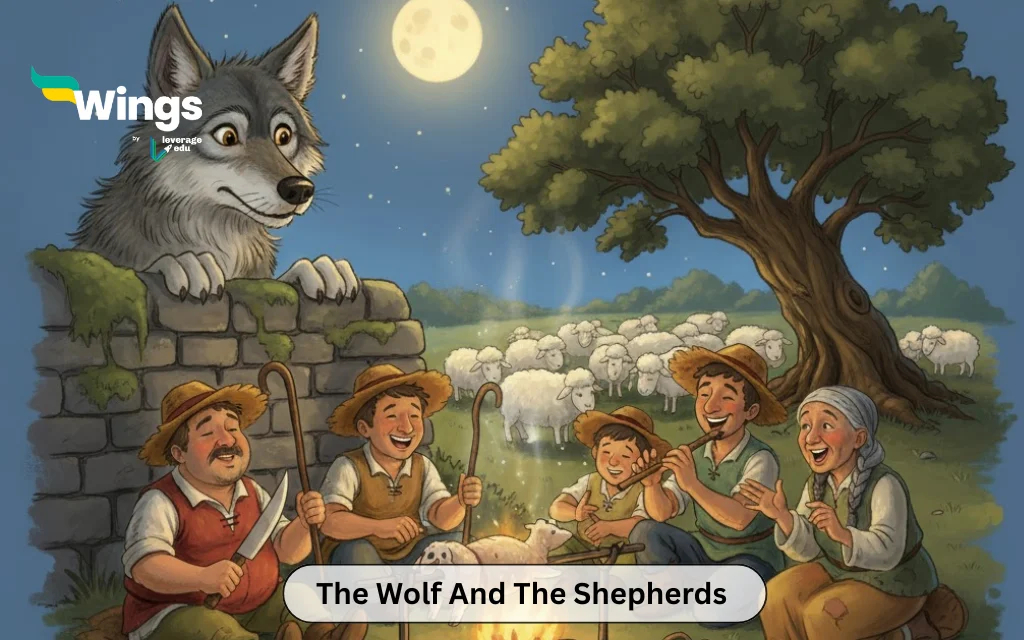
One day, a hungry wolf went to a farm to steal some sheep for food. The farmer and his family saw the wolf and chased him away.
A few days later, the wolf came back to the farm. This time, he saw the farmer and his family enjoying a meal of roasted lamb. The wolf felt confused and sad. “Why was I punished for wanting food, when the humans can eat lamb whenever they want?” he thought.
The wolf realised that people often judge others without looking at their own actions.
Learning Points from The Wolf and the Shepherds
Stories like ‘The Wolf and the Shepherds’ help us understand important lessons about fairness and thinking before acting.
- It is important not to judge others without knowing the full situation.
- Everyone makes mistakes, so we should focus on understanding, not blaming.
- Showing kindness and understanding helps build better relationships.
- We should reflect on our own actions before criticising others.
- Treating everyone fairly and with respect makes the world a better place.
2. The Young Crab And His Mother
Once upon a time, there was a little crab who lived with his mother on the sandy seashore. He loved playing near the water and watching the other animals move around.
One day, the young crab asked his mother, “Mother, why do you always walk sideways? Why don’t you walk straight like other animals?”
The mother crab smiled and said, “My dear, crabs are made to walk sideways. This way, we can move faster, hide from predators, and protect ourselves. Every animal has its own way of doing things that suits its body and nature.”
The young crab was curious and said, “But I want to walk straight like everyone else. Can you teach me?”
His mother replied, “No, my child. You must walk like a crab. Trying to copy others can be harmful. It’s important to understand and respect your own abilities.”
The young crab thought about her words and practised walking sideways with pride. He discovered that everyone is different, and each has unique skills. By accepting his nature, he could move safely, enjoy his life, and even help other crabs when needed.
Learning Points from The Young Crab and His Mother:
‘The Story of the Young Crab’ can teach us important lessons about accepting ourselves and respecting our own strengths.
- Every animal has a unique way of doing things that suits its body and abilities.
- It is important to understand and accept your own nature rather than trying to copy others.
- Being confident in your own skills helps you perform tasks safely and efficiently.
- Differences among individuals are natural and should be respected.
- Following your own strengths can help you face challenges better.

3. The Other Side Of The Wall
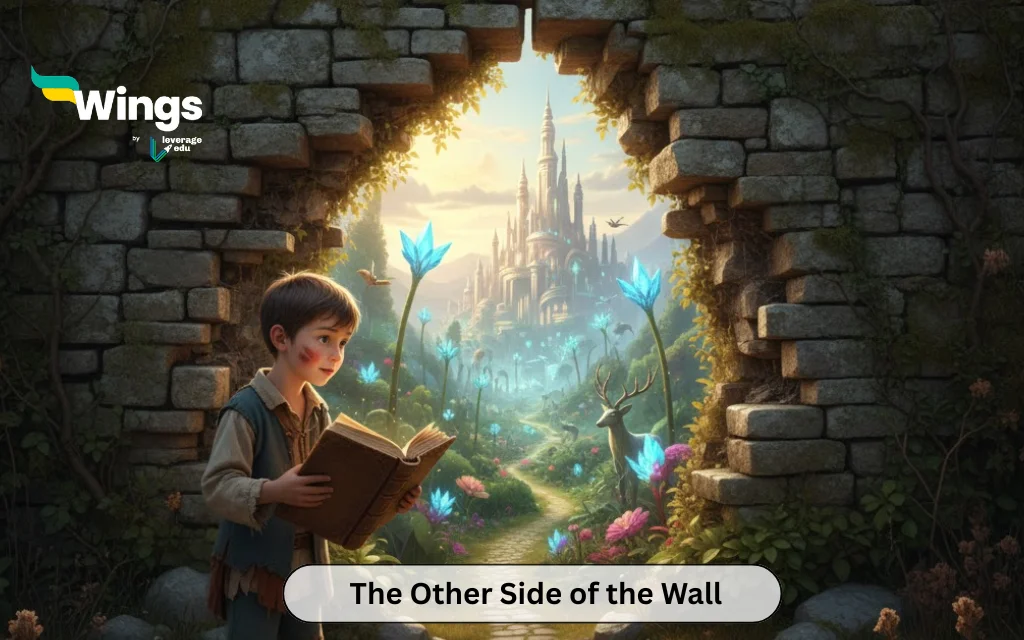
There was a young woman who loved gardening. She took care of all her plants every day. One day, she saw a beautiful plant in a catalogue and decided to grow it in her garden. She planted it at the base of a stone wall.
The plant grew quickly, but no flowers appeared on her side. She felt disappointed and thought about cutting it down. Just then, her neighbour called her and thanked her for the beautiful flowers blooming in his garden.
She rushed over and saw that the plant had grown through the cracks in the stone wall. The flowers had bloomed beautifully on the other side. She realised that her care and patience had made the flowers bloom, even if she couldn’t see them herself.
Learning Points from The Other Side of the Wall
‘The Other Side of the Wall’ story helps us understand the value of patience, effort, and perspective.
- Hard work may not show results immediately, but it often pays off in time.
- Patience is important; sometimes results appear where we least expect them.
- Our efforts can benefit others, even if we don’t see the results ourselves.
- Nature and growth can surprise us in wonderful ways.
- Taking care of something with dedication can lead to beautiful outcomes.
4. The Fox and the Stork
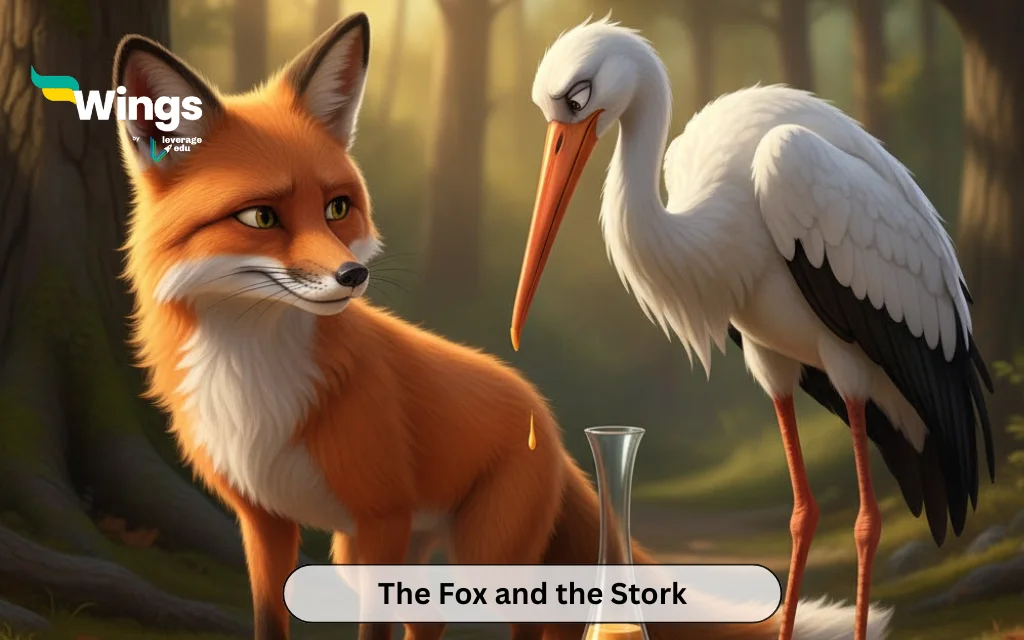
One day, a selfish fox invited a stork to his house for dinner. The stork was happy and arrived on time. The fox served soup in shallow bowls. The fox enjoyed his soup, but the stork could not drink any because her long beak did not fit in the bowl.
The stork felt upset but stayed polite. The next day, she invited the fox for dinner. This time, she served the soup in tall, narrow vases. The stork easily drank her soup, but the fox could not reach it with his short snout. The fox realized his mistake and went home hungry.
The story shows that selfishness and unfairness can backfire.
Learning Points from The Fox and the Stork
‘The fox and the Stork’ story teaches us lessons about fairness, kindness, and thinking about others.
- Treat others the way you want to be treated.
- Selfish acts can cause problems for yourself in the future.
- Being polite and patient can help you handle unfair situations.
- Fairness and thoughtfulness create better relationships.
- Everyone should consider others’ needs, not just their own.
5. The Golden Touch
Once there lived a greedy man in a small town. He was very rich and loved gold and fancy things. But he loved his daughter more than anything else.
One day, he saw a fairy whose hair was caught in tree branches. He helped her, and the fairy was grateful. She offered to grant him a wish. The man, blinded by greed, asked, “I want everything I touch to turn into gold.” The fairy granted his wish.
The man rushed home, touching stones and pebbles and watching them turn into gold. Excited, he went to hug his daughter, but as soon as he touched her, she turned into a gold statue. He was heartbroken and realized that his greed had caused this tragedy. He spent the rest of his life searching for the fairy to reverse his wish.
The story teaches that greed can bring great harm, even to those we love.
Learning Points from The Golden Touch
‘The Golden Touch’ story helps us understand why greed should be avoided and how choices affect our lives.
- Being greedy can cause harm to yourself and others.
- Love and family are more valuable than money and possessions.
- Think carefully before making wishes or decisions.
- True happiness comes from caring and sharing, not from wealth alone.
- Self-control and contentment lead to a better life.

Also Read: 5 Tips to Improve Kid’s Vocabulary
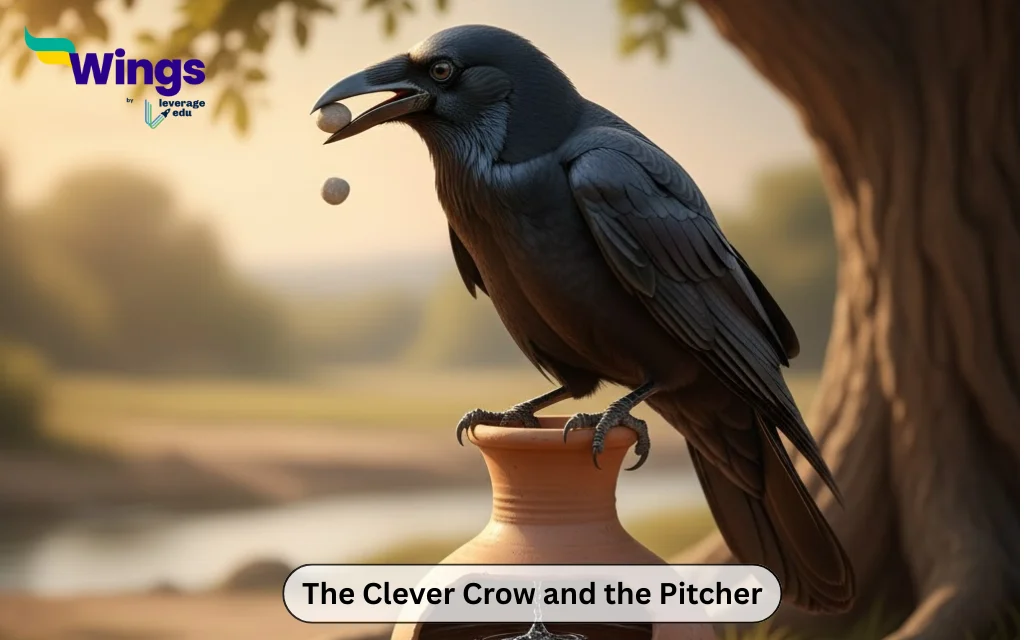
6. The Clever Crow and the Pitcher
On a hot summer day, a thirsty crow flew over a village looking for water. She finally saw a pitcher near a house and flew down. But when she looked inside, she saw only a little water at the bottom, too low for her beak to reach.
The clever crow did not give up. She looked around and noticed some pebbles on the ground. An idea struck her! She picked up the pebbles one by one and dropped them into the pitcher. Slowly, the water level rose. After adding enough pebbles, the water came up high enough for the crow to drink comfortably.
The story shows how clever thinking can solve problems.
Learning Points from The Clever Crow and the Pitcher
‘The Clever Crow and the Pitcher’ story teaches us lessons about creativity, problem-solving, and persistence.
- Thinking creatively can help solve difficult problems.
- Never give up, even when the situation seems hard.
- Using resources around you wisely can lead to success.
- Patience and effort often lead to good results.
- Observing and learning from your surroundings can give you new ideas.
7. The Honest Woodcutter
A poor woodcutter was cutting wood near a river when his axe slipped from his hands and fell into the deep water. He sat on the bank and began to cry because the axe was his only means of earning a living.
Suddenly, a river goddess appeared before him. She dived into the water and brought up a golden axe. “Is this yours?” she asked. The woodcutter shook his head honestly. She dived again and brought up a silver axe. Again, the woodcutter said it wasn’t his. Finally, she brought up his old iron axe, and the woodcutter’s face lit up with joy.
The goddess was pleased with his honesty and gave him all three axes as a reward.
Learning Points from The Honest Woodcutter
‘The Honest Woodcutter’ story teaches us the value of honesty and integrity in our daily life.
- Always be honest, even when no one is watching.
- Truthfulness can bring unexpected rewards.
- Doing the right thing earns respect and trust.
- Honesty is more valuable than material wealth.
- Being truthful helps build a good character for life.

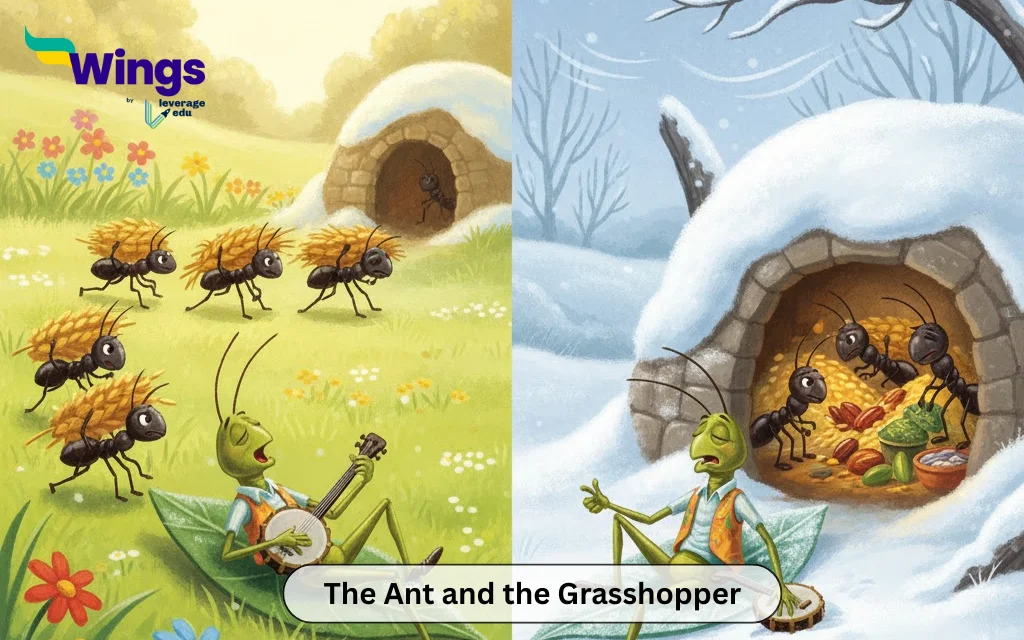
8. The Ant and the Grasshopper
During the warm summer months, an ant worked hard collecting grains and storing them for winter. A grasshopper watched the ant and laughed, “Why work so hard? Come and sing with me!”
The ant replied, “I’m preparing for winter when food will be scarce.” The grasshopper continued to play his violin and enjoy the sunshine.
When winter came, the ground was covered with snow. The grasshopper had nothing to eat and felt very hungry. He went to the ant’s house and begged for food. The ant said, “I worked hard during summer while you only played. Now you must face the consequences of your laziness.”
Feeling sorry for him, the ant shared some food but also taught him an important lesson.
Learning Points from The Ant and the Grasshopper
‘The Ant and the Grasshopper’ story teaches us the importance of hard work and planning for the future.
- Always work hard and be prepared for challenges ahead.
- Laziness can lead to problems when the situation becomes difficult.
- Planning and saving in advance helps ensure security and comfort.
- Enjoyment is good, but responsibility should come first.
- Helping others is kind, but learning from their mistakes is equally important.
9. The Boy Who Cried Wolf
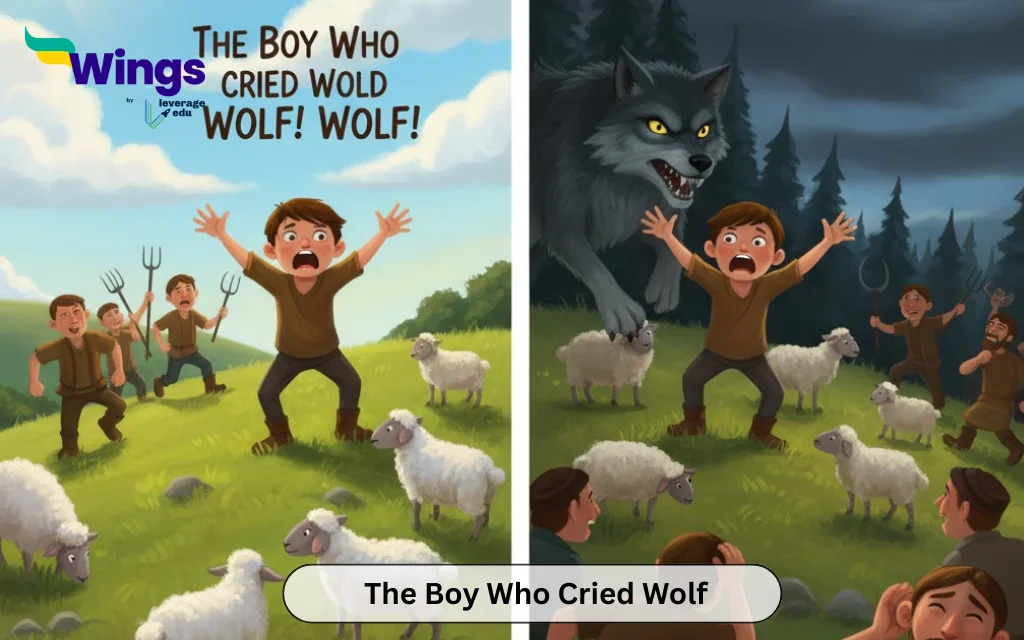
A shepherd boy was responsible for watching over sheep in the hills near his village. He found his job boring and wanted some excitement.
One day, he shouted, “Wolf! Wolf! A wolf is attacking the sheep!” The villagers rushed up the hill with sticks to help, but found no wolf. The boy laughed at them. He played this trick several times, and each time the villagers came running.
Then one day, a real wolf appeared and began attacking the sheep. The boy screamed, “Wolf! Wolf! Please help!” But this time, the villagers thought he was lying again and didn’t come. The wolf killed many sheep before running away.
Learning Points from The Boy Who Cried Wolf
‘The Boy Who Cried Wolf’ story teaches us the importance of honesty and trust.
- Always tell the truth; lying can have serious consequences.
- Repeated false alarms make people stop believing you.
- Trust is built over time and can be easily lost.
- Being responsible in your duties is very important.
- Actions have consequences, so think before you act.
10. The Hidden Stream
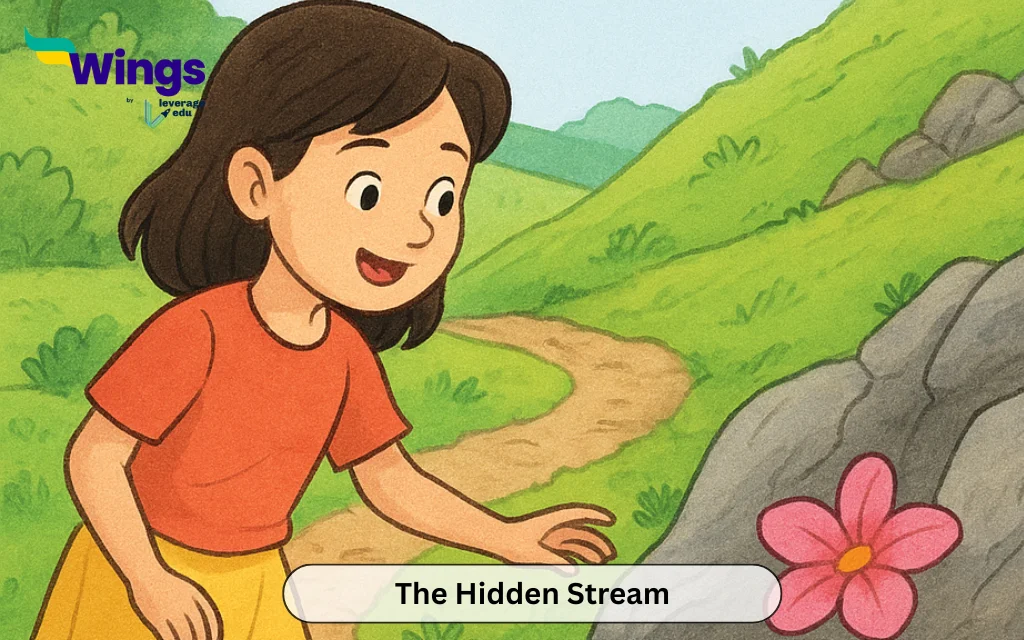
Ria was a cheerful girl who loved helping her mother in the kitchen garden. Every morning, she watered the plants and checked every leaf with great care. One summer, she found a small packet of seeds in an old drawer. The packet said, “Mountain Bloom, a flower that grows in tough places.” Curious and excited, she planted the seeds near a dry patch behind their house.
Weeks passed. Ria watered the spot daily, but she saw nothing except a few tiny leaves. She wondered if the soil was too dry or if the seeds were too weak. Still, she continued to care for them because she believed every seed deserved a chance.
One evening, her grandfather called her for a walk near the back hill. As they climbed a little path, Ria stopped in surprise. Bright pink flowers covered the rocky slope. They were the same flowers she had planted. The plant had pushed its roots deep into the ground and found a hidden stream of water on the other side. That was why it had grown and bloomed away from where she had planted it.
Ria felt amazed. Her efforts had helped the flowers grow, even though the results had appeared in a place she had never expected.
Learning Points from The Hidden Stream
‘The Hidden Stream’ story reminds us that steady effort and patience can lead to meaningful results, even when they appear in unexpected ways.
- Consistent effort can lead to success, even if the outcome is not immediately visible.
- Patience is important; things grow at their own pace.
- Sometimes our work brings results in places we don’t notice right away.
- Nature often finds surprising ways to thrive when given love and care.
- Caring for something with dedication creates beauty, even when the process is slow.
The 10 Great and Fun English Stories For Class 5 young readers are a mix of adventure, imagination, and meaningful lessons. Each tale helps students build stronger reading skills while encouraging them to think about kindness, courage, patience, and honesty. Whether they are exploring magical places or learning from everyday experiences, these stories make reading enjoyable and help children understand values that matter in real life. This collection aims to inspire Class 5 students to keep reading, keep wondering, and keep learning through stories.
Related Reads:
FAQs
Ans: Some of the best stories for class 5 are:
The Wolf And The Shepherds
The Golden Touch
The Fox and the Stork
The Other Side Of The Wall
The Young Crab And His Mother
Ans: A simple story has a basic narrative following a particular plot. It has 3 distinct parts: the starting, the middle, and the ending.
Ans: A short story for 5th Graders is “Blueberries for Sal by Robert McCloskey”. This story shows children that all families are alike despite their differences. It’s the story of a young boy named Sal and a baby bear named Maine, who are both on a blueberry search with their mothers.
Moral: Regardless of our colour, race, ethnicity, or location, we’re all the same.
Ans. English stories for class are designed to teach students important life lessons such as honesty, patience, hard work, and the value of relationships. They help children understand ethical behaviour and decision-making in real-life situations.
Ans. Students can apply these lessons by being honest, working diligently, respecting others, and making thoughtful decisions. Following the teachings from the stories helps build strong character and good habits.
Hope you like the English stories for class 3 that we have provided in this blog. For more such kids’ learning material, check out School Education and follow Leverage Edu!!

 60,000+ students trusted us with their dreams. Take the first step today!