

 One app for all your study abroad needs

















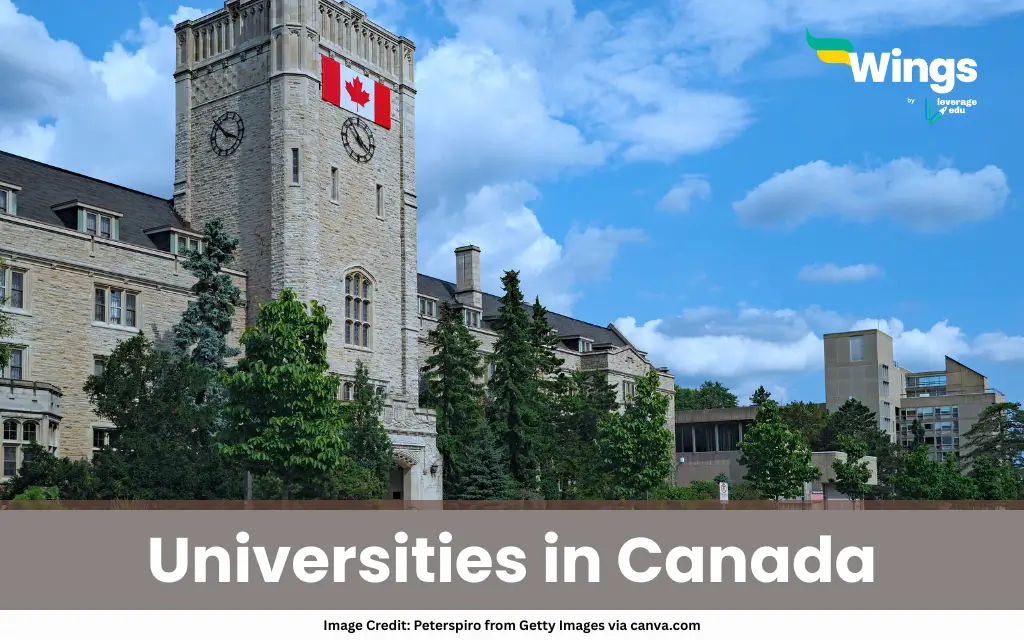
If you are planning to study abroad in 2026, Canada is likely to appear at the top of your list. Several top universities in Canada consistently rank among the best in the world. Institutions such as McGill University, the University of Toronto, and the University of British Columbia are globally recognized for their research, academic excellence, and industry connections.
Also, these top Canadian universities offer a wide range of programs in rapidly growing fields, including technology, healthcare, business management, engineering, and artificial intelligence. In this article, we have compiled a list of the top universities in Canada, including their rankings, areas of specialisation, tuition fees, and other key details. Take a look and see which one might be the right fit for you.
This Blog Includes:
- List of Top Universities in Canada
- Detailed Overview of the Top Universities in Canada
- Types of Universities in Canada
- Best Canadian Universities for Master’s Programs
- Top Universities in Canada for MBA Programs
- Top Universities in Canada for PhD Programs
- Top Universities in Canada for Engineering Programs
- Top Universities in Canada for Master’s in Computer Science
- Tuition Fees for Top Universities in Canada
- Study Permit Process for International Students in Canada
- FAQs
List of Top Universities in Canada
Canada attracts many ambitious international students because of its blend of rigorous academics, inclusive environments, and pathways to meaningful careers. For 2026 entrants, the top universities in Canada deliver exceptional research output, employer-valued degrees, and campuses that embrace cultural diversity. Global rankings from QS and Times Higher Education (THE) assess key strengths: academic prestige, research quality, graduate employability, international faculty/student ratios, and sustainability efforts.
These metrics assure that a degree from a Canadian leader holds weight worldwide. The table below features standout top universities in Canada based on the latest 2026 rankings, perfect for comparing options if you’re targeting strong academics and supportive international communities.
| Universities | QS World University Rankings 2026 | THE World University Rankings 2026 |
| University of Toronto | 29 | 21 |
| McGill University | 27 | =41 |
| University of British Columbia (UBC) | 40 | 45 |
| University of Alberta | Around 94 | ~119 (top 150 range) |
| University of Waterloo | Around 119 | Top 150-200 range |
| McMaster University | Top 150-200 range | =116 |
| Western University | 151 | 201 to 250 (band) |
| Université de Montréal | =173 | Top 200 range |
| Queen’s University | =191 | 301–350 (band) |
| University of Calgary | =211 | 200 |
| University of Ottawa | = 219 | =187 |
Detailed Overview of the Top Universities in Canada
The Canadian universities listed above have built strong reputations for good reason. They are known for academic excellence, meaningful research that makes a real impact, and campus communities where students from all over the world feel welcome. Each one has its own character and strengths, which is why we have included them in the list of top Universities in Canada.
The following sections will give you a clearer sense of what each university offers and what makes it stand out. Let’s understand them one by one:
1. University of Toronto
The University of Toronto is Canada’s top public research university. It was founded in 1827 as King’s College and later rechartered in 1850. Its motto, Velut arbor aevo, means As a tree through the ages, reflecting a legacy of steady academic growth.
The table below outlines important details for a clearer overview of the University of Toronto, Canada.
| Year of Foundation | 1827 (as King’s College), rechartered in 1850 |
| List of Campuses | St. George, Mississauga, Scarborough |
| Student Population | Approximately 97,000 |
| International Students | ~25% from 160+ countries |
| Faculty Members | 12,000+ |
| Major Research Areas | Artificial Intelligence, Sustainability, Health Sciences, and Quantum Computing |
| Notable Contributions | Insulin discovery, stem cell research, and AI innovation |
| International Tuition (Undergraduate, 2025/2026) | CAD 63,000 to CAD 70,000+ per year (varies by program) |
| Why Choose for 2026 | Unmatched employer reputation and urban networking in Canada’s largest city. |
2. McGill University
McGill University, founded in 1821, is one of Canada’s oldest and most respected public research institutions. Named after its founder, James McGill, the university is known for academic excellence and impactful research. Its motto, Grandescunt aucta labore, means By work, all things increase and grow, reflecting a strong tradition of achievement.
The table below outlines important details for a clearer overview of this top university in Canada.
| Year of Foundation | 1821 |
| Founder of the University | James McGill |
| Number of Core Faculties | 11 |
| Student Population | ~40,000 |
| International Students | ~30% from 150+ countries |
| Language Environment | Primarily English with French bilingual options |
| Major Research Areas | Sustainability, Health Sciences, Law, Life Sciences |
| Notable Alumni | Justin Trudeau and Leonard Cohen |
| Average International Tuition Fee | CAD 49,000 to CAD 69,000 per year |
| Why Choose for 2026 | Diverse, multicultural community with strong funding for thesis-based studies. |
3. University of British Columbia
The University of British Columbia (UBC), founded in 1908, is a leading public research university known for excellence in research and teaching. Its motto, Tuum Est, means It is up to you, emphasising personal leadership in learning.
The table below outlines important details for a clearer overview of this top Canadian University:
| Year of Foundation | 1908 |
| Campuses | Vancouver (main) and Okanagan |
| Student Population | ~70,000 |
| International Students | ~30% of total enrolment |
| Major Research Areas | Climate Science, Health, Technology, Sustainability |
| Notable Alumni | Kim Campbell (Former Prime Minister of Canada) |
| Campus Environment | Ocean and mountain views, green campus, innovation hubs |
| Career Opportunities | Strong co-op programs and industry partnerships |
| Average International Tuition | CAD 51,000 to CAD 67,000 per year |
| Why Choose for 2026 | Top co-op programs and pathways to BC’s green/tech industries. |
4. University of Alberta
The University of Alberta, founded in 1908, is a leading public research university known for innovation and discovery that directly benefits society. The motto of the university, Quaecumque vera (Whatsoever things are true), reflects a strong commitment to academic integrity and advancing knowledge.
The table below summarizes the key facts about this leading Canadian university for quick reference.
| Year of Foundation | 1908 |
| Faculties | 18 |
| Student Population | ~40,000 |
| Major Research Areas | Energy, Health Sciences, Artificial Intelligence |
| Campus | North Campus with modern research facilities |
| City Advantage | Affordable living and strong energy/technology job markets |
| Average International Tuition Fee | CAD 40,000 to CAD 46,000 per year |
| Why Choose for 2026 | Competitive costs plus strong internships in high-demand fields. |
5. University of Waterloo
The University of Waterloo, founded in 1957, is known for innovation, technology, and career-focused education. Its motto, Concordia cum veritate, means In harmony with truth, reflecting a commitment to practical knowledge and discovery.
Waterloo runs the world’s largest co-operative education system, where students gain paid work experience alongside academic study. Here’s a clear snapshot of the essential details for this top-ranked university in Canada.
| Year of Foundation | 1957 |
| Number of Faculties | 6 |
| Student Population | ~42,000 students |
| Major Academic Strengths | Engineering, Mathematics, Computer Science |
| Major Research Areas | Artificial Intelligence, Quantum Computing, Entrepreneurship |
| Distinct Feature | World’s largest co-operative education (co-op) program |
| Industry and Career Links | Strong connections with technology companies; alumni in firms such as Google and Shopify |
| Average Undergraduate Tuition | CAD 58,000 to CAD 74,000 per year |
| Why Choose for 2026 | Paid work terms build resumes and connections in Canada’s tech hub. |
6. McMaster University
McMaster University, founded in 1887, is known for its strong research focus and distinctive teaching approach. It has built a reputation for problem-based learning, where students tackle real-world challenges and develop practical solutions. The university motto, All things in Christ, reflects its historical foundation and values. The following table provides a concise overview of the most important information for this prestigious Canadian institution.
| Year of Foundation | 1887 |
| Number of Faculties | 6 |
| Student Population | ~35,000 students |
| Major Academic Strengths | Health Sciences, Medicine and Interdisciplinary Research |
| Distinct Teaching Approach | Problem-based learning model |
| Campus Location | Hamilton, Ontario (near Toronto) |
| Average Undergraduate Tuition | CAD 44,000 to CAD 56,000 per year |
| Why Choose for 2026 | Global influence in health education with industry partnerships. |
7. Western University
Western University is among the top universities in Canada, founded in 1878. It is known for combining strong academics with leadership development and student engagement. Its motto, Truth and usefulness, reflects a commitment to knowledge that creates real-world impact. Western is particularly recognised for programs in business and health sciences, with the Ivey Business School building a global reputation for leadership education and case-based learning.
The table below gives a quick and clear summary of the main details for this highly regarded university in Canada.
| Year of Foundation | 1878 |
| Student Population | ~40,000 students |
| Major Academic Strengths | Business (Ivey Business School) and Health Sciences |
| Campus Location | London, Ontario |
| Campus Environment | Scenic campus with strong community life and extracurricular activities |
| Student Support | Dedicated international student support services |
| Average Undergraduate Tuition | CAD 46,000 to CAD 65,000 per year |
| Why Choose for 2026 | Strong international support and well-rounded student experience. |
8. Université de Montréal
Université de Montréal, founded in 1878, is one of the largest French-language research universities in the world. This distinction places it among the top universities in Canada. It plays a key role in advancing knowledge within French-speaking academic communities while offering English-language options at the graduate level. This university is particularly strong in medicine, sciences, and humanities, supported by high research activity.
The summary table below presents the key highlights of this leading Canadian university.
| Year of Foundation | 1878 |
| Student Population | ~67,000 students |
| Major Academic Strengths | Medicine, Sciences, Humanities |
| Research Focus | Strong research output across health, science, and social research |
| Campus Location | Montreal, Quebec |
| Learning Environment | Bilingual French–English academic exposure |
| Cost Advantage | Quebec policies may reduce overall study costs |
| Average Undergraduate Tuition Fee | CAD 27,000 to CAD 30,000 per year |
| Why Choose for 2026 | Budget-friendly entry to high-output research. |
9. University of Calgary
The University of Calgary is a public research university focused on innovation, entrepreneurship, and solving global challenges. Founded in 1966 with roots dating to 1908, its motto Mo Shùile Togam Suas (I will lift up mine eyes), reflects a forward-looking vision. It excels in energy, engineering, health, and business research, with alumni active in industry and politics.
The table below outlines important details for this prominent university in Canada.
| Year of Foundation | 1966 (origins in 1908) |
| Motto of the University | Mo Shùile Togam Suas (I will lift up mine eyes) |
| Student Population | ~35,000 students |
| Number of Faculties | 14 |
| Major Faculties | Schulich School of Engineering and Haskayne School of Business |
| Major Academic Strengths | Energy, Engineering, Health Sciences, and Business |
| Research Focus | Energy Transition, Sustainability, Mental Health, Artificial Intelligence |
| International Student Support | Arrival assistance, advising, scholarships, work permit guidance, and integration programs |
| Campus Location | Calgary, Alberta |
| Campus Advantage | Modern facilities, innovation hubs, access to outdoor activities, and the Rocky Mountains |
| Average Undergraduate Tuition Fee | Average CAD 25,000 to CAD 40,000+ per year |
| Why Choose for 2026 | Excellent co-op/PGWP pathways in industry hubs. |
10. Queen’s University
Queen’s University, founded in 1841, is known for undergraduate education, leadership development, and community engagement. Its motto, Sapientia et Doctrina Stabilitas, means Wisdom and knowledge shall be the stability of thy times. The university has a strong reputation in engineering, business, and health sciences, with alumni including Canadian prime ministers and business leaders.
The table below outlines important details about this top-tier Canadian university.
| Year of Foundation | 1841 |
| Motto of the University | Sapientia et Doctrina Stabilitas, which means “Wisdom and knowledge shall be the stability of thy times.” |
| Student Population | ~30,000 students |
| Major Faculties | Arts and Science, Engineering and Applied Science, Smith School of Business |
| Major Academic Strengths | Engineering, Business, Health Sciences |
| Research Focus | Innovation, Sustainability, Interdisciplinary Studies |
| International Student Support | International Programs Office, visa guidance, orientation, housing, and career services |
| Campus Location | Kingston, Ontario |
| Campus Environment | Historic lakeside campus with strong community traditions and student activities |
| Average Undergraduate Tuition | CAD 54,000 to CAD 58,000 per year |
| Example Tuition | Arts/Commerce ~CAD 54,800–57,100; Engineering/Business higher depending on program |
| Why Choose for 2026 | Personalized support and strong employability outcomes. |
Types of Universities in Canada
After exploring some of the top universities in Canada for studying in Canada, it also helps to understand how the country’s higher education system is structured. Canada does not follow a single national model for universities. Instead, education is managed by individual provinces and territories. This creates a diverse system where students can choose institutions that match their academic goals, whether they are interested in research, professional careers, or practical training.
Canada has two main types of universities: Public and Private. Let’s understand them one by one:
Public Universities
Most universities in Canada are public institutions. They receive funding from provincial governments and operate as non-profit organisations. This support allows them to offer a wide range of programs, maintain modern laboratories and libraries, and keep tuition more stable. However, international students should remember that their tuition fees are usually higher than those for domestic students.
Private Universities
Private universities also exist in Canada, though they are less common. These institutions often specialise in areas such as business, liberal arts, or theology. They may provide smaller class sizes and more flexible admission processes. Since private universities do not receive government funding, tuition fees are typically higher. While both public and private institutions award recognised degrees, many international students choose public universities because of their global reputation, wider program choices, and strong research opportunities.
Before applying to these top universities in Canada, international students should check one important requirement. The university must be a Designated Learning Institution (DLI). Only DLIs are approved by the Canadian government to admit international students and issue the acceptance letter required for a study permit.
Three Main Categories of Canadian Universities
Beyond this basic public/private University distinction, Canadian universities are often grouped by academic scope and research level using Maclean’s 2026 classifications (a trusted standard for comparing institutions fairly). Canadian universities are commonly placed into three broad categories. These categories give students a clearer idea of the type of learning environment, research opportunities, and campus experience they can expect.
1. Medical or Doctoral universities
The first category includes medical or doctoral universities, which are large research-focused institutions. These universities have medical schools and offer a wide range of PhD and advanced research programs. They are known for major discoveries, innovation, and strong global rankings.
Students who are interested in research careers or advanced academic study often prefer these universities because they provide access to well-funded research facilities and experienced faculty.
- McGill University
- University of Toronto
- University of British Columbia
- University of Alberta
- McMaster University
2. Comprehensive Universities
The second category is known as comprehensive universities. These institutions offer a broad mix of undergraduate and graduate programs and maintain active research environments. While they may not always have medical schools, they still provide strong academic programs across many fields.
Many comprehensive universities are recognised for their co-op programs and industry connections, which allow students to gain valuable work experience while studying.
- Simon Fraser University
- University of Victoria
- University of Waterloo
- York University
3. Primarily Undergraduate Universities
The third category includes primarily undergraduate universities, where the main focus is on bachelor’s degree programs. These universities usually have smaller campuses and smaller class sizes, which helps create a more personal learning environment.
Students often benefit from closer interaction with professors and a supportive academic community. This setting is well-suited for students who value individual attention and a close-knit campus atmosphere.
- Mount Allison University
- University of Northern British Columbia
- Acadia University
- St. Francis Xavier University
Also Read: Public vs Private Universities: Which one to Choose
Best Canadian Universities for Master’s Programs
After exploring the common funding options available to support your studies, the next step is deciding where to pursue your postgraduate degree. Canada offers several universities known for strong Master’s programs and attracts students from around the world seeking advanced academic training and global career opportunities.
Most Master’s degrees in Canada take one to two years to complete. Programs may be research-based with a thesis, coursework-focused for professional careers, or co-op-based with internships that allow students to gain practical work experience during their studies. Below are some of the top universities in Canada for strong Master’s programs, recognised for their research strength, program variety, and strong graduate employment outcomes.
| Best Canadian Universities for Master’s Programs | Why The University Is Beneficial for International Students |
| University of Toronto | – Offers more than 200 graduate programs with strong research output in engineering, computer Science, Data Science, Public Health, Business, and Humanities. – Provides scholarships and access to Toronto’s technology and finance sectors, supporting internships and strong employability. |
| McGill University | – Recognised for excellence in Medicine, Biomedical Sciences, Neuroscience, Law, Environmental Studies, and Engineering. – Offers funded thesis opportunities in a bilingual and multicultural academic environment. |
| University of British Columbia | – Strong in sustainability, Ocean Sciences, Forestry, Artificial Intelligence, and Business. – Provides co-op options and links to British Columbia’s green and technology industries. |
| McMaster University | – Known for Health Sciences, Engineering, and business with a focus on problem-based learning. – Maintains strong industry partnerships and offers competitive scholarships for international students. |
| University of Alberta | – Competitive in Energy Engineering, Artificial Intelligence, Agriculture, and Health Sciences. – Offers comparatively lower tuition and living costs, along with strong graduate funding support. |
| University of Waterloo | – Strong Master’s programs in Engineering, Computer Science, Mathematics, and Data Analytics. – Paid co-op work terms enhance practical experience and employability in technology sectors. |
| University of Calgary | – Known for energy innovation, GeoSciences, Business, and Veterinary Sciences. – Strong research grants and proximity to industry support career-focused Master’s pathways. |
Also Read: Cheapest Masters Degree in Canada for International Students
Top Universities in Canada for MBA Programs
Many international students consider specialised degrees that focus on career advancement. One of the most popular options is the Master of Business Administration (MBA) offered by many top universities in Canada. Canada’s MBA programs attract career-driven international students with innovative curricula, strong employer connections, and post-grad work options via the PGWP, allowing up to 3 years of Canadian experience to build toward global roles or residency.
Here are the standout top universities in Canada for MBA programs in 2026, based on QS Global MBA and Financial Times rankings, prioritizing Canadian leadership, global standing, and features appealing to internationals.
| Top Universities in Canada for MBA | Global Rank and National Position for 2026 | Important Features for MBA Aspiring International Students |
| University of Toronto (Rotman School of Management) | – #1 in Canada (QS Global MBA 2026) – #81 globally (Financial Times 2026) | – Innovative curriculum combining design thinking with analytics. – Strong placements in Finance, Consulting, and Technology Sectors. – Located in Canada’s financial capital with direct access to Bay Street firms and global employers. |
| Western University (Ivey Business School) | – #1 in Canada (Financial Times 2026) – #74 globally | – Famous for its intensive case-method learning approach focused on leadership development. – Exceptional alumni network and strong recruitment in consulting and finance. – High employment rates within three months of graduation and strong ESG focus. |
| McGill University (Desautels Faculty of Management) | – #2 in Canada (QS 2026) – #87 globally (Financial Times 2026) | – Strong international outlook with globally diverse faculty and students. – Flexible specialisations such as analytics and entrepreneurship. – Bilingual Montreal setting with strong ties to Aerospace, Technology, and Finance Sectors. |
| Queen’s University (Smith School of Business) | #92 globally (Financial Times 2026) | – Accelerated 12-month MBA with team-based learning. – Includes global consulting projects for hands-on experience. – Strong alumni support and high return on investment in consulting and strategy roles. |
| University of British Columbia (Sauder School of Business) | #99 globally (Financial Times 2026) | – Focus on sustainability, innovation, and entrepreneurship. – Strong links to the technology and energy industries. – Vancouver location offers Asia-Pacific exposure and a strong quality of life. |
| York University (Schulich School of Business) | Highly regarded in global MBA rankings | – Global business focus with dual-degree options. – Specialisations in sustainability and international trade. – Flexible program structure with strong international exposure in Toronto. |
Explore: Top Business Schools in Canada
Top Universities in Canada for PhD Programs
For those interested in advanced research and academic careers, PhD programs in Canada offer the opportunity to contribute new knowledge within a globally respected education system. Most PhD programs in Canada take four to six years to complete and focus mainly on thesis-based research under the guidance of experienced faculty members.
Along with research work, students may complete some coursework during the early stages of the program. The table below spotlights leading top universities in Canada for PhD programs in 2026, based on QS and THE rankings, focusing on strengths, funding edges, and why they suit ambitious global applicants.
| Top Universities | Global Ranking for 2026 | Why is a PhD important in Canada |
| University of Toronto | – QS #29; – THE #21 | – Offers PhD programs across 80+ departments with major research centres and strong funding support. – High publication impact and access to Toronto’s global academic and industry networks. |
| McGill University | – QS #27; – THE #41 | – Known for research excellence in biomedical sciences, sustainability, physics, and interdisciplinary fields. – Provides generous fellowships and access to numerous research centres in a diverse, bilingual environment. |
| University of British Columbia | – QS #40; – THE #45 | – Strong in environmental science, biotechnology, health research, and quantum studies. – Offers doctoral fellowships and global research collaborations in Vancouver’s innovation ecosystem. |
| McMaster University | – THE #116 | – Recognised for health sciences, engineering, and evidence-based research. – Competitive stipends and collaborative research culture with industry links. |
| University of Alberta | Frequently ranked in global top 150 | – Excels in energy transition, artificial intelligence, agriculture, and climate studies. – Strong provincial funding and unique northern research opportunities. |
| University of Waterloo | Globally recognised for research excellence | – Premier for engineering, computer science, mathematics, and quantum information research. – Strong partnerships with research institutes and technology sectors. |
| University of Calgary | Strong performer in research-intensive fields | Known for energy and geosciences research with industry-backed funding opportunities. |
| Queen’s University | Well-regarded in global research rankings | Strong in health sciences and engineering with supportive doctoral mentorship and funding structures. |
Also Read: PhD in Commerce in Canada
Top Universities in Canada for Engineering Programs
For students interested in building technologies, infrastructure, or energy solutions of the future, engineering programs in Canada offer strong academic training and practical learning opportunities. Canadian engineering degrees are widely respected, and many programs emphasise hands-on experience through labs, projects, and industry placements.
Here are the top universities in Canada for engineering programs, along with their global rankings for 2026 and the reasons why they are important for international students:
| Top Universities | Global Ranking for 2026 | Why Important |
| University of Toronto (Faculty of Applied Science & Engineering) | – QS Engineering & Technology #17 globally; – THE Engineering #25 globally | – Specialised streams in AI, Sustainable Energy, and Robotics. – Strong research facilities and access to Toronto’s tech ecosystem enhance global career prospects. |
| University of Waterloo (Faculty of Engineering) | Frequently ranked #1 in Canada for co-op engineering | – Structured co-op model with paid work terms. – High employability in Canada’s leading technology corridor. |
| University of British Columbia (Faculty of Applied Science) | THE Engineering #46 globally; strong QS subject placements | – Strength in sustainable and environmental engineering. – Strong industry links within Vancouver’s green economy. |
| McGill University (Faculty of Engineering) | THE Engineering #72 globally | – Expertise in Mining, Aerospace, and Materials Science. – Bilingual environment with strong aerospace industry access. |
| University of Alberta | Highly regarded in energy and resource engineering | – Strong focus on petroleum and energy engineering. – Industry funding and comparatively lower living costs. |
| McMaster University | Strong global performer in materials and Biomedical Engineering | Known for problem-based learning and strong industry collaborations. |
| Polytechnique Montréal | Leading engineering institution in Quebec | Bilingual engineering programs with strong provincial industry connections. |
| University of Calgary | Strong in Energy and Geotechnical Engineering | Focus on energy innovation with close industry partnerships. |
Many universities also include internships or co-op terms as part of the program. These placements allow students to gain paid work experience before graduation, helping them build practical skills and industry connections while studying.
For international students, several advantages make Canada an attractive option:
- Most engineering programs are taught in English, with some bilingual options available in Quebec.
- Universities offer scholarships and support services to help international students settle into academic life.
- Graduates from Designated Learning Institutions may qualify for the Post-Graduation Work Permit (PGWP), allowing them to gain work experience in Canada after completing their degree.
Also Read: Check Out Cheapest Engineering Universities in Canada
Top Universities in Canada for Master’s in Computer Science
Many students interested in technology choose to specialise further in computer science. Canada offers several universities known for strong Master’s programs in this field. Master’s programs in computer science in Canada attract international students who want advanced knowledge in areas such as artificial intelligence, machine learning, cybersecurity, data science, quantum computing, and software engineering. Most programs take one to two years to complete.
Here are some of the top universities in Canada for Master’s in Computer Science, along with their global subject rankings and program strengths for international students.
| Universities | Global Ranking for 2026 | Why Important |
| University of Toronto | – QS Computer Science #12 globally- THE Computer Science #22 globally | – Strong research in artificial intelligence, machine learning, and human-computer interaction. – Offers research and professional programs with internship opportunities in Toronto’s major technology hub. |
| University of Waterloo | – QS Computer Science #33 globally- THE Computer Science #41 globally | – Known for co-op Master’s programs with paid industry terms. – Strong in software engineering, algorithms, and quantum computing with high employability in Canada’s technology corridor. |
| University of British Columbia | – QS Computer Science #31 globally- THE Computer Science #52 globally | – Excels in artificial intelligence, graphics, bioinformatics, and sustainable computing. – Offers research and co-op options in Vancouver’s growing technology ecosystem. |
| McGill University | – THE Computer Science #74 globally- Strong QS subject ranking | – Focuses on theoretical computer science, machine learning, and computational biology. – Bilingual environment with access to leading artificial intelligence research centres in Montreal. |
| University of Alberta | – Strong global reputation in artificial intelligence | – Pioneer in reinforcement learning and artificial intelligence research. – Offers competitive funding and comparatively lower living costs. |
| Université de Montréal | – Globally recognised for artificial intelligence research | – Strong in deep learning and natural language processing through advanced research institutes in Montreal. |
| Simon Fraser University | – Strong national performer in applied computer science | – Known for applied computing and industry partnerships in British Columbia. |
| Carleton University | – Recognised for cybersecurity and networks | – Strong focus on cybersecurity and network systems with connections in Canada’s capital region. |
Tuition Fees for Top Universities in Canada
Budgeting accurately is crucial when applying to top universities in Canada as an international student. Tuition fees for international undergraduate students at leading Canadian universities can vary depending on the program and course load. The figures below for the tuition fees for top Universities in Canada show approximate annual costs for a standard full-time study load.
| Top Universities in Canada | Average International Undergraduate Tuition |
| University of Toronto | CAD 63,000 to CAD 65,000 |
| McGill University | CAD 49,000 to CAD 69,000 |
| University of British Columbia (UBC) | CAD 51,000 to CAD 67,000 |
| University of Alberta | CAD 40,000 to CAD 46,000 |
| University of Waterloo | CAD 58,000 to CAD 74,000 |
| McMaster University | CAD 44,000 to CAD 56,000 |
| Western University | CAD 46,000 to CAD 65,000 |
| Université de Montréal | CAD 27,000 to CAD 30,000 |
| University of Calgary | CAD 30,000 to CAD 45,000 |
| Queen’s University | CAD 54,000 to CAD 58,000 |
These tuition fee estimates do not include additional expenses like incidental fees, health insurance, books, or living costs. Professional programs such as engineering, business, and technology usually cost more than arts or social science programs.
Study Permit Process for International Students in Canada
If you plan to study at a top university in Canada, obtaining a study permit is an essential step. The process is managed by Immigration, Refugees and Citizenship Canada (IRCC) and is usually completed online.
Most leading universities, including the University of Toronto, McGill University, the University of British Columbia, and the University of Waterloo, are Designated Learning Institutions (DLIs). This means they are approved by the Canadian government to admit international students and support study permit applications.
An important update for 2026 graduate applicants is that students applying for Master’s or PhD programs at public DLIs do not need a Provincial Attestation Letter. This change simplifies the study permit process for many international students.
Key Requirements for a Study Permit in Canada
Before you begin your application, you must meet certain basic requirements. These are in place to ensure you can support yourself during your studies and will follow the rules of your stay in Canada. Think of them as the foundation of your application.
Here is what you will need to show:
| Requirements of a Study Permit in Canada | Details of the Requirements |
| Letter of Acceptance | You must have an official Letter of Acceptance from a Designated Learning Institution (DLI). This is the most important document required to apply for a study permit. |
| Proof of Funds | You must show enough funds to cover tuition, living expenses, and return travel. For a single student outside Quebec, the minimum living expense requirement is CAD 20,635 per year, excluding tuition. This can be shown through bank statements, education loan approval letters, or financial documents. |
| Proof of Intent to Leave Canada | Applicants must demonstrate ties to their home country and plans to return after studies. This may include family ties, career plans, property ownership, or other commitments. |
| Health and Character Clearance | Depending on your country and length of stay, you may need a medical examination and possibly a police certificate to confirm you have no criminal record. |
Study Permit Process for International Students in Canada
After preparing the required documents for your study permit, the application process follows a few clear steps. Each step brings you closer to starting your studies in Canada.
- Receive your Letter of Acceptance
Once you receive your official Letter of Acceptance from a Designated Learning Institution, you can begin your study permit application. At this stage, you should also gather documents such as a valid passport, proof of funds, passport-size photographs, and your statement of purpose. - Apply online through the IRCC portal
Create an account on the Immigration, Refugees and Citizenship Canada (IRCC) website, complete the application form, upload your documents, and pay the required fees. The study permit application fee is CAD 150, and CAD 85 may be required for biometrics. - Complete biometrics and medical examination
Many international students must provide biometrics (fingerprints and a photograph) at a visa application centre. Depending on your country and length of stay, you may also need to complete a medical examination. - Wait for application processing
Processing usually takes four to twelve weeks, depending on the country of application. During this time, you can track your application through your online account. - Prepare for arrival in Canada
If your application is approved, you will receive a Port of Entry Letter of Introduction. When you arrive in Canada, present this document along with your Letter of Acceptance, proof of funds, and a valid passport to receive your official study permit.
Explore: Canada PR After Study
Choosing to study at a top Canadian university in 2026 is an investment in your future that goes far beyond the classroom. Whether you pursue a Master’s in Computer Science, an Engineering degree, an MBA, or a specialized PhD, you are placing yourself in a globally respected academic environment. Programs with co-op options and internships, combined with the Post-Graduation Work Permit, give you a real head start on your career.
Leading institutions like the University of Toronto, McGill University, and the University of British Columbia offer strong academic credentials and are recognized by employers worldwide. Their international student offices, scholarships, and multicultural campuses help you feel at home while preparing you for high-demand fields like artificial intelligence and sustainability.
Planning your finances carefully makes this dream achievable. Tuition generally ranges from CAD 20,000 to CAD 65,000, with living costs between CAD 15,000 and CAD 30,000 depending on the city. With smart budgeting, part-time work, and scholarships, your Canadian education becomes a valuable and well-calculated step toward a bright global future.
FAQs
Yes, studying at top universities in Canada is worth it for international students because of global rankings, strong research quality, and high employability. Graduates benefit from industry connections, multicultural campuses, and eligibility for the Post-Graduation Work Permit, which supports long-term career growth in Canada.
Studying at top universities in Canada generally costs between CAD 30,000 and CAD 70,000 per year for undergraduate programs and CAD 20,000 to CAD 60,000 per year for Master’s programs. Living expenses usually add CAD 15,000 to CAD 25,000 annually, depending on the city and lifestyle.
Yes, top universities in Canada offer merit-based scholarships, entrance awards, research assistantships, and teaching assistantships. Many Master’s and PhD students receive partial or full funding, which can significantly reduce tuition costs.
Most top universities in Canada require an IELTS score between 6.5 and 7.0 overall or a TOEFL iBT score between 86 and 100. Some competitive programs may require higher scores depending on the field of study.
No, Master’s and PhD students at public Designated Learning Institutions in Canada are exempt from the Provincial Attestation Letter requirement in 2026. Undergraduate students may still need one depending on the program and province.
Yes, international students with a valid study permit can work up to 20 hours per week during academic sessions and full-time during scheduled breaks. This helps manage living expenses and gain Canadian work experience.
The Post-Graduation Work Permit allows eligible graduates to work in Canada for up to three years after completing their degree. This open work permit supports career development and can strengthen future permanent residency applications.
Master’s programs in Canada usually take one to two years to complete, while PhD programs typically take four to six years, depending on the research area and program structure.
International students should apply for admission eight to twelve months before their intended intake. Study permit applications should ideally be submitted three to six months before the program start date.
Yes, Canada offers strong job markets in technology, healthcare, engineering, finance, and research. Graduates from top universities benefit from global recognition, industry partnerships, and clear pathways to work and permanent residency.
Explore More Interesting Topics on Study in Canada
| Canada Visa for Indians | Canada vs UK vs Australia |
| LSAT Test in USA and Canada | Best Colleges in Ontario |
| Scholarships at Canadian Universities | TOEFL Accepted Universities in Canada |
Take the next step with Leverage Edu and get expert support for study abroad counselling, education loans, forex, accommodation, visa processing, SOP and LOR guidance, and career-focused pathways. Call 080 6901 2014 to plan your journey with confidence.


 60,000+ students trusted us with their dreams. Take the first step today!