

 One app for all your study abroad needs












Answer: The Chipko Movement was a forest conservation movement in India which was led by environmentalist like Sunderlal Bahuguna, Chandi Prasad Bhatt, and Gaura Devi. The movement was inspired by the brave sacrifice of Amrita Devi in the 18th century, where more than 300 Bishnois sacrificed while protecting Khejri trees at Prasanna Khamkar village in Rajasthan.
Short note on Chipko movement
| Year of Start | 1973 |
| Place of Origin | Chamoli district, Uttarakhand |
| Important Leaders of the Movement | Gaura Devi, Sunderlal Bahuguna, and Chandi Prasad Bhatt |
| Inspiration of the Movement | Sacrifice of Amrita Devi and Bishnois in the year 1730 |
The Chipko Movement was a non-violent forest conservation movement that began in 1973 in the Chamoli district of present-day Uttarakhand, then part of Uttar Pradesh. The word Chipko means To Hug in Hindi, and the movement earned its name because villagers, particularly women, hugged trees to prevent them from being cut down by contractors.
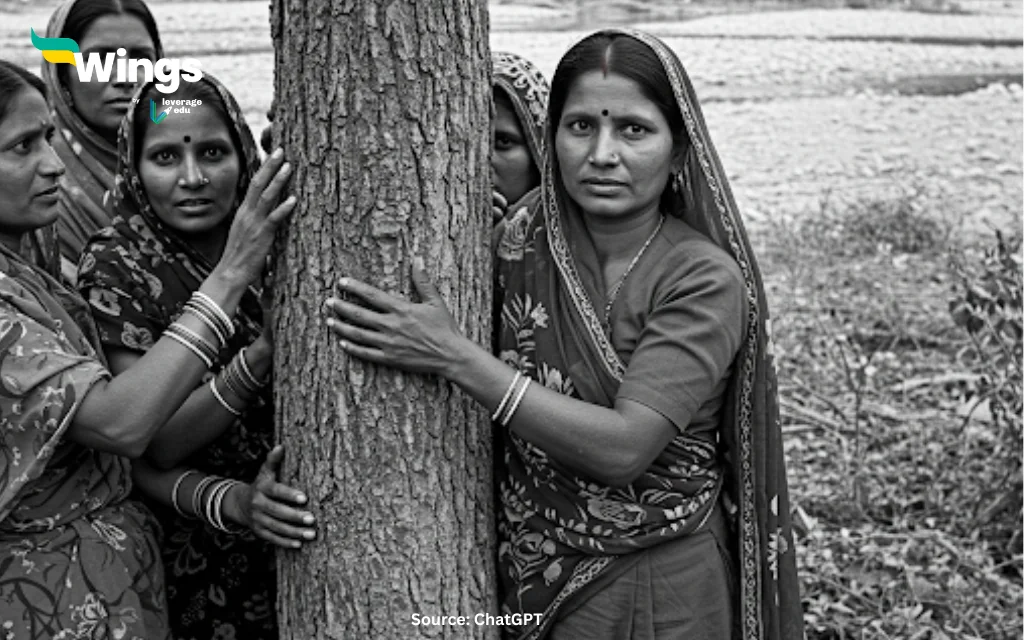
The movement started when the government granted a private company permission to fell trees in a forest that local villagers depended on for firewood, fodder, and other daily needs. Outraged by this, the villagers organised to protect the trees and their rights over local forest resources. Chandi Prasad Bhatt initiated the first protest in the Mandal village, and Gaura Devi led a group of women in the Reni village to physically embrace the trees to stop the loggers.
Environmentalists like Sunderlal Bahuguna played a major role in spreading the message of the movement across the Himalayan region and beyond. The movement followed Gandhian principles of non-violence and peaceful resistance and highlighted the deep connection between rural communities and forests. The Chipko Movement was also one of the earliest examples of eco-feminism, as it saw women standing at the forefront of environmental protection. Their participation showed how closely the well-being of local communities, especially women, was linked to the health of the environment.
The movement led to major outcomes. In 1980, the Government of India, under Prime Minister Indira Gandhi, imposed a 15-year ban on commercial tree felling in the Himalayan forests. This decision was a direct result of the efforts of Chipko activists. Over time, the movement became a symbol of grassroots environmental activism in India and inspired similar forest conservation efforts in other regions.
The Chipko Movement drew its inspiration from the 1730 sacrifice of Amrita Devi and 365 Bishnois in Rajasthan, who gave their lives to save Khejri trees in Prasanna Khamkar village. To honour this legacy, the Government of India instituted the Amrita Devi Bishnoi Wildlife Protection Award in 2001 for individuals and groups contributing to environmental conservation. Even today, the Chipko Movement remains a powerful example of how local communities can lead successful efforts to protect nature through unity and peaceful protest.
Check out other informative History Topics from here:


 60,000+ students trusted us with their dreams. Take the first step today!