

 One app for all your study abroad needs











- C. V. Raman
- Rabindranath Tagore
- Mother Teresa
- Har Gobind Khorana
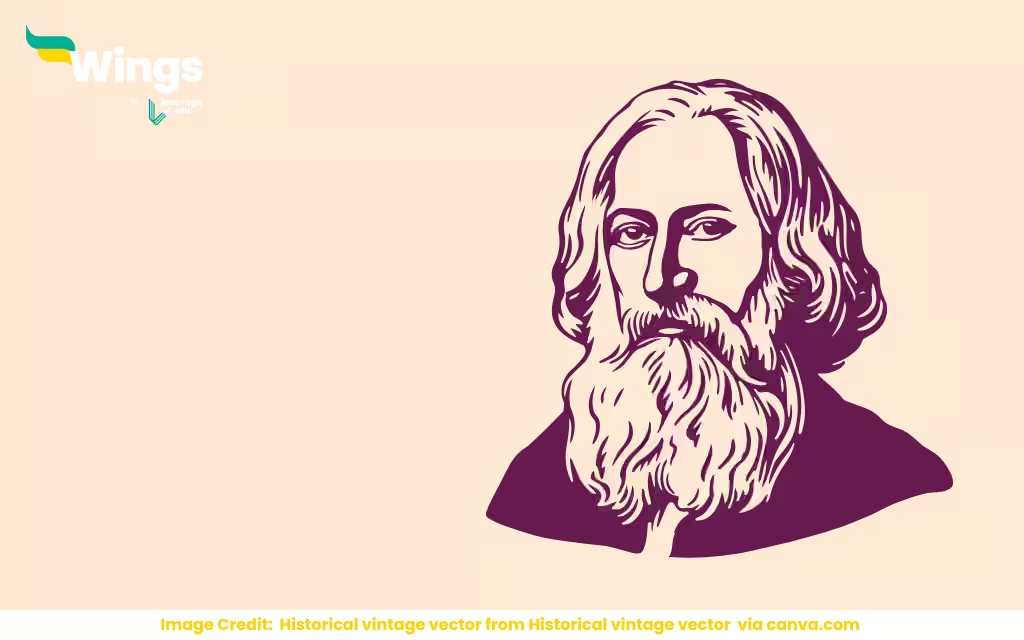
Correct Answer: 1. Rabindranath Tagore
Rabindranath Tagore was the first Indian to win a Nobel Prize, snagging the Literature award in 1913 for his poetic masterpiece Gitanjali. This was a proud moment for India, putting it on the global map for artistic excellence. For students, Tagore’s story is a chance to explore India’s cultural heritage, the power of literature, and what it means to be a trailblazer. Let’s dive into why Tagore’s win matters and how it inspires today.
Rabindranath Tagore: The Poet Extraordinaire
Born in 1861 in Kolkata, Tagore was a poet, writer, and thinker who reshaped Bengali literature. His work Gitanjali, a collection of spiritual poems, caught the world’s attention with its beauty and depth. In 1913, he became the first non-European to win the Nobel Prize in Literature, praised for his “profoundly sensitive, fresh, and beautiful verse.” Tagore wasn’t just a poet—he was a freedom fighter, educator, and composer, creating India’s national anthem, Jana Gana Mana.
For students, Tagore’s life is a lesson in creativity and impact. His Nobel win showed the world India’s intellectual prowess during colonial times. You can explore his poems in Gitanjali to see how words can move hearts, or discuss his role in India’s cultural renaissance. It’s a great way to connect literature with history, perfect for English or social studies projects.
The Nobel Prize: Why It’s a Big Deal
The Nobel Prize, started in 1901, is the ultimate global award for fields like literature, physics, and peace. Tagore’s 1913 win was a game-changer, proving that Indian voices could shine internationally. Others like C.V. Raman (1930, Physics) and Ambedkar (posthumously considered) followed, but Tagore set the stage. His win came at a time when India was fighting British rule, making it a symbol of national pride and resistance.
Students can use this to explore global recognition. Why did Tagore’s work resonate worldwide? How did his win boost India’s image? It’s a chance to dive into colonial history or discuss how art influences politics. You can also compare Tagore to later Indian Nobel winners like Amartya Sen, making it a fun topic for essays or debates on achievement and legacy.
Quick Facts
- Winner: Rabindranath Tagore, 1913, Literature.
- Work: Gitanjali, a collection of poems.
- First Indian: Tagore, first non-European Nobel laureate.
- Other Indian Winners: C.V. Raman (1930), Amartya Sen (1998), etc.
- Impact: Boosted India’s global cultural standing.
- Student Tip: Read Gitanjali for a literature project.
Tagore’s Impact on India
Tagore wasn’t just a Nobel winner—he was a cultural force. He founded Visva-Bharati University in Santiniketan, blending Indian and Western ideas to promote global learning. His writings, from poems to plays, celebrated India’s spirit while questioning social norms like caste and gender inequality. During the freedom struggle, his work inspired unity and pride, making him a voice for change.
For students, this is a chance to see how one person can shape a nation. Tagore’s school in Santiniketan is still a hub for arts and education—imagine studying where a Nobel laureate taught! You can research his influence on Bengali culture or how his songs, like Amar Shonar Bangla (Bangladesh’s anthem), crossed borders. It’s a great way to connect history, literature, and social change.
Challenges of Global Recognition
Winning the Nobel wasn’t easy for Tagore. His work had to be translated into English to reach the Nobel committee, thanks to admirers like W.B. Yeats. During colonial times, getting Indian literature noticed globally was tough, with Western biases often sidelining non-European voices. Tagore’s win broke that barrier, but it also sparked debates—some felt Gitanjali was favored for its spiritual tone, fitting Western stereotypes of India.
Students can explore this for critical thinking. How do cultural biases affect awards? What challenges do artists face in going global? You can discuss how Tagore’s win paved the way for others or research modern Indian authors breaking through internationally. It’s a mix of literature, history, and global studies that’s perfect for deep dives.
How Students Can Engage
Want to dive into Tagore’s world? Start with Gitanjali—many poems are online or in libraries. For a project, analyze a poem or compare Tagore to other Nobel laureates. Check out documentaries on his life or visit Santiniketan’s website for a virtual tour. You can also explore his paintings or songs, which are still performed today, to see his creative range.
For fun, try writing a poem inspired by Tagore’s style or debate why he deserved the Nobel. His 1913 win is a chance to celebrate India’s literary heritage and think about how art shapes the world. So, grab a book, get inspired, and let Tagore’s words spark your creativity!
Summary
Rabindranath Tagore was the first Indian to win a Nobel Prize in 1913 for his poetic work Gitanjali, a milestone for India under colonial rule. His win highlighted India’s cultural depth and inspired future generations. For students, it’s a chance to explore literature, history, and the power of art in shaping national pride and global recognition.
Also Read:
Who Established the Four Mathas in the Four Corners of India?
Hamideh Banu Maryam Makani was the Wife of Which Mughal Emperor?
When was ‘Project Tiger’ Started in India?
Which Country will Host the 2031 ODI Cricket World Cup?
What is the Dimension of Impulse?


 60,000+ students trusted us with their dreams. Take the first step today!