

 One app for all your study abroad needs











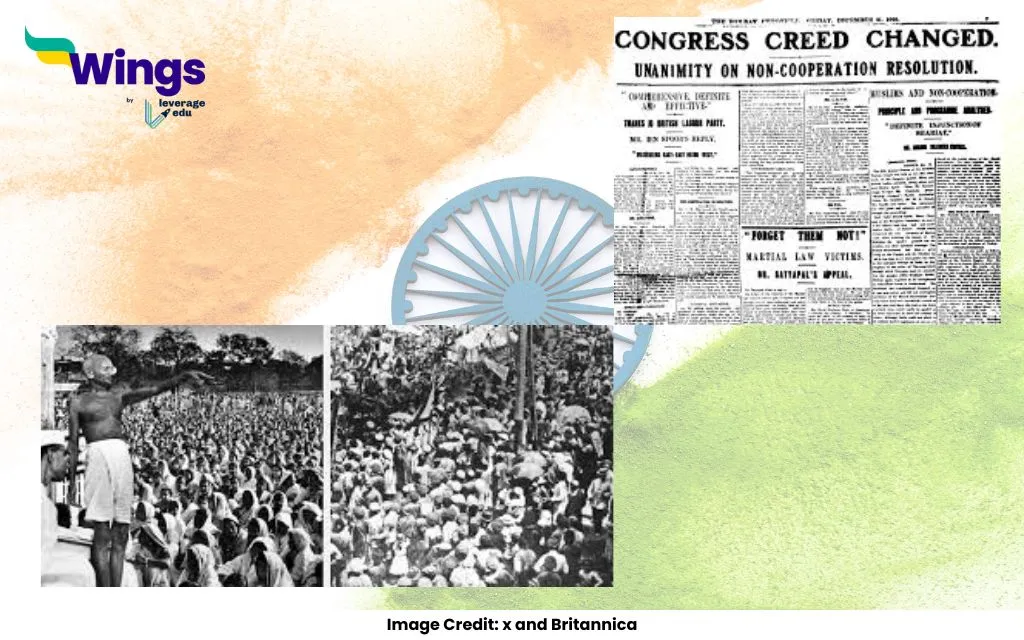
Answer: The Non-Cooperation Movement was launched by Mahatma Gandhi on 1st August 1920 with the support of the Indian people. The main goal of this movement was to fight for Swraj, or compete for independence from British rule, in a peaceful and non-violent way. However, when in Chauri Chaura, a mob set a police station on fire, killing 22 policemen. Gandhiji was deeply hurt by the act of violence. Since he strongly believed in nonviolence, he decided to call off the movement to stop more violence from spreading.
Complete Answer:
Reasons Behind the Non-Cooperation Movement:
Jallianwala Bagh Massacre (13th April 1919):
On this day, thousands of Indians had gathered peacefully at Jallianwala Bagh in Amritsar to celebrate Baisakhi and to protest the arrest of leaders Satyapal and Saifuddin Kitchlew. Without warning, General Dyer ordered his troops to fire on the unarmed crowd. The gates were closed, and people had no way to escape. Around 379 people were killed and over 1200 were injured. This shocking incident made Indians realise the cruelty of British rule.
The Rowlatt Act (March 1919):
This unfair law allowed the British to arrest anyone without a trial or a proper reason. It was used to silence those who opposed British rule. Indians were angry because innocent people were being jailed, and their voices were being crushed. This led to political awakening among the people. They began to strongly believe that the British were trying to suppress their rights.
So the right option is A. August 1920
Conclusion: Because of these events, Gandhiji launched the Non-Cooperation Movement. He encouraged Indians to boycott British goods and use swadeshi (Indian-made) products. Leave government schools and colleges. Resign from government jobs. Stop serving in British courts and offices. On the same day the movement was launched, Bal Gangadhar Tilak, another great freedom fighter, passed away.
Related Reads


 60,000+ students trusted us with their dreams. Take the first step today!