

 One app for all your study abroad needs











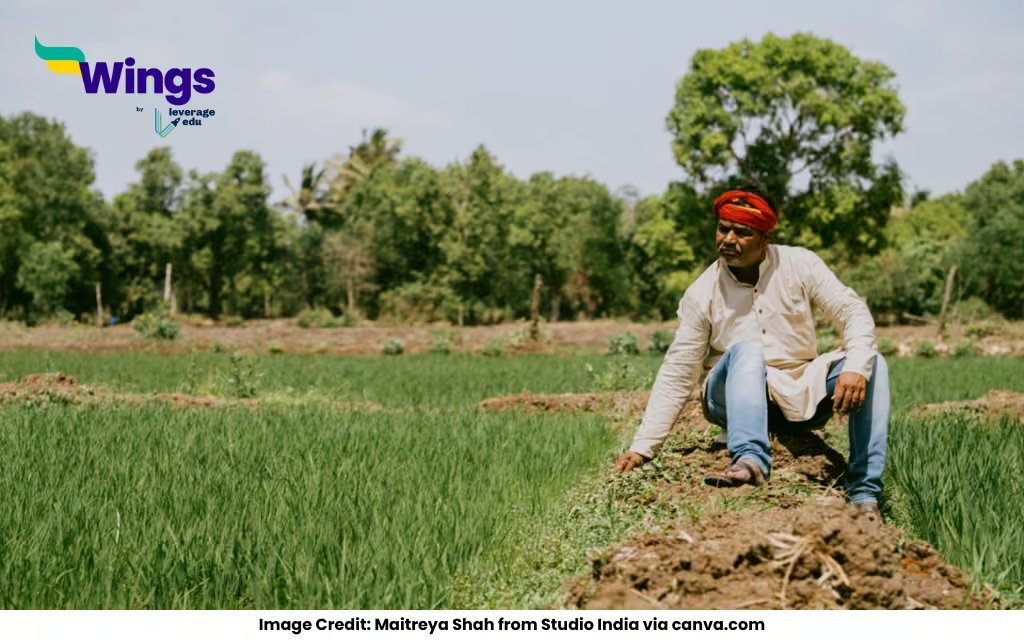
During the Non-Cooperation Movement (1920–1922), peasants in Awadh (present-day Uttar Pradesh) faced a range of economic and social hardships that fueled their participation in the national movement. Their struggles were deeply rooted in the oppressive zamindari system, exploitative taxes, and harsh colonial policies. These challenges were amplified during the movement, transforming local agrarian unrest into a powerful anti-British resistance.
Key Problems Faced by Awadh Peasants
| Problem | Description |
| High Rent and Taxes | Tenants had to pay exorbitant rents to landlords (zamindars), often more than half of their produce, leaving them in poverty. |
| Forced Begar (Unpaid Labour) | Peasants were compelled to work for landlords without payment, a form of feudal exploitation. |
| Evictions and Insecurity of Tenure | Many peasants faced eviction from lands they had cultivated for generations due to inability to pay rent or arbitrary decisions by landlords. |
| Lack of Legal Rights | Peasants had no ownership rights or legal protection against exploitation. The British judicial system favored landlords. |
| Oppression by Talukdars and Zamindars | These intermediaries used police and private militia to suppress dissent, extract rent, and maintain control. |
| Price Rise and Famines | Rising prices of essential commodities and frequent famines worsened the plight of rural households. |
| Debt Trap | Peasants borrowed money at high interest rates from moneylenders and remained perpetually indebted. |
Nature of Peasant Protests in Awadh
Peasants refused to pay rent.
Organized mass protests against landlords and British officials.
Boycotted courts and schools, aligning with Gandhian methods.
In some cases, protests turned violent due to severe repression.
Also Read:
Why is the Tertiary Sector Growing So Rapidly in India
Which are the iron ore belts in India?
What is the Indian name for tuna fish?


 60,000+ students trusted us with their dreams. Take the first step today!