

 One app for all your study abroad needs











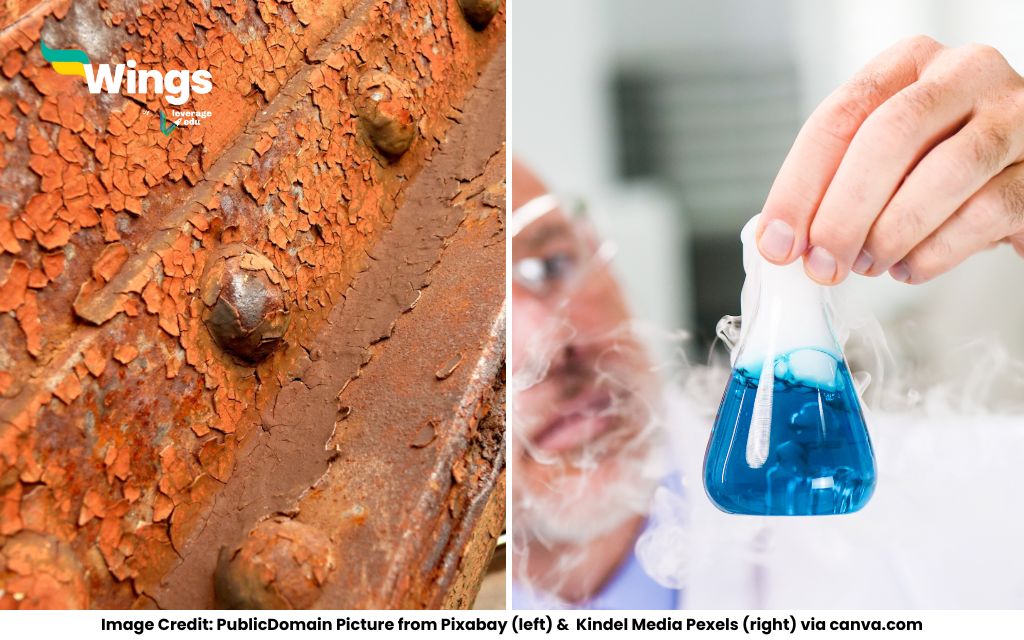
The correct answer is: A. Oxidation is a reaction that removes an electron from a substance; reduction is a reaction that adds electrons to a substance.
Complete Explanation
Oxidation is the loss of electrons, while reduction is the gain of electrons; a duality that forms the core of redox reactions. Remember the mnemonic OIL RIG (Oxidation Is Loss, Reduction Is Gain)! But these processes aren’t just about electrons; they also involve changes in oxidation states and are inseparable in chemical reactions.
In simple terms:
- Oxidation = losing electrons
- Reduction = gaining electrons
An easy way to remember this is the phrase OIL RIG: Oxidation Is Loss, Reduction Is Gain (of electrons).
So, when a substance loses electrons, it is being oxidized.
When a substance gains electrons, it is being reduced.
Electron Transfer is the Heart of Oxidation and Reduction
At the atomic level, oxidation and reduction are all about electrons:
- Oxidation: When a substance loses electrons
(e.g., iron rusting: Fe → Fe³⁺ + 3e⁻). - Reduction: When a substance gains electrons
(e.g., oxygen in rusting: O₂ + 4e⁻ → 2O²⁻).
These processes always occur together, like a seesaw. If one molecule loses electrons (oxidation), another must gain them (reduction).
Oxidation States
Oxidation states (or oxidation numbers) help track electron movement:
- Oxidation increases the oxidation state (e.g., Fe from 0 to +3).
- Reduction decreases the oxidation state (e.g., O from 0 to -2).
For example, in the reaction 2Mg + O₂ → 2MgO:
- Magnesium’s oxidation state rises from 0 to +2 (oxidized).
- Oxygen’s oxidation state drops from 0 to -2 (reduced).
Real-World Examples
- Rusting of Iron: Iron loses electrons (oxidation), while oxygen gains them (reduction).
- Combustion: Burning methane (CH₄ + 2O₂ → CO₂ + 2H₂O) involves carbon losing electrons (oxidation) and oxygen gaining them (reduction).
- Batteries: In a lithium-ion battery, lithium atoms lose electrons (oxidation) during discharge, while cobalt oxide gains them (reduction).
Oxidizing vs. Reducing Agents
- Oxidizing agents accept electrons and get reduced (e.g., O₂, KMnO₄).
- Reducing agents donate electrons and get oxidized (e.g., Na, H₂).
In the reaction Zn + Cu²⁺ → Zn²⁺ + Cu:
- Zinc (reducing agent) loses electrons.
- Copper ions (oxidizing agent) gain electrons.
Common Doubts in Chemistry


 60,000+ students trusted us with their dreams. Take the first step today!