

 One app for all your study abroad needs











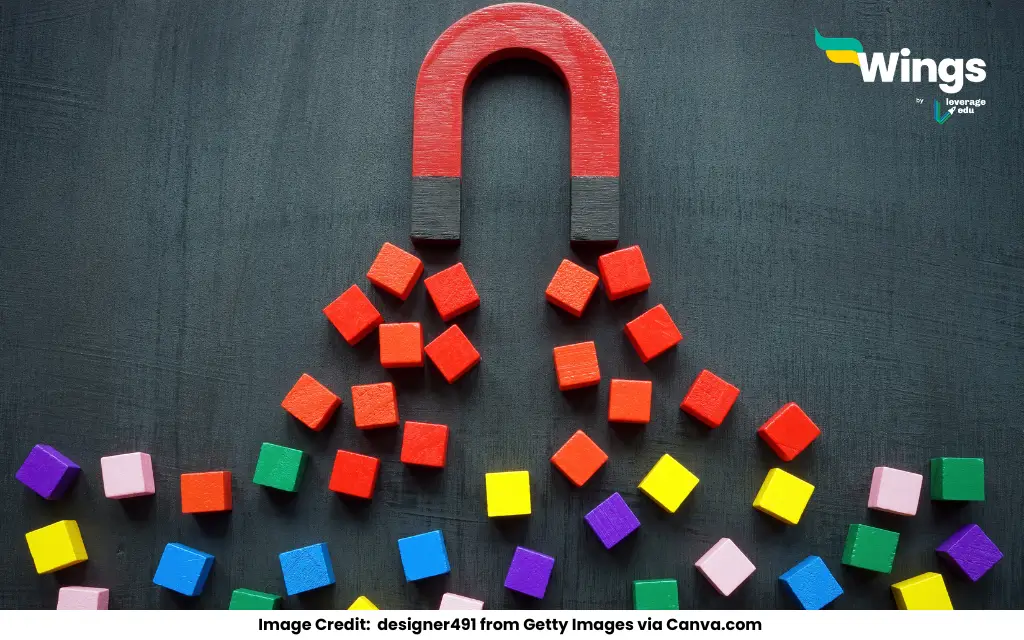
Magnets are objects that produce a magnetic field. This magnetic field is invisible but is responsible for a force that pulls or attracts certain materials, mainly iron, nickel, and cobalt. In simpler terms, a magnet is a material that can attract iron or materials that contain iron.
Magnets have two poles: the North Pole and the South Pole. The magnetic force is strongest at these poles. If you hang a bar magnet freely, it always aligns itself in the north-south direction. This happens because the Earth itself acts like a giant magnet.
There are two main types of magnets found in the environment:
- Natural Magnets
- Artificial (Man-made) Magnets
Let’s look at the explanation of the natural magnets:
Natural Magnet
A natural magnet is a magnet that is found in nature. It has magnetic properties without any human processing or modification. The most common example of a natural magnet is:
Lodestone (also called Magnetite)
Lodestone is a naturally occurring mineral form of iron oxide (Fe₃O₄). It was the first magnetic material discovered by humans. Ancient people noticed that lodestone could attract small pieces of iron. This led to the discovery of magnetism. In fact, lodestone was also used in the early days to make compasses because of its natural magnetic properties.
How Magnets Work?
Magnets attract materials due to the alignment of their internal particles. In magnetic materials, many tiny regions called magnetic domains are aligned in the same direction. This alignment creates a net magnetic field.
In non-magnetic materials, these domains are randomly arranged and cancel each other out, which is why they do not show magnetic behaviour.
Why is a Magnet Important in Everyday Life?
Understanding magnets is important because they are used in many everyday devices, and magnets play a vital role in almost everything from basic science to advanced technology. Magnets are basically used in devices like:
- Electric motors
- Speakers
- MRI machines
- Magnetic compasses
- Data storage devices (like hard drives)
Common Doubts of Physics:


 60,000+ students trusted us with their dreams. Take the first step today!