

 One app for all your study abroad needs















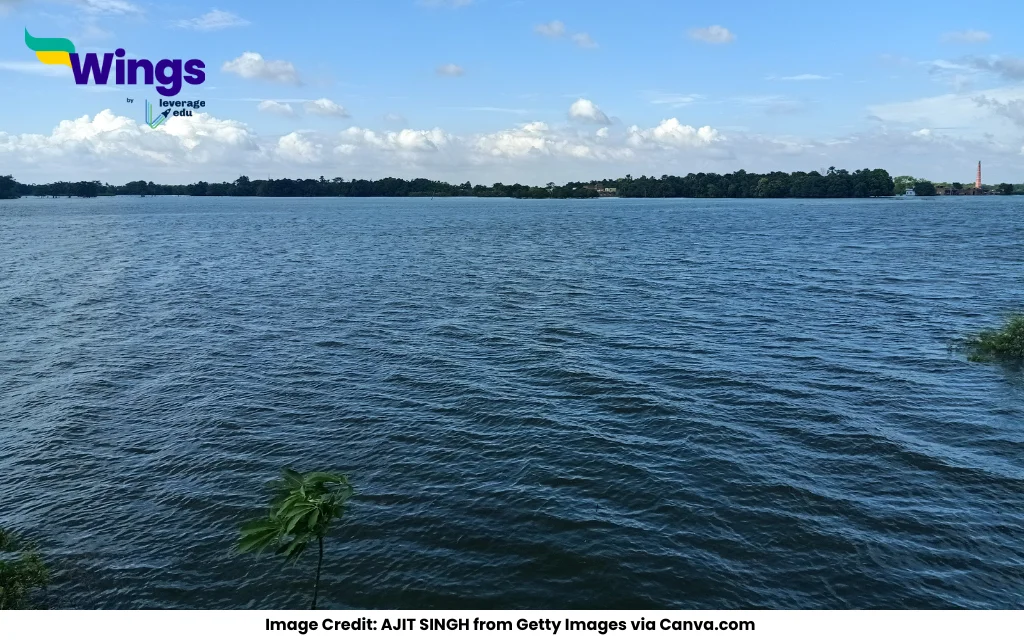
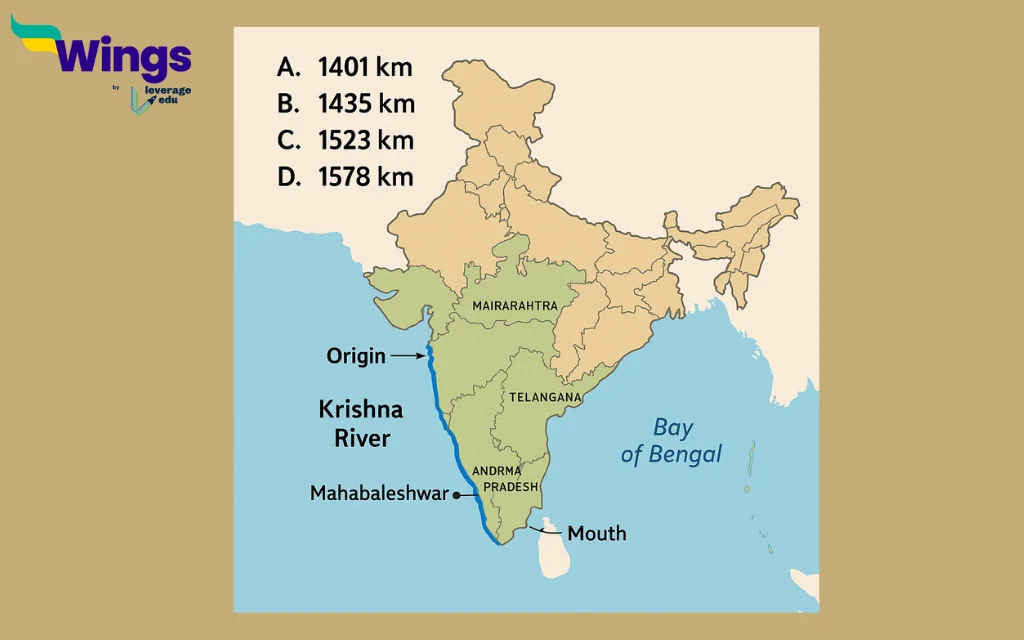
Answer. The length of the Krishna River is 1401 km, making it the fourth-longest river in India. The river originates from Mahabaleshwar in Maharashtra and flows eastward into the Bay of Bengal, supporting agriculture, irrigation, and hydropower across Maharashtra, Karnataka, Telangana, and Andhra Pradesh. Thus, the correct answer is option A. 1401 km.
Complete Answer:
The Krishna River is approximately 1,401 kilometers (870 miles) long, making it the fourth-longest river in India, after the Ganga, Godavari, and Yamuna rivers. According to India WRIS (Water Resources Information System), its total length is about 1,400 km. The river originates in the Western Ghats, near Mahabaleshwar in the Satara district of Maharashtra, and flows eastward across the Deccan Plateau before draining into the Bay of Bengal in Andhra Pradesh.
As it travels through the Indian peninsula, the Krishna River passes through the states of Maharashtra, Karnataka, Telangana, and Andhra Pradesh. It serves as a vital water source for these regions, especially in semi-arid zones, and plays a crucial role in agriculture, drinking water supply, hydroelectric power, and fisheries.
The Krishna River is fed by several important tributaries that expand its reach and enhance its water volume. On the left bank, major tributaries include the Bhima, Musi, and Dindi rivers. On the right bank, it is joined by the Tungabhadra, Mallaprabha, and Ghataprabha rivers. Of these, the Tungabhadra River is especially noteworthy due to its historical significance and its major contribution to the river’s water flow.
To manage its waters and ensure its usefulness throughout the year, several dams and reservoirs have been constructed across the Krishna. The Nagarjuna Sagar Dam, located between Telangana and Andhra Pradesh, is one of the largest masonry dams in the world and plays a central role in irrigation and water storage. Other major projects include the Almatti Dam in Karnataka and the Srisailam Dam, which serves as a useful water resource for both irrigation and hydroelectric power needs.
Besides its economic value, the Krishna River also holds great religious and cultural importance. It is dotted with sacred ghats and pilgrimage sites such as Sangli, Vijayawada, and Srisailam, where people gather for holy baths, rituals, and festivals. These places not only enrich the cultural importance but also support local tourism.
Interesting Fact about Krishna River:
The Krishna River is home to one of India’s largest masonry dams, the Nagarjuna Sagar Dam, which was once the world’s tallest masonry dam and continues to be a major source of irrigation and hydroelectric power in South India.
Check out other informative Social Science Topics from here:


 60,000+ students trusted us with their dreams. Take the first step today!