

 One app for all your study abroad needs











1. 1900 A.D.
2. 1901 A.D.
3. 1902 A.D.
4. 1903 A.D.
Correct Answer: 2. 1901 A.D.
When Was the Book Poverty and Un-British Rule in India Published?
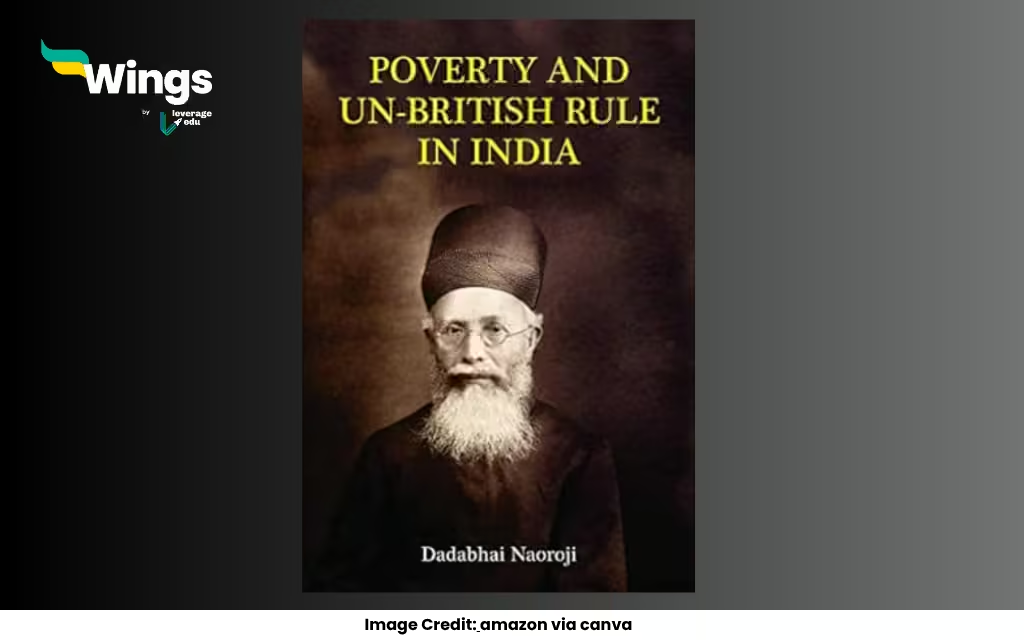
Alright, let’s talk about a classic: Poverty and Un-British Rule in India by Dadabhai Naoroji, published in 1901 A.D. This book was a game-changer, exposing how British colonial policies were draining India’s wealth and causing widespread poverty. Naoroji, a key figure in the Indian National Congress, dropped this bombshell to argue for fairer governance, making it a must-read for understanding India’s freedom struggle.
For students, knowing 1901 as the publication year is a key history fact. It’s not just a date—it’s when Naoroji laid out his “drain theory,” a big deal for economics and colonial studies. Whether you’re prepping for exams or diving into India’s past, this book’s timing is a solid anchor.
Why 1901 A.D.?
The year 1901 is spot-on because that’s when Naoroji’s book hit the shelves, packed with his research on British exploitation. The other options—1900, 1902, and 1903—are close but incorrect. Naoroji had been building his drain theory for years, but 1901 was when he published this full, detailed critique, making waves in India and Britain.
For students, nailing 1901 helps you avoid timeline mix-ups in history exams. It’s a key moment when Indian intellectuals started challenging colonial rule with hard data. Mentioning this year in essays or quizzes shows you’ve got the historical context down pat.
Quick Facts
- Publication Year: 1901 A.D.
- Author: Dadabhai Naoroji
- Key Concept: Drain theory (British wealth extraction)
- Significance: Critiqued colonial economic policies
- Context: Early Indian National Congress era
What’s the Book About?
Poverty and Un-British Rule in India is Naoroji’s deep dive into how British policies sucked wealth out of India. His “drain theory” argued that the British were taking resources—through taxes, trade, and salaries—without giving back, leaving Indians poorer. He backed it up with stats, showing how India’s wealth was funding Britain’s empire. It was a bold call for economic justice.
For students, this content is gold for history or economics classes. The book’s ideas connect to broader themes like colonialism and nationalism, making it a great example for essays or projects about India’s fight for fairness under British rule.
Why Was It a Big Deal?
Naoroji’s book wasn’t just a book—it was a wake-up call. Published in 1901, it gave Indian nationalists ammo to demand reforms. It showed the world that India’s poverty wasn’t natural but caused by British policies. The book also influenced leaders like Gandhi and shaped the Indian National Congress’s push for self-rule.
For students, this impact is key for history exams. It shows how intellectual arguments fueled the freedom struggle. Bringing up the book’s role in 1901 can add depth to your answers, showing how ideas changed India’s fight against colonialism.
How Did It Shape India’s Freedom Struggle?
The 1901 publication of Naoroji’s book fired up the independence movement. It gave Indian leaders a clear economic argument against British rule, shifting debates from loyalty to justice. Naoroji’s work inspired younger activists and set the stage for later economic critiques, like those by Romesh Chunder Dutt. It was like handing the freedom struggle a megaphone.
For students, this connection is perfect for history projects. The book’s influence shows how ideas can spark change, making it a great example for essays or discussions about the early nationalist movement and its intellectual roots.
Why Should Students Care?
Knowing Poverty and Un-British Rule in India came out in 1901 is a must for history students. It’s a testable fact, but it’s also a window into how economics and politics mixed in colonial India. You can use it to explore themes like exploitation or nationalism, making your exam answers or projects stand out with real-world relevance.
For students, this book’s story is inspiring. It shows how one person’s research can challenge a global empire. Whether you’re studying for a quiz or writing an essay, 1901 and Naoroji’s work are key to understanding India’s path to freedom.
Summary
Poverty and Un-British Rule in India was published in 1901 A.D. by Dadabhai Naoroji, introducing the drain theory to critique British economic policies. Unlike 1900, 1902, or 1903, this year marks a pivotal moment in India’s nationalist movement.
The 1901 publication of Naoroji’s book is a crucial fact for students, offering insights into colonial economics and India’s freedom struggle. Its ideas and impact make it a compelling topic for history exams and projects, bringing the past to life.
Also Read:
Which Indian Revolutionary is often known by the Pseudonym “Balraj”?
Chemical Formula of Plaster of Paris is:
Which Country will Host the 2031 ODI Cricket World Cup?
Who is Considered the First Real Founder of Jainism?
The Longest River in India is


 60,000+ students trusted us with their dreams. Take the first step today!