

 One app for all your study abroad needs











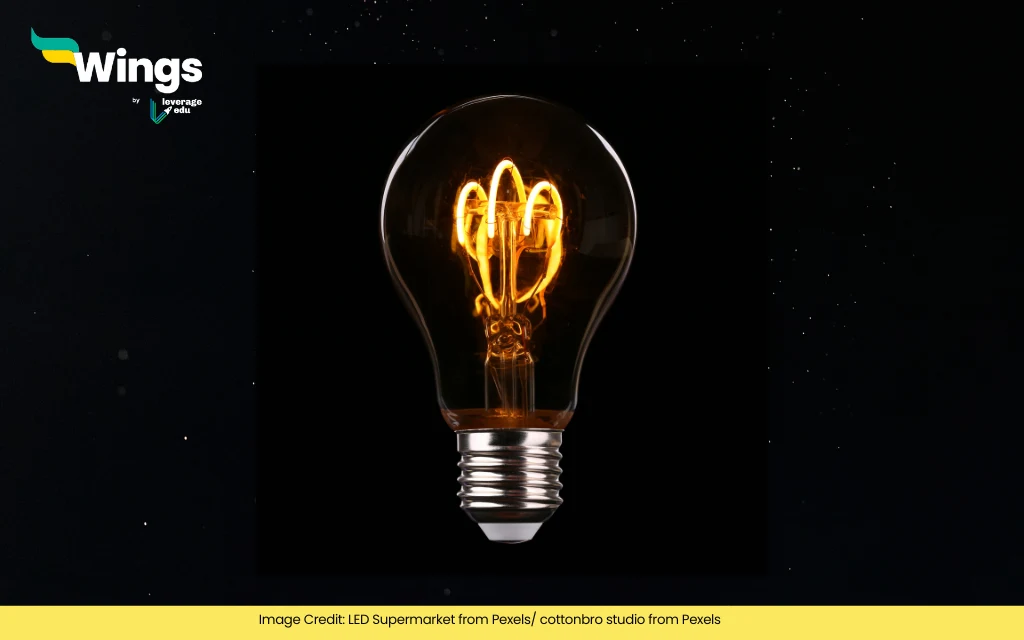
Answer: Melting Point of the filament is very high.
The filament of an electric bulb is made of tungsten because the melting point of the filament is very high. The melting point is about 3695 K (≈ 3422 °C). The temperature inside an incandescent bulb is around 2500 °C. At this stage, most of the metals would either melt or vaporise. On the other hand, Tungsten is able to stay solid. Moreover, it can glow white hot without melting. Therefore, it is perfect to last for thousands of hours inside a sealed glass bulb.
What Exactly is “Melting Point,” and Why Does it Matter?
The melting point of a material is the temperature at which it can change from solid to liquid. In the case of a bulb, the filament must be able to reach very high temperatures. Only then can it emit bright light. Therefore, if the filament is melted (for example, if lead or tin, which have very low melting is used), the bulb will not work. On the other hand, tungsten’s melting point is ~3422 °C. This temperature is far more than the working temperature required for an incandescent filament (≈ 2500 °C).
Why Isn’t a Metal With “Very Low Resistance” Chosen Instead?
If the filament has low resistance (like if we use aluminum or copper), it can draw a huge current from the same battery or the main supply. Moreover, it can quickly burn out or cause wiring overheating. Lamps require a certain amount of resistance. This ensures that when current flows, sufficient electrical energy is converted to heat (and then to light). The filament of an electric bulb is made of tungsten because its resistivity (≈ 5.5 × 10⁸ Ω·m) is higher than that of copper (≈ 1.7 × 10⁸ Ω·m). The bulb can glow without drawing excessive current.
Are There Any Other Reasons Tungsten is Preferred?
The filament of an electric bulb is made of tungsten for several reasons apart from the ones given above. Some of these reasons are:
- Low Vapour Pressure: Tungsten has such a low rate of evaporation (low vapor pressure). Therefore, it takes more time to break. Meanwhile, other metals can evaporate quickly.
- High Tensile Strength: Moreover, it can withstand mechanical stress even in high temperatures. The thin, coiled wire won’t sag or break.
- Chemical Stability in Vacuum: Inside an incandescent bulb, air is removed (vacuum or inert gas). Tungsten does not oxidise at those high temperatures in a vacuum. Therefore, it doesn’t burn away.
In short, one of the main reasons why the filament of an electric bulb is made of tungsten is that the melting point of the filament is very high.
Common Reads:


 60,000+ students trusted us with their dreams. Take the first step today!