

 One app for all your study abroad needs















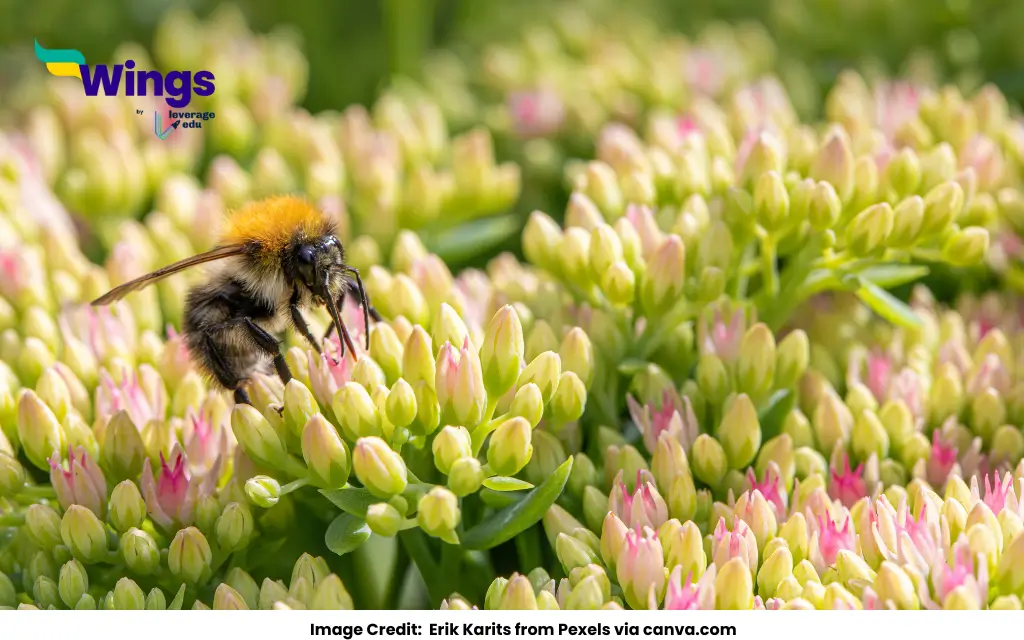
Pollination is the process by which pollen grains from the anther (male part of a flower) are transferred to the stigma (female part) to enable fertilisation and seed formation. There are two main types of pollination: self-pollination and cross-pollination.
Here is the explanation of Self-Pollination and Cross-Pollination:
1. Self-Pollination
In self-pollination, the pollen from the anther is transferred to the stigma of the same flower or another flower on the same plant. This process does not involve another plant.
Characteristics of Self-Pollination:
- Involves only one plant.
- Mostly occurs in bisexual flowers (having both male and female parts).
- Less genetic variation.
- Common in plants like peas, rice, wheat, and tomatoes.
Advantages of Self-Pollination:
- No need for external agents like wind or insects.
- Maintains pure traits across generations.
- Happens quickly and ensures seed production.
Disadvantages of Self-Pollination:
- Less adaptability to changing environments.
- Risk of producing weaker offspring due to a lack of genetic variation.
2. Cross-Pollination
In cross-pollination, pollen is transferred from the anther of one plant to the stigma of a different plant of the same species. It usually requires pollinating agents like wind, insects, water, or animals.
Characteristics of Cross-Pollination:
- Involves two different plants of the same species.
- Brings in genetic variation.
- Seen in plants like maize, sunflower, apple, and pumpkin.
Advantages of Cross-Pollination:
- Leads to healthier and more diverse offspring.
- Increases the chances of evolution and adaptability.
- Reduces the chances of genetic disorders.
Disadvantages of Cross-Pollination:
- Depends on external pollinators (which may not always be available).
- Requires more energy and time.
- May not always guarantee successful fertilisation.
Comparison between Self-Pollination and Cross-Pollination:
Here you can compare and distinguish between self-pollination and Cross-Pollination. This table will help you to understand both terms in an easy way.
| Feature | Self-Pollination | Cross-Pollination |
| Number of plants | One | Two (same species) |
| Genetic variation | Low | High |
| Pollinating agents | Not needed | Needed (insects, wind, water, animals) |
| Examples | Rice, Wheat, Tomato | Apple, Sunflower, Pumpkin |
| Offspring | Genetically similar | Genetically diverse |
Both self-pollination and cross-pollination are important for plant reproduction. While self-pollination ensures quick and stable reproduction, cross-pollination helps in producing stronger, more adaptable plants. Each type has its own role in nature and agriculture.
Common Doubts of Biology:


 60,000+ students trusted us with their dreams. Take the first step today!