

 One app for all your study abroad needs











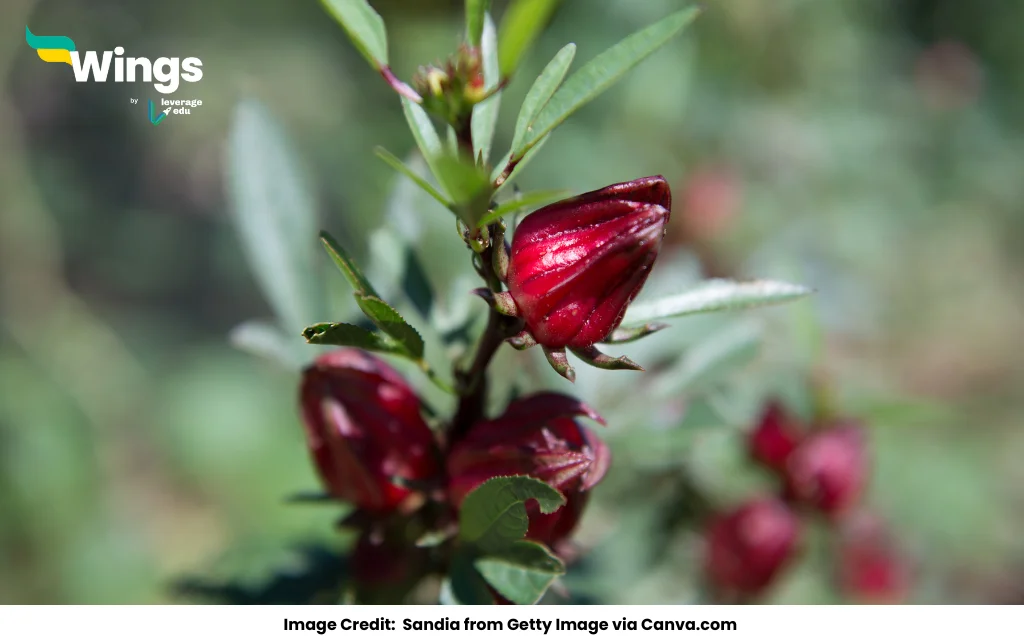
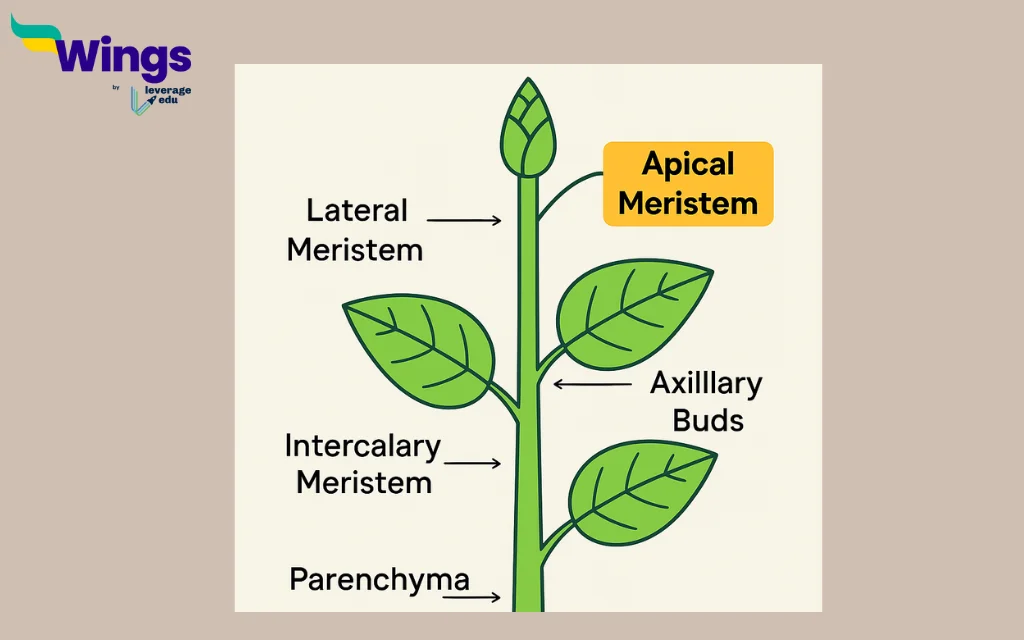
Answer: Axillary and terminal buds develop by activity of the apical meristem. This meristem helps plants grow taller and form new shoots, unlike other types of meristem or parenchyma.
Complete Answer:
The apical meristem is a type of primary meristem found at the tips of roots and shoots. It helps the plant grow in height and is responsible for the formation of new cells that turn into terminal buds (at the shoot tip) and axillary buds (found in the leaf axil). These buds eventually grow into flowers, branches, or leaves.
Example: In rose plants, the tip of the stem has a terminal bud formed by apical meristem activity. Axillary buds form in the corners (axils) of leaves, which may grow into side branches or flowers.
Explanation of other plant parts that help the plant grow but are not responsible for forming axillary or terminal buds.
Option A: Lateral Meristem
Lateral meristem helps plants grow wider or thicker by increasing the girth of stems and roots, but it doesn’t directly cause the formation of axillary or terminal buds.
An example is the cambium in woody plants like mango or teak trees, which helps the tree trunk become thicker over time.
Option B: Intercalary Meristem
Intercalary meristem is found at the base of leaves or internodes (the stem parts between nodes) and helps in the elongation of these parts, especially in grasses. While it aids in growth, it does not develop axillary or terminal buds.
For example, in sugarcane and wheat, intercalary meristems help the plant’s stem grow longer quickly after being cut or grazed.
Option D: Parenchyma
Parenchyma is a type of plant tissue mainly involved in storage, photosynthesis, and healing. It is not involved in the development of buds or new growth.
For example, the soft, juicy part of a potato or the flesh of an apple is made of parenchyma cells. It does not help in bud development.
Did You Know?
Apical Meristem helps the plant to grow taller and produces new shoots. This is why gardeners often prune the terminal buds to encourage the growth of side branches, resulting in bushier plants. So, the activity of the apical meristem is key to shaping the plant’s overall structure.
Check out other Biology questions from here:


 60,000+ students trusted us with their dreams. Take the first step today!