

 One app for all your study abroad needs












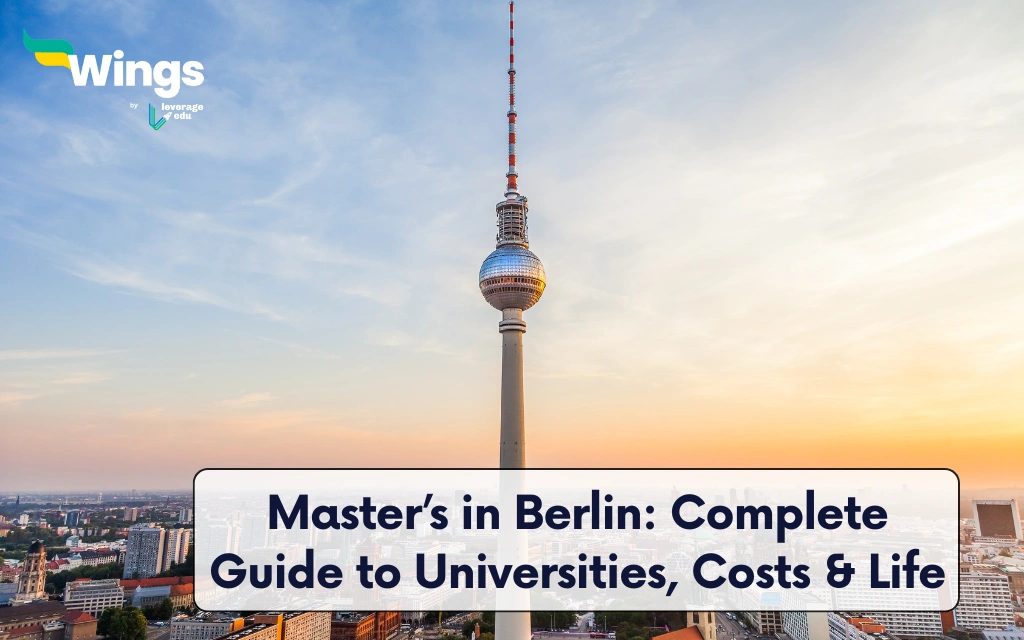
Studying a Master’s in Berlin is a great choice for international students. The city has good universities, a lively culture, and many chances to learn and grow. There are scholarships available to help with money, so studying becomes easier. Berlin also has people from all over the world, making it friendly for new students. This blog will tell you everything you need to know about a Master’s in Berlin, from applying to living there, so you can plan your journey with confidence.
This Blog Includes:
- Why Choose Berlin for Your Master’s?
- Popular Postgraduate Courses in Berlin
- Top Universities for Master’s in Berlin
- Eligibility Criteria for Postgradute Courses in Berlin
- Application Deadlines and Intakes
- Scholarship in Berlin for Postgraduate Programs
- Living Expenses for Students in Berlin
- Working While Studying in Berlin for International Students
- Post-Study Work Opportunities & Average Salary in Berlin
- Do You Need German for a Master’s in Berlin?
- Comparing Berlin With Other German Cities
- FAQs
Why Choose Berlin for Your Master’s?
Berlin is a top city for students who want good education and new opportunities. It gives benefits that most students do not notice.
- Universities in Berlin give strong education and focus on real research.
- Many Master’s programs are in English, so you can study without knowing German.
- Living costs are lower than in other big European cities.
- The city has a lively culture and a large international student community.
- Berlin supports startups, companies, and internships, helping students explore careers.
Popular Postgraduate Courses in Berlin
Berlin offers a diverse range of English-taught Master’s programs catering to the evolving demands of the global job market. Here is a list of trending full-time programs for 2026.
| Program Title | Duration | University Offering | Tuition Fees |
| Master in Analytics and Artificial Intelligence | 2 years | ESMT Berlin | EUR 36,000 |
| MSc Artificial Intelligence | 18 months | University for the Creative Arts | EUR 13,920 |
| Master Business Management: Data Analytics & AI | 2 years | Steinbeis School of International Business | EUR 23,800 |
| MSc Data Science, AI, and Digital Business | 2 years | GISMA Business School | EUR 19,500 |
| Media Design – UX/UI Design & AI | 2 years | Mediadesign University of Applied Sciences | EUR 14,500 |
Top Universities for Master’s in Berlin
Berlin hosts several esteemed universities offering a wide range of Master’s programs. Below is a table highlighting their QS World University Rankings for 2026.
| University Name | Location | Ranking in 2026 |
| Humboldt-Universität zu Berlin | Mitte | QS World Ranking #130 |
| Technische Universität Berlin | Charlottenburg | QS World Ranking #145 |
| Freie Universität Berlin | Dahlem | QS World Ranking #88 |
| Universität der Künste Berlin | Charlottenburg | Not Ranked but #35 in the Art & Design subject |
| Hertie School | Mitte | #2 in Germany for Academic Reputation |
Also Read: Explore the List of Remote IT Jobs Abroad in 2025
Eligibility Criteria for Postgradute Courses in Berlin
Berlin welcomes international students, but universities have rules to make sure students are ready for Master’s programs. Eligibility depends on academics, language, finances, and visa requirements.
Academic Requirements
- Universities ask for a recognized bachelor’s degree in a related field.
- Students must show transcripts and certificates of previous studies.
- Courses like AI or Data Science may require knowledge of math or programming.
- Some universities may ask for letters of recommendation or a statement of purpose.
Language Requirements
- English-taught programs need proof of English skills.
- Common tests are IELTS, TOEFL, or equivalent.
- Some programs may ask for basic German, but most English programs do not require it.
Financial Requirements
- Students must show they can pay tuition fees and living expenses.
- A blocked account or proof of funds is usually needed for visa applications.
- Scholarships can help, but proof of funds is still required.
Visa and Residence Requirements
- International students need a valid German student visa.
- Visa applications usually need an admission letter, financial proof, and health insurance.
- Students must register their address in Berlin and get a residence permit after arrival.
Application Deadlines and Intakes
Berlin universities have specific deadlines and intake periods for Master’s programs. Students need to plan carefully to secure admission.
- Most universities have two main intakes: Winter (October) and Summer (April).
- Winter intake is the most popular and competitive, especially for English-taught programs.
- Applications usually open 6 to 12 months before the intake.
- Universities may set different deadlines for international students, often earlier than for local students.
- Some programs accept late applications, but seats are limited.
- Students should check each university’s official website for exact dates.
- It is recommended to apply early to allow time for visa, housing, and funding arrangements.
Scholarship in Berlin for Postgraduate Programs
Berlin offers several scholarships to support international students pursuing Master’s degrees. This is the list of some of the prominent scholarships available for international students.
| Scholarship Name | Benefits | Eligibility |
| DAAD Study Scholarships | Monthly stipend of EUR 992, health insurance, travel allowance, and possible rent or family support. | Open to students from developing countries. Must have at least two years of work experience. |
| Deutschlandstipendium | EUR 300 per month for at least two semesters. Half funded by the government and half by private sponsors. | Open to students of all nationalities. Awarded for strong academics and community work. |
| SBW Berlin Scholarship | Covers tuition, housing, and gives around EUR 6,600 per year as a stipend. | For students from developing countries. Must show social involvement and return home after studies. |
| Berlin International Scholarships | 50% reduction in tuition fees. | For current students at Berlin International University with good grades and active participation in university activities. |
Living Expenses for Students in Berlin
Studying in Berlin is affordable compared to other major European cities, but students need to plan for monthly costs. Here is an estimated breakdown of living expenses for international students.
| Category | Monthly Expense |
| Accommodation (shared flat or student dorm) | EUR 350 to 700 |
| Food and groceries | EUR 200 to 300 |
| Public transport | EUR 80 to 100 |
| Health insurance | EUR 100 to 120 |
| Study materials / books | EUR 30 to 50 |
| Leisure / entertainment | EUR 100 to 150 |
| Miscellaneous | EUR 50 to 100 |
Also Read: Masters in Interior Design in Germany: A Guide
Working While Studying in Berlin for International Students
Many international students want to work while studying in Berlin to support their living expenses and gain experience. Here is what they need to know.
- Students can work up to 120 full days or 240 half days per year without a special work permit.
- Universities often have part-time job boards for students looking for internships or campus work.
- Jobs in cafes, shops, and startups are common for international students.
- Students should check if their contract hours match visa rules to avoid legal issues.
- Internships related to your Master’s program may count as work experience and help in future jobs.
- Freelance work is allowed only if approved by the German authorities.
- Learning some basic German helps in finding part-time jobs outside the campus.
Post-Study Work Opportunities & Average Salary in Berlin
Berlin offers a dynamic job market for international graduates, especially in fields like IT, engineering, finance, and business. Here is an overview of high-paying job roles and their corresponding average annual salaries.
| Job Title | Average Annual Salary |
| IT Manager | EUR 90,000 – EUR 166,000 |
| Software Engineer | EUR 60,000 – EUR 85,000 |
| Data Scientist | EUR 78,000 – EUR 138,000 |
| Cybersecurity Specialist | EUR 65,000 – EUR 112,000 |
| Investment Banker | EUR 72,000 – EUR 675,000 |
| Corporate Lawyer | EUR 80,000 – EUR 150,000 |
| Marketing Director | EUR 65,000 – EUR 160,000 |
| Pharmaceutical Scientist | EUR 60,000 – EUR 120,000 |
| Engineering Manager | EUR 97,450 |
| Professor | EUR 75,000 – EUR 140,000 |
Do You Need German for a Master’s in Berlin?
Many students wonder if they need to know German to study a postgraduate in Berlin. The answer depends on your program and daily life.
- English-taught Master’s programs do not require German, so international students can study without it.
- Knowing basic German helps in daily life, like shopping, travel, and communicating with locals.
- German is useful for part-time jobs, internships, and networking.
- Some universities may offer German language courses alongside your program.
- Advanced knowledge of German can boost career opportunities in Berlin after graduation.
Comparing Berlin With Other German Cities
International students often consider cost, lifestyle, job opportunities, and English-taught programs when choosing a city.
| City | English-Taught Programs | Monthly Living Costs | Tuition Fees | Part-Time Job Opportunities | Lifestyle & Culture |
| Berlin | Very high | 850 – 1,200 | 0 – 36,000 | High (startups & industries) | Lively, artsy, multicultural |
| Munich | High | 1,000 – 1,500 | 0 – 30,000 | High (engineering & finance) | Traditional & modern, expensive |
| Frankfurt | Medium | 900 – 1,400 | 0 – 25,000 | Very high (finance & business) | Modern, urban, business-focused |
| Hamburg | Medium | 800 – 1,300 | 0 – 20,000 | Medium (media & logistics) | Port city, creative & relaxed |
| Cologne | Medium | 750 – 1,200 | 0 – 18,000 | Medium | Young, vibrant, university city |
Also Read: SBW Berlin Scholarships: Eligibility, Benefits, Application
FAQs
Ans: No, the German rules allow students to work up to 120 full days or 240 half days per year. Part-time or part-year study does not increase this limit. Exceeding it can cause legal issues with your visa.
Ans: Not always. Many universities and visa processes require a blocked account, but you can open a German bank account after arrival too. Some students also use international banks temporarily.
Ans: Yes, many universities offer free or low-cost German courses alongside your Master’s program. Public language schools and online platforms also provide affordable learning options to improve daily life and job opportunities.
Relatable Reads
This was all about pursuing a Master’s in Berlin as an international student. We covered why Berlin is a great choice, top universities, popular courses, and post-study careers. Now, you can plan your studies and take the first step toward an exciting international academic journey. For more such insights, make sure to check out the Study Abroad page on Leverage Edu and stay updated!

 60,000+ students trusted us with their dreams. Take the first step today!