

 One app for all your study abroad needs

















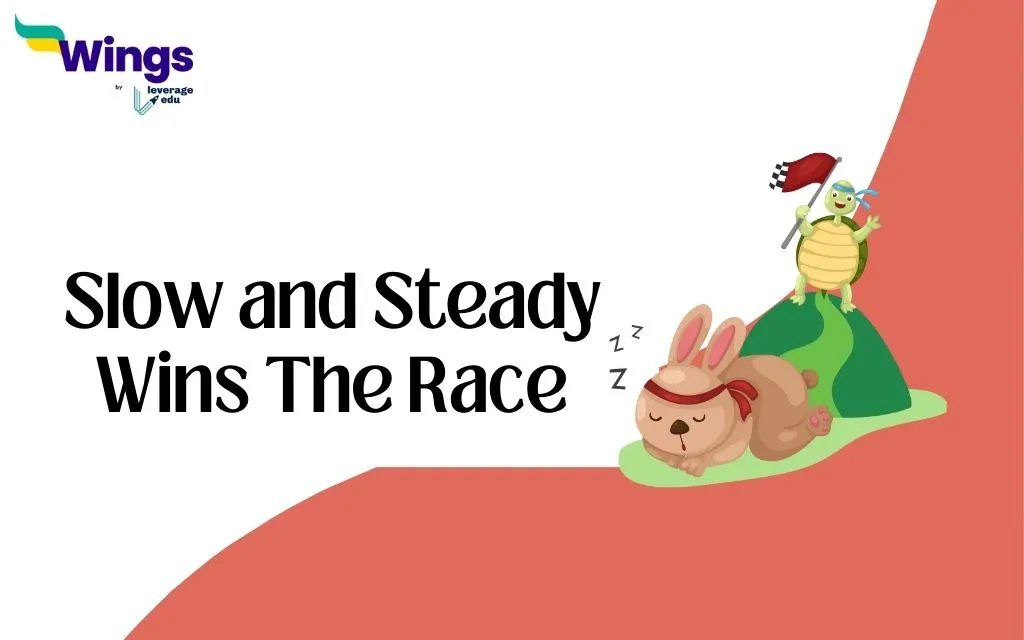
Kids today want everything instantly, notes in 5 minutes, success in 5 days, results in 5 seconds. And then they panic when life doesn’t load like a fast-forward reel. That’s exactly why the slow and steady wins the race meaning still hits harder than any motivational quote on your feed. It’s the quiet reminder that consistency beats chaos, patience beats pressure, and discipline beats drama. It’s that classic formula that actually works. This blog breaks down the real slow and steady wins the race meaning, its origin, story, and how it still applies in a world obsessed with speed.
This Blog Includes:
- What Does Slow and Steady Wins the Race Mean?
- Origin of the Idiom “Slow and Steady Wins the Race”
- Slow and Steady Wins the Race Story Summary in 150 Words
- Slow and Steady Wins the Race Meaning with Examples
- How to Use Slow and Steady Wins the Race in Sentences
- Synonyms of Slow and Steady Wins the Race
- Antonyms of Slow and Steady Wins the Race
- Slow and Steady Wins the Race Meaning Quiz
- FAQs
What Does Slow and Steady Wins the Race Mean?
“Slow and steady wins the race” means that taking your time and keeping a consistent effort is better than rushing or showing off. Success comes from patience, persistence, and doing things step by step. Being fast doesn’t always help if you stop, get distracted, or make mistakes.
This idiom teaches that even small, steady progress beats hasty actions. No matter if it’s learning, sports, or any project, focusing on steady work usually brings better results than trying to finish everything quickly.
Origin of the Idiom “Slow and Steady Wins the Race”
The idiom comes from Aesop’s fable “The Tortoise and the Hare”. In the story, the hare is super fast and confident, while the tortoise is slow but keeps moving without stopping. The hare gets distracted, takes a nap, and the tortoise crosses the finish line first.
This story became a lesson in patience and persistence. The phrase “slow and steady wins the race” started being used to remind people that consistent effort is more powerful than speed, arrogance, or rushing, and it has stuck around for hundreds of years as a classic moral saying.
Slow and Steady Wins the Race Story Summary in 150 Words
Once upon a time, a hare and a tortoise had a race. The hare was super fast and proud, always bragging about how quick he was. The tortoise was slow, quiet, and kept moving step by step without stopping. When the race started, the hare zoomed ahead and thought, “I’m so fast, I can nap now.” He stopped, took a long nap, and wasted his lead. Meanwhile, the tortoise kept moving steadily, never giving up, step after step. Slowly but surely, the tortoise crossed the finish line before the hare woke up.
Everyone watching was surprised, but the lesson was clear: speed alone doesn’t guarantee success. Consistent effort, patience, and determination matter more. The story shows that even small, steady steps can win the race if you don’t quit, proving why slow and steady really does win.
Also Read: Get your act together meaning
Slow and Steady Wins the Race Meaning with Examples
The meaning of slow and steady wins the race is simple: consistent effort, patience, and persistence usually lead to better results than rushing or overconfidence. In real life, small but steady steps are more powerful than trying to do everything fast and failing. Let’s look at 10 examples where slow and steady really works:
- Studying a little every day instead of cramming all night before exams.
- Practicing a musical instrument regularly to improve skills.
- Saving money every month instead of spending all at once.
- Exercising consistently for fitness instead of extreme workouts in one day.
- Learning a new language by practicing daily rather than trying to memorize everything at once.
- Building a small business gradually rather than expecting instant profit.
- Gardening by watering and caring for plants daily instead of overwatering.
- Improving drawing or art skills with daily sketches instead of one marathon session.
- Practicing sports techniques regularly rather than only before a game.
- Reading a book chapter every day instead of trying to finish it in one night.
How to Use Slow and Steady Wins the Race in Sentences
The phrase slow and steady wins the race is used to remind people that patience, persistence, and steady effort lead to success. You can use it in school, sports, learning new skills, or daily habits to show that consistent progress beats rushing and shortcuts. Here are some practical ways to use it:
Encouraging students: When a student struggles with a subject, this phrase reminds them to practice regularly instead of cramming all at once.
Example: “Keep solving one math problem every day; slow and steady wins the race.” Solving a little every day helps you understand better and remember for exams.
Motivating sports practice: Athletes improve by training consistently instead of overexerting themselves in one session.
Example: “Don’t try to score all the goals in one game; practice every day—slow and steady wins the race.” Daily practice builds skill and stamina.
Saving money: Regular small savings grow into a larger amount over time, teaching patience and planning.
Example: “Save 50 rupees every week; slow and steady wins the race.” Little consistent savings add up better than spending all at once.
Learning new skills: Learning a language, instrument, or craft improves with small daily efforts rather than trying to learn everything at once.
Example: “Write five new words in English every day; slow and steady wins the race.” Daily practice makes learning easier and less stressful.
Building habits: Healthy routines form when done consistently instead of in bursts.
Example: “Drink water every morning and exercise daily; slow and steady wins the race.” Steady routines improve health and stick longer than sudden efforts.
Synonyms of Slow and Steady Wins the Race
The idiom slow and steady wins the race teaches that patience, and here are some synonyms that can make your writing or speech more interesting while keeping the same moral lesson.
| Patience pays | Keep at it |
| Consistent effort | Work steadily |
| Steady progress | Regular practice |
| Gradual improvement | Cautious advance |
| Slow but sure | Constant effort |
| Careful steps | Determined pace |
| Persistent action | Long-term focus |
| Step-by-step | Steady climb |
| Methodical approach | Unhurried progress |
| Endurance wins | Continuous work |
Antonyms of Slow and Steady Wins the Race
The opposite of slow and steady wins the race shows rushing, impatience, and overconfidence. These words or phrases represent actions where speed and shortcuts are valued over consistent effort.
| Rushing | Hasty actions |
| Overconfidence | Quick fixes |
| Impatience | Fast-forwarding |
| Slacking off | Careless speed |
| Shortcut mentality | Instant gratification |
| Rushing to finish | Acting without thought |
| Hurrying | Jumping steps |
| Doing everything fast | Skipping processes |
| Quick and careless | Chaotic effort |
| Fast but sloppy | Inconsistent work |
Also Read: Idioms for IELTS
Slow and Steady Wins the Race Meaning Quiz
Quizzes are a fun way to test how well you understand the slow and steady wins the race meaning. These exercises help you remember the lesson, apply it in sentences, and recognize it in real-life situations. Try them out and see if you’ve mastered the moral of the fable.
Exercise 1: Fill in the Blanks
Instruction: Fill in the blanks with the correct words to complete the sentences based on the meaning of slow and steady wins the race.
Questions:
- The tortoise moved _______ but never stopped.
- Instead of cramming all night, Maya solved a few problems every day because _______ wins the race.
- Rushing through homework often leads to _______.
- In sports, consistent practice beats _______ in one match.
- The moral of the story teaches us to value _______ over speed.
Answers:
- slowly
- slow and steady
- mistakes
- trying to win fast
- patience
Exercise 2: True or False
Instruction: Read the statements and write whether they are True or False.
Questions:
- The hare won the race because he was fast.
- Slow and steady effort often leads to success.
- Being overconfident and rushing can cause failure.
- The tortoise stopped in the middle of the race.
- Consistency is more important than instant results.
Answers:
- False
- True
- True
- False
- True
Exercise 3: Multiple Choice Questions
Instruction: Choose the correct answer for each question based on the meaning of slow and steady wins the race.
Q1. “I know you think that you are better than everyone else because of your natural talent, but don’t forget that slow and steady wins the race.” What does it mean here?
a) Run fast to win
b) Take your time and be consistent in your efforts, you will succeed
c) Think before you speak
d) Inconsistency is the key to success
Ans: b) Take your time and be consistent in your efforts, you will succeed
Q2. What quality does the hare represent in the fable The Tortoise and the Hare?
a) Determination
b) Overconfidence and carelessness
c) Wisdom
d) Teamwork
Ans: b) Overconfidence and carelessness
Q3. How does the “steady” part of the phrase contribute to success?
a) By ensuring progress
b) By avoiding distractions
c) By remaining focused
d) All of the above
Ans: d) All of the above
Q4. How can this phrase be applied to achieving academic goals?
a) By cramming before exams
b) By studying regularly over time
c) By skipping tough subjects
d) By relying on last-minute luck
Ans: b) By studying regularly over time
Q5. Which of these best describes the long-term result of a “slow and steady” approach?
a) Guaranteed failure
b) Balanced and consistent progress
c) Constant setbacks
d) Immediate results
Ans: b) Balanced and consistent progress
Also Read: Useful Idioms with Examples, Sentences and Meanings
FAQs
Ans: The Slow and Steady Wins the Race Meaning is that consistent effort and patience beat rushing and overconfidence. Moving carefully and steadily usually leads to success, even if others seem faster at first. It’s about valuing persistence over speed.
Ans: The moral of Slow and Steady Wins the Race Meaning is that patience, focus, and steady effort pay off in the long run. It teaches students not to get frustrated by slow progress because consistent work always brings results. Overconfidence and rushing often lead to mistakes.
Ans: It is an example of an idiom or a moral proverb in English. The phrase summarizes a life lesson from Aesop’s fable “The Tortoise and the Hare,” showing that wisdom and steady action beat speed and arrogance.
Ans: You can use it like this: “She studies a little every day because she knows slow and steady wins the race.” Another example: “Don’t rush your homework; remember, slow and steady wins the race.” It encourages patience and consistent effort.
Ans: Understanding the Slow and Steady Wins the Race Meaning helps students focus on consistent learning instead of cramming. It encourages building habits, improving skills step by step, and achieving better results without stress or shortcuts.
Read other blogs on Idiom here:
| Idioms in English – Best Idioms | Idioms and Phrases Questions |
| Idioms for Appreciation | Idioms for Surprise and Shock |
| Idioms for Studying Hard | Idioms for Travelling |
This was everything you needed to know about the slow and steady wins the race meaning. Now you actually get what this classic line stands for, why it still matters, and how consistency quietly beats speed in real life. Keep learning and stay connected with Learn English on Leverage Edu for more helpful and student-friendly blogs. And if this helped you, don’t forget to share, rate, and drop a comment. Your support helps more students find the good stuff.

 60,000+ students trusted us with their dreams. Take the first step today!