

 One app for all your study abroad needs













The CBSE Class 10 English Grammar syllabus in 2026 is brutal if you are unprepared. Tenses, modals, determiners, subject-verb agreement, they love stealing marks while you are busy guessing. Gap-filling, editing, sentence transformation? One slip and the marks are gone. Spelling and punctuation mistakes can turn a perfect essay into a dumpster fire. But here is the deal: every rule is learnable, every mark is winnable. This blog breaks down every single grammar topic from the syllabus, shows exactly where your marks are hiding, and gives actionable tips to dominate. We have explained English Grammar for class 10 CBSE like someone actually wants you to pass (because we do).
This Blog Includes:
- CBSE Class 10 English Grammar Syllabus 2026‑27: Here’s Everything!
- Marks Weightage of Grammar Topics: Where Your 10 Marks Actually Come From
- Complete List of Grammar Topics You Actually Need to Know for Class 10
- Best Study Materials and Resources to Slay Class 10 English Grammar
- Common Mistakes & Tips to Actually Score Full Marks in Grammar
- Step-By-Step Study Plan to Smash Grammar Before Exams
- Quick Revision Techniques for Grammar That Won’t Make You Sleep
- Time Management Hacks for Grammar: Don’t Let Tiny Traps Steal Your Marks
- FAQs
CBSE Class 10 English Grammar Syllabus 2026‑27: Here’s Everything!
The CBSE class 10 English Grammar syllabus 2026‑27 is designed to test your accuracy, understanding, and application in just 10 marks. This section gives you a complete overview of all grammar topics, marks distribution, and what to expect, so you can plan, revise, and score efficiently.
| Grammar Topic | What You’ll Be Tested On | Quick Prep Tip |
| Determiners | Articles, Quantifiers, Demonstratives, Others | Revise examples from NCERT & do 5 practice sentences |
| Tenses | Simple, Continuous, Perfect, Perfect Continuous | Focus on correct tense forms and spotting errors in sentences |
| Modals | Can, Could, May, Might, Shall, Should, Will, Would, Must | Practice gap-filling and correcting modal misuse |
| Subject-Verb Agreement | Singular/plural forms, tricky subject cases | Highlight keywords in sentences and practice matching subjects with verbs |
| Reported Speech | Statements, Questions, Commands, Requests | Convert sentences between direct and indirect speech repeatedly |
| Editing / Gap-Filling / Sentence Transformation | Correct grammar, punctuation, and sentence structure | Solve past paper questions and timed exercises |
| Punctuation & Spelling | Commas, full stops, capitalization, common spelling errors | Revise rules and practice correcting sentences |
Marks Weightage of Grammar Topics: Where Your 10 Marks Actually Come From
The grammar section is small but precise. Every mark is earned by accuracy. Boards love precision, so practice rules in real exercises. Here’s a quick table of the topics and how marks are generally distributed:
| Grammar Topic | Marks (Approx.) |
| Determiners | 2 |
| Tenses | 2 |
| Modals | 1 |
| Subject-Verb Agreement | 1 |
| Reported Speech | 2 |
| Editing, Gap-Filling, Sentence Transform | 2 |
| Total Marks | 10 |
Complete List of Grammar Topics You Actually Need to Know for Class 10
Every mark in CBSE Class 10 English grammar is hidden in tiny rules. This section breaks down all the grammar topics you actually need to know, shows what the board loves to test, and gives you mini-tips to slay each one.
Determiners – 2 Marks
Determiners are the tiny grammar words that decide which thing, how many things, or how much of something you’re talking about. CBSE loves testing them because one wrong article, quantifier, or demonstrative can steal marks instantly. They appear everywhere in sentences, so mastering them is about accuracy, not memorization.
How It Will Appear in Exams:
- Mostly in gap-filling sentences requiring the correct article, quantifier, or demonstrative.
- Occasionally in editing exercises where determiner mistakes are hidden.
- Rarely in sentence transformation if the sentence structure changes, e.g., pluralization or emphasis.
Topics That Will Be Tested:
- Articles: a, an, the
- Quantifiers: some, any, much, many, few, several
- Demonstratives: this, that, these, those
- Possessives: my, your, his, her, their
Preparation Strategy:
- Practice context-based exercises. Boards love traps in long sentences.
- Memorize basic rules like “a vs an” and plural agreements with quantifiers.
- Check past 3 years’ CBSE sample papers to understand exam patterns.
- Make a mini cheat sheet of tricky determiners and revise daily. It covers almost all exam scenarios.
Read or Regret: Determiners Exercises: 45+ Questions For Students!
Tenses – 2 Marks
Tenses are the backbone of the grammar section. They tell when an action happens, past, present, or future, but CBSE loves to make them tricky. One wrong form can cost marks even if the sentence looks simple.
How It Will Appear in Exams:
- Gap-Filling: Pick the correct tense based on context and time indicators.
- Editing Exercises: Correct wrong tense usage in sentences.
- Sentence Transformation: Changing tense as instructed (e.g., direct to reported speech or active to passive).
Topics That Will Be Tested:
- Present Tense: Simple, Continuous, Perfect, Perfect Continuous
- Past Tense: Simple, Continuous, Perfect, Perfect Continuous
- Future Tense: Simple, Continuous, Perfect, Perfect Continuous
Preparation Strategy:
- Focus on time indicators like already, yesterday, by the time, tomorrow. They hint the tense.
- Practice mixed tense exercises. CBSE loves combining tenses in one sentence.
- Use CBSE sample papers and previous years’ questions to understand tricky patterns.
- Make a small daily revision sheet of rules for tense shifts. It’s your lifesaver for last-minute prep.
Modals – 1 Mark
Modals are helping verbs that show possibility, ability, permission, or obligation. CBSE tests them because one tiny wrong word like “may” instead of “might” can steal marks instantly.
How It Will Appear in Exams:
- Mostly in gap-filling sentences where you choose the correct modal.
- Sometimes in editing exercises with incorrect modal usage.
- Very rarely in sentence transformation if a sentence changes meaning slightly.
Topics That Will Be Tested:
- can, could, may, might, shall, should, will, would, must
Preparation Strategy:
- Always read the sentence meaning first. Context decides the modal.
- Watch for tense and subject clues.
- Practice past 3 years’ CBSE sample questions.
- Make a tiny revision chart of modals with usage notes. It’s enough for full marks.
Subject-Verb Agreement – 1 Mark
Subject-Verb Agreement is all about making sure the subject and verb match in number. CBSE loves this topic because one tiny slip and singular vs plural can steal a mark in a blink.
How It Will Appear in Exams:
- Editing Exercises: Spot and correct verbs that don’t agree with the subject.
- Sentence Transformation: Make sure verb changes still match the subject in number.
- Tricky cases often include collective nouns (team, family) and indefinite pronouns (everyone, nobody).
Topics That Will Be Tested:
- Singular vs Plural subject-verb forms
- Collective nouns and their verbs
- Indefinite pronouns and verb agreement
Preparation Strategy:
- Memorize common subject-verb traps, especially collective nouns and tricky pronouns.
- Practice editing exercises from CBSE sample papers.
- Read the sentence carefully before choosing the verb.
- Make a quick reference sheet of tricky words. They come up every year.
Reported Speech – 2 Marks
Reported Speech is telling someone else’s words without quoting them directly. CBSE loves this topic because it tests tense shifts, pronouns, and sentence changes all at once.
How It Will Appear in Exams:
- Statements: Change direct statements into indirect ones with correct tense and pronouns.
- Questions: Convert yes/no or WH-questions into reported form.
- Commands & Requests: Transform commands or polite requests correctly.
- Gap-Filling & Editing: Spot incorrect tense or pronoun usage in reported sentences.
Topics That Will Be Tested:
- Tense shifts in reported statements and questions
- Pronoun changes
- Converting commands and requests correctly
- Question word changes for WH-questions
Preparation Strategy:
- Memorize rules for tense and pronoun changes.
- Practice past 3 years’ CBSE questions to spot common patterns.
- Focus on commands, requests, and questions.
- Make a mini cheat sheet for quick last-minute revision.
Editing, Gap-Filling, and Sentence Transformation – 2 Marks
This is the board’s favourite mark-stealer. CBSE uses editing, gap-filling, and sentence transformation to test all grammar topics together, tenses, determiners, modals, subject-verb agreement, reported speech, punctuation, and spelling.
How It Will Appear in Exams:
- Editing Exercises: Correct grammatical mistakes in a given sentence or paragraph.
- Gap-Filling: Fill in the blanks with correct grammar words (tenses, determiners, modals).
- Sentence Transformation: Change sentences as per instructions, active/passive, direct/indirect, or using given words.
Topics That Will Be Tested:
- Tenses, Determiners, Modals, Subject-Verb Agreement
- Reported Speech
- Punctuation and Spelling
- Sentence restructuring as per transformation rules
Preparation Strategy:
- Practice context-based exercises. Boards hide mistakes in longer sentences.
- Make a list of common traps seen in CBSE past papers.
- Time yourself while practicing. This section requires quick spotting of errors.
- Revise all grammar rules together, because CBSE mixes topics in these exercises.
Punctuation and Spelling – 1 Mark
Punctuation and spelling are tiny details with huge mark impact. CBSE tests these because even a missing comma, full stop, or wrong capital letter can steal marks from careless students.
How It Will Appear in Exams:
- Editing Exercises: Identify and correct punctuation and spelling mistakes in sentences.
- Sentence Transformation: Ensure correct punctuation when changing sentence forms.
- Boards often mix this with other grammar topics, so mistakes are hidden in context.
Topics That Will Be Tested:
- Full stops, commas, question marks, exclamation marks
- Capitalization of proper nouns, first word of a sentence
- Apostrophes, hyphens, and correct spelling of commonly misused words
Preparation Strategy:
- Always proofread sentences carefully. Tiny mistakes cost marks.
- Practice past CBSE sample papers to spot recurring punctuation traps.
- Make a mini list of tricky spellings and punctuation rules for last-minute revision.
- Treat this section as a quick-win. Nail it and grab marks effortlessly.
Read This Before You Forget: Tenses Exercise for Class 10: Download Free PDF
Best Study Materials and Resources to Slay Class 10 English Grammar
Picking the right study material can make or break your marks. Don’t waste time with random PDFs or outdated notes. Stick to official CBSE books, sample papers, and tech tools that actually show you what the board tests.
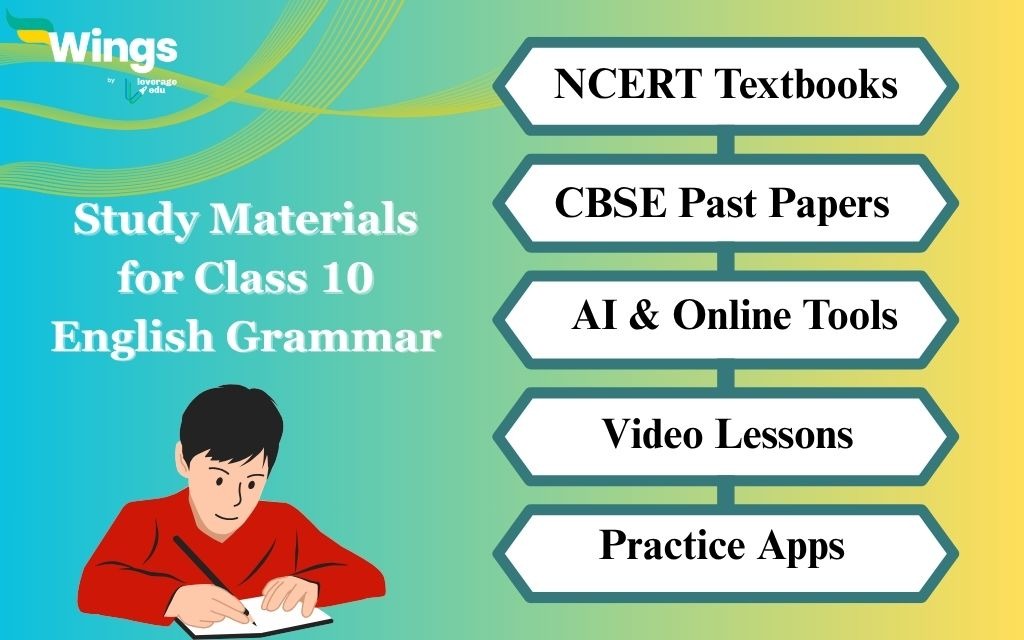
- NCERT Textbooks: Start here. Every grammar topic in the 10-mark section comes straight from NCERT. Don’t skip examples or exercises.
- CBSE Past Papers: Solve at least 3–5 years’ papers. Spot repeated question patterns in determiners, tenses, modals, reported speech, and editing.
- AI & Online Tools: Use ChatGPT or Gemini to practice tricky sentences and get instant explanations for mistakes.
- Video Lessons: You can use YouTube videos to help you give quick topic explanations in 5–10 minutes. Perfect for last-minute revision.
- Practice Apps: Apps like Quizlet or Toppr help you make flashcards, test yourself, and revise anywhere.
Common Mistakes & Tips to Actually Score Full Marks in Grammar
Most students lose marks because they rush, guess, or ignore context. This section gives you the real cheat code to avoid those traps and grab all 10 marks in 2026.
| Common Mistakes | How to Avoid and Tips |
| Using wrong determiners like a, an, the, some, or any | Check the meaning of the sentence carefully and practice gap-filling exercises with longer sentences. |
| Using the wrong tense even when time words are clear | Look for words like already, yesterday, by the time, and tomorrow. Revise all tenses with examples. |
| Misusing modals like can, may, should, or must | Read the full sentence and consider the subject and tense before choosing the modal. |
| Subject-verb mismatch, especially with collective nouns and indefinite pronouns | Memorize tricky pronouns and collective nouns. Always check that the subject and verb agree. |
| Making mistakes in reported speech with tense, pronouns, or commands | Learn the rules for tense shifts and pronoun changes. Practice statements, questions, and commands. |
| Forgetting punctuation and spelling | Proofread carefully and make a small list of tricky punctuation and spellings for quick revision. |
| Falling into traps in editing and gap-filling | Practice past three years of CBSE papers and revise all grammar rules together. |
Step-By-Step Study Plan to Smash Grammar Before Exams
This plan shows you exactly what to study, in which order, and how to practice so that determiners, tenses, modals, reported speech, and all other grammar topics stick in your brain. Follow it step by step, and you will see marks adding up. It’s short, smart, and designed for students who hate boring revision but still want full marks.
| Step | Action | Why It Works |
| Step 1 | Collect all grammar topics and rules in one place | Keeps everything organized, no random notes lying around |
| Step 2 | Make a mini cheat sheet for determiners, tenses, modals, and subject-verb agreement | Quick reference saves time during revision |
| Step 3 | Practice gap-filling, editing, and sentence transformation exercises from past 3 years of CBSE papers | Board loves repeating patterns, so you’ll spot traps easily |
| Step 4 | Revise reported speech rules and practice converting statements, questions, commands, and requests | High-value topic, small mistakes can cost marks |
| Step 5 | Take timed mock practice of 10-mark grammar section | Improves speed and accuracy for exam day |
| Step 6 | Proofread your exercises for punctuation and spelling mistakes | Tiny details make a big difference in marks |
| Step 7 | Daily 15-20 minute quick revision of tricky rules and mini cheat sheet | Retains memory, avoids last-minute panic |
| Step 8 | Check yourself with self-made questions or peers | Reinforces learning and builds confidence |
Quick Revision Techniques for Grammar That Won’t Make You Sleep
Last-minute grammar revision doesn’t have to be a soul-sucking bore. We mixvarious cool hacks to make your brain actually remember rules instead of pretending to. Follow these, and you’ll scan, recall, and ace your 10-mark grammar section in no time.
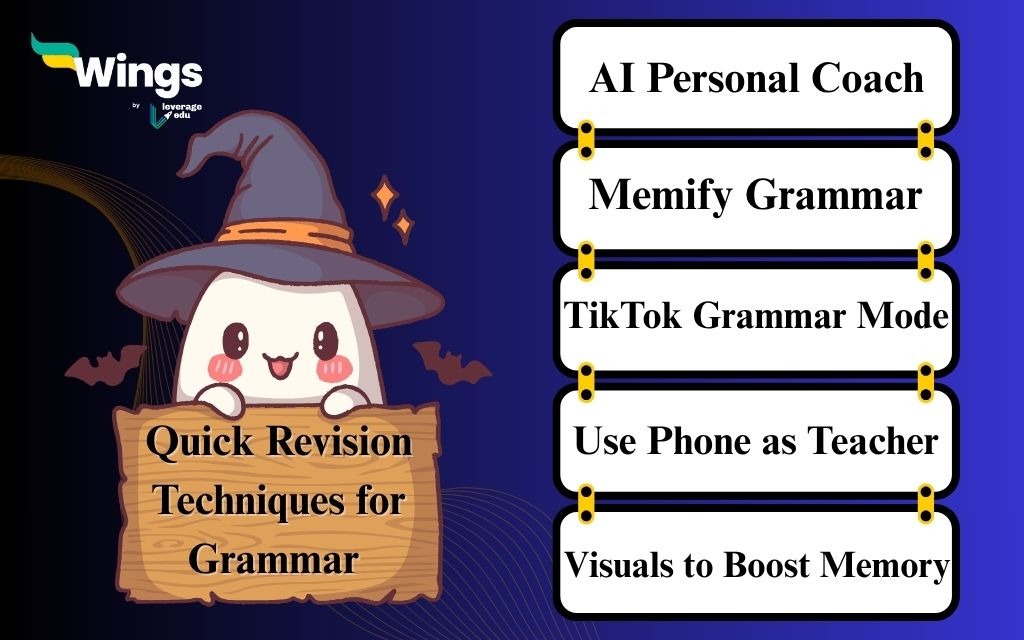
AI as Your Personal Coach
Type tricky sentences in ChatGPT or Grammarly and ask it to explain mistakes in simple words. Let the AI highlight patterns you keep missing. I’s like having a 24/7 teacher without the attitude.
Memify Your Grammar
Turn rules into funny memes or doodles. For example, a cartoon showing “he runs” vs “they run” as superheroes. Humor and visuals make brain remembers instantly.
Grammar in TikTok Mode
Make 15-second reels for rules or watch short clips explaining tricky topics. Quick, punchy, repeated exposure sticks better than boring long notes.
Use Your Phone as a Teacher
Type tricky sentences in Notes or WhatsApp and let autocorrect suggest fixes. Study why it changes things, then rewrite the correct version yourself.
Use Visuals to Boost Memory
Visual tricks make grammar stick without boring your brain. Use colors, mind maps, doodles, sticky notes, and AI-generated graphics to see, interact, and remember rules like determiners, tenses, modals, and reported speech effortlessly.
Time Management Hacks for Grammar: Don’t Let Tiny Traps Steal Your Marks
Grammar can be a time-eating monster if you’re not careful. One extra minute stuck on a tiny thing like “a vs an” can cost you marks on bigger questions. This section is all about strategies to finish the 10-mark grammar section fast and smart. You’ll learn how to prioritize, spot patterns, and even use tech tools to save time, so every second works for your marks instead of against you.
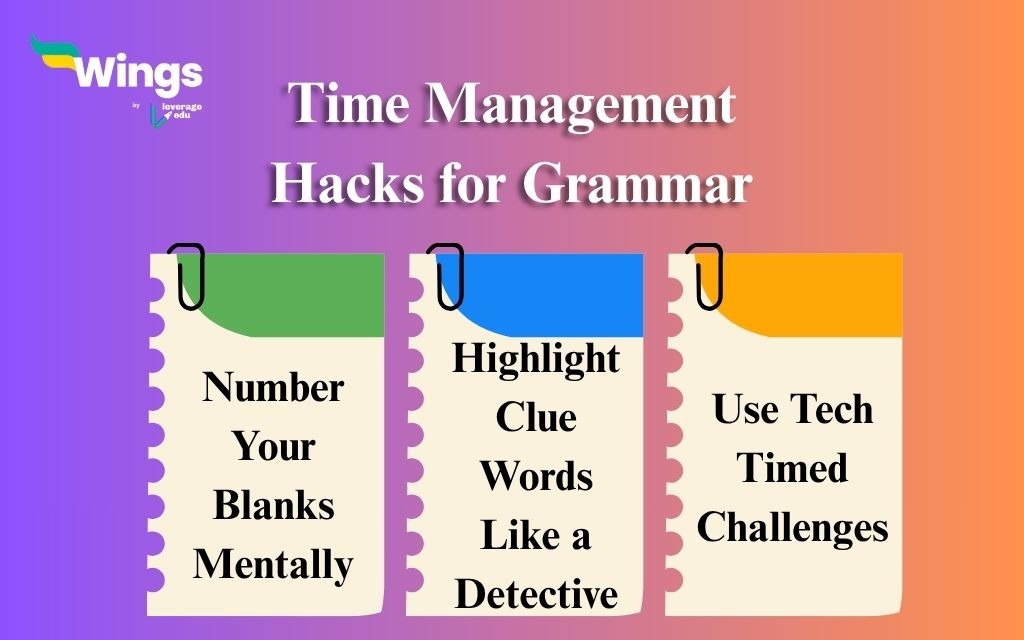
Number Your Blanks Mentally
For gap-filling or editing questions, quickly number blanks in your mind or on paper. This helps you tackle easier ones first and prevents skipping or repeating mistakes.
Highlight Clue Words Like a Detective
Circle time indicators, pronouns, modals, and keywords in sentences. Treat each sentence like a mini puzzle, spotting clues first speeds up your answers.
Use Tech Timed Challenges
Use a stopwatch or phone timer while practicing past papers online. Give yourself 1 minute per mark. This trains your brain to make decisions fast without overthinking.
Too Good to Skip: Modals Exercise for Class 10 with Answers (CBSE English)
FAQs
Ans: Yes, if you focus smart, not hard. Prioritize determiners, tenses, modals, subject-verb agreement, and reported speech. Daily practice, gap-filling drills, and revision hacks can get you exam-ready in 30 days.
Ans: No official deletions have been announced for grammar in 2026-27. Everything from determiners to sentence transformation remains exam-relevant. Focus on the full syllabus to avoid missing marks.
Ans: It covers determiners, tenses, modals, subject-verb agreement, reported speech, and spelling/punctuation applied through gap-filling, editing, and sentence transformation exercises. Total marks: 10.
Ans: NCERT textbooks, CBSE sample papers, previous year questions, online quizzes, and apps like LearnCBSE or Toppr are solid picks. Focus on exercises that mimic gap-filling, editing, and transformation questions.
Ans: There’s no reduction announced for the grammar section. Students should prepare the full syllabus as usual to avoid losing marks on any critical topic.
.Relatable Reads Picked Just for You
Wrapping up, the CBSE class 10 English Grammar syllabus isn’t some mysterious boss level you can’t beat. Every tense, modal, determiner, and sentence twist is now on your radar. Follow the tips, practice like your sanity depends on it, and memorize the tricks that actually work. You’ve got the map, the hacks, and the cheat-code for every tricky topic. Now it’s your turn, use this guide, crush the grammar section, and stay tuned with Learn English on Leverage Edu.

 60,000+ students trusted us with their dreams. Take the first step today!