

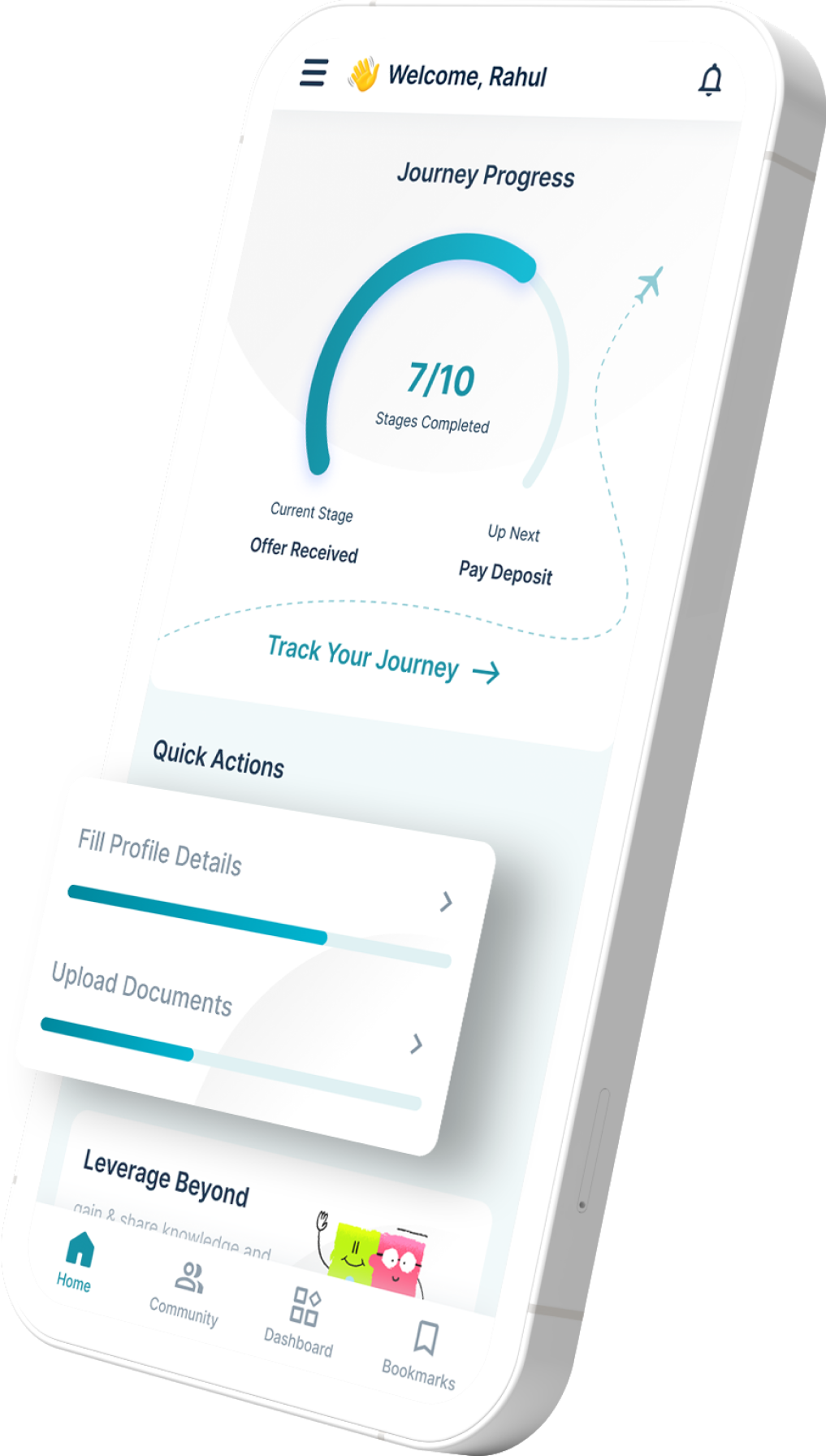
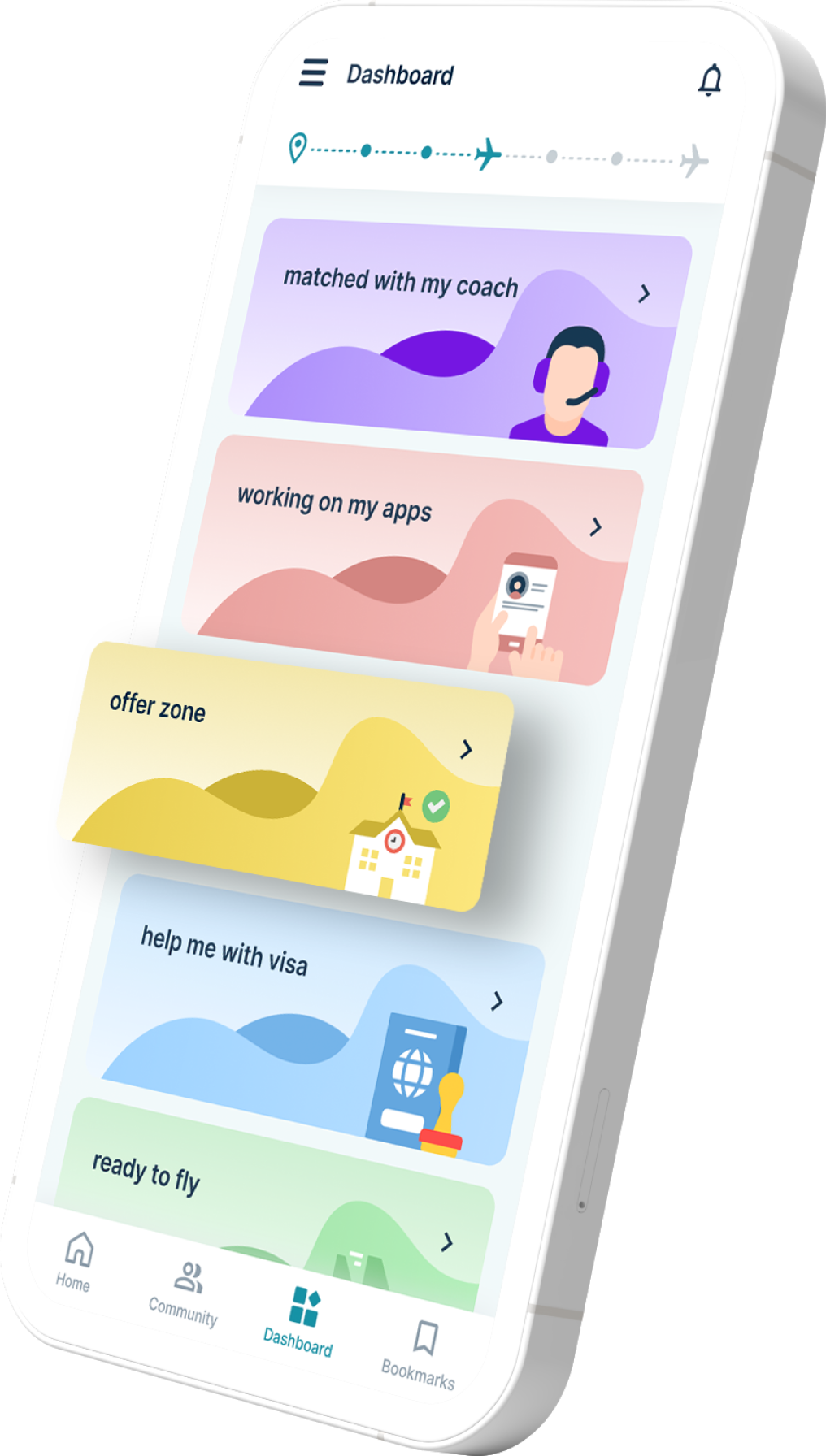
 One app for all your study abroad needs















Landing in a new country is exciting, but it can also feel overwhelming. According to the Ministry of External Affairs (MEA), over 1.3 million Indian students were pursuing higher education across overseas institutions last year. Ask any of them and they’ll tell you the first three months shaped everything that followed: grades, friendships, finances and even confidence.
The good news? Those 90 days follow a pattern, and once you know it, you can plan for it. In this study abroad guide, we’ll walk through what to expect month by month, what to sort first, and how to settle in without stress or overspending.
Table of contents
The Pre-Departure Checklist Before You Go to Study Abroad
Your first 90 days actually begin about a month before your flight. Students who arrive with the basics sorted spend their first week exploring rather than panicking. This study abroad guide will help you prepare for a smoother transition.
- Visa and documents: Keep originals and photocopies of your passport, visa, offer letter, financial proof and accommodation confirmation in your hand luggage.
- Forex: Carry a small amount of local currency, plus a forex card, for the first few days.
- Accommodation: Book at least your first few weeks in advance. Arriving without a living arrangement is the most avoidable stress of all.
- Insurance and medicines: Carry prescriptions and a basic medical kit.
This is where Leverage Edu quietly does the heavy lifting for many Indian students abroad. For over a decade, our team has helped more than 2 lakh students study abroad, so we’ve seen what goes wrong at the airport. From visa filing and forex to education loans and accommodation before you land, we help you tick these boxes in one place.
Days 1-30: Landing and Settling In
Think of month one as setting up your life abroad. Don’t worry about being perfect; just get the essentials done.
Your first-week priorities:
- Get a local SIM card or eSIM, so you can use maps, banking apps and ride services.
- Complete your university registration and collect your student ID.
- Attend orientation. Here you’ll meet your classmates, learn campus systems and find out about student support.
- Register with the local authorities, or collect your residence permit, if your country requires it. Rules differ, so check your university’s international office guidance.
- Learn the local transport options and buy a student travel pass if one is offered.
Once you’ve handled these basics on your study abroad guide, move on to these:
- Open a local bank account: Many universities have partner banks that make this easy for international students. A local account helps with rent, part-time wages and everyday spending.
- Budget from day one: As a rough rule, rent is usually your largest monthly cost, followed by food and transport. Tracking spending in your first month shows you where your money actually goes, rather than where you assumed it would.
| Expense | What to do in Month 1 |
| Rent and bills | Compare options between on-campus university halls, Purpose-Built Student Accommodation (PBSA), and private shared flats; verify whether utility bills (heating, electricity, water, Wi-Fi) and local municipal tax exemptions are bundled into the base rent. |
| Groceries | Compare 2-3 supermarkets; cooking at home saves a lot |
| Transport | Check student passes and monthly caps |
| Phone and internet | Choose a student-friendly plan |
| Emergency fund | Keep one month’s expenses aside |
Common Scams to Avoid Once You Land
Arriving in an unfamiliar city leaves newcomers vulnerable to opportunists targeting international students. Protect your finances and personal data during your first month by watching out for these common traps:
- Rental deposit fraud: Never wire money, transfer cryptocurrency, or hand over cash for an apartment you have only seen on social media groups or peer-to-peer listing sites. Legitimate property managers and Purpose-Built Student Accommodation (PBSA) providers use formal tenancy agreements, certified deposit protection schemes, and verified portals before requesting holding fees.
- Airport SIM card markups: Avoid buying inflated prepaid plans from third-party kiosks in arrival halls. Instead, purchase an eSIM directly from verified telecom network carriers online, or visit an official retail branch in town where student plans and identification checks are handled transparently.
- Unlicensed money exchange counters: Stay away from street-corner cash changers or informal peer-to-peer forex transfers promising zero margins. Stick to multi-currency forex cards, accredited bank branches, or standard local ATMs associated with major commercial banks to avoid skimmed cards and counterfeit bills.
- Impersonation and visa extortion calls: Be cautious of callers claiming to represent local police, tax authorities (such as HMRC or the IRS), or immigration departments threatening immediate deportation over incomplete forms. Official immigration bodies communicate through formal postal letters or registered portal notifications, and they never demand instant fines over the phone or via gift cards.
For most Indian students abroad, the novelty has worn off by now, and homesickness often peaks around this time. That is completely normal, and it passes.
- Focus on academics
Teaching styles abroad usually involve more independent study, class participation and continuous assessment than many Indian students are used to. In these weeks:
- Meet your professors and teaching assistants during office hours.
- Learn your university’s referencing and plagiarism rules; they’re taken very seriously.
- Set a weekly study routine rather than cramming before deadlines.
- Use the library, writing centre and language support. They’re included in your fees.
- Build your circle
Join at least one student society, whether it’s a sports club, a cultural group or an academic society. Mixing with students from other countries is half the value of study abroad programs.
- Look after yourself
Sleep, home-style meals and a quick call home every week do more for your performance than you’d think.
Also Read :- How to Study Abroad from India: Complete Guide
Days 61-90: Working Smart and Planning Ahead
By the third month, you should feel like you live there. Now is the time to think about part-time work and your career.
- Offsetting your expenses with part-time work
Part-time jobs can ease living costs, and they build local work experience, too. Rules depend on your country and visa, so always confirm the latest conditions with your university and visa guidelines before you start. A study abroad consultant can also help you understand work regulations and plan your finances. At minimum wage, many Indian students abroad earn roughly ₹50,000 to over ₹1.3 lakh a month. That can go a long way towards rent and groceries.
- The return on your investment
The total cost of a study abroad program varies enormously with the country, city and university. To judge any destination fairly, weigh up four things:
- Total cost: Tuition plus living expenses for the full duration
- Part-time income: How many hours you can work and what the local wage is
- Post-study options: How long you can stay on to find work
- Starting salaries: What graduates in your field typically earn locally
Where the numbers line up, many students recover their investment within a few years of working, though it can take longer in lower-paying fields. A Leverage Edu counsellor can run this comparison with you for each shortlisted country.
- Career moves to start now
It’s time to start checking these off your study abroad guide:
- Visit your university career centre and get your CV reviewed to local standards
- Create or refresh your LinkedIn profile
- Attend employer talks and career fairs
- If you’re in a non-English-speaking country, start learning the local language. Even intermediate proficiency speeds up part-time work, interviews and daily life.
Summing Up
Your first 90 days abroad are less about getting everything right and more about building a steady base. That includes a safe place to live, a bank account, a study routine and a few friendly faces. Do that, and the rest, from internships to part-time work to career plans, falls into place much more easily. Remember, most Indian students abroad feel homesick or overwhelmed at some point, and it’s completely normal.
If you’re still planning your move, book a free consultation with Leverage Edu‘s counsellors, and we’ll help you shape a study abroad plan that fits your budget, marks and goals.
Also watch :- First 90 Days as a Student Abroad: What No One Tells You
FAQs
1.Which country is best to study abroad?
There’s no single best country; it depends on your course, budget and goals. Popular destinations such as the US, Canada, the UK, Australia, Germany and Ireland each have their own strengths in courses, costs, part-time work rules and post-study options. Compare the total cost, how many hours you can work and how long you can stay on after graduating, which together show your likely return on investment.
2.What is a study abroad program?
A study abroad program is a course of study, such as a bachelor’s, master’s or shorter exchange programme, completed at a university outside your home country. Many are taught in English, and some include internships or work placements. Study abroad programs help you gain an international qualification, global exposure and new career options.
3.How do you get into a study abroad program?
Start by shortlisting courses and universities that match your marks, budget and goals. Then prepare your documents (transcripts, SOP, LORs, CV), take any required English tests such as IELTS, TOEFL or PTE, and apply before deadlines. After receiving an offer, you’ll arrange finances and apply for your visa. Leverage Edu can guide you through each step, from shortlisting to visa filing.
4.What are the must-haves for studying abroad?
You’ll need a valid passport, a student visa, your offer letter, proof of funds, accommodation, health insurance and an English test score, if your university requires one. It also helps to have forex, a plan for your first month’s budget and copies of all key documents.
5.Can Indian students work while studying abroad?
Yes, Indian students abroad can work part-time while still studying, though the rules vary. For example, Australia allows up to 48 hours per fortnight, Canada allows 24 hours a week off campus, and the UK allows up to 20 hours per week in term and full-time in holidays. Always check your visa conditions and university guidelines before taking up a job.


 2,00,000+ students realized their study abroad dream with us. Take the first step today.