

 One app for all your study abroad needs











Answer. An electric bell is a device that uses electromagnetism to produce sound. When current flows through its coil, it creates a magnetic field that moves a hammer to strike a gong, producing a ringing sound in a repeated manner.
Short Note on Electric Bell
An electric bell is a simple but resourceful device that converts electrical energy into mechanical motion to produce a ringing sound. It is commonly used in homes, schools, and offices for signalling purposes such as doorbells, school bells, and alarms. The functioning of an electric bell is based on the principles of electromagnetism.
Electric Bell Construction
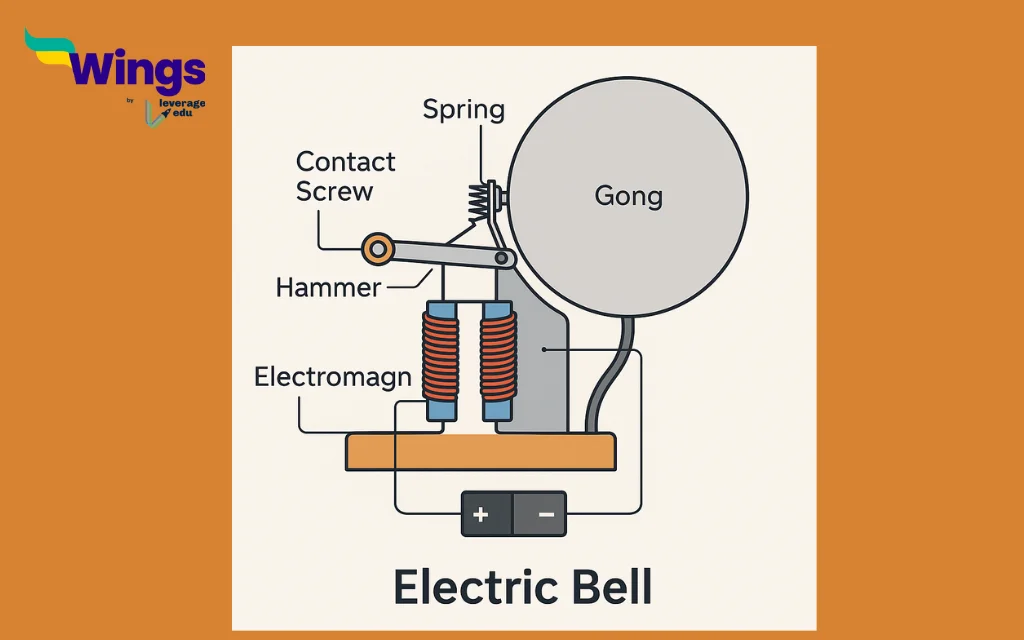
An electric bell, which is a well-known example of the magnetic effects of electric current, consists of several main parts. These include an electromagnet, a soft iron armature, a hammer, a gong, a spring, and a contact screw. The electromagnet is made of insulated copper wire wound around a soft iron core. The armature is a small piece of iron placed near the electromagnet and connected to a spring-loaded hammer. The entire assembly is enclosed in a casing with a gong, which serves as the sounding surface.
Working Principle of Electric Bell
When the electric bell is connected to a power source and the circuit is completed by pressing a switch, current flows through the coil of the electromagnet. This energises the electromagnet, creating a magnetic field that attracts the iron armature. As the armature moves toward the electromagnet, the hammer strikes the gong, producing a ringing sound.
This movement also breaks the circuit at the contact screw, cutting off the current. As a result, the electromagnet loses its magnetism, and the spring pulls the armature back to its original position. This action re-establishes contact, allowing current to flow again. The cycle repeats rapidly, causing the hammer to strike the gong repeatedly and continuously as long as the switch is held down.
Applications of Electric Bell
Electric bells are widely used in various fields due to their reliability and simplicity. In schools, they are used to signal the start and end of classes. In homes and buildings, they serve as doorbells or emergency alarms. Their ability to provide immediate and audible feedback makes them highly effective for communication and alert systems.
Check out other Science questions from here:


 60,000+ students trusted us with their dreams. Take the first step today!