

 One app for all your study abroad needs















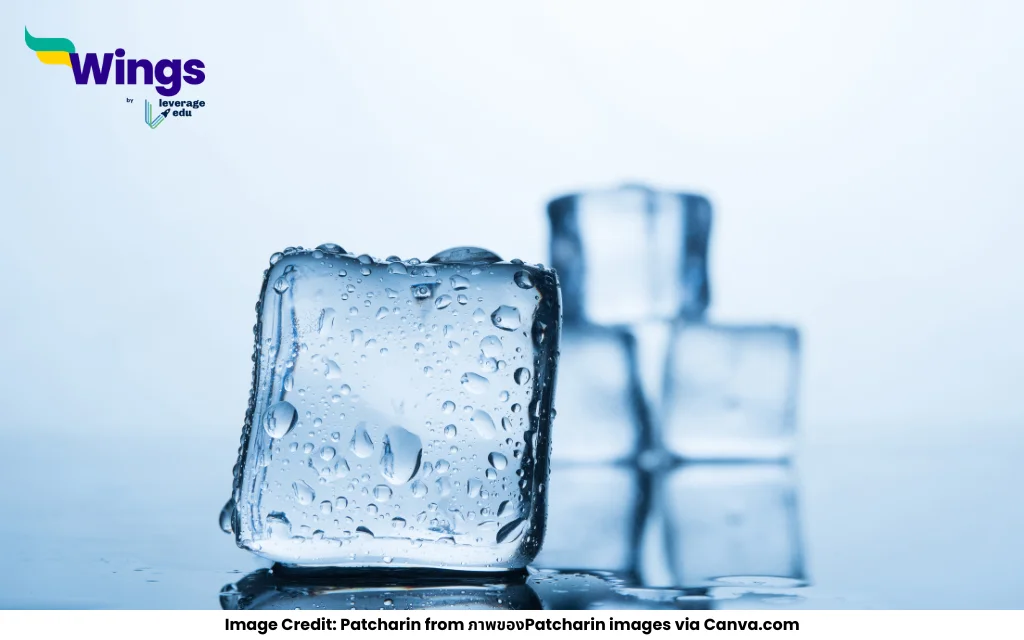
Answer: Ice at 273 Kelvin (which is 0°C) is more effective in cooling than water at the same temperature because when ice melts, it absorbs extra heat energy called latent heat of fusion from the surroundings without increasing its temperature. This extra heat (about 336 J/g) is used to change the ice into water. Water at 273K does not absorb this extra heat because it is already in liquid form. So, ice takes in more heat and cools things better than water at the same temperature.
Complete Answer:
Latent heat is the amount of heat energy required to change the state of a substance without changing its temperature. This means converting a solid to a liquid or a liquid to a gas while keeping the temperature the same.
- The heat energy used to change a solid into a liquid at constant temperature and pressure is called the latent heat of fusion.
- The heat required to turn a liquid into vapour under the same conditions is called the latent heat of vaporization.
Now, if we take ice and water both at 273K (0°C), there is a big difference in how they behave in terms of cooling:
- Ice at 273K needs extra heat to melt and become water. This heat is the latent heat of fusion, and it is absorbed from the surroundings (like a drink or the air around it).
- Since the temperature of ice doesn’t rise during melting, this absorbed energy only goes into changing the state, not increasing temperature. As a result, more heat is taken from the surroundings, causing a stronger cooling effect.
- On the other hand, water at 273K is already a liquid and doesn’t need any extra heat to change state. So it absorbs much less heat from the surroundings, leading to weaker cooling.
Therefore, Ice at 273K gives better cooling than water at the same temperature because it absorbs extra heat (latent heat of fusion) from the surroundings to melt, which lowers the temperature of the surroundings more effectively.
Common Chemistry Doubts:


 60,000+ students trusted us with their dreams. Take the first step today!