

 One app for all your study abroad needs











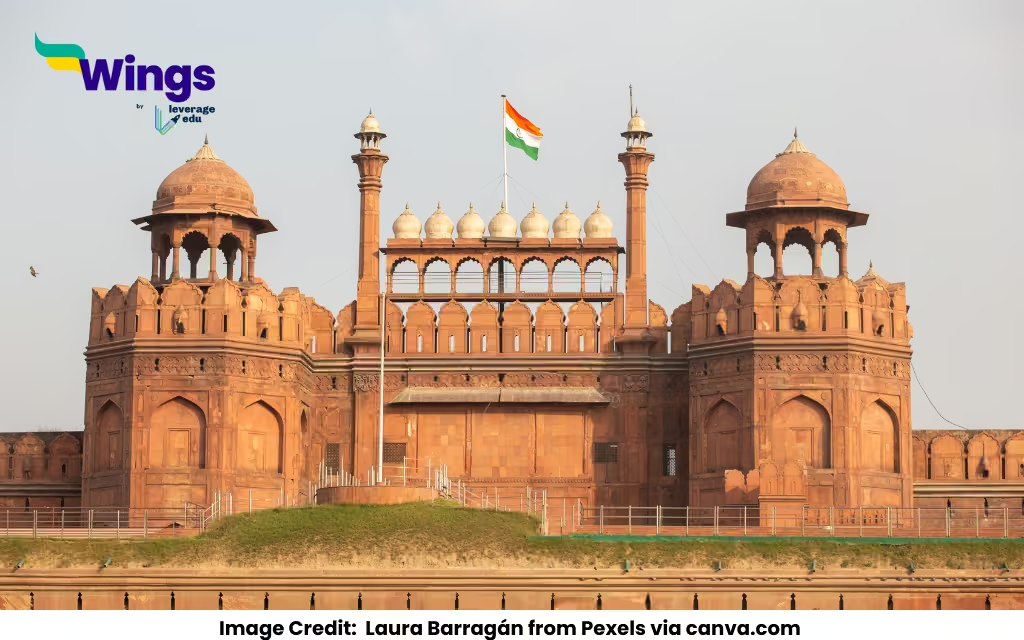
Delhi, the capital city of India, is often referred to as the “Heart of India” — and for good reason. This nickname is not just symbolic but deeply rooted in the city’s geographical, political, cultural, and historical significance. Let’s explore the reasons behind this popular title.
1. Geographical Significance
Delhi is strategically located in the north-central part of India, making it a central hub that connects various regions of the country. This centrality makes it easier for trade, transport, and communication, acting like a heartbeat that keeps the flow between the north, south, east, and west alive.
2. Political Importance
As the national capital, Delhi is the seat of all three branches of the Government of India — Executive, Legislature, and Judiciary. It houses the Rashtrapati Bhavan (President’s residence), Parliament House, and the Supreme Court of India.
This central role in governance makes Delhi the political nerve center of the country.
3. Historical and Cultural Heritage
Delhi has been the capital for several major empires including the Mughals and Delhi Sultanate, and has witnessed key events in India’s history. Its rich tapestry of monuments, such as:
- Red Fort
- Qutub Minar
- Humayun’s Tomb
- India Gate
- Jama Masjid
…reflects the soul of Indian heritage and architecture.
4. Economic and Educational Hub
Delhi is a major economic powerhouse and a commercial center, attracting professionals and businesses from across India. It is also home to top institutions like:
- University of Delhi (DU)
- Jawaharlal Nehru University (JNU)
- Indian Institute of Technology Delhi (IIT-D)
This blend of opportunity, education, and employment makes it a magnet for ambition and growth.
5. Cultural Diversity
As a melting pot of cultures, Delhi is home to people from every corner of India. It celebrates every major festival — Diwali, Eid, Holi, Gurpurab, and Christmas — with equal enthusiasm. This makes it a true representation of India’s unity in diversity.
Key Reasons Why Delhi is Called the Heart of India
| Aspect | Reason |
| Geographical Position | Centrally located, connects all regions of India |
| Political Power | Capital of India, home to major government institutions |
| Historical Importance | Rich legacy of empires, monuments, and historic events |
| Economic Contribution | Thriving business, trade, and job opportunities |
| Cultural Representation | Diverse population, festivals, languages, and cuisine |
| Educational Significance | Hub for top universities and research institutions |
Also read:
What are the ways of creating employment opportunities in rural areas?
What Are the Three Ways to Maintain BMI?
Who is the father of computer in India?
How High is 5 Feet 6 Inches in cm?


 60,000+ students trusted us with their dreams. Take the first step today!