

 One app for all your study abroad needs











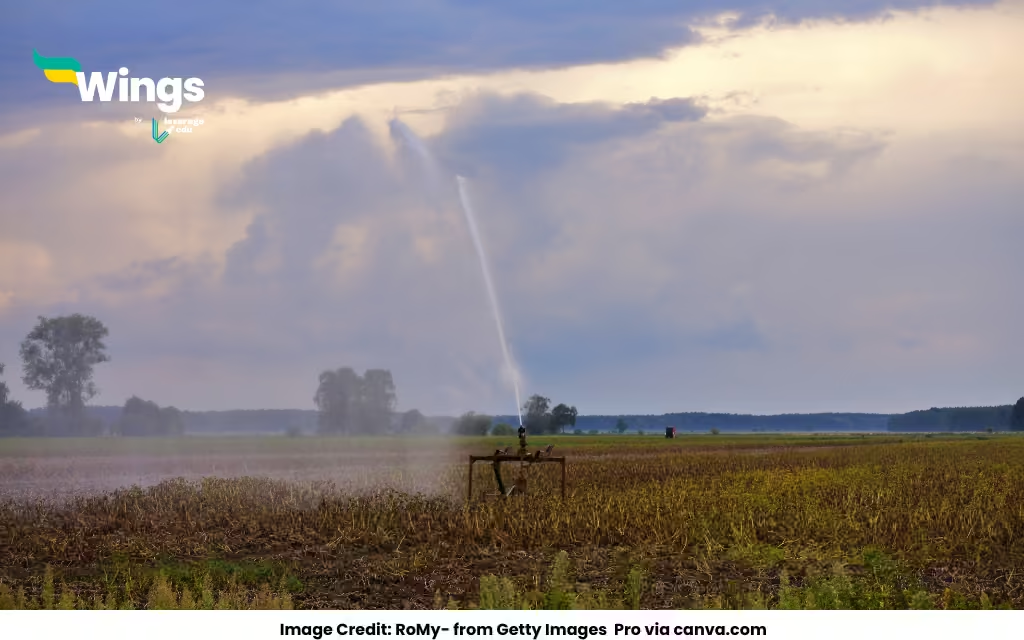
Artificial rain refers to the process of inducing precipitation through scientific techniques, primarily by seeding clouds with certain chemicals. The most common substance used for creating artificial rain is Silver Iodide (AgI). Other substances include sodium chloride (common salt) and potassium iodide, depending on the atmospheric conditions.
Substances Used in Artificial Rain
| Substance | Chemical Formula | Purpose/Use |
| Silver Iodide | AgI | Most commonly used; forms ice-like crystals to induce precipitation. |
| Potassium Iodide | KI | Similar to silver iodide; used in certain conditions for cloud seeding. |
| Sodium Chloride | NaCl | Common salt; used in warmer clouds to help water droplets merge and fall. |
| Dry Ice | CO₂ (solid form) | Used to cool clouds and promote ice crystal formation (sublimates rapidly). |
| Liquid Propane | C₃H₈ (liquid) | Used at high altitudes for creating ice crystals in supercooled clouds. |
How Does Cloud Seeding Work?
Cloud seeding involves dispersing these substances into clouds from aircraft or ground-based generators. These substances serve as nuclei around which moisture condenses to form water droplets or ice crystals, ultimately resulting in rainfall.
Rainfall: These droplets combine and become heavy enough to fall as rain.
Cloud selection: Suitable clouds (with enough moisture) are identified.
Seeding process: Substances like silver iodide are sprayed into the cloud.
Droplet formation: Water condenses or freezes around the particles.
Why Use Artificial Rain?
Artificial rain is used in various scenarios:
- Combating droughts in agriculture
- Reducing air pollution and smog in urban areas
- Enhancing water supply in dry regions
- Preventing forest fires by maintaining soil moisture
Also Read:
How was Swaraj Different for Various Classes and Groups?
What is a Hamster?
Who Advocated Government Based on Social Contract?


 60,000+ students trusted us with their dreams. Take the first step today!