

 One app for all your study abroad needs











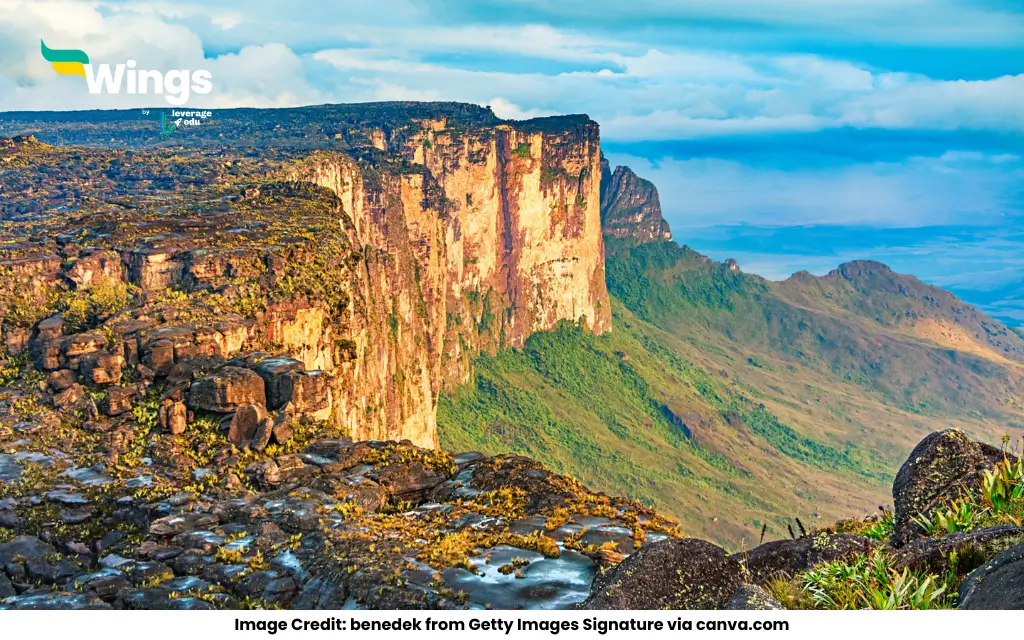
India is a land of diverse physical features, and among these, plateaus play a significant role. One such important plateau is the Malwa Plateau, which lies between the Aravali and Vindhya ranges in central India.
The Malwa Plateau – A Land of Black Soil and Rich History
The Malwa Plateau is located mainly in the western part of Madhya Pradesh and parts of southeastern Rajasthan. It is bounded by the Aravali Hills in the northwest and the Vindhya Range in the south. The plateau is roughly triangular in shape and is an important part of the Deccan Plateau region.
The surface of the Malwa Plateau is mostly flat but gently slopes towards the north. The region is famous for its black soil, which is ideal for growing cotton. This type of soil is also called regur soil, and it retains moisture well, which is beneficial for agriculture.
The Malwa Plateau is also home to many rivers, such as the Chambal, Shipra, and Kali Sindh, which help in irrigation and support the region’s agriculture. Several important cities, like Indore and Ujjain, are located on this plateau.
Apart from its physical features, the Malwa Plateau holds great historical and cultural significance. It has been the center of many ancient kingdoms and has contributed richly to Indian art, music, and architecture.
In conclusion, the Malwa Plateau is a key geographical feature of central India. Located between the Aravali and Vindhya ranges, it is not only important for its physical geography but also for its rich cultural and historical heritage. Understanding such regions helps us appreciate the diversity and uniqueness of India’s landforms.
Common Doubts of Social Science


 60,000+ students trusted us with their dreams. Take the first step today!