

 One app for all your study abroad needs















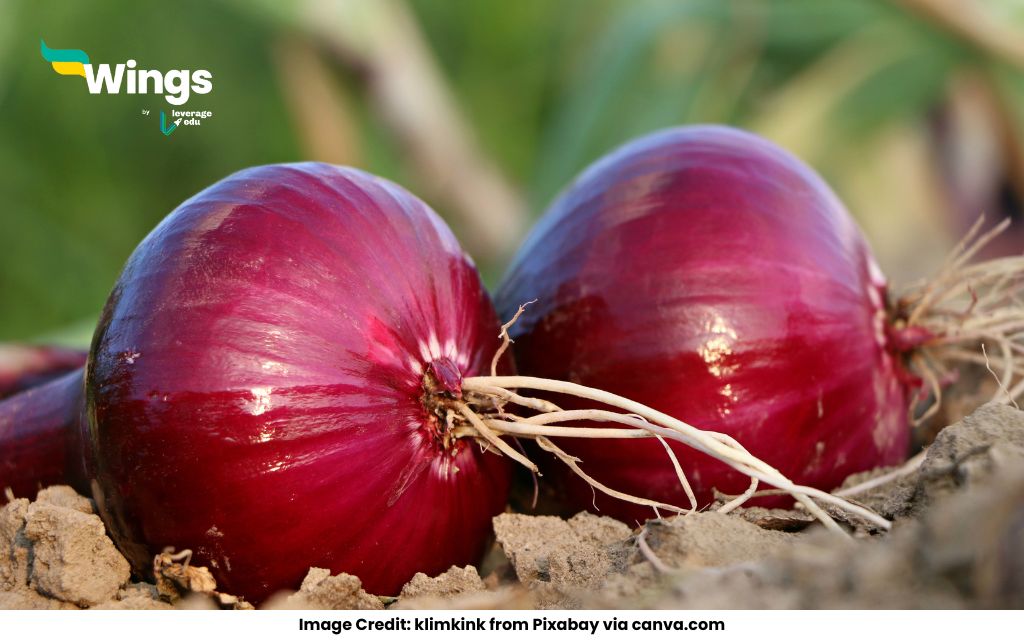
Answer: An onion is a modified underground stem called a bulb, designed to store nutrients and endure harsh conditions. Unlike roots, which primarily absorb water, bulbs like onions act as energy reservoirs, enabling the plant to regenerate when the environment becomes favorable.
Complete Explanation
The Onion Bulb – A Masterclass in Plant Adaptation
At first glance, onions might seem like roots due to their subterranean growth. However, their structure reveals a different story. The onion bulb consists of three critical parts:
- Basal Plate: A compressed, disc-like stem at the base. It anchors the bulb and produces thin, fibrous roots underneath.
- Fleshy Scale Leaves: These thick, concentric layers (the edible part) are modified leaves packed with starch and water. They’re shielded by dry, papery tunic leaves that prevent desiccation.
- Apical Bud: Located at the bulb’s center, this tiny bud develops into a new shoot during germination.
This tunicate bulb structure, common in monocots like onions, garlic, and lilies, prioritizes compact nutrient storage and protection.
Why Isn’t an Onion a Root?
Roots and bulbs serve distinct purposes. Roots absorb nutrients and anchor the plant, but they lack nodes, internodes, or buds. The onion bulb, however, functions as a stem because:
- It has a basal plate (stem) that generates roots and shoots.
- It stores food in modified leaves, not root tissues.
- It undergoes vegetative propagation, allowing the plant to clone itself.
- Under a microscope, cross-sections of onion cells reveal large parenchyma cells filled with starch, traits of storage organs, not absorptive roots.
How Bulbs Help Plants Thrive
Onion bulbs are evolutionary marvels. They enable perennation, the ability to survive unfavorable seasons (e.g., winter or drought). When temperatures drop or water is scarce, the plant’s aerial parts wither, but the bulb remains dormant underground. Once conditions improve, the apical bud uses stored nutrients to sprout new leaves and roots. This strategy reduces reliance on seeds, ensuring faster regeneration and species survival.
Fun Fact: Why Do Onions Make Us Cry?
| While unrelated to its bulb structure, this quirky trait is worth noting! Cutting an onion ruptures its cells, releasing enzymes that convert sulfoxides into syn-propanethial-S-oxide, a volatile gas. When this gas contacts your eyes, it triggers tears as a defense mechanism – proof that plants have clever ways to protect themselves! |
Common Doubts in Biology


 60,000+ students trusted us with their dreams. Take the first step today!