

 One app for all your study abroad needs











Answer
Verified
The largest river basin in India is the Ganga River basin. It covers about 1,086,000 square kilometres. It spans 11 Indian states, parts of Nepal, and Bangladesh. Originating from the Gangotri Glacier, the Ganga River basin supports 400+ million people, produces 50% of India’s agricultural output, and is sacred in Hinduism.
History of the Ganga River Basin
The Ganges River Basin has been central to Indian civilisation for thousands of years. Here’s a quick look at its history:
- Ancient Period: During ancient times, the largest river basin of India was the cradle of the Indus-Gangetic Plain, where ancient civilisations like the Vedic culture flourished. Cities like Varanasi, Prayagraj, and Haridwar are some of the oldest continuously inhabited cities in the world, located along the river.
- Medieval Period: Furthermore, in the medieval era, the Ganga River basin was a hub for trade, culture, and learning. Cities like Patna and Kanpur rose in prominence as trade centres.
- Modern Period: In colonial times, the basin became central to agricultural development and irrigation, laying the foundation for India’s Green Revolution in the 20th century.
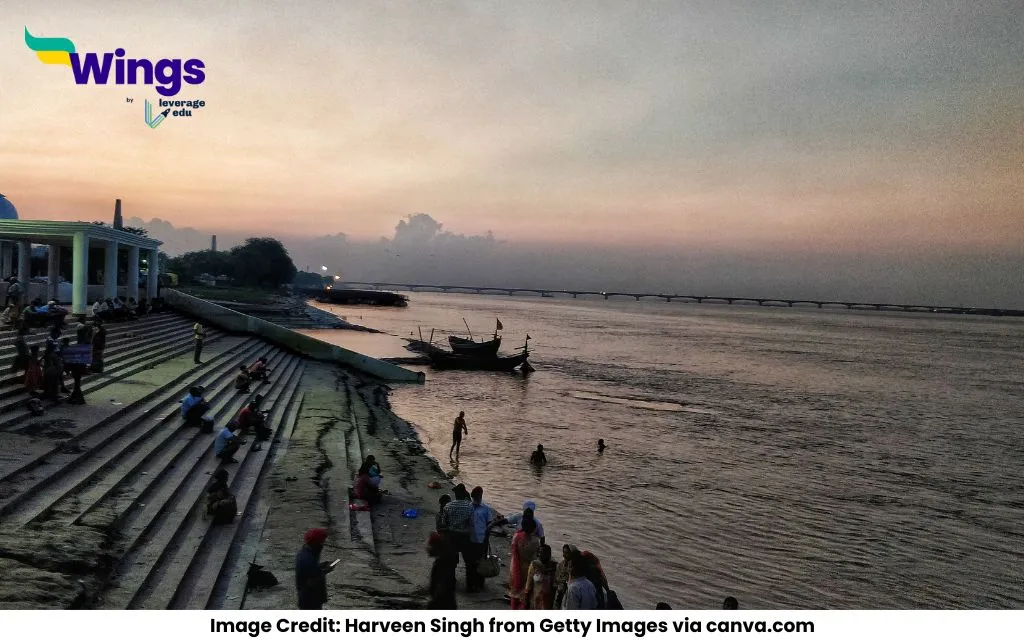
- Contemporary Times: The river is still a vital part of Indian rituals, festivals, and traditions. The Kumbh Mela, one of the largest religious gatherings in the world, is held at the confluence of the Ganges, Yamuna, and mythical Saraswati rivers.
Geography of the Ganga River Basin
Geographical features of the largest river basin in India are as follows:
- Area: It covers approximately 1,086,000 square kilometres, spanning 11 Indian states (including Uttarakhand, Uttar Pradesh, Bihar, Jharkhand, and West Bengal), Nepal, and parts of Bangladesh.
- Source: The Ganga River originates from the Gangotri Glacier in the Indian state of Uttarakhand, where it is known as the Bhagirathi. It officially becomes the Ganga at Devprayag, where the Bhagirathi and Alaknanda rivers meet.
- Length: The Ganga River basin is about 2,525 km long, flowing from the Himalayas to the Bay of Bengal.
- Tributaries: Major tributaries include the Yamuna, Ghaghara, Gandak, Kosi, and Son rivers.
- Delta: The Ganga Delta, shared by India and Bangladesh, is the world’s largest river delta. It is a rich, fertile area supporting dense human habitation and agriculture.
Fun Facts about the Ganga River Basin
Here are some interesting facts about the largest river basin in India, the Ganga:
- It is worshipped as a goddess in Hinduism and is believed to purify the soul.
- It is home to the endangered Ganges River Dolphin, India’s National Aquatic Animal.
- Over 400 million people live in the basin, making it one of the most densely populated river basins in the world.
- The basin produces nearly 50% of India’s agricultural output, including rice, wheat, and sugarcane.
- Festivals like Dussehra, Kartik Purnima, and Chhath Puja are celebrated along its banks, attracting millions of devotees annually.
- The Ganges basin is part of the UNESCO-listed Sundarbans, the world’s largest mangrove forest, home to the famous Royal Bengal Tigers.
- Ganges water has a unique property that helps it remain fresh for extended periods due to the presence of bacteriophages, and viruses that kill harmful bacteria.
Common Doubts:


 60,000+ students trusted us with their dreams. Take the first step today!