

 One app for all your study abroad needs











Answer
Verified
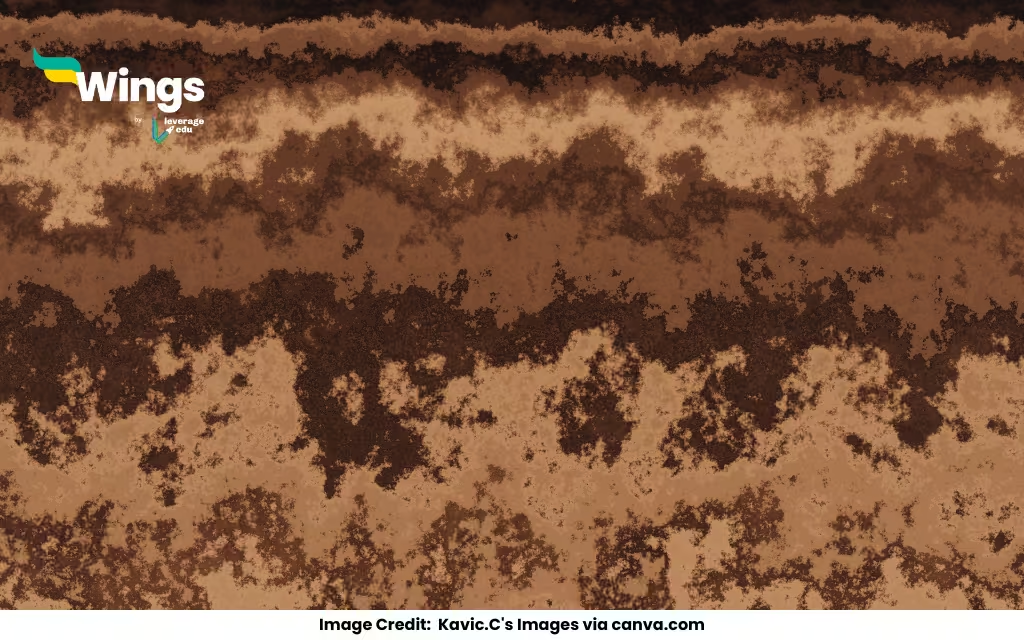
The darkest layer of the soil is the topsoil, also known as the A horizon. This layer is rich in organic matter such as decomposed leaves, plants, and microorganisms, which gives it a dark brown or black color. It plays a crucial role in plant growth as it contains the most nutrients and is biologically the most active layer.
Characteristics of the Darkest Soil Layer
| Feature | Description |
| Layer Name | A Horizon (Topsoil) |
| Color | Dark brown to black |
| Rich in | Humus (organic matter), nutrients |
| Texture | Loamy or crumbly |
| Function | Supports root growth, holds water and nutrients |
| Biological Activity | High – contains bacteria, fungi, worms |
| Thickness | Varies (5–30 cm typically) depending on location |
Why is Topsoil the Darkest?
It contains humus, formed by the decomposition of organic materials.
The presence of carbon compounds and microbial activity darkens the soil.
It absorbs and retains moisture, which also enhances its appearance.
Also Read:
What is the Main Function of FCI?
Plants That Live on Rotting Food Are Known as?
What are Trans-Himalayan Rivers?


 60,000+ students trusted us with their dreams. Take the first step today!